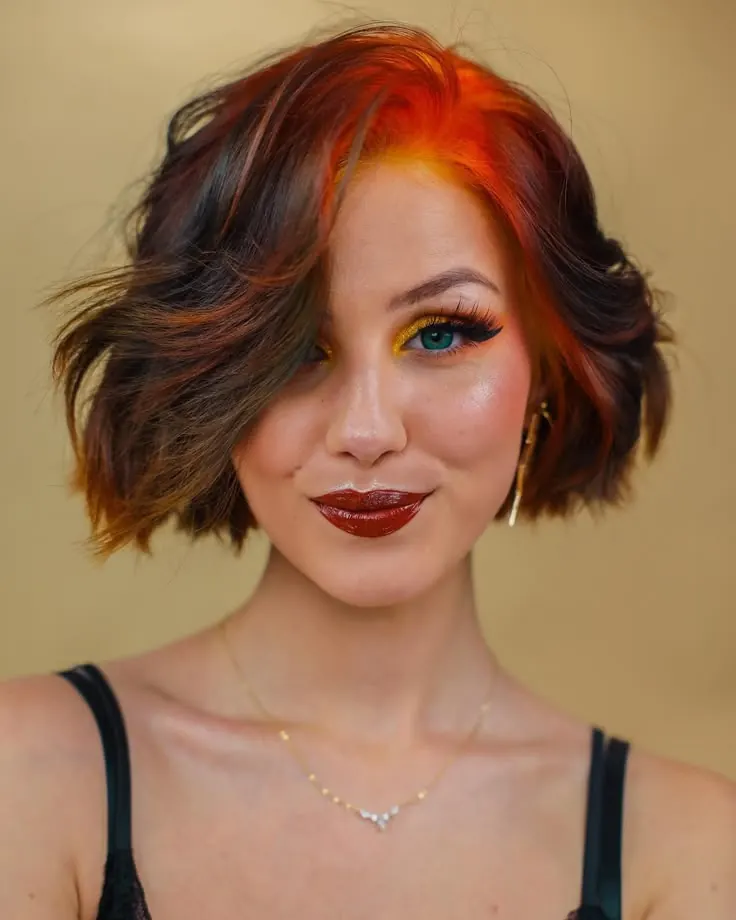
Ghost roots work on long hair when the colored section remains visible after the lengths fall into place. A beautiful top view can become almost invisible once straight hair, waves, curls, braids, or locs settle over the crown. That makes placement more important than simply choosing a bright shade.
The 24 photographs below were selected because each one answers a real planning question. They compare narrow part lines, broad crown panels, face frames, hidden sections, braids, loc rows, and colors from burgundy and blonde to aqua, chartreuse, violet, teal, pink, silver, and neon yellow.
Visual Ideas
Twenty-Four Long-Hair Placements Selected For Visible Root Contrast
These manually reviewed references compare straight hair, waves, curls, braids, locs, narrow part lines, broad crown panels, face frames, and diverse vivid, blonde, silver, and deeper shades.
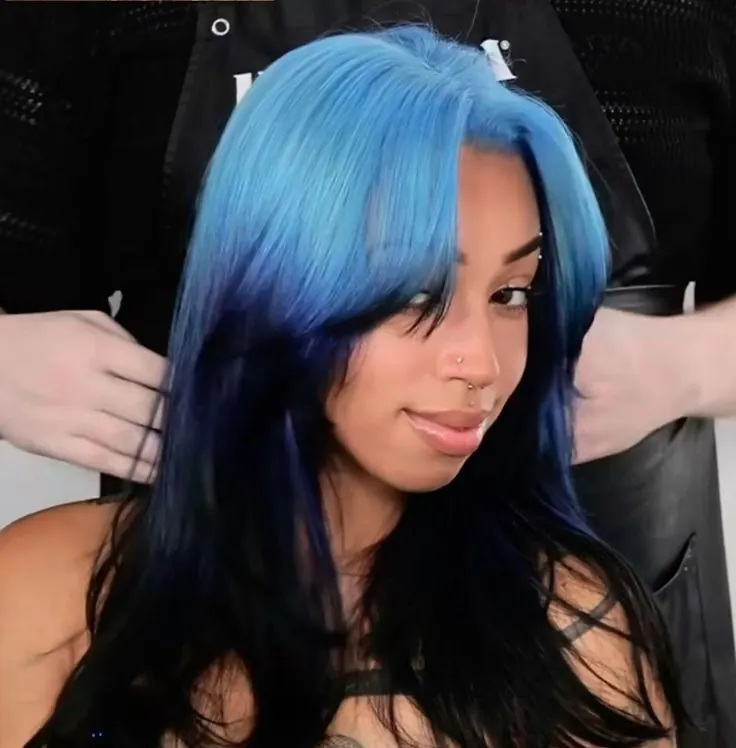
Aqua-Blue Roots Melting Into Long Black Hair
Aqua starts as a wide, bright field at the scalp and deepens through navy before meeting the black lengths. The gradual transition keeps a large colored section from looking like a hard cap.
The blue travels far enough below the crown to remain visible when the straight lengths fall forward. A shorter root band would disappear behind the top layer.
Use this reference when you want a blended boundary rather than a crisp stripe. Ask where aqua should become navy and where the black should begin.

Ash-Blonde Money Pieces Through Long Waves
Muted ash-blonde sections open beside the part and follow the front waves, while the crown and most of the length stay dark. The result is quieter than a broad blonde root panel but still brightens the face.
The pale pieces continue through the face frame, so they do not vanish when the long waves settle over the shoulders.
Ask for two controlled front sections with a cool, shadowed transition. This is a placement reference for someone who wants dimension without coloring the entire crown.
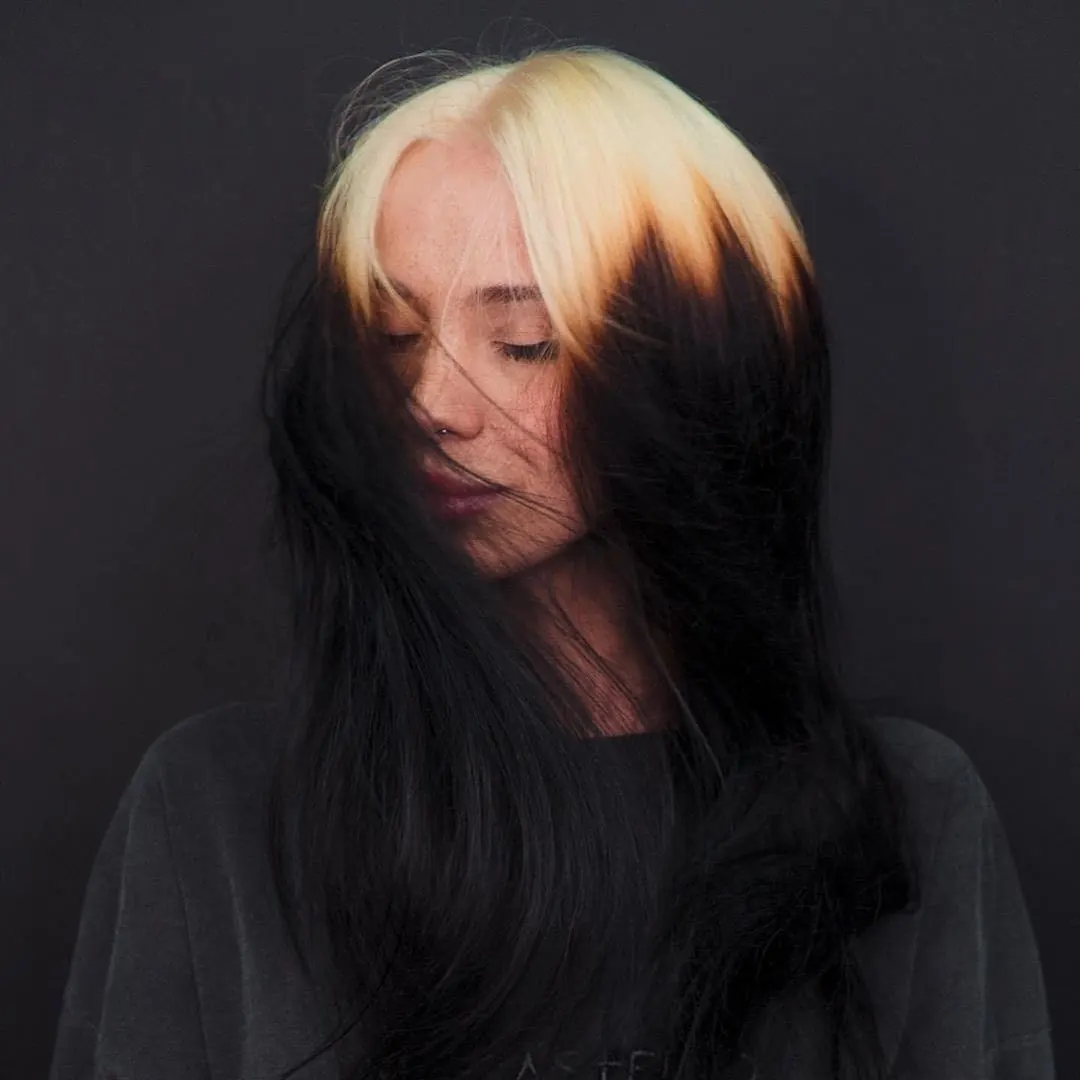
Wide Blonde Front Panel on Long Straight Hair
Pale blonde occupies a broad front section on both sides of the center part, leaving black around the crown and through the full length. The clean straight finish makes the panel width unmistakable.
Because the blonde extends beyond the root line, it stays legible even when the front hair swings across the face.
Bring this image to discuss symmetry and width. The design depends on preserving enough black at the outer edges to frame the blonde.

Blue Crown Color Above Long Body Waves
Electric blue sits across the top of the head while the curled lengths remain glossy black. The front view shows how a crown panel can read clearly without being carried through every layer.
The waves add volume below the colored area but do not cover it because the blue section reaches across the visible crown.
Ask for the panel to be checked after the final part and blowout. Its visibility depends more on crown coverage than on adding blue to the ends.
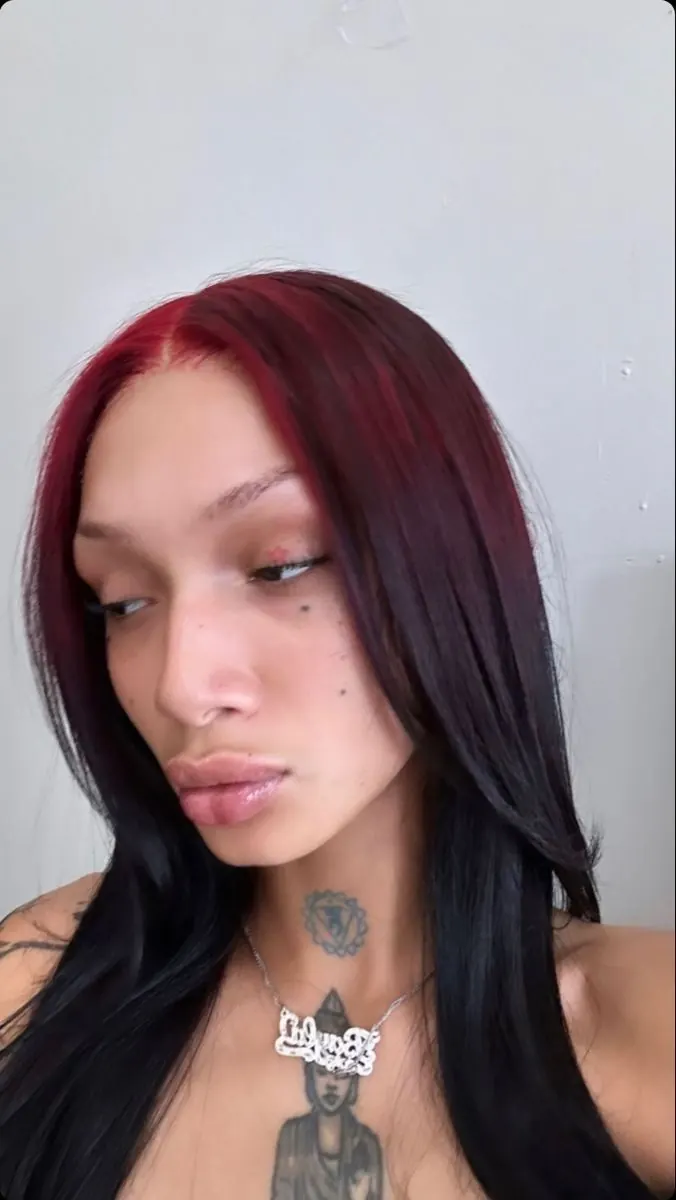
Burgundy Center-Part Roots on Sleek Lengths
Burgundy follows the center part and front hairline without becoming a fluorescent red block. Against black lengths, the deeper shade looks deliberate in normal light and brighter where the hair catches shine.
A narrow but saturated part line creates focus at the face while the uninterrupted black length keeps the result polished.
Use this for a lower-contrast red option. Confirm whether you want wine-toned burgundy or a brighter cherry result before the formula is mixed.
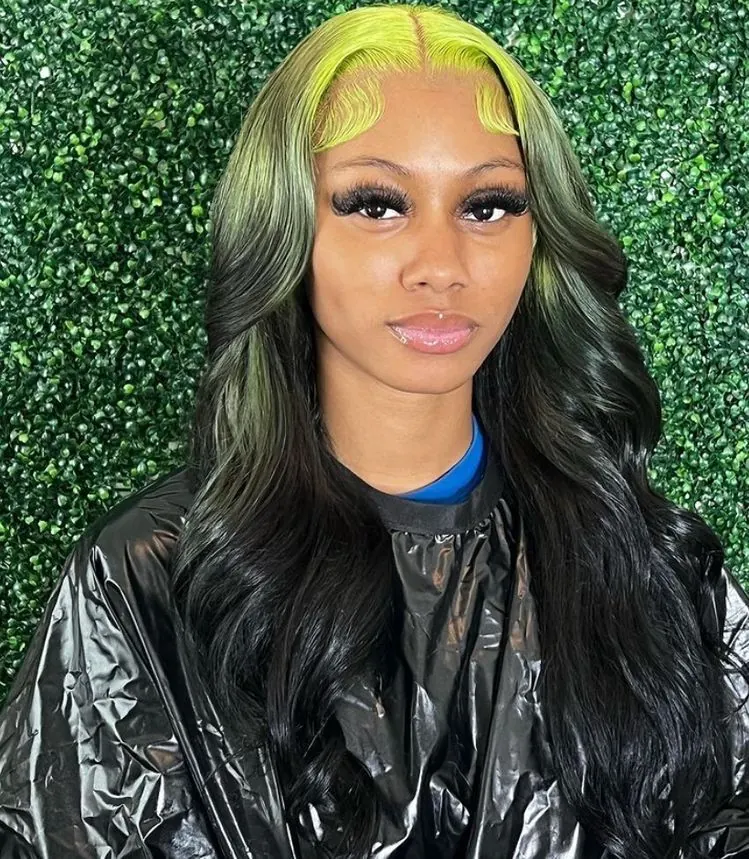
Chartreuse Roots Framing Long Glam Waves
Chartreuse opens around the center part, then narrows into the front waves. The green is brightest at the scalp, so the color reads as a root design rather than a conventional money piece alone.
The face-framing curve repeats the movement of the waves and keeps the lime visible without spreading it over the whole crown.
Ask the colorist to map the section with the hair parted and curled as you normally wear it. A straight-hair map could place the green differently once waves are added.

Narrow Cobalt Panel on Very Long Straight Hair
A precise cobalt strip follows the center part and stops high above the long black ends. Its restrained width gives the style a clean vertical line instead of a broad colored crown.
The extreme length supplies a strong dark frame, making a relatively narrow blue section feel intentional and balanced.
Use the image to set the maximum width. Ask for the panel to be centered on your habitual part so it does not shift off balance after styling.

Crimson Crown Rows With Long Box Braids
Crimson is concentrated across the upper rows, while the box-braid lengths remain predominantly dark. The open parting pattern lets the red root map show from the front without coloring every braid.
The braid rows preserve visibility at the scalp even though the style is long and dense. Movement does not completely close over the colored area.
Discuss which rows will be red before braiding begins. The placement should still make sense when the braids are worn down, tied back, or shifted to one side.

Crimson Crown Roots Opening Through Long Curls
Crimson occupies the top section, then breaks into smaller flashes as the curls separate. The black lengths remain dominant, which keeps the red focused around the face and crown.
Curl gaps reveal color from several angles, so the panel does not need a ruler-straight edge to stay readable.
Map the red with the curls dry and in their usual part. Density and shrinkage determine how wide the section must be before it disappears under neighboring curls.
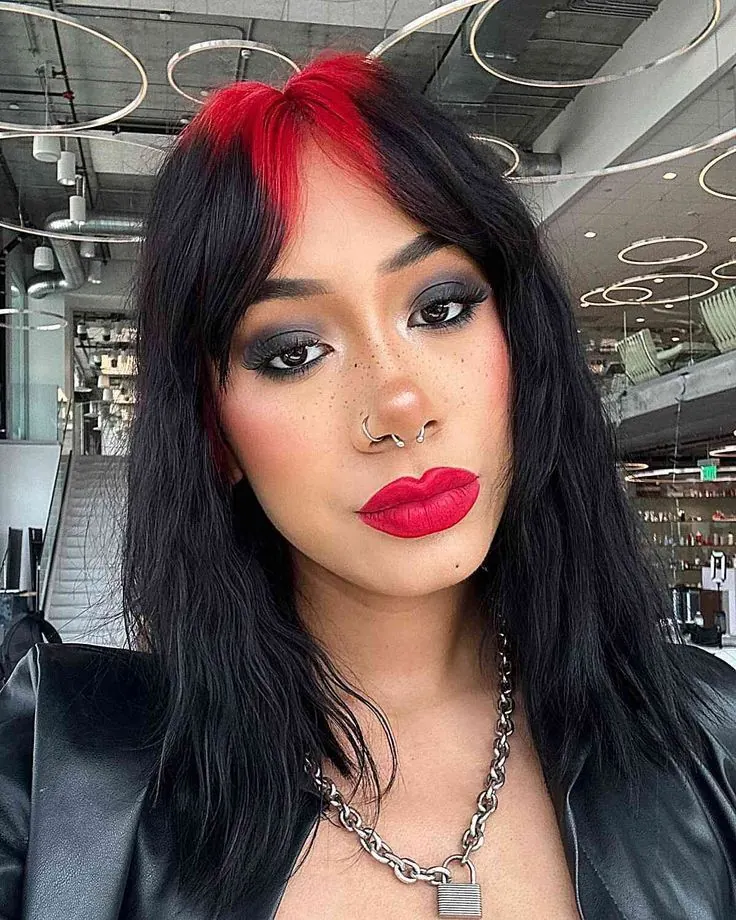
Crimson Center Stripe With Black Face Frames
A bright crimson stripe fills the center top while two black front pieces remain intact. That dark frame prevents the red from reading as an all-over top color.
The black front lengths lead the eye downward and make the shorter red section look deliberately contained.
Point out both the red width and the preserved black pieces. Removing either detail would change the balance of the look.
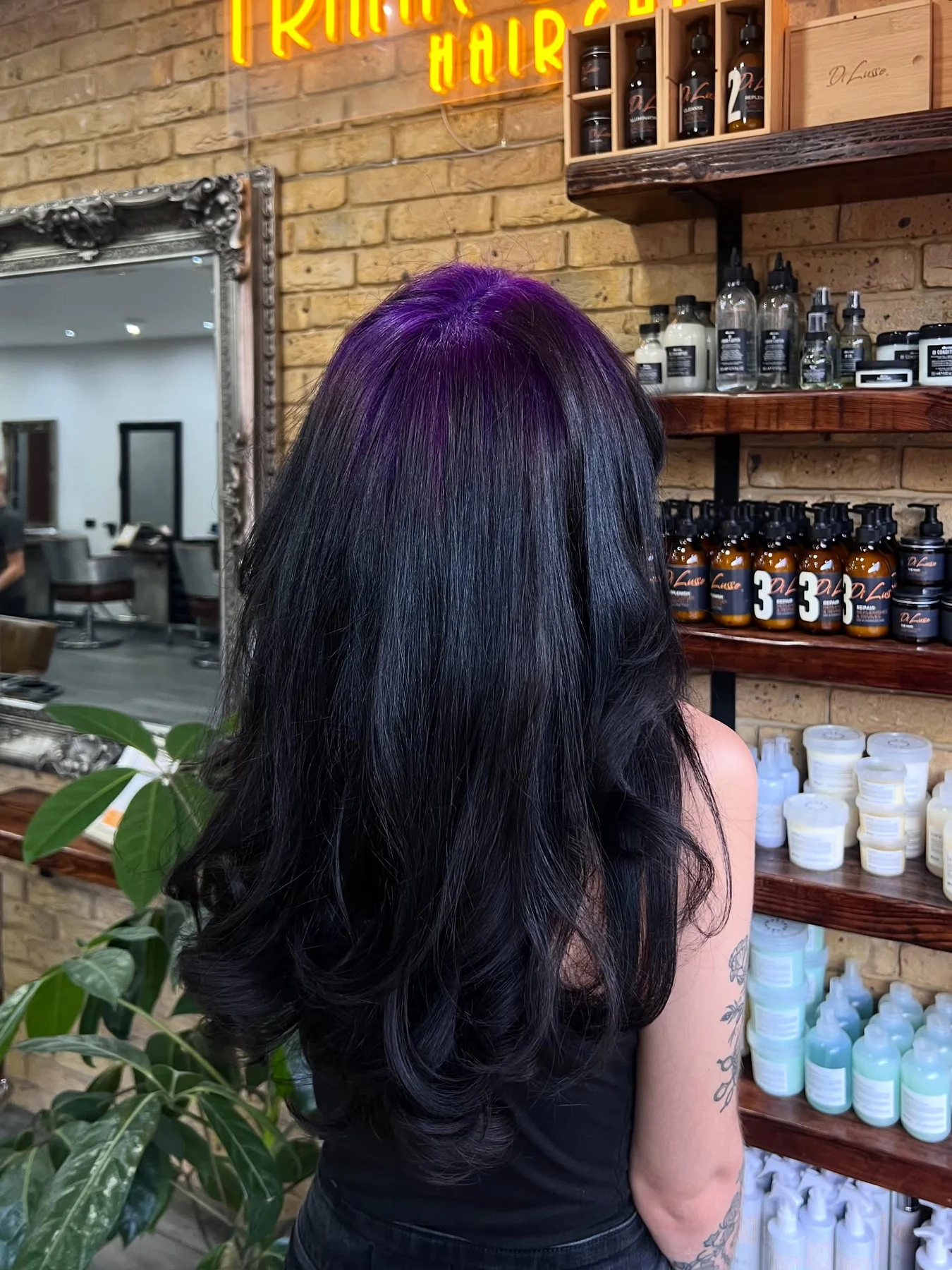
Deep-Violet Crown Above Long Layered Waves
The salon back view exposes a violet crown panel that ends well before the long black layers. Its lower edge remains visible because the hair is smooth and lifted away from the shoulders.
This angle answers how far color should travel toward the back, a decision that front portraits often hide.
Use it to discuss rear coverage and the shape of the boundary. Ask to see the placement from behind before leaving the appointment.
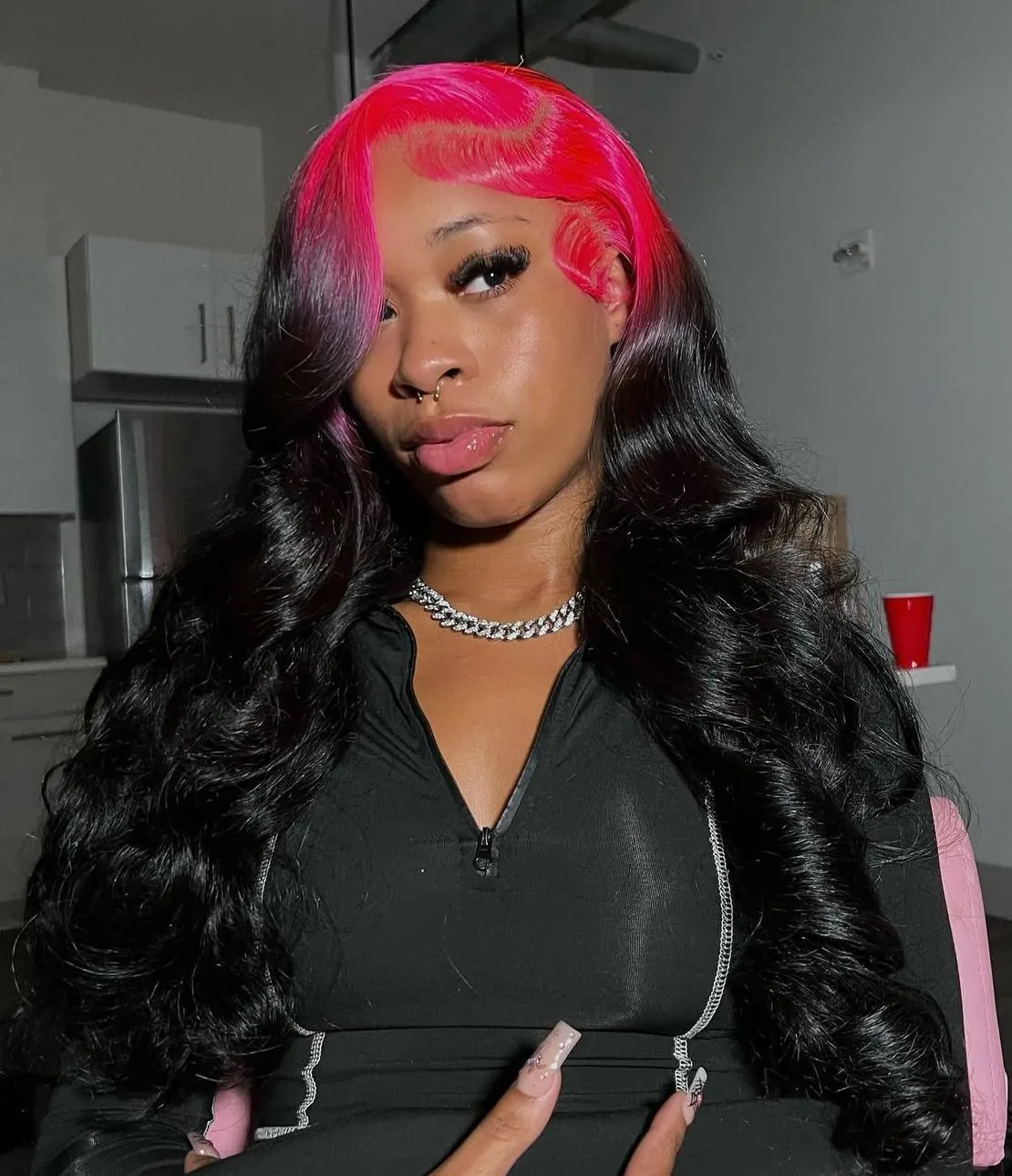
Hot-Pink Center Roots With Long Body Waves
Hot pink forms a bright arc across the front root area, then disappears into black waves below the temples. The limited placement gives the face a strong color frame without pink lengths.
The large black waves add drama without competing with the root color. Pink stays concentrated where it will be seen first.
Set the front-to-back depth of the pink panel before discussing shade. A deeper crown section would remain visible from more angles but create a bolder result.
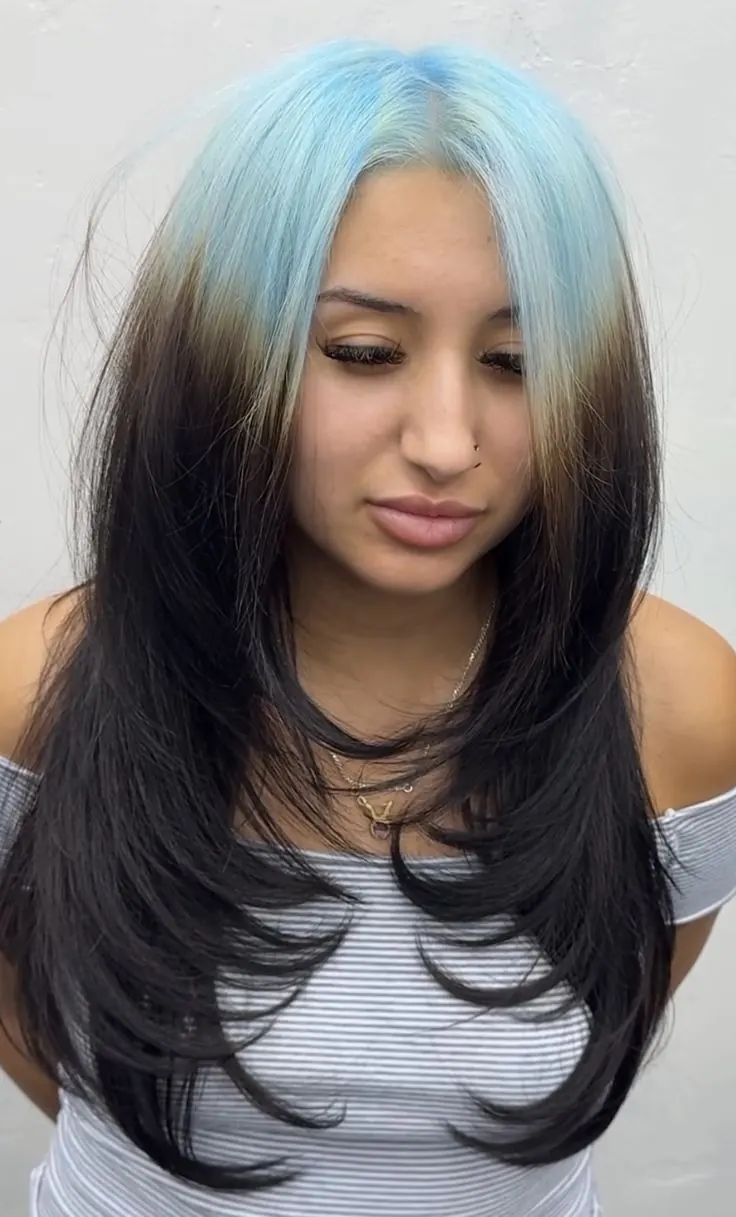
Ice-Blue Face Frame on Long Black Layers
Ice blue begins at the front roots and continues through the upper face-framing layers. Black remains visible at the center and through the longest pieces, preventing the pale color from becoming a full blonde front block.
Carrying the blue into the layers keeps a pale shade from being swallowed by the dark length.
This is a high-lift reference. Ask whether your starting hair can reach a clean enough base for ice blue without compromising the front sections.
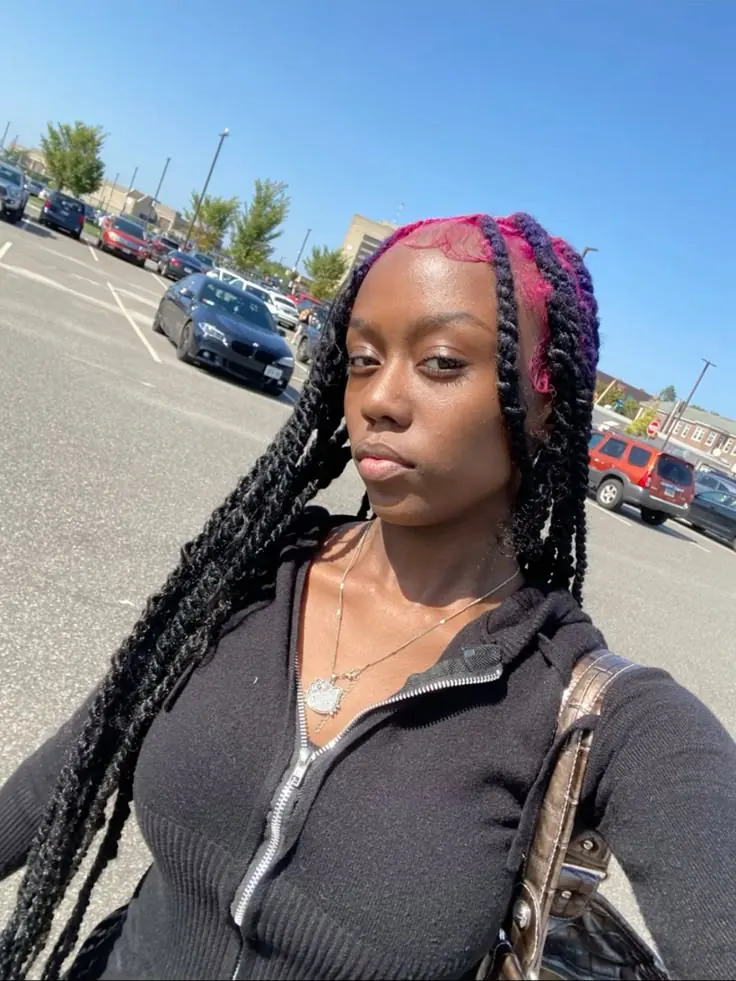
Magenta Part Rows in Long Box Braids
Magenta follows the exposed front and crown rows, while the braid lengths stay black. The outdoor angle makes the colored grid clearer than a straight-on portrait would.
The scalp pattern becomes part of the design, so color remains visible even when the braids extend far below the shoulders.
Choose the rows that should carry magenta and decide whether the color should continue into the braid feed. Protect scalp comfort and avoid unnecessary overlap during later refreshes.
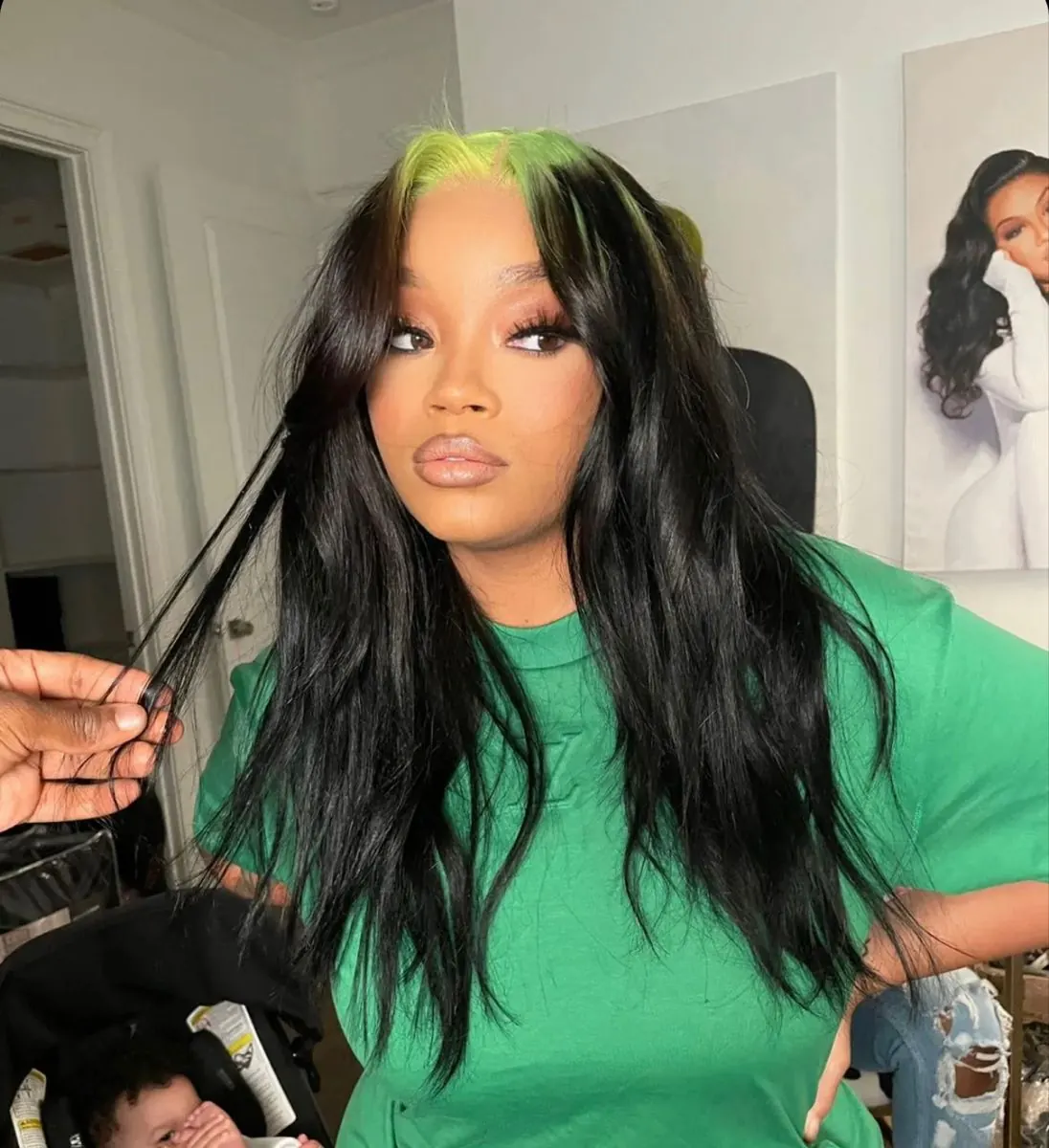
Neon-Lime Peekaboo Roots Under Long Waves
Neon lime appears beneath the black top layer near the temples rather than covering the whole part. The color flashes when the front waves are lifted and becomes quieter when they fall back into place.
Long hair provides enough overlay to make the placement adjustable: tuck or lift the front pieces for more green, or wear them down for less.
Explain whether you want a daily visible money piece or a true peekaboo section. The amount of black left on top controls that difference.
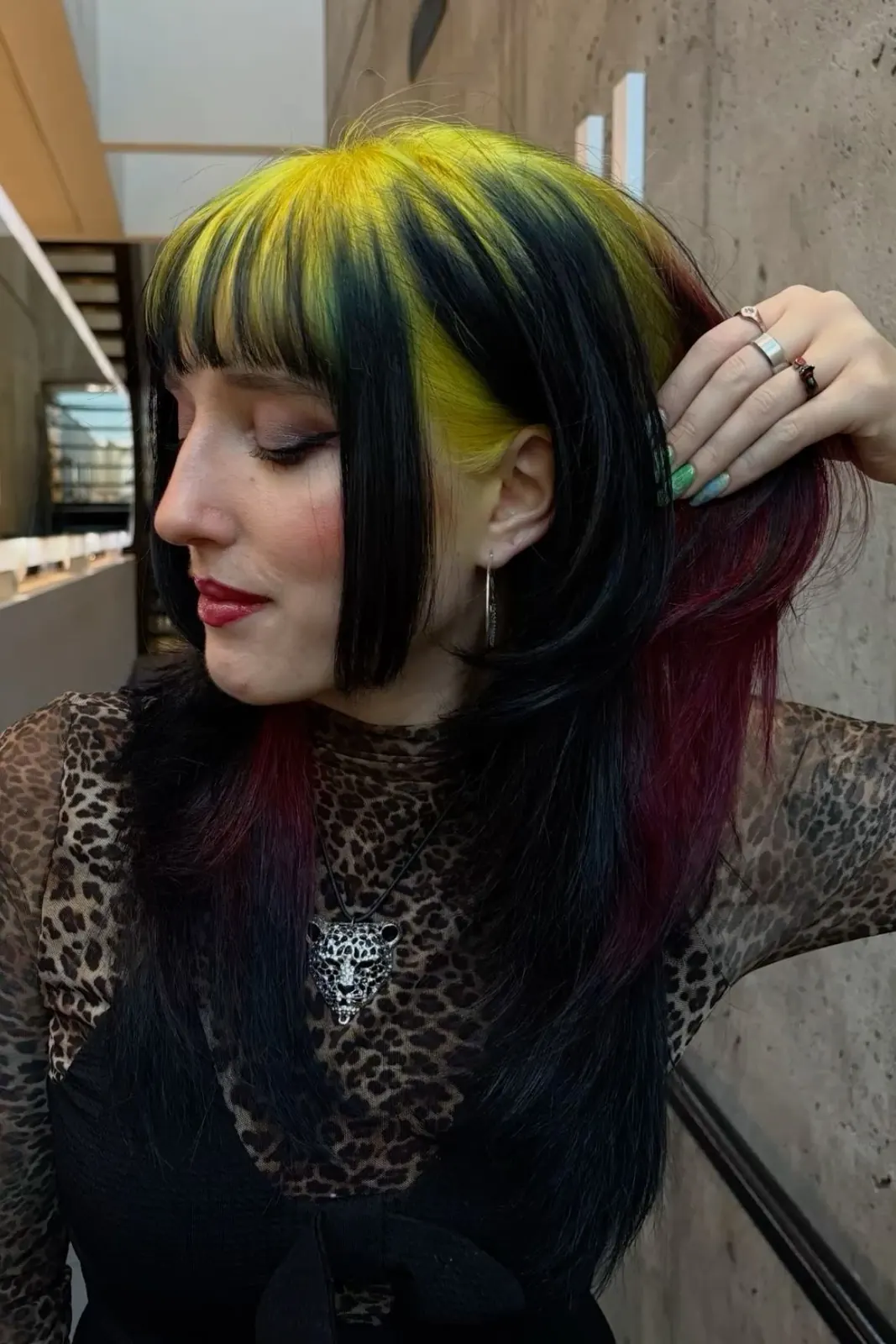
Neon-Yellow Panels Across Long Straight Hair
Neon yellow crosses the top in wide, uneven panels and continues into the fringe, while black remains through the sides and length. The profile reveals how far the bright section extends behind the face.
A broad top map is necessary for the yellow to hold its shape against this much black hair. Small pieces would read as isolated streaks.
Bring a side view like this when the panel should travel behind the fringe. Neon yellow also demands a very light base, so condition and lift should be assessed first.
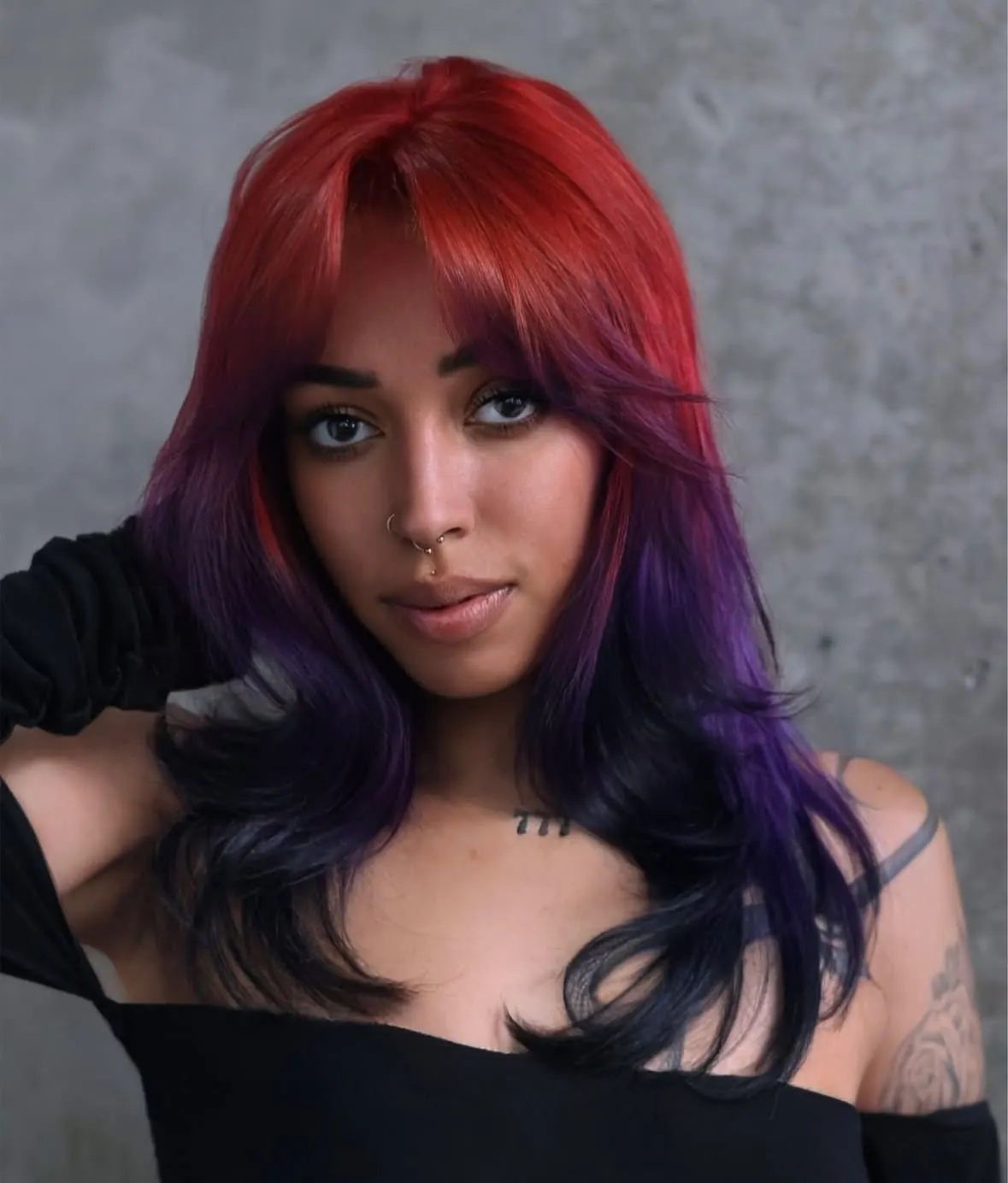
Red-Violet Split Roots on Long Glam Waves
Red-violet spreads from the part across the top layers, then breaks into cooler purple near one side. Black returns through the lower waves, giving the color a clear stopping point.
The layered wave exposes more than one surface, allowing the red and violet shifts to be seen without carrying them to the ends.
Decide whether you want a true two-tone formula or one red-violet shade changing under light. That distinction affects both the application and later refresh.
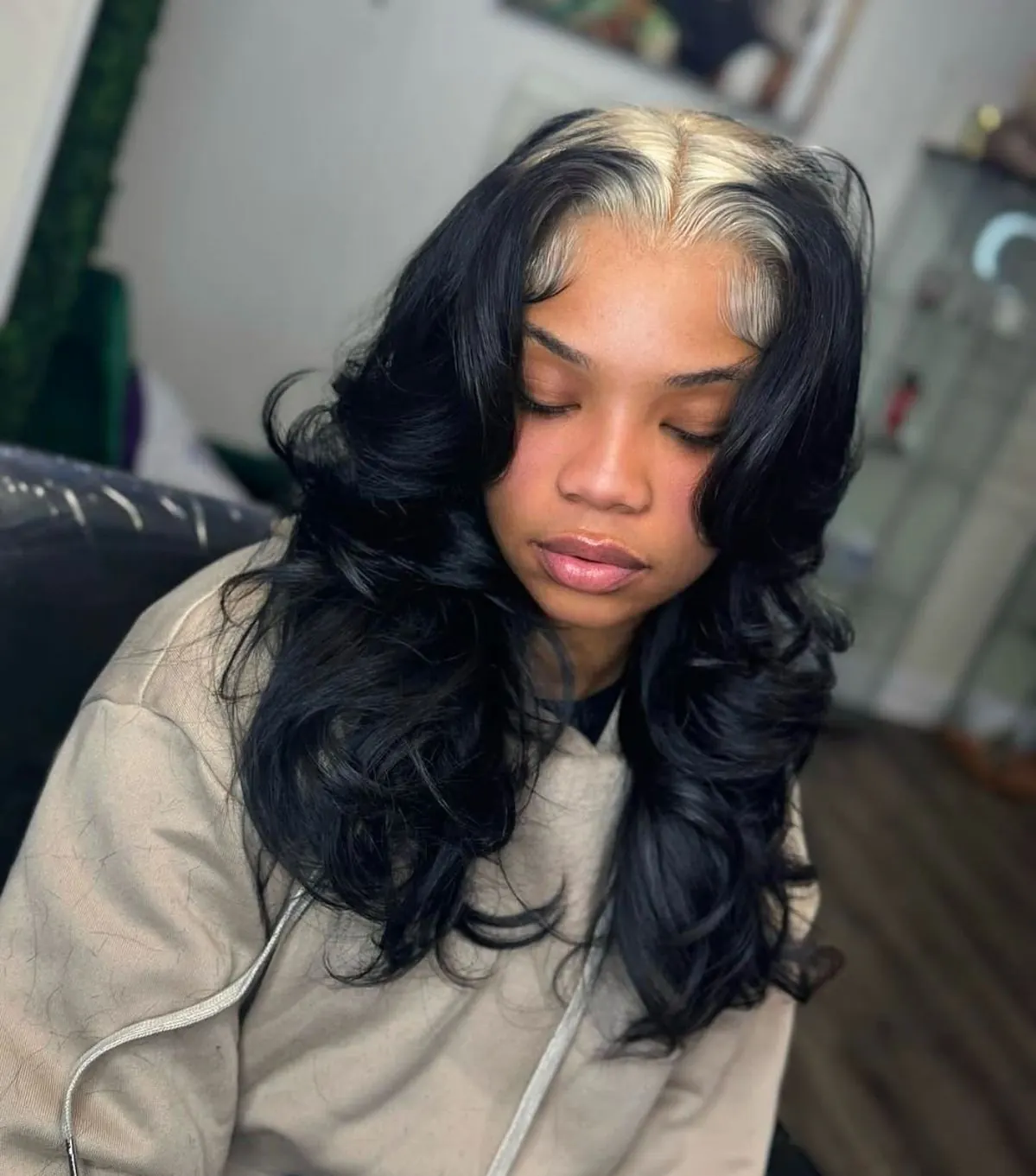
Silver-White Roots Through Long Glam Curls
Silver-white sections begin beside the part and sweep into curled face frames. The rest of the crown remains dark, so the pale color brightens the face without flattening the black-and-silver contrast.
The curl carries silver outward from the root and keeps it visible beside the dark volume.
Ask where the pale section should stop and how often it will need toner. Silver-white requires a cleaner lift and more tone control than beige blonde.
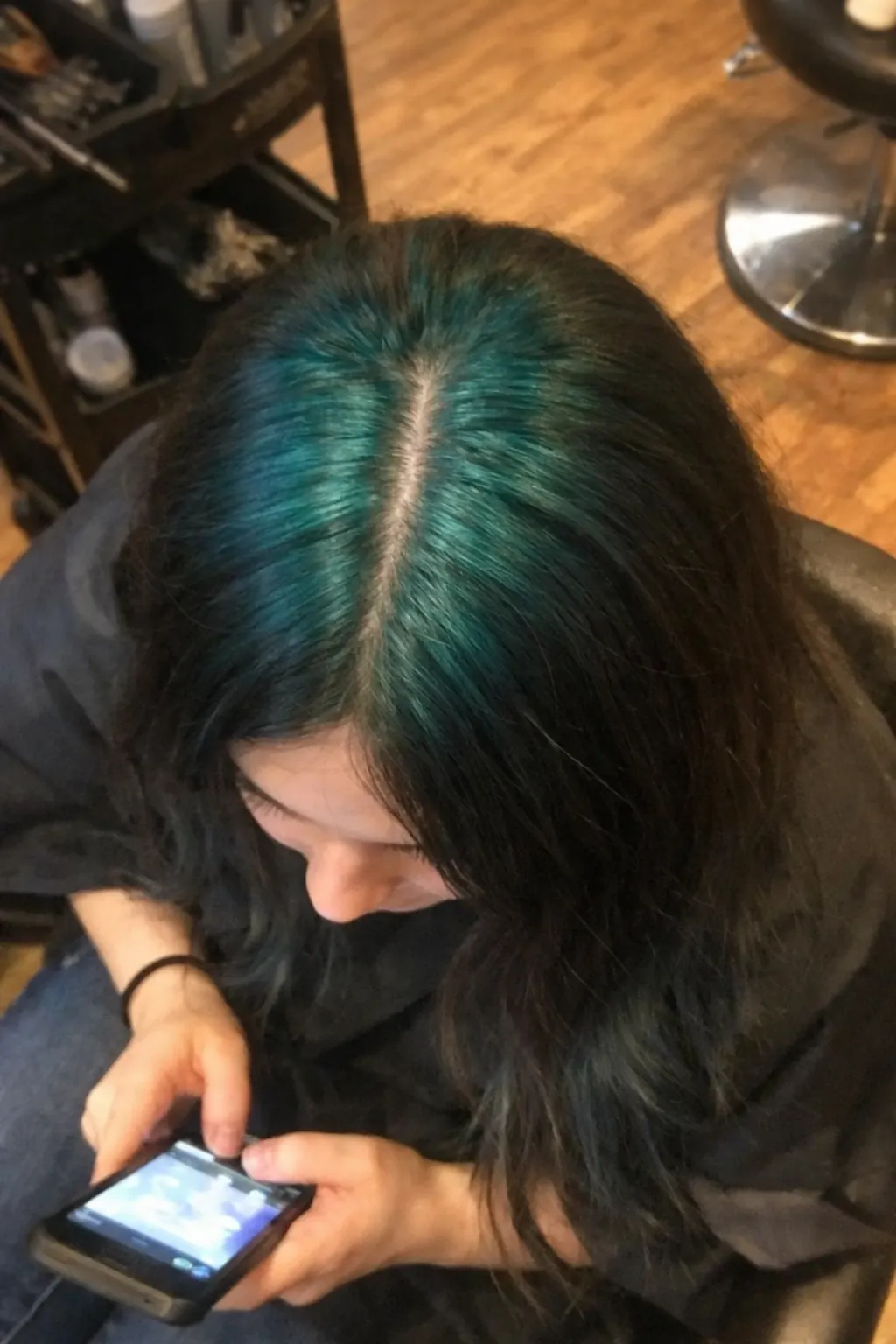
Teal Roots Mapped Along a Center Part
The top-down salon view shows teal placed on both sides of a center part, with a narrow natural-looking divide at the scalp. Black begins quickly outside the colored lane.
This is the clearest sectioning reference in the set. It shows the width and back reach that a front portrait cannot confirm.
Use it to map placement, not finished styling. Confirm that your normal part is stable enough for a centered design before color is applied.
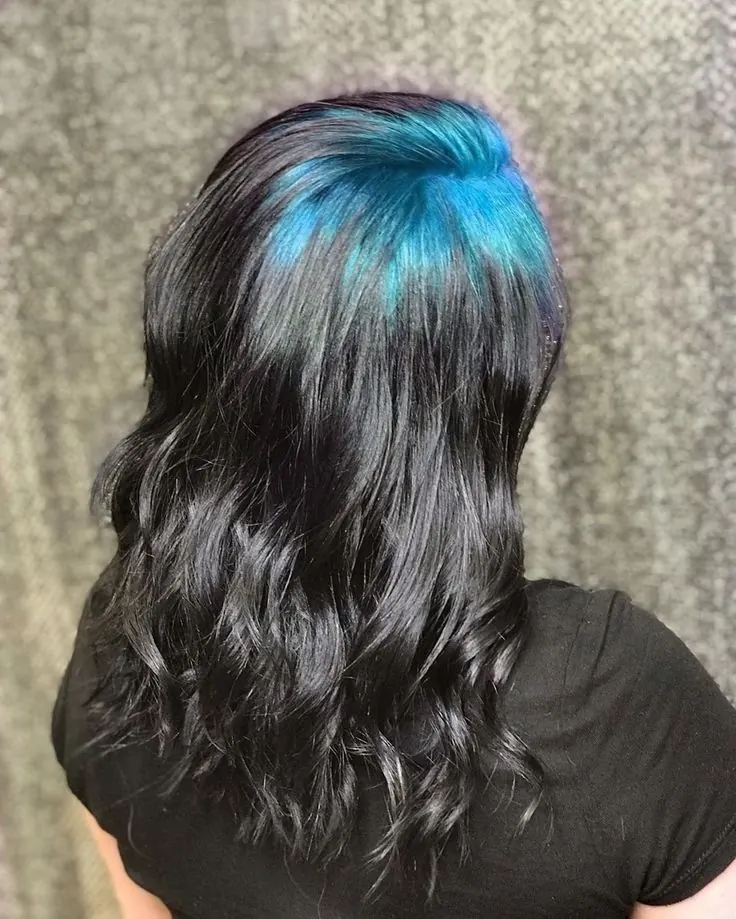
Teal-Blue Crown Over Long Loose Waves
A bright teal-blue patch sits over the upper back crown, surrounded by black waves. The rear view proves that the color is a contained panel rather than an all-over blue-green layer.
The broad crown placement remains visible above the dark wave pattern even without a face or front part in view.
Choose this when rear visibility matters. Ask how the panel will look with the hair down, in a half-up style, and after the wave pattern relaxes.
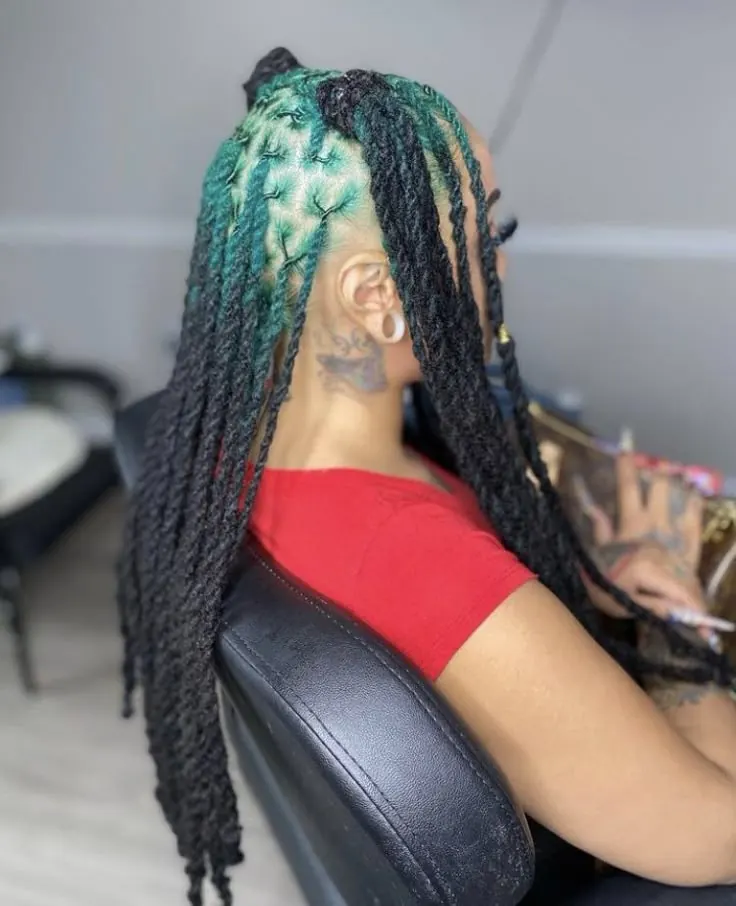
Teal-Green Side Panel With Long Locs
Teal-green is mapped across the exposed side and into selected loc roots, while the long locs above and behind remain dark. The profile makes the panel visible as a structural part of the style.
The side placement avoids being covered by the full weight of the locs and stays visible when they are swept away from the face.
Discuss the exact side rows and how you normally position your locs. A panel that looks strong when pinned may disappear when every loc is worn forward.
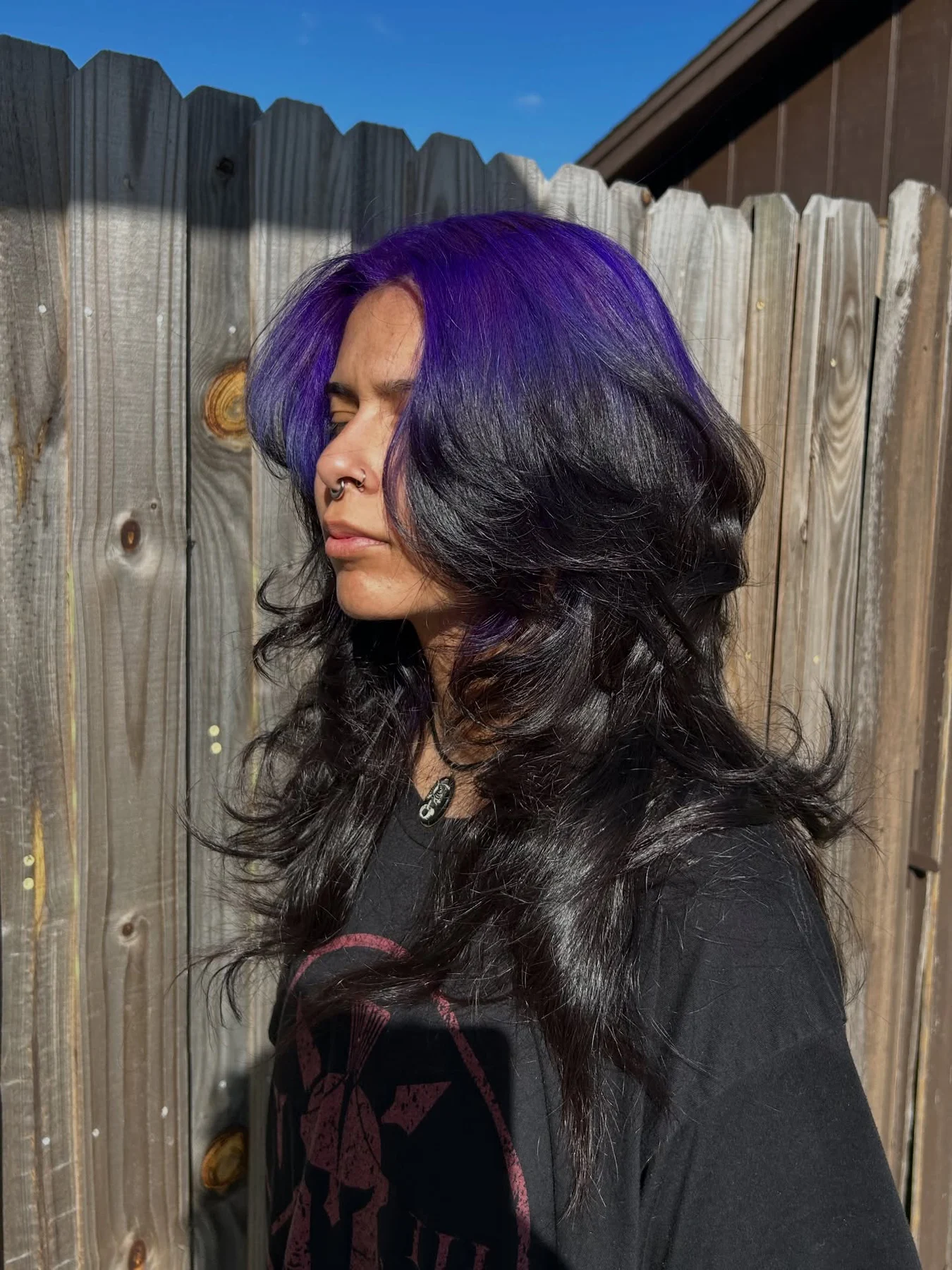
Broad Vivid-Violet Crown on Long Black Waves
Vivid violet covers most of the visible top before meeting black through the side layers. Sunlight separates the purple from the dark perimeter and shows the true breadth of the crown panel.
The high-coverage top balances the volume of the long blowout. A narrower stripe would feel much smaller against these layers.
Use this for maximum crown impact while keeping black lengths. Mark where the violet should stop around the temples and back crown.
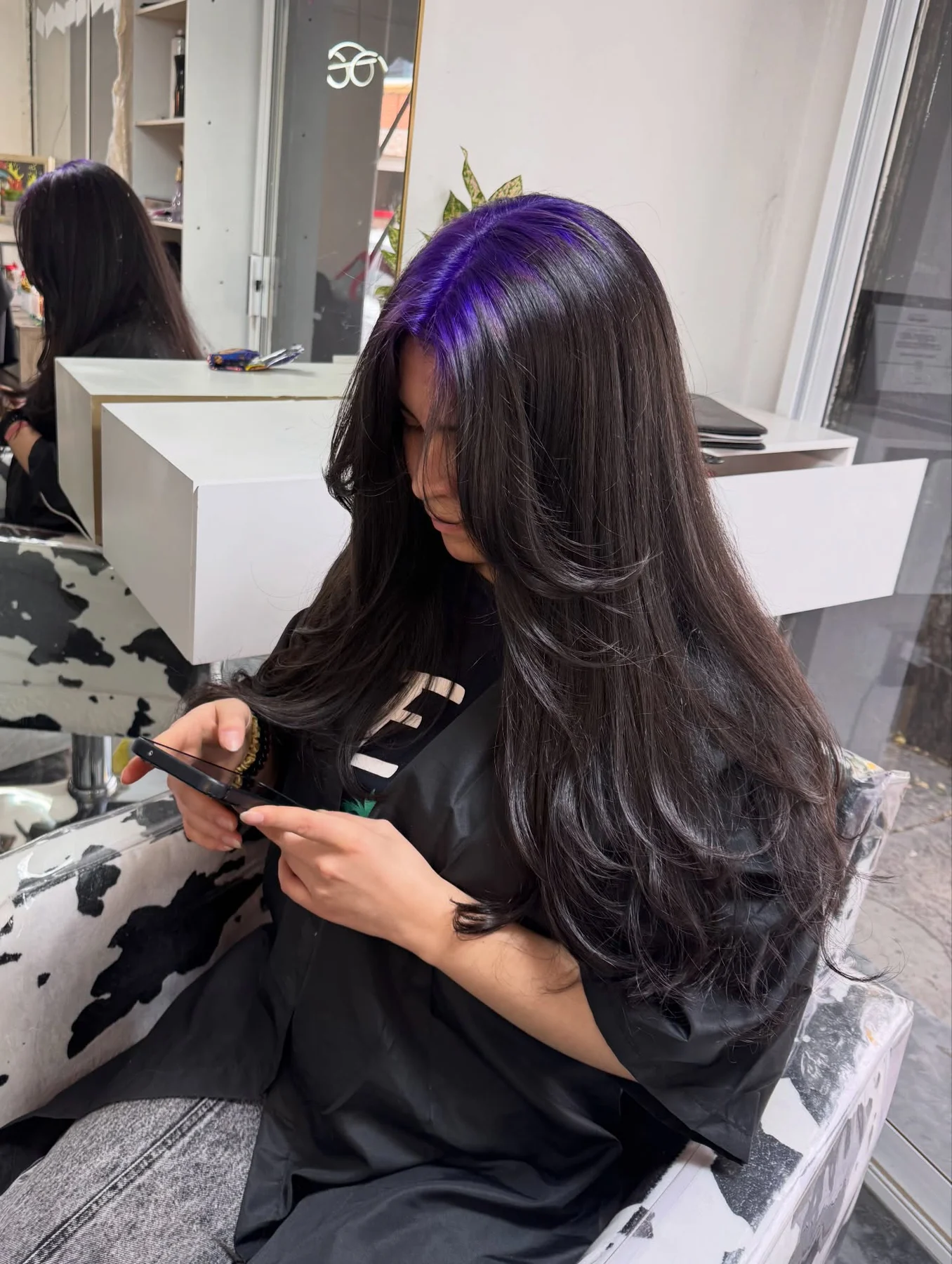
Asymmetric Violet Roots on a Very Long Blowout
Violet is strongest on one side of the part and opens across the upper crown, while the opposite side stays mostly black. The asymmetry is deliberate and follows the way the long layers are swept.
A fixed side part turns a smaller colored section into a visible focal point, even with very long, dense lengths.
Map the panel after choosing the final part. Moving the hair to the opposite side would hide some violet and change the intended balance.
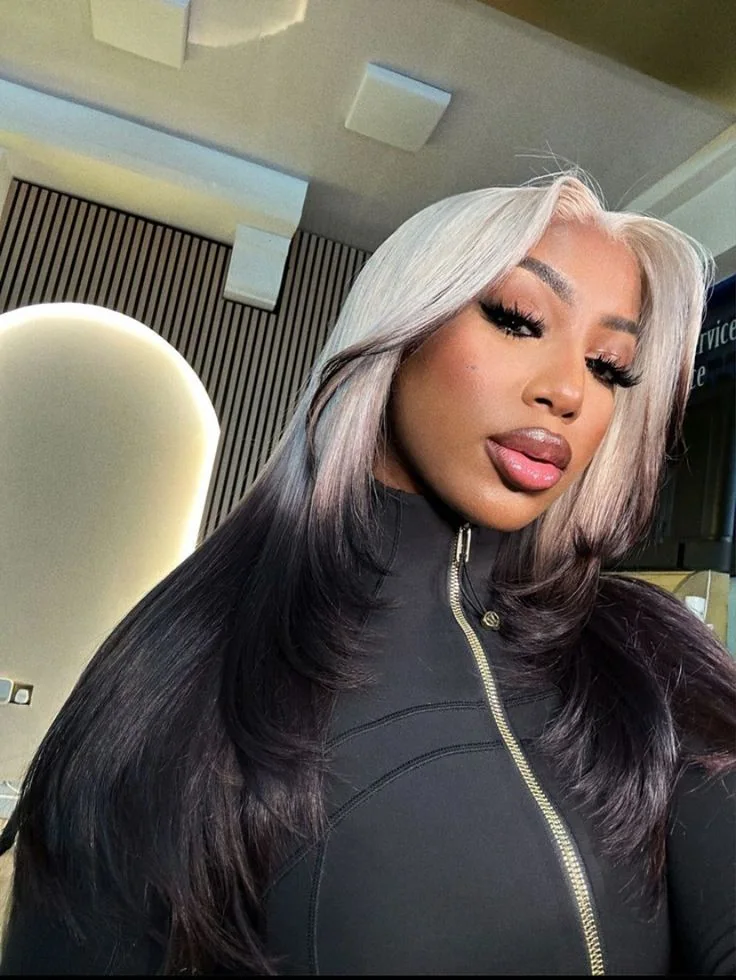
Silver-White Side Roots With Long Glam Waves
Silver-white begins at the side part and spreads into one dominant face-framing section. The opposite side stays black, creating an asymmetric pale accent rather than a mirrored pair.
The wide silver section remains visible through the curved front wave, while the black length supplies contrast and depth.
Use this to request one-sided emphasis. Confirm the target tone, because silver-white needs different toning from warm blonde and can reveal yellowing quickly.
What Makes Ghost Roots Visible on Long Hair?
Long hair gives root color a large dark frame, which can make even a small section look striking. It can also cover the color. A successful design accounts for the usual part, density, texture, front layers, and the way the hair is worn most days.
Use these checks before choosing a reference:
- Part stability: A narrow center stripe only stays centered if the hair is normally worn in that part.
- Crown coverage: A broad panel remains visible from more angles, but it creates a much bolder block of color.
- Front-layer movement: A colored face frame can stay visible when the crown is mostly dark.
- Texture: Curls open and close around the roots. The color map should be judged on dry, naturally arranged hair.
- Updos and braids: A side panel or selected part rows may be more useful than coloring every visible root.
If you are still deciding whether the color belongs at the part, fringe, crown, or face frame, start with what ghost roots are before choosing a shade.
Choose a Placement That Matches How You Wear Your Hair
| Placement | Best reason to choose it | What to check first |
|---|---|---|
| Narrow part line | You want a controlled vertical accent | Whether your part moves during the week |
| Broad crown panel | You want color visible from front, side, and back | How much dark perimeter should remain |
| Face-framing roots | You want brightness near the face without a full crown | Where the front layers fall after styling |
| Peekaboo roots | You want color that can be hidden or revealed | How much dark hair will cover the section |
| Side panel | You wear long hair or locs swept to one side | Whether the panel disappears when hair is down |
| Selected braid or loc rows | You want the parting pattern to carry the design | Which rows stay visible in your usual styles |
A center-part reference is not interchangeable with a side-part design. Ask the stylist to map the section after placing the hair as you actually wear it, not from a generic middle part used only during coloring.
Straight Hair, Waves, Curls, Braids, And Locs Show Color Differently
Straight hair exposes clean boundaries. It is useful for a sharp cobalt stripe, a symmetrical blonde panel, or an aqua melt where the transition needs to look controlled. Because every line is easy to see, uneven width and banding are also more obvious.
Waves create more surface movement. A crown panel can appear and disappear as the hair turns, while a colored front section follows the curve of the face. The strongest reference is one styled with a wave size similar to your own.
Long curls separate the colored area into flashes rather than one flat panel. Mapping on dry curls helps the stylist see which roots naturally open around the face and crown. If the section is planned only on stretched or wet hair, the finished color may sit somewhere unexpected.
Braids and locs make the parting pattern part of the look. Color can follow selected crown rows, front locs, or an exposed side panel. Read the dedicated ghost roots on locs guide if you need advice about row placement, buildup, lightening, and wearing the locs in different positions.
Which Colors Stay Clearest Against Long Dark Hair?
Vivid blue, chartreuse, hot pink, crimson, violet, teal, and neon yellow create immediate contrast against black or deep-brown lengths. Deeper burgundy and violet are quieter choices that reveal more color in direct light. Blonde and silver can look graphic, but their success depends on reaching and maintaining the right level and tone.
Do not choose by brightness alone. The starting hair determines what can be reached responsibly:
- Vivid shades usually need a light enough prepared section to display the intended hue.
- Ice blue, silver-white, and pale blonde generally demand a cleaner, lighter base than burgundy or deep violet.
- Old dark dye, fragile front pieces, or previous lightening can limit the safest result.
- Depositing more vivid color on an already prepared panel is different from repeatedly applying lightener at the roots.
Use the ghost roots hair-dye guide to compare direct dye, toner, lightener, strand testing, and damage risk before committing to a pale or fluorescent reference.
How Wide Should The Colored Section Be?
There is no correct universal width. A narrow stripe can look strong on smooth center-parted hair because the black lengths form an even frame. The same stripe may disappear under thick waves or curls. A broad crown panel is more reliable from multiple angles, but it changes the overall color balance and exposes more hair to the coloring process.
Judge width in three views:
- A front view shows the relationship to the face and part.
- A top or three-quarter view shows the true section size.
- A back or side view shows where the panel ends and whether the long hair covers it.
Bring more than one photograph to the consultation. One image can communicate the shade while another explains the section boundary more clearly.
What to Say at The Salon
I want ghost roots that stay visible with my hair worn long. Please map the color around my normal part and show me how the section will look from the front, top, and back. I want this amount of colored root area, with the remaining lengths kept dark. Before lightening, please check whether my starting hair can support the target shade and explain how later refreshes will avoid overlap.
Also tell the stylist whether you usually wear the hair down, tucked behind the ears, half up, braided, or swept to one side. Those habits determine which root sections are actually seen.
Maintenance And Grow-Out on Long Hair
Long hair can make placement grow-out feel softer because the lengths continue to frame the colored section. Pigment can still fade before the placement looks too far from the scalp. Treat those as two separate decisions: refreshing the shade and remapping or relightening the section.
Vivid color may need a matching depositing product. Blonde, silver, and ice-blue sections may need toner support. Every lightened area benefits from controlled heat and care that respects the condition of the hair. Avoid pulling lightener over previously lifted hair just because the visible color has faded.
The ghost roots maintenance guide explains how washing, heat, growth rate, section width, toner, pigment, and trims change the refresh decision. If you prefer a softer transition between appointments, compare grown-out ghost roots.
Common Mistakes With Long-Hair Ghost Roots
- Choosing a front portrait that never shows the actual crown boundary.
- Copying a narrow stripe onto dense waves where it becomes hidden.
- Planning around a temporary salon part instead of the everyday part.
- Taking pale silver, white, or ice-blue inspiration as proof that every starting color can reach it in one appointment.
- Coloring a large crown when a smaller face frame would meet the same goal.
- Ignoring how braids, locs, half-up styles, or a side sweep change visibility.
- Refreshing faded pigment with unnecessary overlapping lightener.
The best long-hair design is not the one with the most color. It is the one whose placement remains recognizable in the way the hair naturally falls and moves.
Long-Hair Ghost Roots Questions
Do ghost roots work on long hair?
Yes. Ghost roots can look especially strong on long hair because the dark lengths frame the colored section. The placement must be wide or exposed enough to remain visible after the hair falls into its normal part and texture.
What ghost-roots placement stays most visible on long hair?
A broad crown panel is visible from the most angles, while a face frame stays clear near the face. A narrow part line can also work on straight or consistently parted hair. Dense waves, curls, braids, and locs need placement mapped around the sections that naturally remain exposed.
Are ghost roots on long hair lower maintenance than on short hair?
Long lengths can make placement grow-out look softer, but the color may still fade before the section looks too far from the scalp. Vivid shades need pigment refreshes, while blonde, silver, and pale blue may need toner support. Lightener should not be overlapped automatically just because the tone has faded.
What should I bring to a long-hair ghost roots consultation?
Bring a front view for the face and part, a top or three-quarter view for section width, and a side or back view for the stopping point. Show your hair in its usual texture and tell the stylist whether you normally wear it down, half up, braided, or swept to one side.