
Pink ghost roots can be a narrow hot-pink stripe, a broad magenta crown, a soft rose face frame, or colored root rows through braids. The shade and placement need to be chosen together. A pastel section on dark hair requires a different canvas and upkeep plan from saturated magenta on an already-lightened panel.
Visual Ideas
Read The Difference Between Hot Pink, Rose, And Magenta Roots
These pink ghost roots examples focus only on looks that visibly read as hot pink, magenta pink, soft pink, or pink-lilac root placement.

Hot Pink Sleek Straight
A slim hot-pink stripe begins at the center part and continues into one front section of otherwise sleek black hair. The concentrated line gives a sharper, more graphic effect than a broad pink halo.

Magenta Purple Glam Wave
Magenta-purple spreads widely across the top before narrowing into the black glam waves. Its red-violet cast is strongest near the part, making this a useful comparison for readers who want pink with a cooler purple bias.

Soft Pink Loose Wave
Soft pink is placed in two muted face-framing panels against loose black waves. The low saturation keeps the contrast gentle, so the color reads more like a dusty veil than vivid magenta.

Magenta Pink Box Braids
Magenta-pink is braided through the crown rows and selected front box braids, while most of the long braids remain black. This distributed placement carries color from the scalp without creating an all-over pink braid set.

Magenta Pink Spiky Mullet
Hot magenta crowns a short spiky mullet and continues through the fringe, with black pieces defining the sides and tips. The color follows the haircut's jagged outline instead of sitting as a smooth circular panel.
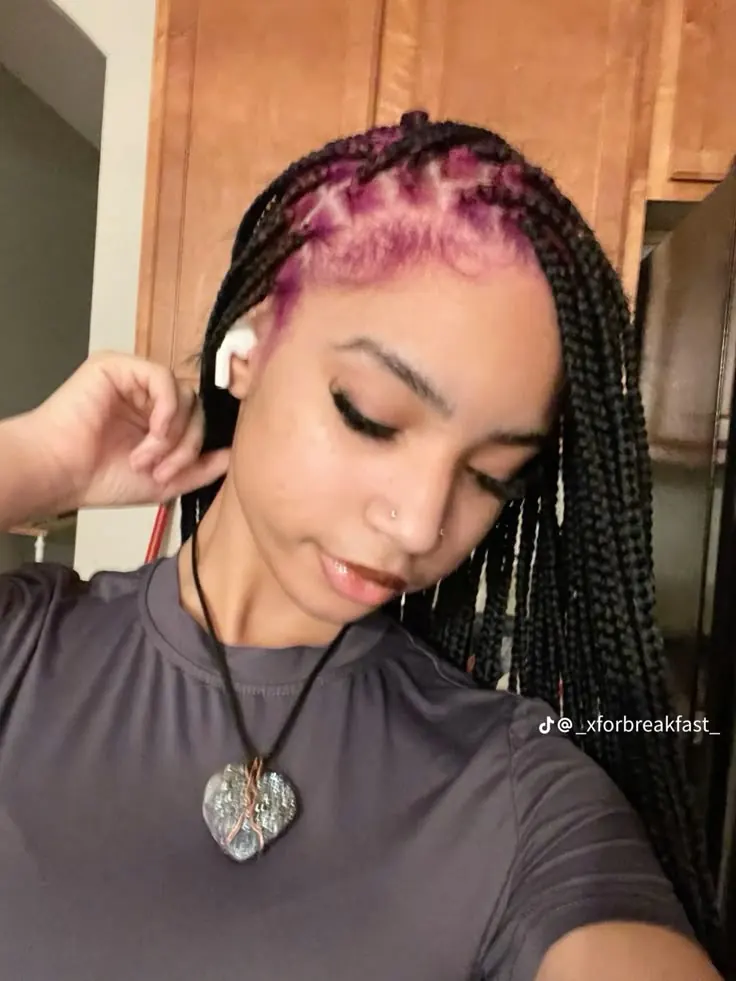
Soft Pink Box Braids
A soft pink cast fills the visible braided roots before the box braids turn black. Because the color is confined close to the scalp, the photograph clearly separates root coverage from colored extensions.
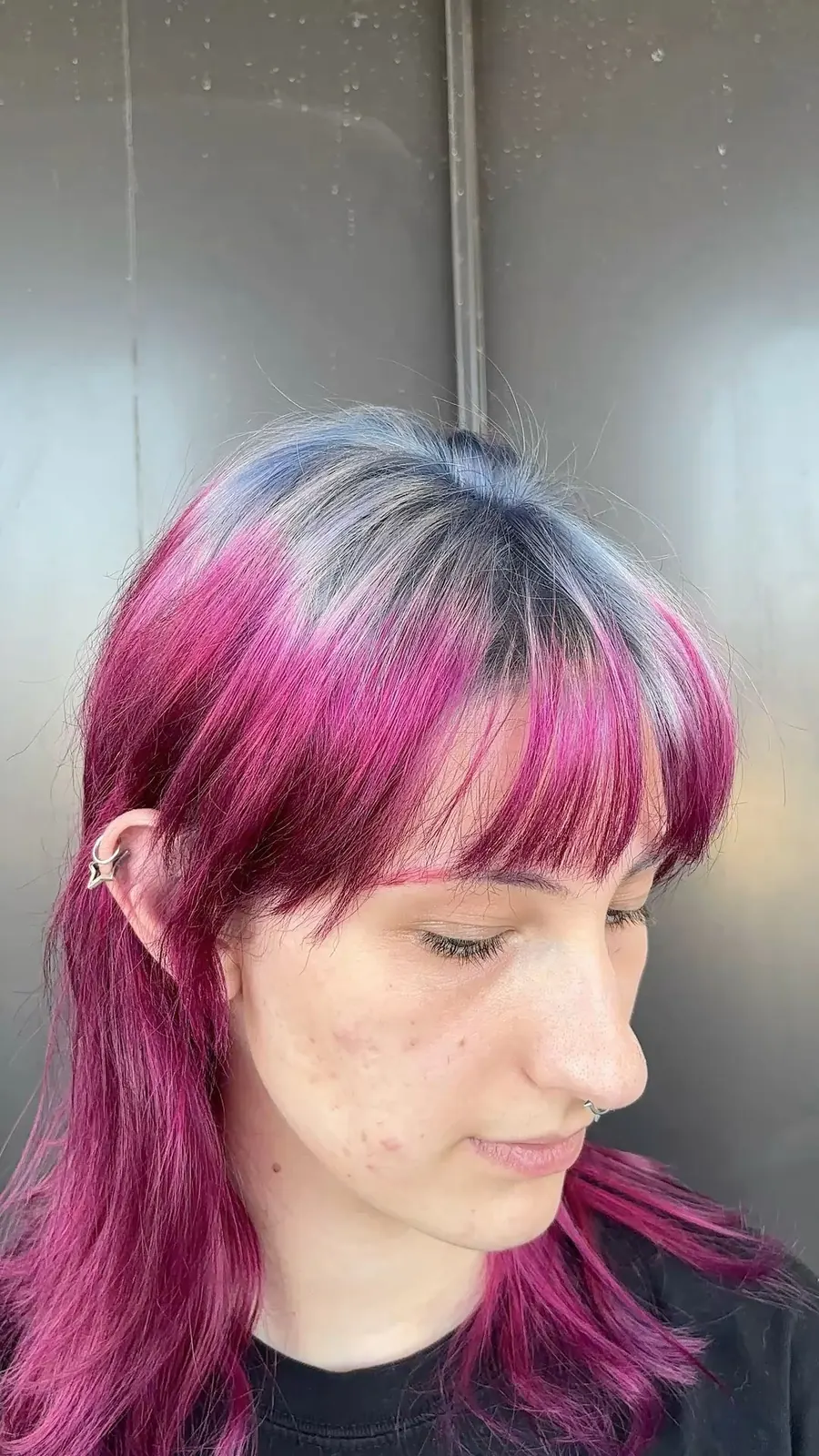
Pink Lilac Straight
Pink-lilac covers the full fringe and top layers, then meets deeper magenta lengths around the ear. The side view is especially helpful for seeing where a fringe-connected root section should stop.

Hot Pink Shaggy Wave
Hot pink breaks through the crown and choppy face frame of a black shag, with the fringe carrying color toward the eyes. The irregular pieces make the result lively without losing the dark outline of the cut.
Choose The Pink Family First
Hot pink gives the clearest vivid contrast against black hair. It is useful when the root zone should remain obvious from the front.
Magenta is deeper and can connect more naturally to black, burgundy, or violet lengths. It often keeps more visual weight as it fades.
Soft pink or rose is quieter but needs a cleaner pale canvas. Warmth left after lifting can push it toward peach.
Pink-lilac sits near purple. Decide whether the finished shade should read pink first or violet first, then choose the reference accordingly. The purple guide is the better destination when violet or plum is the main effect.
Let The Hairstyle Decide The Section
A center part creates symmetry and makes a narrow panel easy to inspect. A crown panel gives curls and body waves repeated flashes of pink. A fringe or choppy face frame makes the color part of a shag or wolf cut. Braided root rows produce a structured grid that remains visible even when the lengths are dark.
Use more than one viewing angle. A front portrait shows balance around the face; a top or back view shows whether the panel is truly at the roots and how wide it becomes away from the part.
Starting Color Changes The Result
Saturated pink can tolerate more depth than pastel, but a bright result on dark hair still commonly needs preparation. Old permanent dye, uneven lightening, and warm banding can make the same formula look different across the section.
Ask what level is needed for the exact pink in your reference. Toner should not be treated as a way to force an unready canvas into pale rose. If lightening is involved, use a strand test and a plan that respects the current condition of the hair.
Plan The Fade Before The Appointment
Pink may soften toward rose, peach, magenta, or a muted stain. The canvas, formula, water, heat, and refresh product all affect that direction. Ask whether the chosen shade is expected to fade warm or cool and which depositing product matches it.
Refresh only the intended pink area. Pulling pigment over every length can erase the contrast that makes the look ghost roots. The maintenance guide explains how to separate tone refresh from placement correction.
What to Ask For
I want pink concentrated at the part, crown, fringe, face frame, or selected root rows, while the surrounding lengths stay dark. Please show me the section width before coloring and tell me how light the canvas must be for this shade.
Clarify whether you mean hot pink, magenta, rose, pastel, or pink-lilac. Also decide whether the edge should be crisp, diffused, or slightly irregular. A reference that shows the root boundary is more useful than a portrait where the color is visible but the placement is hidden.
What to Compare in The Gallery
Look for section width, the amount of black or brunette left around the pink, and how the placement behaves with waves, straight hair, braids, bangs, and short layers. Pink-lilac can belong here when rose or magenta remains the dominant impression; a clearly violet or silver root section belongs with the adjacent color guides.
For a deeper alternative, compare red ghost roots. For process questions, use the hair dye guide.
Pink Ghost Roots Questions
Do pink ghost roots show on dark hair?
Hot pink and magenta can show well after the root zone is lightened. Pastel pink usually needs a much lighter base, so it is harder to achieve cleanly on dark hair.
What pink shade lasts longest?
Magenta and hot pink usually last longer than pastel pink because they have more pigment. Pastel pink fades faster and may need more frequent refreshes.
Can I refresh pink ghost roots at home?
Yes, if the pink section is already lightened and you are refreshing the same shade. Use a pink depositing mask or semi-permanent dye and keep the product only on the intended root panel.