Purple ghost roots can read deep and ink-like, bright violet, muted plum, or pale lilac. Those shades do not need the same canvas and they do not fade in the same direction. Start with depth, then choose the placement that keeps the purple visible in the way you actually part and style your hair.
Red-violet, hot pink, and silver-lilac can look purple under some lighting, but they are not substitutes for a clearly violet root reference. Use the available examples to judge undertone and placement, then bring a second reference that shows your preferred depth if you want plum, lilac, or a brighter violet.
Visual Ideas
Violet And Plum Roots Across Different Levels of Contrast
These visually reviewed purple ghost roots examples compare a narrow part-line accent, fringe-connected color, asymmetric placement, and broad violet crown panels on dark hair.

Subtle Deep-Violet Roots on Loose Waves
The purple is intentionally quiet here. Natural light reveals a deep-violet cast over the top and crown, while the long loose-wave lengths still read as black.
This is a useful reference for someone who wants purple roots to appear tonal rather than neon. The color covers more than the part line, but its depth keeps the contrast restrained.
Ask for a broad crown wash that remains darkest near the black lengths. A brighter formula would turn the same section map into a much louder result.
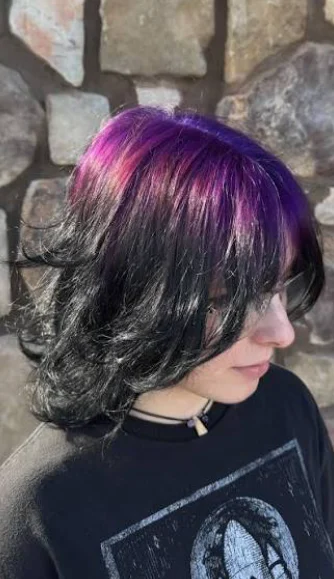
Violet-Magenta Crown Panel on a Layered Bob
Direct sunlight separates the violet base from the brighter magenta ribbons across the crown. The black lower layers keep the short bob clearly two-tone.
The profile view makes the panel depth easy to judge: purple covers the top layers and stops before the black ends, instead of continuing as all-over color.
On a layered bob, the crown section must be wide enough to stay visible after the hair curves and flips. The side view is the most useful reference for mapping that boundary.
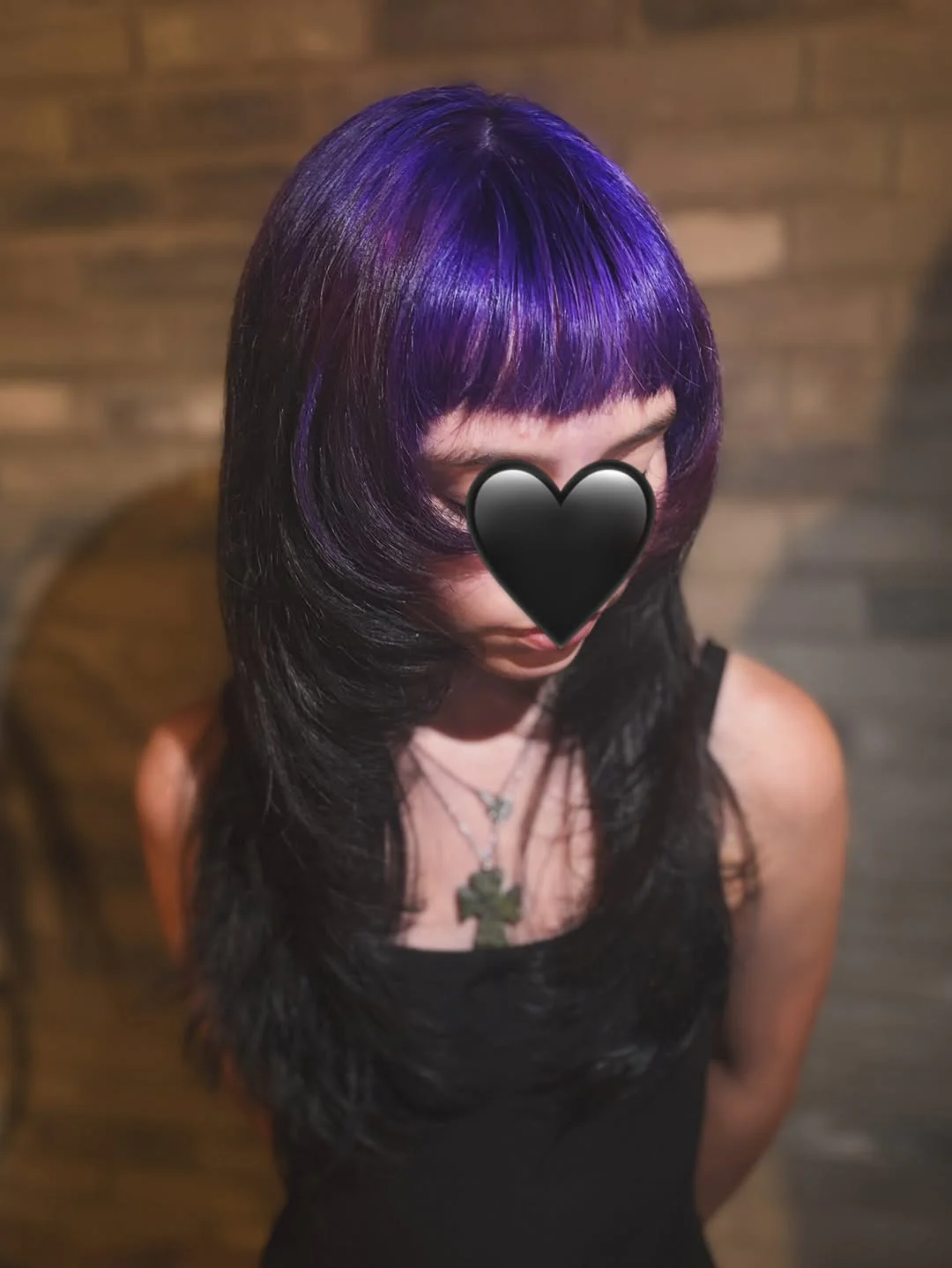
Violet Top Roots Carried Through a Blunt Fringe
A saturated violet panel begins at the crown and continues into the blunt fringe. The black side layers frame the purple rather than letting it take over the full haircut.
This is the strongest fringe example in the set because the purple remains continuous from the top roots into the short bang section.
Bring this angle if the fringe should belong to the root design. A front-only photo would not show how far the violet extends behind the bangs.
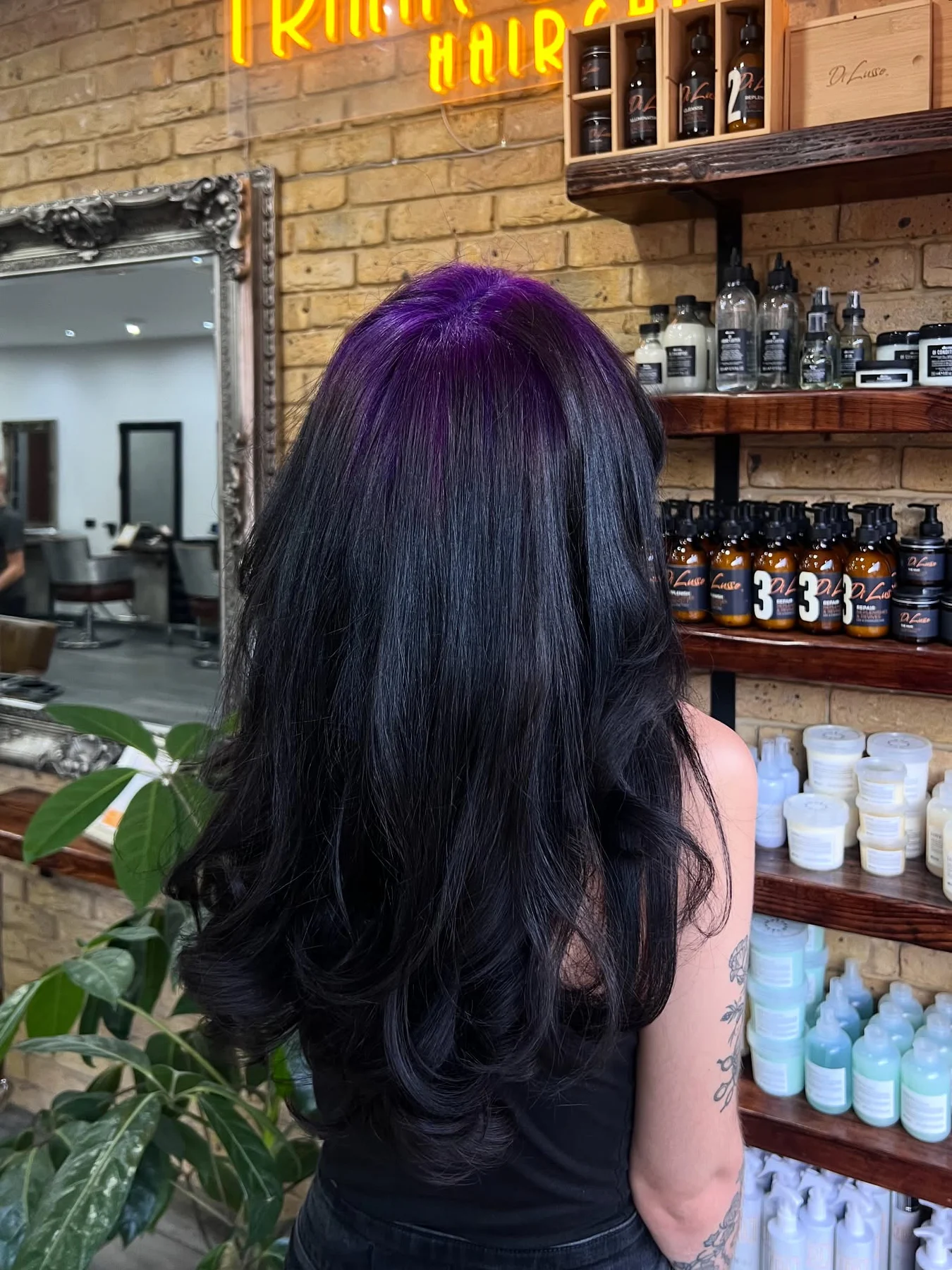
Deep-Violet Crown Over Long Glossy Black Layers
The back view isolates a deep-violet crown panel above long black layers. Its lower edge is visible across the head, which makes the amount of purple coverage unusually easy to assess.
Purple occupies the upper crown but ends well before the mid-lengths. The smooth salon finish exposes a controlled boundary rather than scattered violet streaks.
Use this reference to discuss how far the panel should travel toward the back. A front portrait cannot answer that sectioning question.
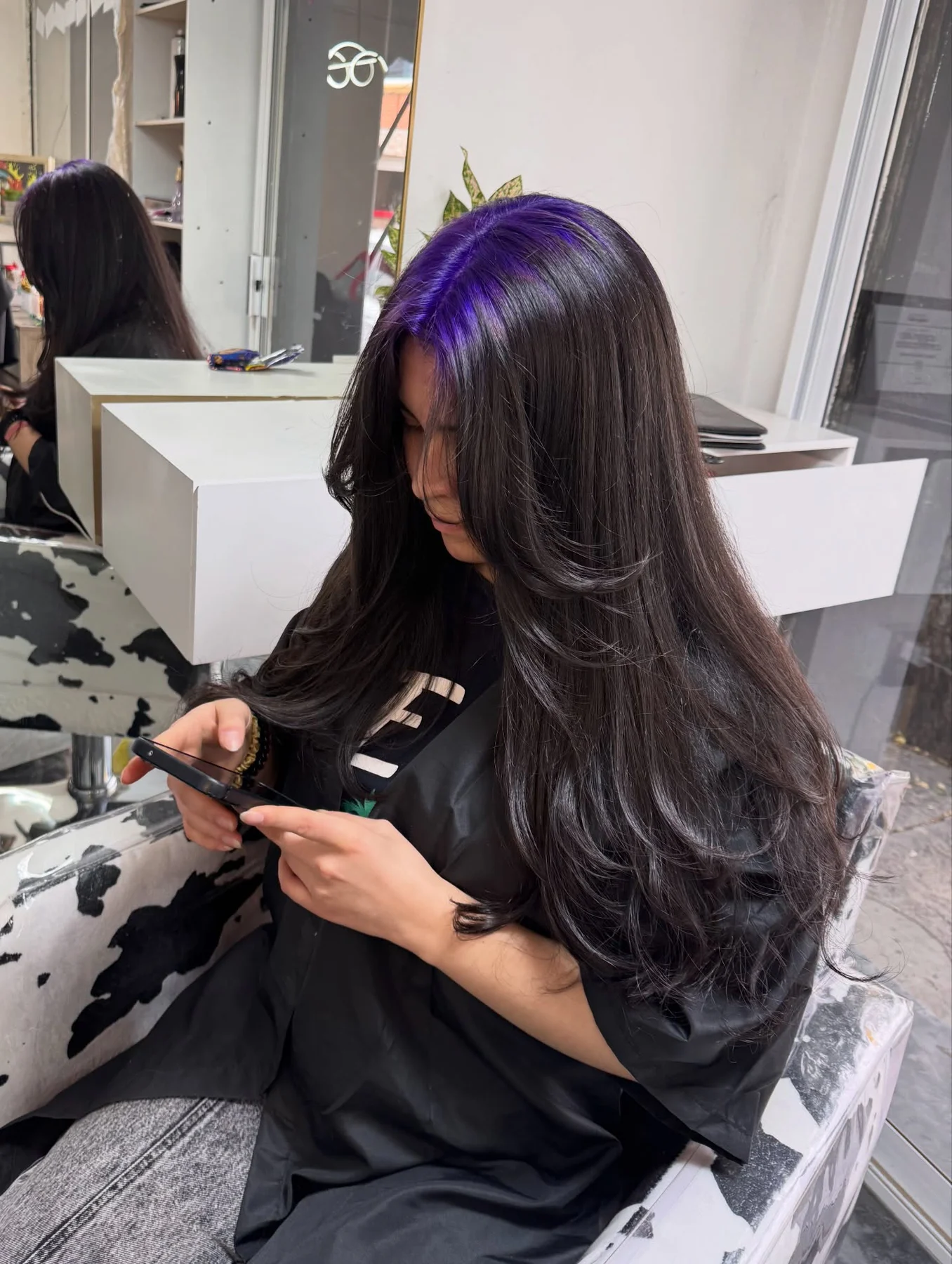
Asymmetric Violet Part Roots on a Very Long Blowout
Vivid violet follows one side of the part and opens across the upper crown, while the opposite side and the very long blowout remain dark.
The uneven distribution is deliberate. The purple is strongest beside the visible part instead of being mirrored across both sides of the head.
This works best when the usual part is mapped before color is applied. Moving the part would hide some of the violet and change the balance of the panel.
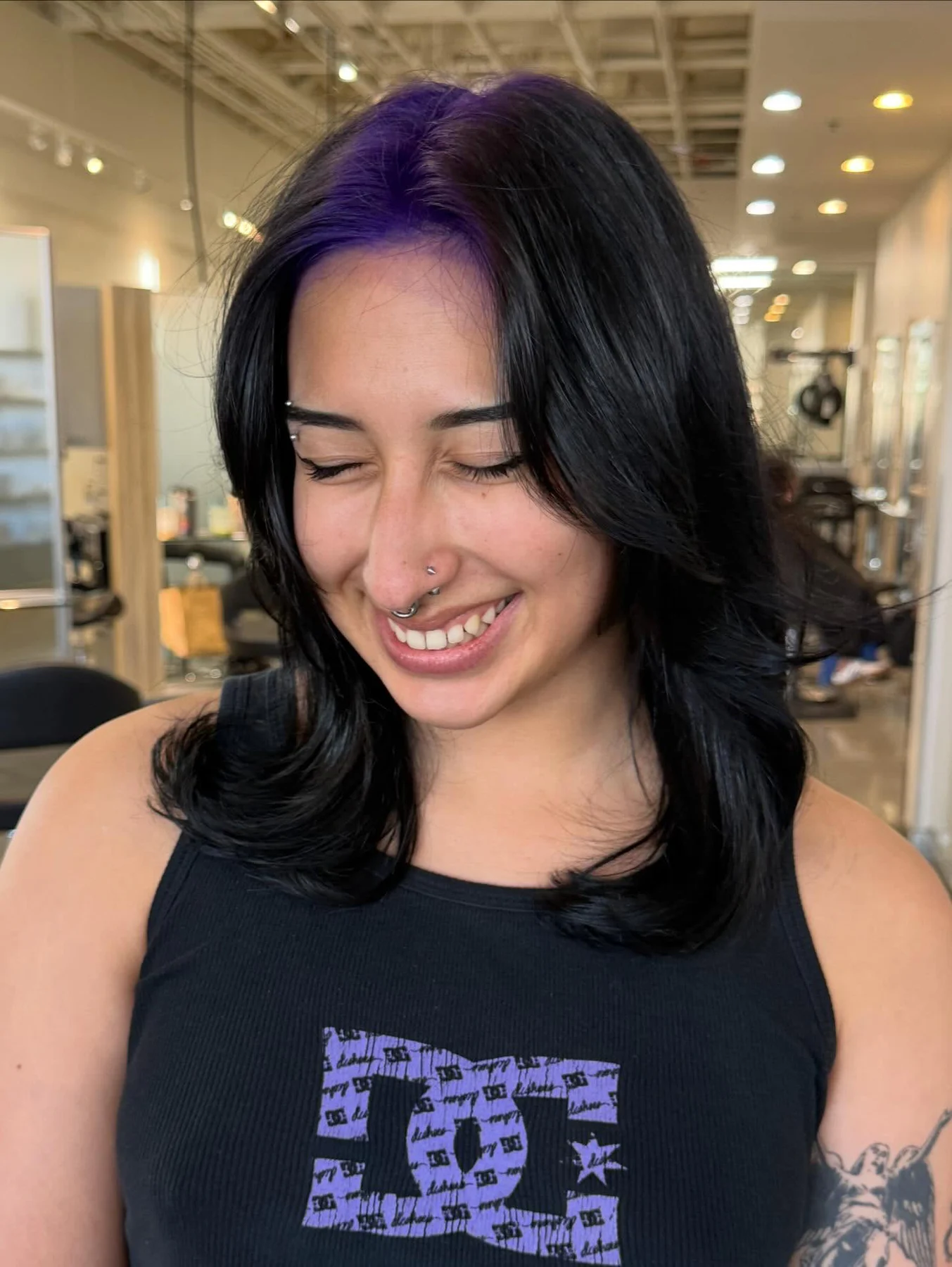
Narrow Deep-Violet Roots at the Front Part
Only a slim section beside the front part is violet. The rest of the center-parted black blowout stays untouched, making this the most limited-coverage example in the group.
A small root section can still register when it sits beside the face and follows the opening of the part. The effect is subtle without looking accidental.
Use this reference for width, not brightness. The narrow map is the defining feature; widening it across the crown would create a different look.
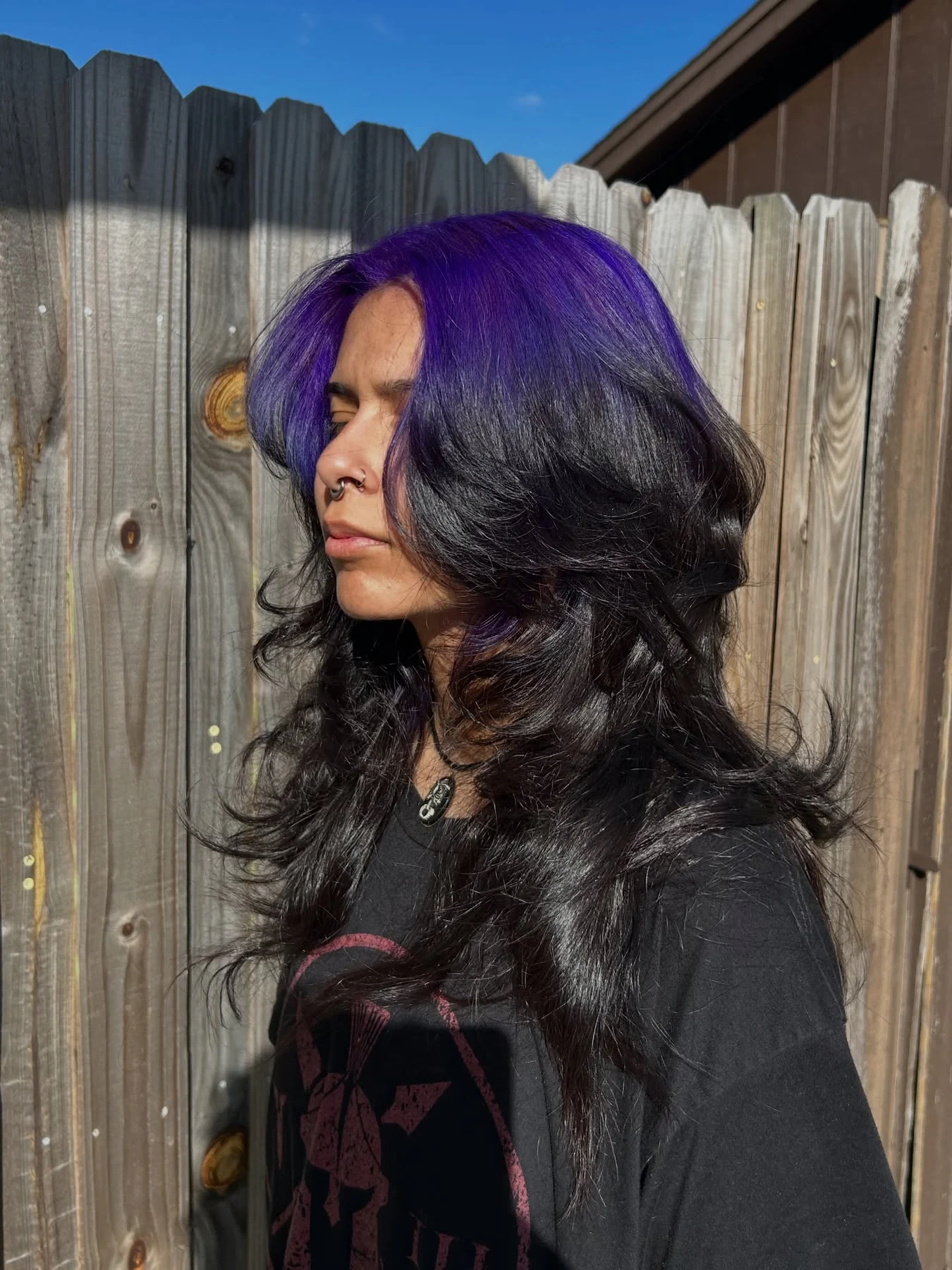
Broad Vivid-Violet Crown on Layered Waves
A broad vivid-violet field sweeps across the front and top of the head, then gives way to black through the lower layers and curled ends.
This is the highest-coverage crown reference of the new set. Outdoor light confirms that the panel reads clearly purple rather than blue-black.
The black perimeter is essential to the two-tone shape. Carrying violet through every layer would remove the ghost-roots contrast shown here.
Choose Depth Before Placement
Deep plum and dark violet can sit closer to black or brunette lengths and create a lower-contrast result. Bright violet needs a clearer canvas to avoid disappearing into a dark base. Lilac is the palest version and usually needs the cleanest lift, so it carries the greatest risk of uneven warmth and rapid tonal change.
If you are deciding between purple and pink, compare the direction of the color. Purple should remain visibly blue-violet or plum; pink leans rose, magenta, or fuchsia. The pink ghost roots guide owns those warmer options.
Place Purple Where Movement Will Reveal it
A center part creates a precise line and works well for straight or softly waved hair. A crown panel gives purple more area and lets curls or layers reveal it in flashes. A fringe or pigtail-root placement connects the color to an alternative haircut, but it also makes trim timing part of maintenance. A peekaboo panel is quieter and may disappear unless the hair is moved or pinned.
The right reference should show the boundary. A front portrait can demonstrate face balance, while a top or side view explains how wide the root section really is.
Decide How The Shade Should Fade
Purple can fade toward pink, smoky violet, blue, or a dull neutral depending on the formula and canvas. Ask which direction is expected before choosing a shade. A blue-violet refresh product can keep a cool result from turning magenta, while a plum formula may be intended to soften warmer.
Wash gently, reduce unnecessary heat, and refresh the existing purple section without pulling color over every length. If the area was lightened, follow the condition limits set during the original service. The maintenance guide provides a broader care framework.
Salon Wording That Identifies The Actual Job
Try:
I want violet or plum concentrated at the root zone, not scattered purple streaks. Please map the section through my normal part and tell me how light the canvas must be for this exact shade. I want the surrounding lengths to stay dark and the edge to remain readable as it grows.
Bring a reference for both the purple tone and the section shape. If the target is lilac, ask for a strand test and a realistic staged result rather than assuming toner can correct an uneven dark canvas.
Common Mismatches
- Choosing red-violet while expecting a cool purple result
- Calling silver-lilac “purple” when the main visual effect is pale grey
- Hiding a narrow panel under a part that is never worn
- Applying vivid purple to dark hair and expecting bright violet without preparation
- Refreshing the whole head when only the root section needs pigment
What to Compare in The Gallery
Look at the amount of visible purple, the relationship to the black base, and whether the panel follows the part, crown, fringe, or side. The captions explain why each image is useful rather than repeating a color label.
For adjacent choices, compare blue ghost roots when you want a cooler result and pink ghost roots when you want more magenta or rose.
Purple Ghost Roots Questions
Do purple ghost roots work on black hair?
Yes. Violet, plum, dark purple, and magenta-purple can look strong on black hair, especially with crown, fringe, or center-part placement. Lilac usually needs more lift.
Is purple easier than blue or green?
Purple can be more forgiving than blue or green because it often fades softer. But light lilac still needs careful lift, and dark purple can become dull if it is not refreshed.
What purple shade is lowest maintenance?
Plum or dark purple is usually easiest because it stays closer to natural depth. Lilac is the highest-maintenance because it needs a lighter base and fades quickly.