Blue ghost roots work best when the color clearly begins at the scalp instead of drifting through the full length like a regular vivid dye job. The strongest versions keep blue close to the part, crown, fringe, curls, or face frame while the rest of the hair stays dark enough to create contrast. That is what makes the look read as intentional root placement instead of faded regrowth or scattered streaks.
Use the visual gallery first, because blue changes considerably depending on the base color, the lift, and how close the shade leans toward silver, aqua, or navy. The examples keep the root area visibly blue rather than teal-heavy. The guide below explains which versions look clearest on dark hair, how to describe them at a consultation, and what to consider as the color fades.
Visual Ideas
Blue Placement Under Straight, Curved, And Broken Lines
These blue ghost roots examples focus on cobalt, ice blue, aqua, electric blue, silver-blue, blue-teal, shags, bobs, bangs, straight hair, and face-framing placements.
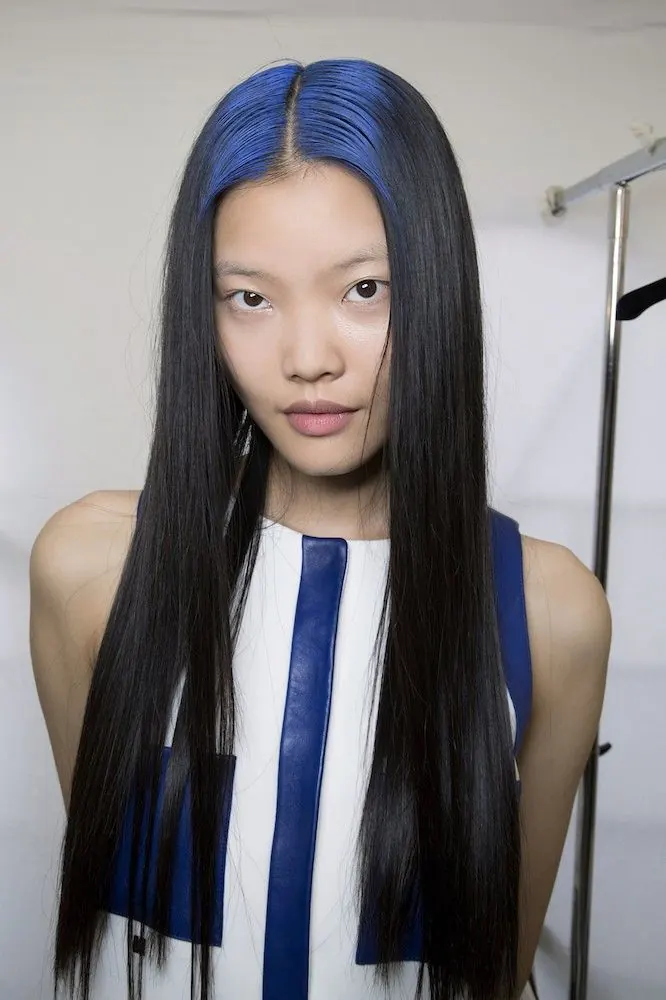
Cobalt Center-Panel Roots
A clean cobalt center panel for people who want blue ghost roots to read immediately from the front.
Long black sleek hair with cobalt blue ghost roots through the center part and front panel.
The straight finish keeps the cobalt placement crisp, graphic, and easy to understand.
Long straight hair, center parts, black hair, and strong cobalt contrast.
Refresh before cobalt fades green or dull, especially if the base lifted yellow.
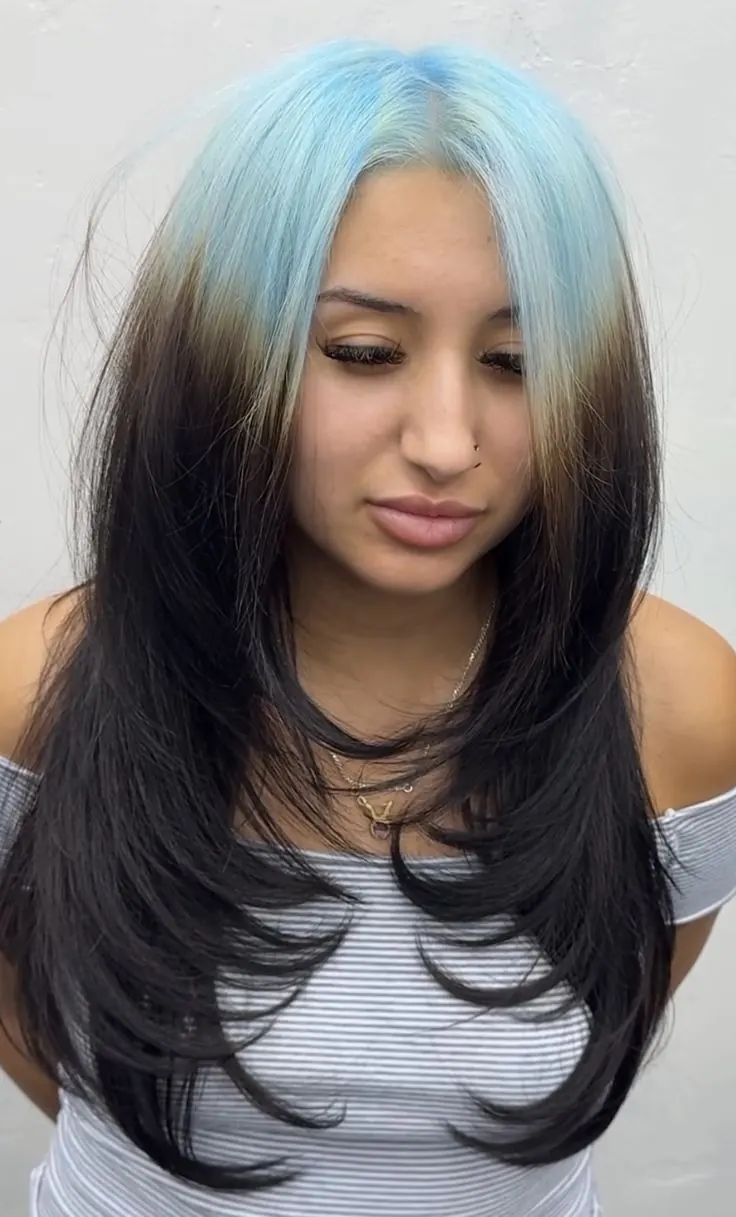
Ice Blue Face Frame
A lighter blue option that feels icy and polished rather than neon.
Long black layered hair with ice blue ghost roots through the face-framing front pieces.
Ice blue brightens the front while still keeping the overall color story cool and sleek.
Long layers, face framing, cool-toned color, and softer blue ghost roots.
Ice blue needs a clean lift; yellow undertones can make it fade minty or green.
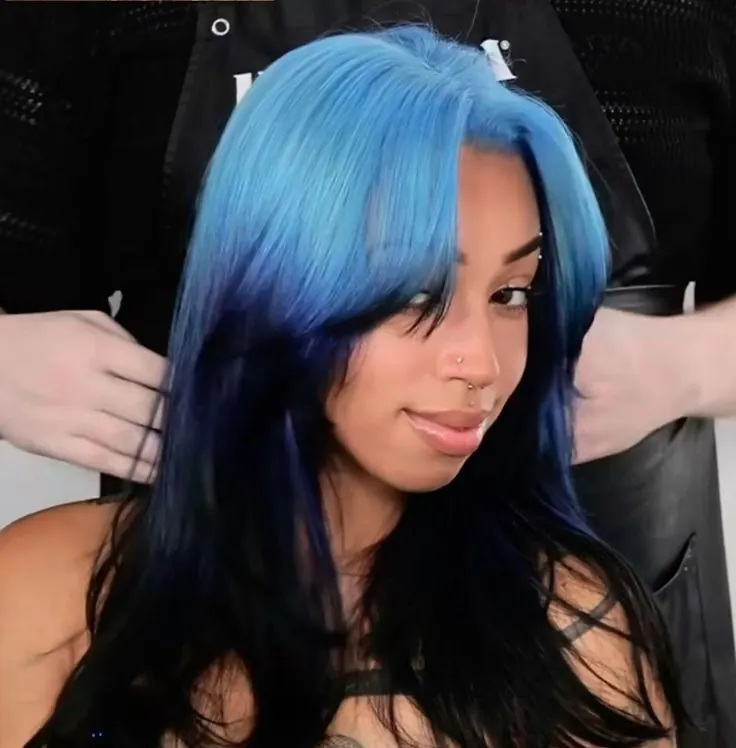
Aqua Blue Ombre Roots
A brighter aqua direction for people who want blue roots with a lighter, almost aquatic finish.
Long black sleek hair with aqua blue ghost roots blended through the top root area.
Aqua gives blue ghost roots more brightness while the black base keeps the look grounded.
Long sleek hair, bright blue color, and people who like blue-green cool tones.
Aqua can fade green, so color refreshes need to happen before the tone gets muddy.
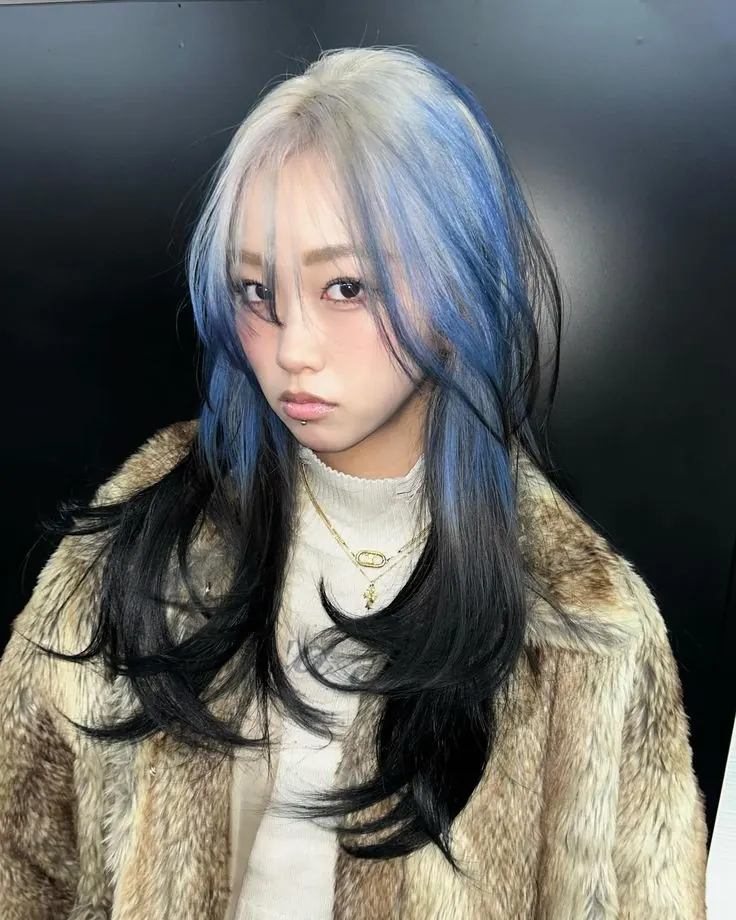
Silver Blue Money Piece
A softer blue option where silver-blue brightens the face without looking neon.
Medium black layered waves with silver blue ghost roots through the money-piece area.
The silver undertone makes blue feel cooler and more wearable on dark hair.
Medium waves, money pieces, softer blue color, and cool-toned styling.
Use cool-toned care carefully; too much toning can make silver-blue look flat.
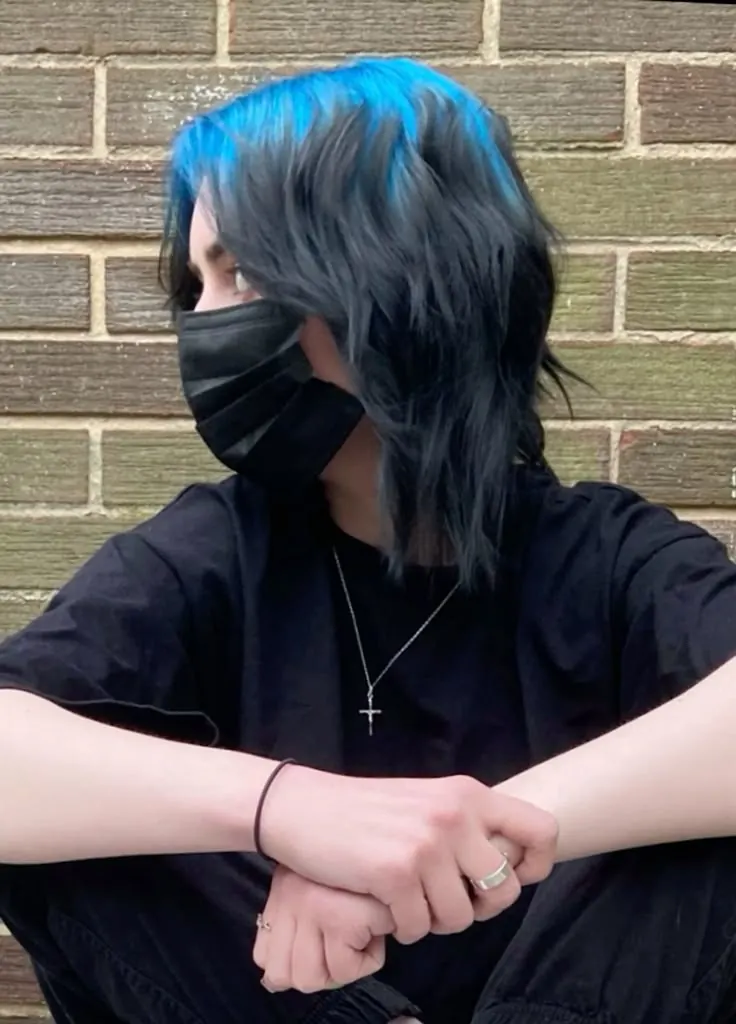
Electric Blue Shag Panel
A vivid shag reference where electric blue flashes through the layers.
Medium black layered shag with electric blue ghost roots through a peekaboo side panel.
The shag layers reveal the blue as the hair moves, so it does not disappear into the dark base.
Layered shags, side panels, alt styling, and high-saturation blue.
Electric blue needs refreshes before it turns dull or greenish.

Electric Blue Short Shag
A short-hair blue placement that keeps the vivid color visible from the front.
Short black shag with electric blue ghost roots and peekaboo panels around the top.
Short layers make even a compact blue placement feel bold and intentional.
Short shags, peekaboo panels, oval faces, and vivid blue root contrast.
Short vivid placements need frequent refreshes because trims change the shape quickly.
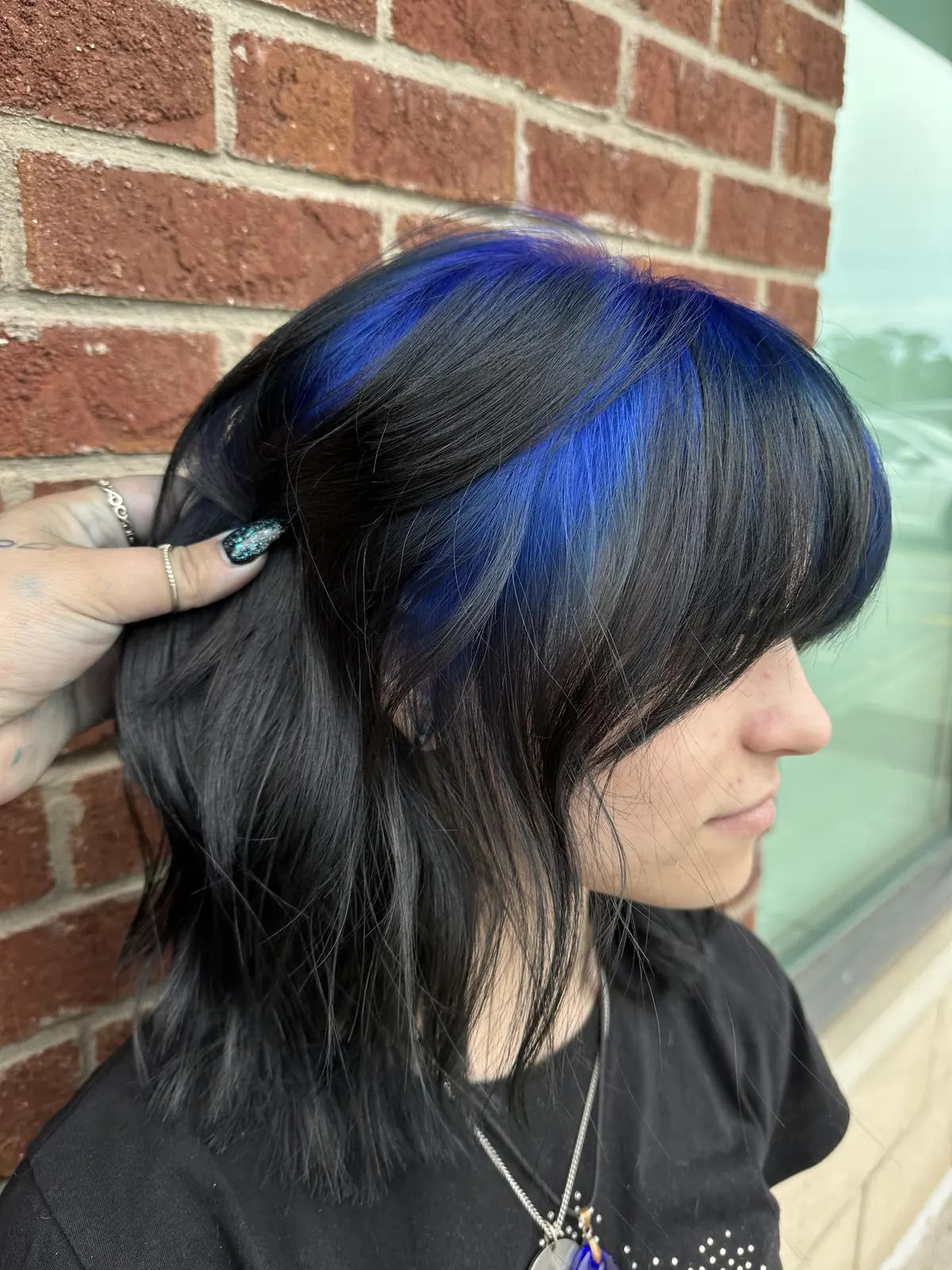
Electric Blue Side-Panel Shag
A brighter electric-blue reference where the color stays visible across the top of the haircut instead of sinking too far underneath.
Medium black layered shag with electric blue ghost roots spread across the top side panel and crown surface.
The blue reads unmistakably blue, and the shag shape keeps the color moving through the visible top layers instead of burying it.
Layered shags, medium lengths, visible top sections, and people who want a brighter blue than cobalt without drifting into teal.
Electric blue fades fastest at the part and crown, so refresh the visible top section before it turns dull or greenish.
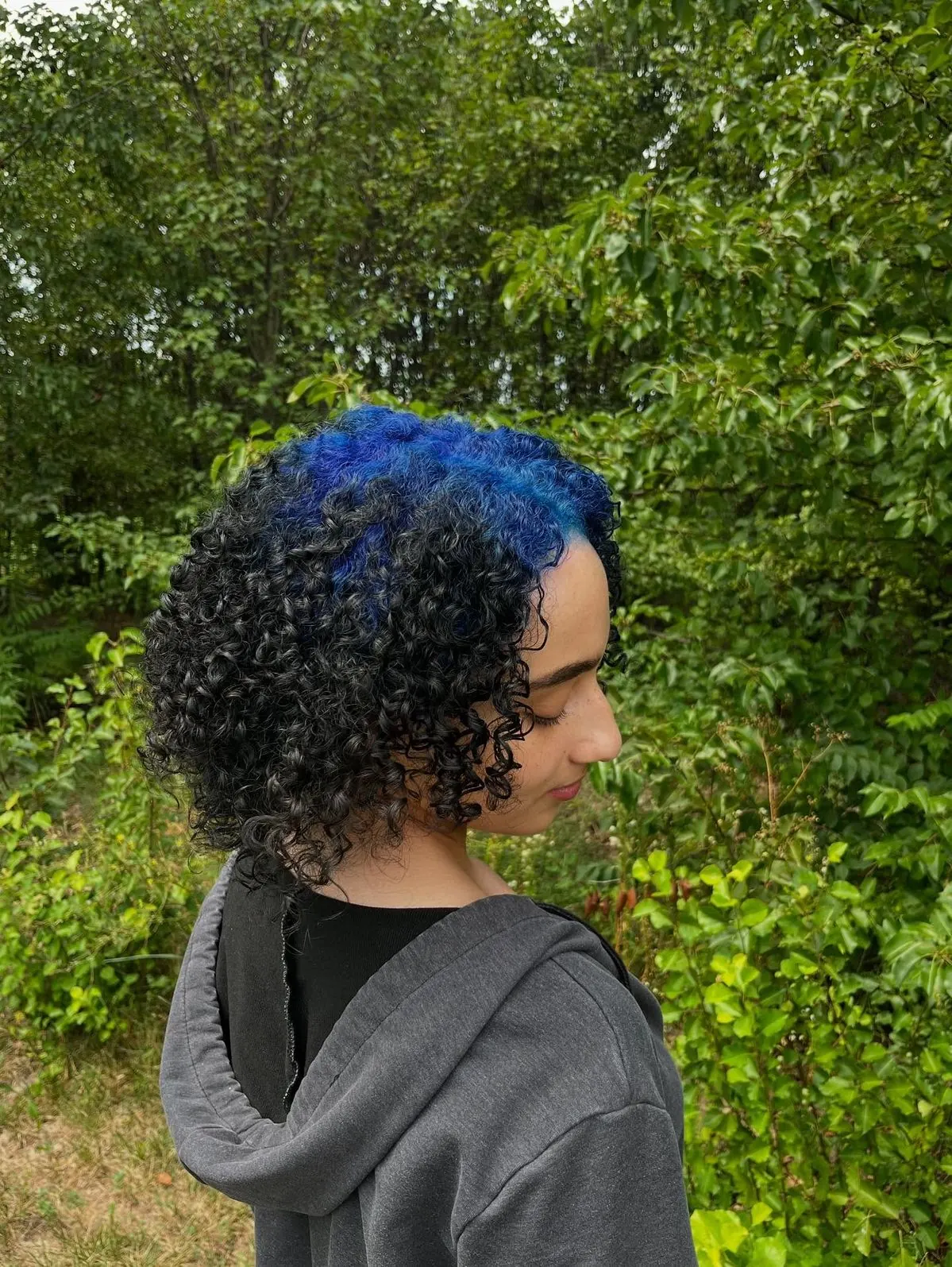
Cobalt Curly Bob Roots
A curly bob reference that proves blue ghost roots do not need straight hair to read clearly when the placement sits high enough on the head.
Short curly bob with cobalt blue ghost roots peeking through the side panel and upper curl line.
Cobalt holds its identity well on dark hair, and the tighter curl pattern breaks up the root panel in a way that still looks intentional.
Curly bobs, side-focused color, people who want a stronger blue than silver-blue, and short hair that needs visible top placement.
Keep curl products lightweight near the root so the cobalt does not disappear under heavy creams or oils.
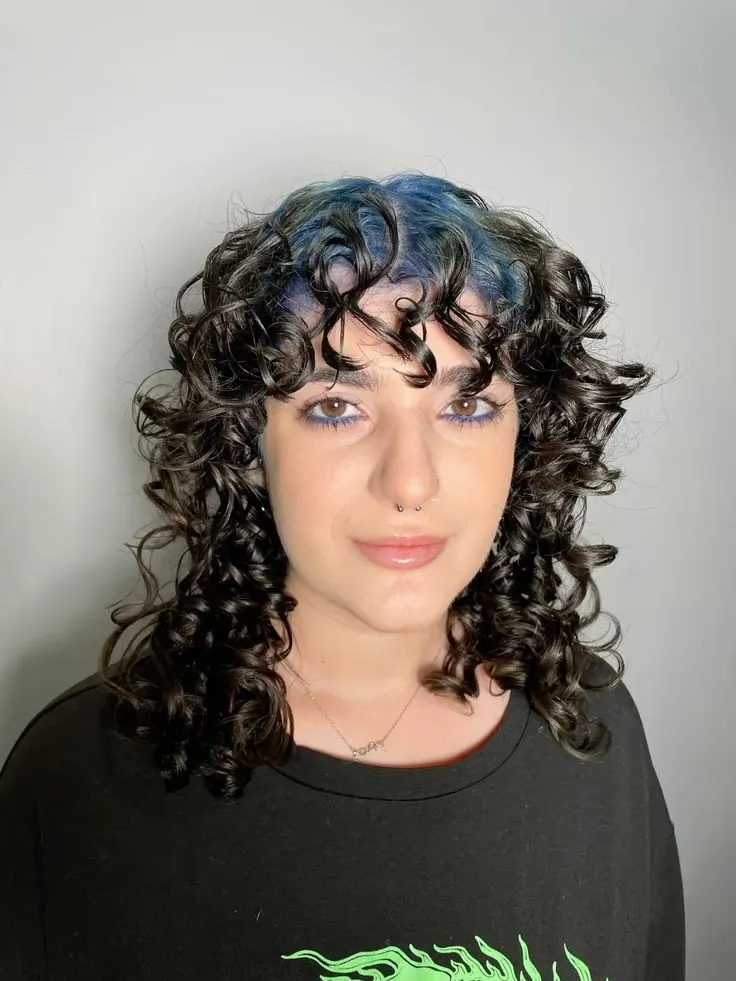
Silver-Blue Curly Fringe
A curly fringe example where silver-blue shows across the bang line and top curls without turning into a full-head pastel color.
Medium curly shag with silver-blue ghost roots concentrated through the fringe, part line, and upper crown curls.
The bangs keep the cool tone visible from the front, and the darker curl lengths keep the root effect looking intentional rather than washed out.
Curly shags, curtain bangs, softer cool blue shades, and people who want the root color to frame the face first.
Fringe areas fade and grow out fastest, so plan refreshes around the bang line instead of waiting for the whole head to need work.

Cobalt Crown-Panel Locs
A locs reference that keeps the blue clearly at the crown so the color still reads as ghost roots instead of random bright loc tips.
Medium black locs with cobalt blue ghost roots placed through the top panel and scalp-adjacent loc roots.
Locs need concentrated placement to read as ghost roots, and cobalt gives enough saturation to stay visible at the scalp on dark hair.
Women with locs, crown-panel color placement, medium-length styles, and people who want a true blue rather than a blue-green cast.
Colored loc roots need gentle scalp cleansing and targeted refreshes so the blue stays vivid without drying the root area.

Blue Body Wave
A blue crown panel sits over long black body waves and stays most visible along the top curve of the head. This broad, smooth placement shows how navy-leaning blue can read clearly without lightening the full length.
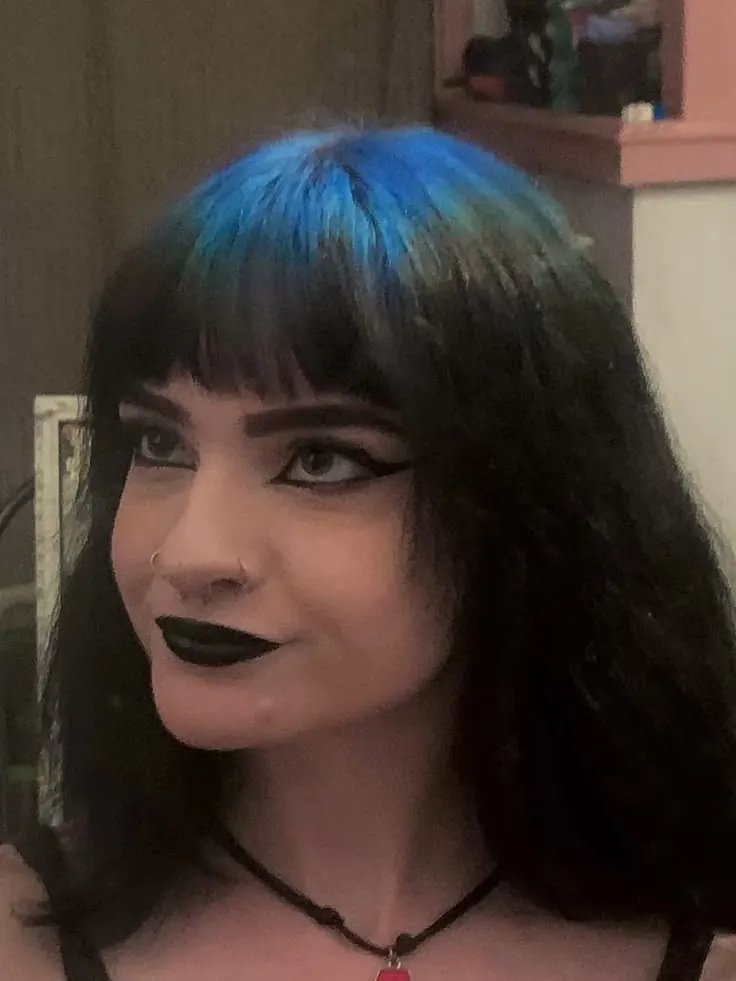
Blue Straight
Blue appears as a cool sheen over the crown and upper fringe of straight black hair. The effect is subtle in indoor light, which makes this a better reference for restrained blue than for an electric result.
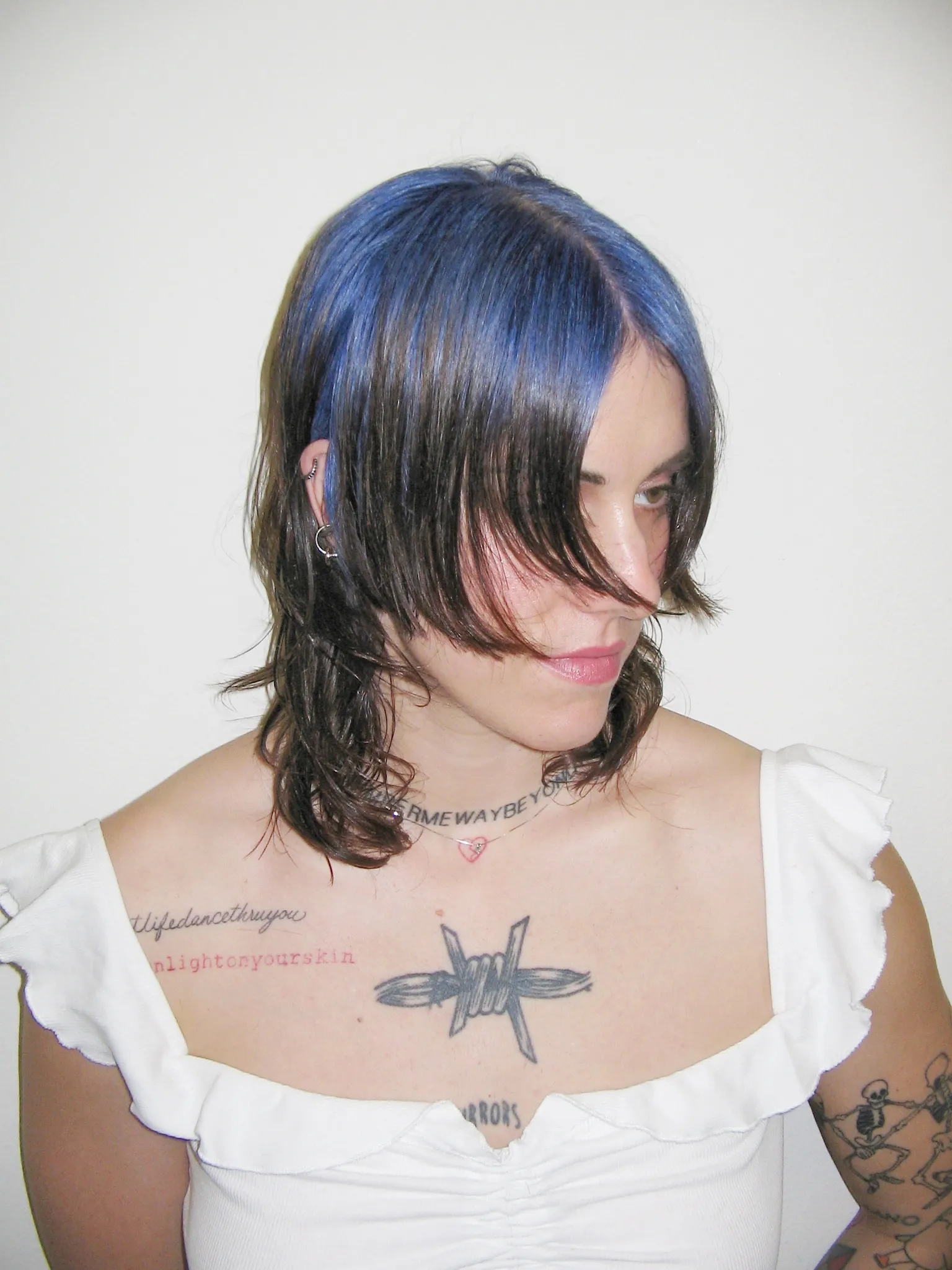
Cobalt Blue Layered Shag
Cobalt-blue slices through one side of the fringe and crown on a layered black shag. The off-center panel creates movement and proves that blue placement does not need to mirror itself on both sides.
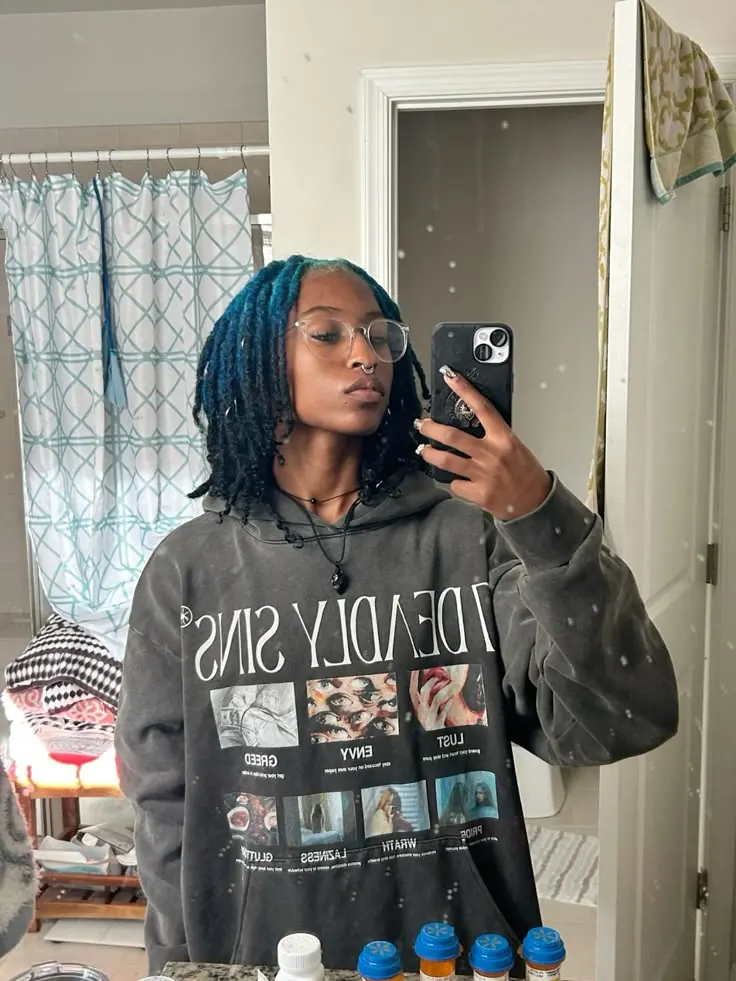
Teal Blue Locs
Teal-blue is visible through the crown of medium locs, with dark lengths preserving most of the silhouette. The mirror view helps show how the colored roots read at normal viewing distance rather than only in a salon close-up.
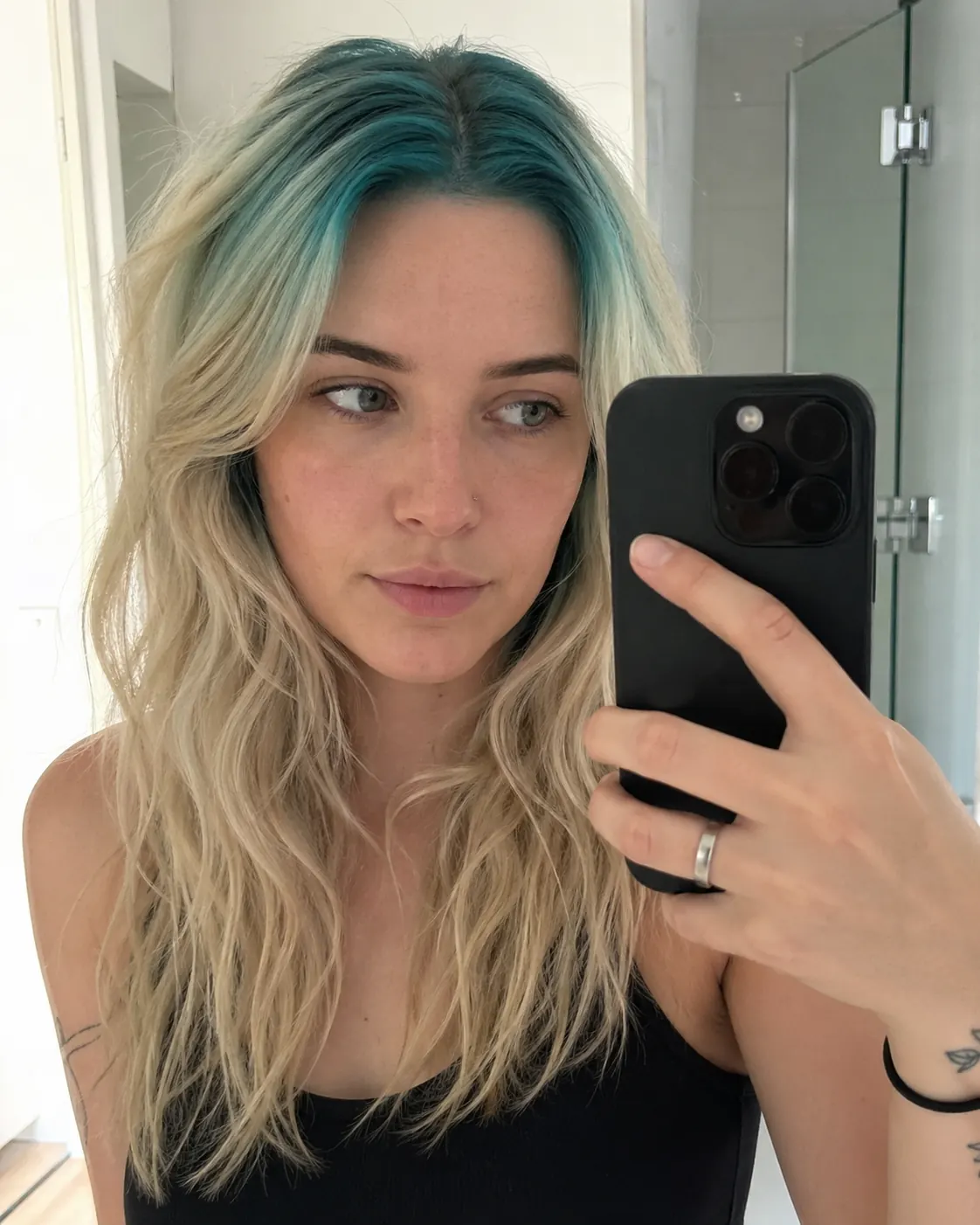
Teal Blue Loose Wave
A muted teal-blue wash follows the center part of long loose waves and fades softly into darker hair. Its green cast is restrained, so this image sits at the boundary between teal and smoky blue.
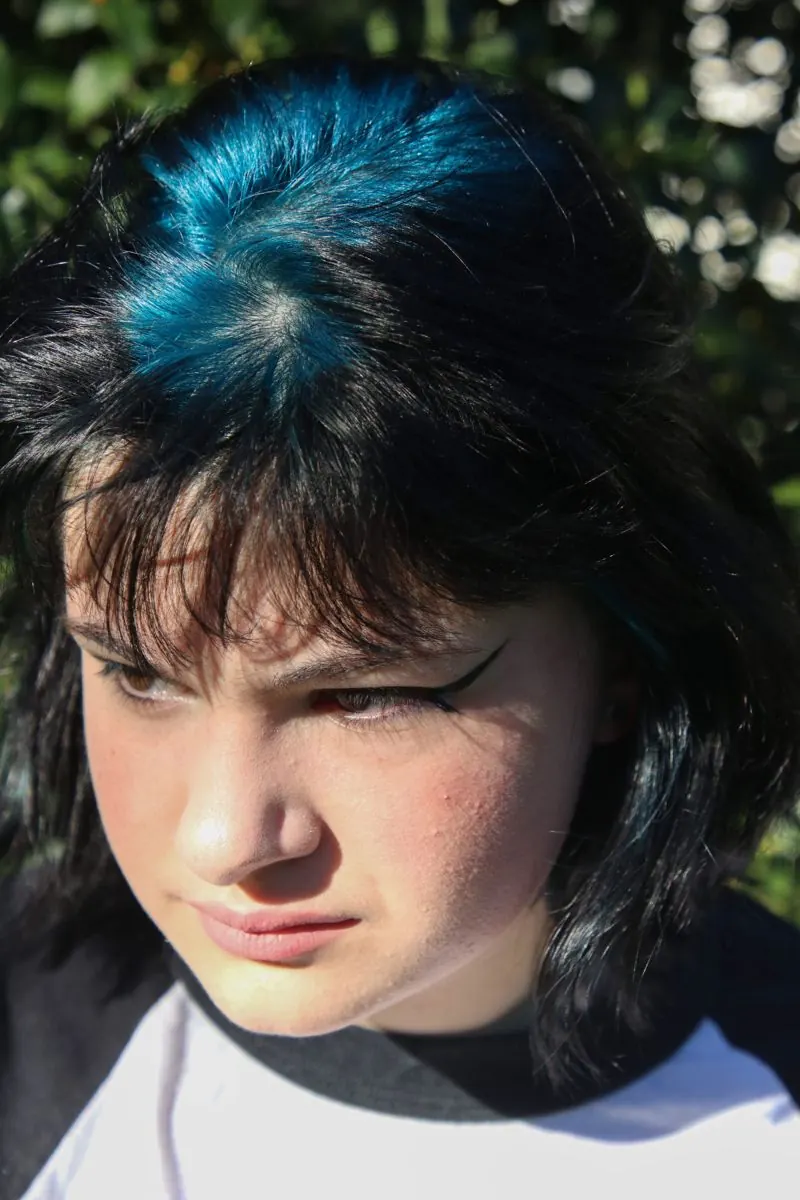
Blue Teal Layered Shag
Daylight reveals a blue-teal crown across a short curly shag, while black curls break up the edge around the forehead. The outdoor light makes the green undertone easier to see than it would be indoors.
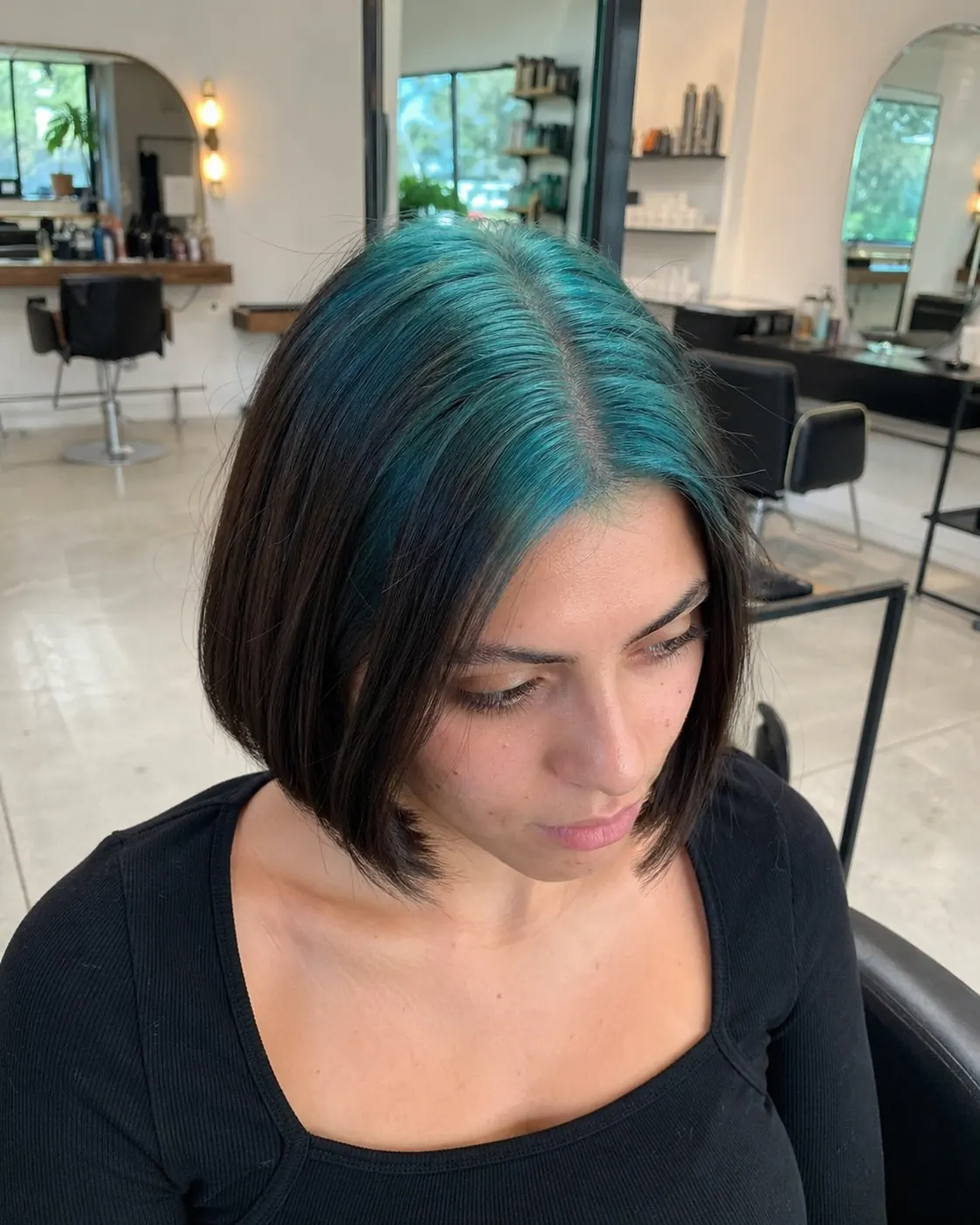
Teal Blue Sleek Bob
The narrow center part on this sleek bob is teal-blue, framed by two even black panels. Its crisp symmetry makes the hue easy to compare with both purer cobalt and greener turquoise examples.
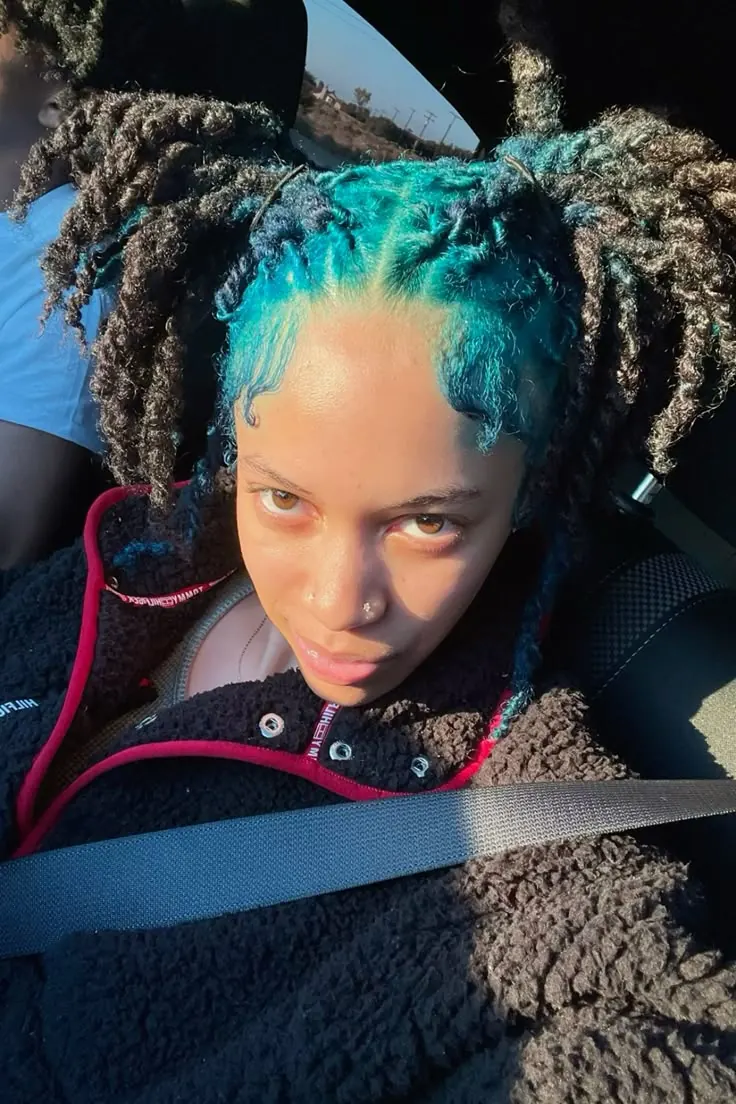
Turquoise Blue Curly Locs
Turquoise occupies the top section between dark curly locs and remains intensely bright in direct car light. The high saturation identifies it as an aqua-leaning blue rather than a smoky teal cast.
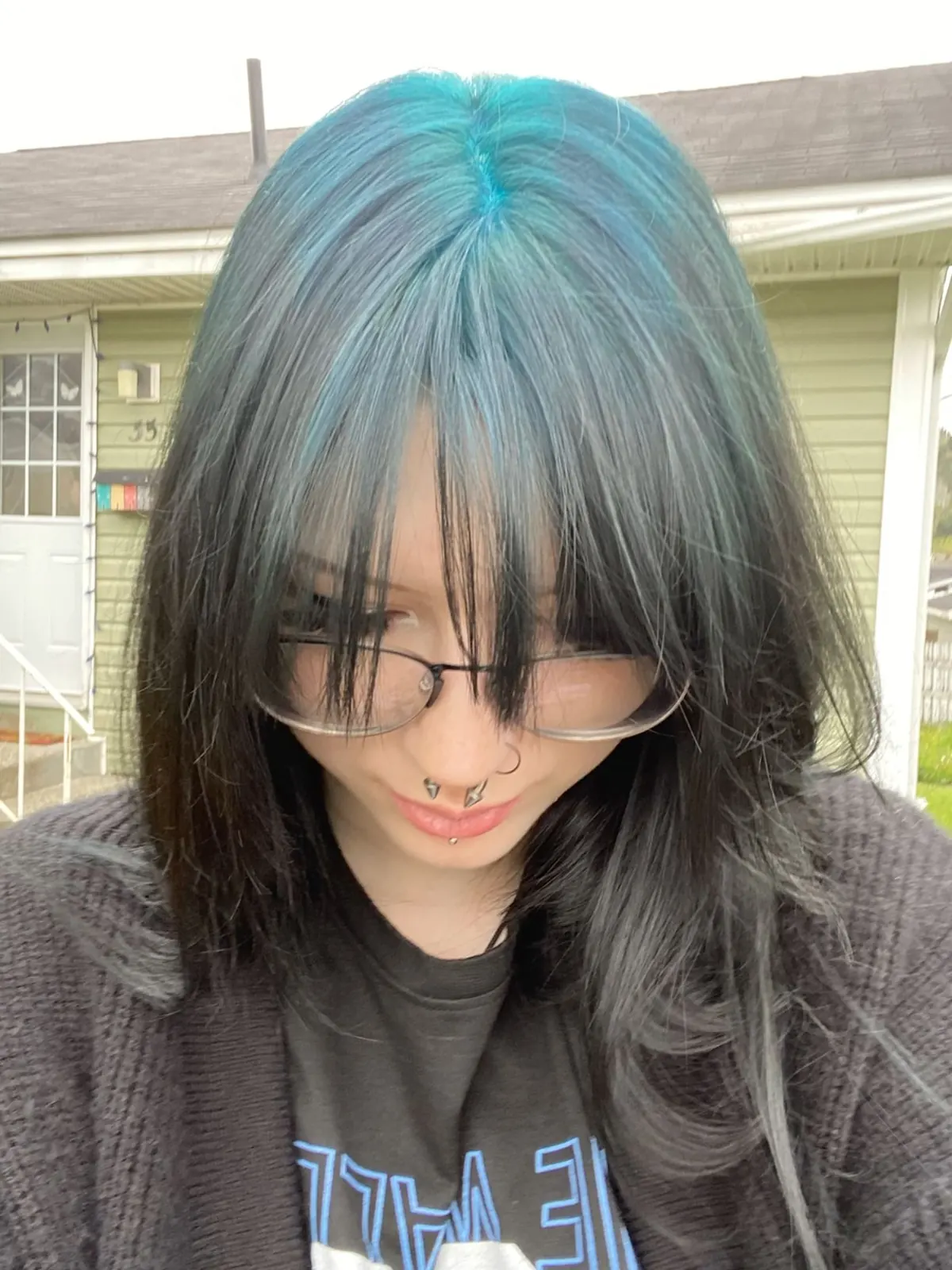
Teal Blue Straight
A teal-blue crown is partially veiled by dark straight layers and long fringe. The result is deliberately subdued: moving the top hair changes how much blue can be seen from the front.
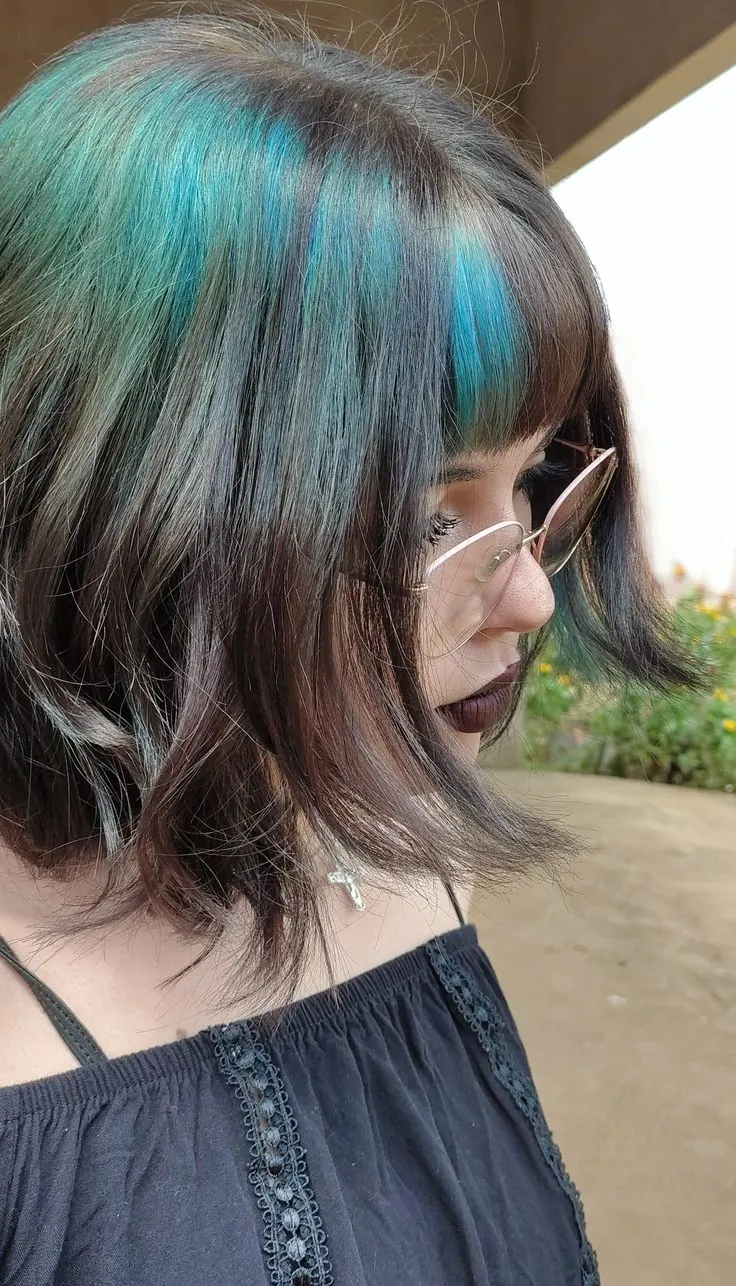
Teal Blue Textured Bob
Teal-blue peeks through the crown and side of a short textured bob, with smoky black ends keeping the shape grounded. The angled view shows the color wrapping beyond the center part without becoming all-over blue.
Cobalt, Ice Blue, Navy, And Electric Blue Need Different Bases
Blue is not one shade, and this is where people often end up disappointed. A lot of reference images online get labeled blue when they are really teal, turquoise, or blue-green, which changes how the final color behaves on dark hair. If you want the result to look clearly blue in person and not just in edited photos, it helps to choose the family before you choose the haircut or the placement.
- Cobalt blue: The clearest blue statement on black hair. It has enough saturation to show in lower light.
- Electric blue: Brighter and more vivid. It works well on shags, short hair, and visible top panels.
- Ice blue: Softer and lighter. It needs a cleaner lift because yellow undertones can turn it minty or green.
- Aqua blue: Brighter and more aquatic. It sits between blue and teal, so it can feel playful without going neon green.
- Silver-blue: Cooler and smokier. It works when you want the color to feel icy rather than saturated.
- Navy or dark blue: More subtle. It works if you want the ghost roots effect without a neon finish.
For most dark hair, cobalt and electric blue are the safest place to start because they stay readable even when the lighting is not ideal. Ice blue and silver-blue look beautiful, but they need a much cleaner pre-lightened base and better maintenance discipline. Aqua can still work if you want a brighter result, but it is the easiest branch of blue to slide toward green if the base underneath is too warm or if the refresh product is too teal. When in doubt, pick the shade that still looks blue in plain indoor light rather than the one that only looks blue in edited salon photos.
Blue Stays Legible When The Root Zone Has a Clear Boundary
Blue needs visibility more than almost any other ghost roots color family. If it is hidden under heavy dark layers, the result can look black from the front and only flash color when the hair moves. That works for peekaboo color, but it is less useful when you want blue to remain visible from the front or top. The placements below tend to keep the shade legible in everyday styling.
- Center-panel blue: Best for long straight hair and clean middle parts.
- Blue money piece: Best if you want the color to show from the front.
- Crown-panel blue: Best for waves, shags, and styles that move, as long as the color is not buried too deep.
- Blue fringe roots: Best for bangs, short hair, bobs, wolf cuts, and alt styling.
- Peekaboo blue roots: Best if you want a hidden reveal but still want color near the scalp.
- Top-curl blue: Best for curls, undercuts, textured top sections, and crown-focused color.
Center panels, money pieces, crown panels, and fringe roots usually give the cleanest read because the viewer can understand the color story in one glance. Short bobs and curly cuts benefit from side panels or top-curl placement because that keeps the blue on the surface instead of disappearing under the denser parts of the haircut. If your inspiration is starting to look more ocean-toned than blue, compare this with teal ghost roots; if the color is pushing more neon than cool, compare green ghost roots.
Cool Contrast is Strongest on Dark Glossy Lengths
Blue is a strong choice if you like vivid color but want something cooler, sleeker, and a little more graphic than red, pink, or green. It suits black hair, dark brunette hair, silver jewelry styling, straight layers, short bobs, shags, curly top sections, and graphic fringe because those shapes all give the root zone room to stay visible. It also tends to feel a little more editorial and less sweet than pink or purple, which is why blue often works well for people who want a sharper alt look without jumping straight to neon green.
Blue can work on curls, short cuts, undercuts, and locs with visible root panels too, but the placement has to live high enough on the head to stay visible after styling cream, curl product, or edge work goes in. That is the part many inspiration boards skip. A technically correct blue ghost roots look is not just about dye color; it is about whether the haircut, texture, and styling routine still let the color show at the scalp once the hair is actually worn in daily life.
- Best on: Black hair, dark brunette hair, straight layers, shags, bobs, undercuts, and crown-focused placements.
- Best if: You want vivid color that feels cool-toned rather than warm or fiery.
- Think twice if: Your lifted base is very yellow and you want clean ice blue, silver-blue, or cobalt.
- Avoid: Blue placed so deep underneath the hair that it cannot be seen from the front or top.
Describe The Blue Before it is Confused With Teal
Ask for the blue family first, then the placement, then the amount of contrast you want against the dark base. That order matters because “blue roots” by itself can send a stylist toward anything from navy gloss to aqua panels, and those are very different services in both lift level and maintenance. If you want the page intent exactly, ask for cobalt, electric blue, ice blue, silver-blue, or navy ghost roots on dark hair, then explain whether you want a center panel, fringe roots, crown panel, money piece, or top-curl placement.
If you want the color to stay bright, ask how light the root zone needs to be before blue is applied and whether the chosen shade is likely to shift green on your current base. Cobalt and electric blue usually need a cleaner lift than navy, while ice blue and silver-blue need the cleanest base of all. It also helps to say clearly that you want the blue to remain visible from the front or top, because that stops the consultation from drifting into hidden peekaboo color that barely reads as ghost roots.
Use wording like:
- "Cobalt blue ghost roots through the center part."
- "Ice blue face-framing roots on black hair."
- "Electric blue root panel on a short shag."
- "Silver-blue money-piece roots with dark lengths left intact."
- "Navy blue roots for a subtler blue-black effect."
Bring two or three photos that all show the same type of blue family instead of mixing cobalt, teal, and silver-blue in one consultation. That alone prevents a lot of mismatch.
Refresh Blue Before The Base Warmth Starts to Show Through
DIY blue ghost roots only make sense when the root zone is small, the haircut is easy to section, and the hair is already light enough for the shade you want. If the hair still needs serious lifting, if the front hairline is fragile, or if you are aiming for ice blue or silver-blue on very dark roots, salon work is the safer route because the lifting stage is what usually creates banding, green fade, and broken front sections. Blue root placement looks simple in photos, but the shape has to stay tight if you want it to read like ghost roots instead of random color.
For DIY planning, match the products to the actual blue family. Cobalt and electric blue usually need a saturated semi-permanent dye, a precise tint brush, tail comb, clips, gloves, and a color-safe shampoo that does not strip vivid pigment too fast. Ice blue and silver-blue often need bond care, a cleaner pre-lightened base, and a controlled cool-tone maintenance product rather than constant purple shampoo. Aqua needs a refresh mask before it turns swampy, while navy is forgiving enough that it can sometimes be maintained with glossier, darker blue products instead of high-saturation vivid dye every time.
Avoid a Yellow Foundation if You Want Clean Cobalt
Blue can turn greenish when it fades over a yellow base, which is why the lifting stage matters almost as much as the dye itself. A lot of disappointing blue references are really consultation problems: the shade family was vague, the root zone was not lifted cleanly enough, or the placement ended up too hidden under dark layers. When that happens, the image may get labeled “blue ghost roots,” but the result on a real person reads dull, muddy, or invisible.
Other common mistakes include:
- Choosing ice blue when the hair cannot lift light enough.
- Using random blue streaks instead of a clear root-focused placement.
- Letting electric blue fade until it looks muddy.
- Using heavy styling product over short blue roots until the color disappears.
- Refreshing blue with the wrong pigment and pushing the shade too green, grey, or muddy.
The Green Component is What Moves Blue Into Teal
Blue ghost roots should read clearly blue first: cobalt, electric, navy, ice, aqua, or silver-blue. Teal ghost roots lean more green-blue and usually feel deeper, moodier, or more ocean-toned on dark hair. Compare the root section in ordinary lighting: if green remains a defining part of the shade, teal is the more accurate family.
Choose blue if you want a cooler, sharper color statement that still reads blue in plain lighting. Choose teal ghost roots if you want the color to feel softer, darker, or more blue-green from the beginning. If you keep having to explain that a look is “kind of blue,” it probably belongs in the teal family instead of the blue family.
Watch The Fade For Green, Grey, or Muddy Areas
Blue can fade greenish if the base underneath is yellow, so maintenance starts before the first wash. A clean lift, the right shade family, and a realistic refresh plan matter more than chasing the color after it already looks muddy. Cobalt and electric blue usually need pigment refreshes sooner, while silver-blue and ice blue need cleaner toning and bond care because a small amount of warmth can throw the whole shade off.
Use color-safe shampoo, cooler water, heat protection, and the right refresh product for your specific blue. Refresh vivid blue before it looks dull, and ask whether your shade needs cobalt, aqua, navy, silver-blue, or ice-blue maintenance products instead of treating all blue hair the same. For product direction before or after coloring, read ghost roots hair dye.
Blue Ghost Roots FAQ
Do blue ghost roots fade green?
They can. Blue over a yellow or warm base often fades greenish, so the lightening stage, toner choice, color-safe shampoo, and timely blue refreshes matter.
What blue shade works best on black hair?
Cobalt and electric blue show the clearest contrast on black hair. Ice blue needs a cleaner lift, while teal-blue and navy are more forgiving if you want a deeper result.
Are blue ghost roots good for short hair?
Yes. Blue works well on short shags, bobs, undercuts, curls, and textured tops because the color can sit near the crown, fringe, or part where it stays visible.