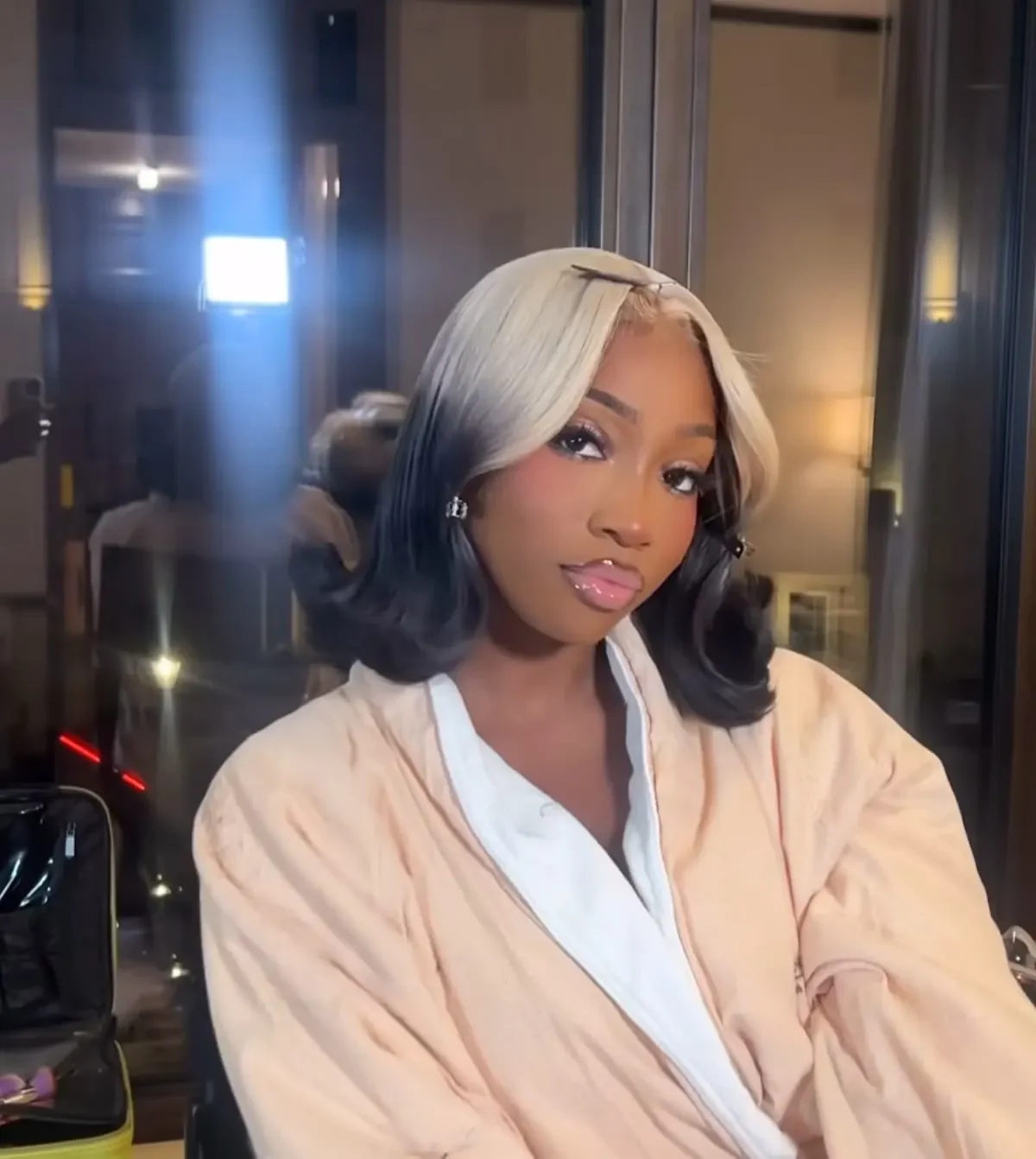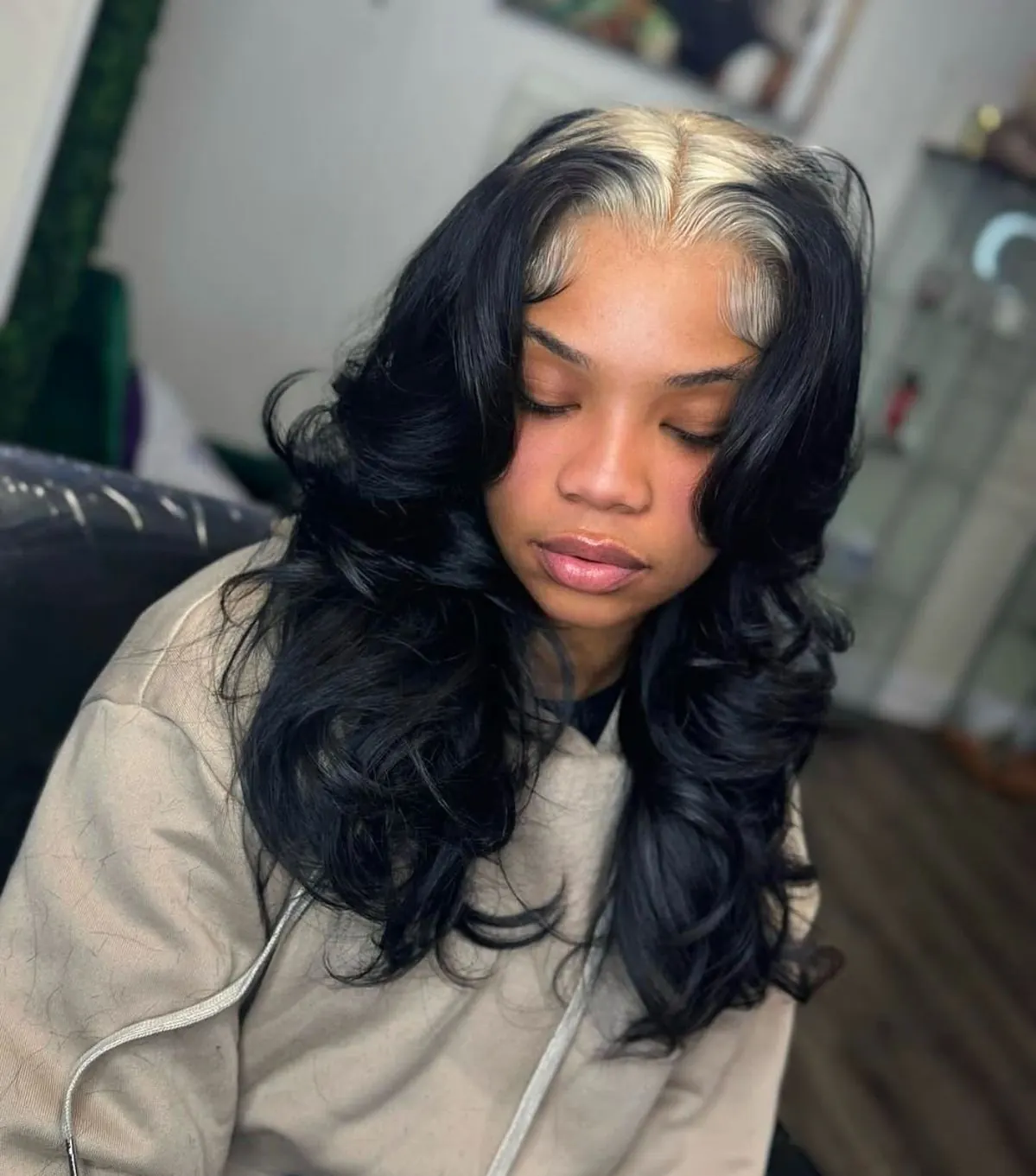
Choosing ghost roots hair dye starts with one practical question: are you depositing color onto hair that is already light enough, or are you trying to make the root zone lighter first? Vivid shades like red, blue, green, pink, purple, and teal are usually semi-permanent colors placed after the root area has enough lift. Blonde, white, silver, icy blue, and pastel ghost roots are different because they usually need lightener first, then toner or gloss to control the final shade.
The mistake is treating every ghost roots idea like a box-dye job. Dye can deposit pigment, but it cannot turn black or dark brown hair into bright cobalt, silver-white, pastel pink, or neon green on its own. A good plan separates the job into three parts: placement, lift level, and final tone. Once those are clear, the product choice becomes much easier.
Visual Ideas
Match The Dye Family to The Result You Can Actually See
These examples show how different dye families read at the root zone, from vivid red and pink to blue, green, blonde, silver, and softer brunette placement.
Copper Orange Wavy Bob
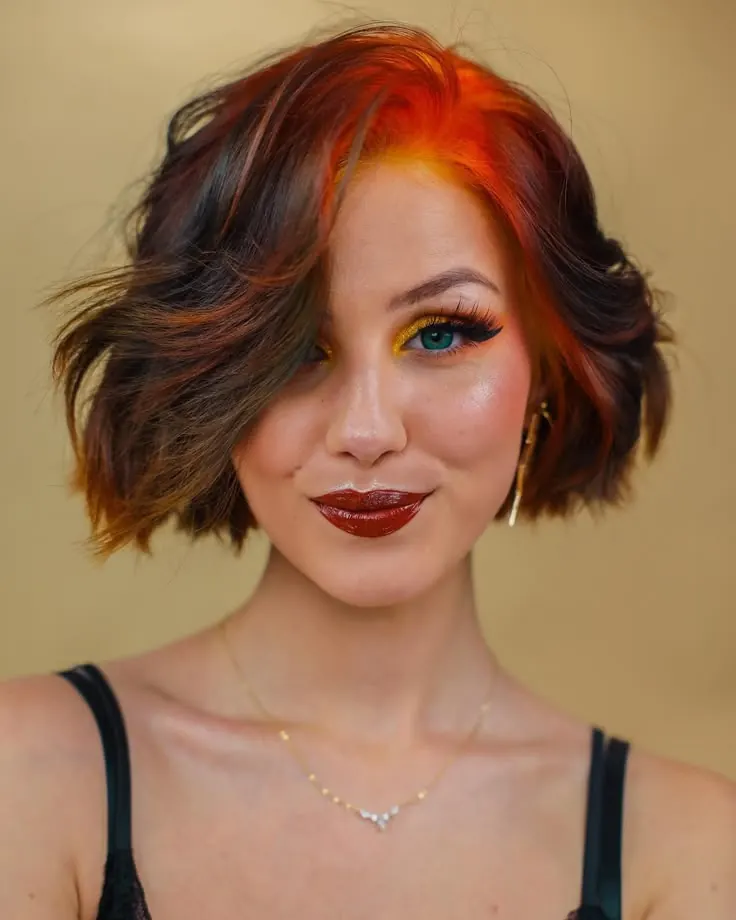
Copper-orange sweeps through the front of an auburn wavy bob, creating warmth without a severe light-dark split. For a dye consultation, this is a tonal lift rather than a neon target, so the starting brown matters to the result.
Ash Blonde Body Wave
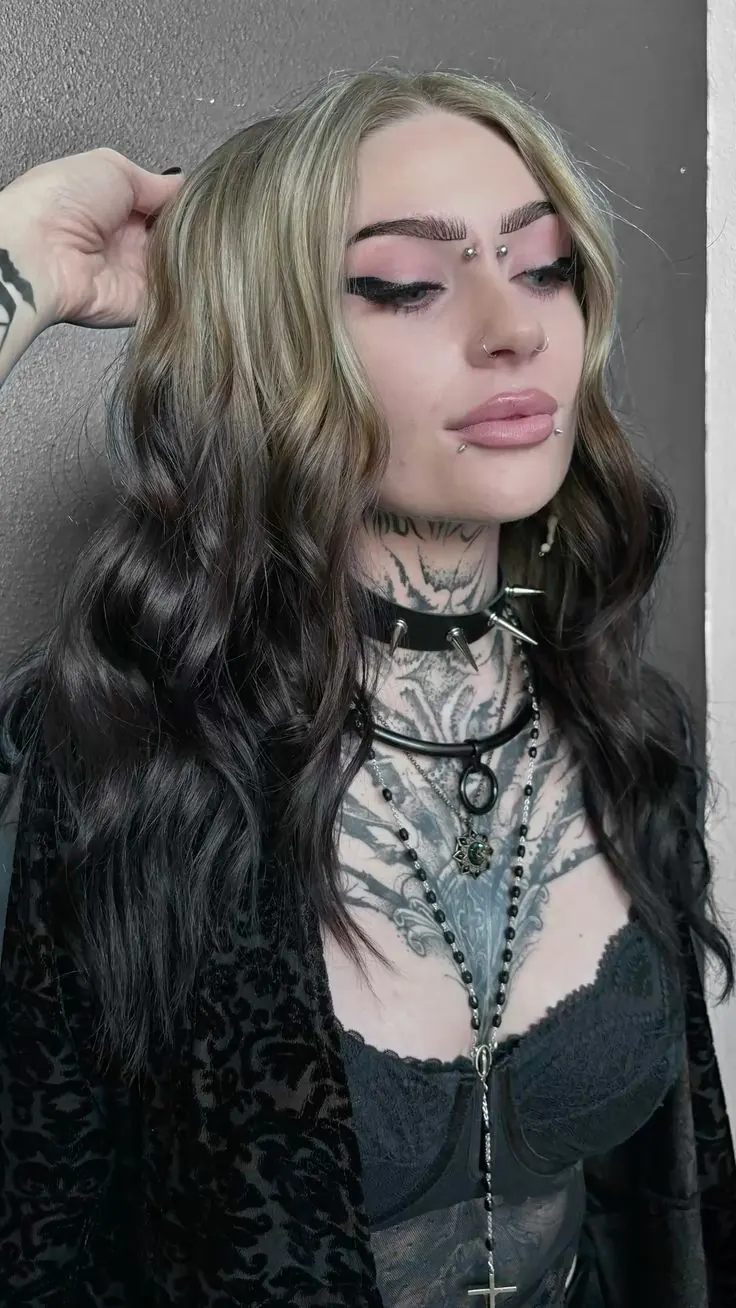
Ash-blonde money pieces are lifted much lighter than the black body waves around them. The pale, cool finish calls for clean pre-lightening at the front and toner control rather than simply applying blonde dye over dark roots.

Blue Body Wave
Deep blue covers a wide crown above glossy black waves. Its navy depth can tolerate a less extreme lift than ice blue, but the broad panel still requires even saturation from the part to its curved edge.
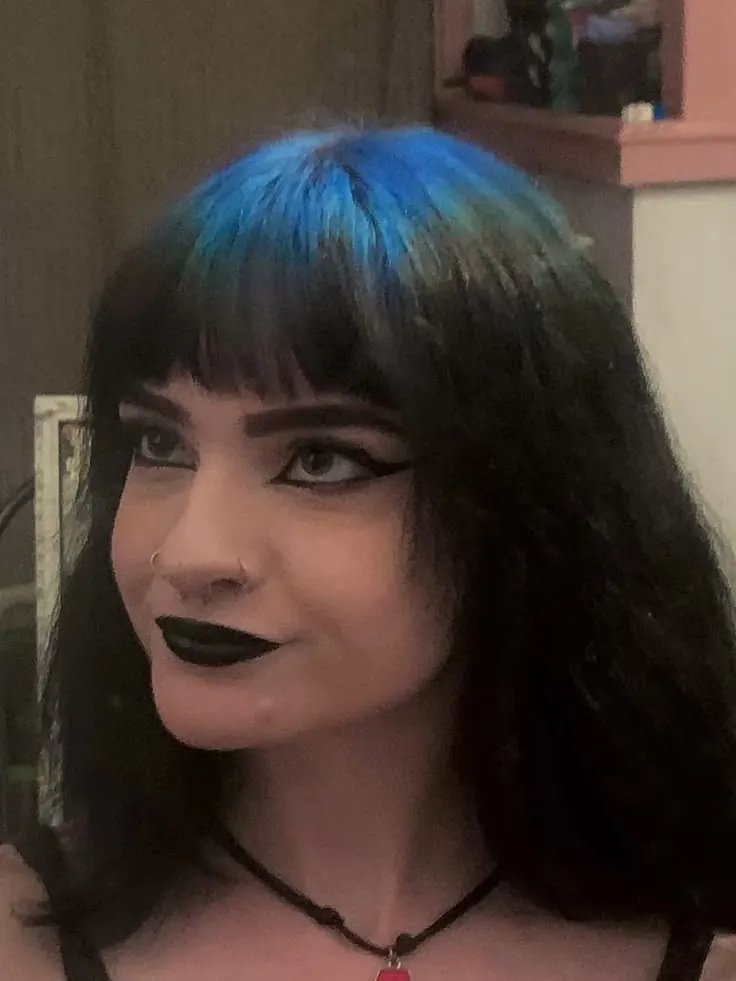
Blue Straight
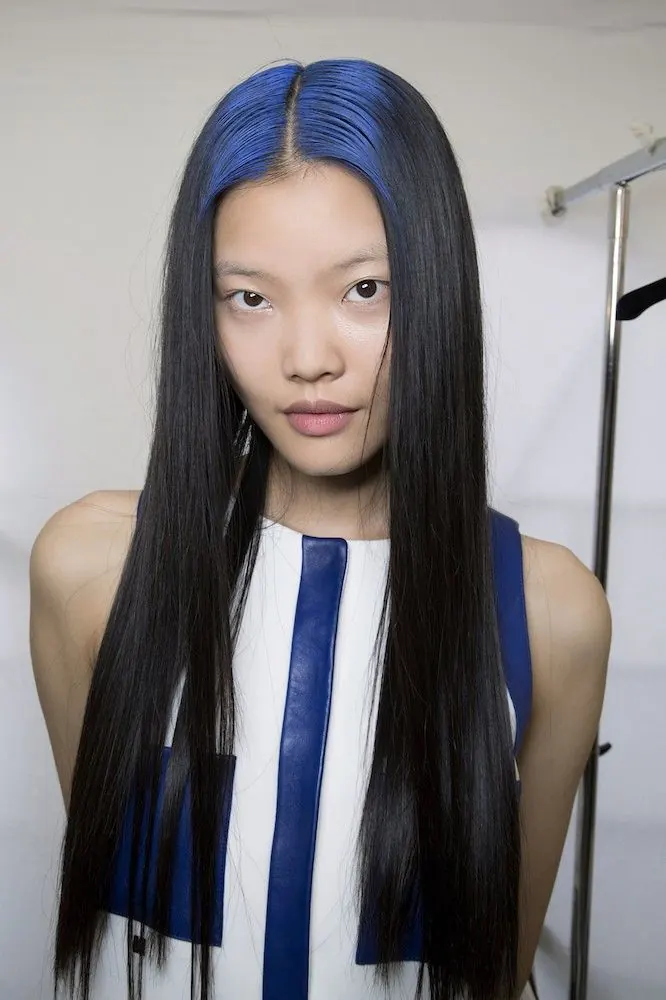
A restrained blue sheen sits over straight black crown hair and the upper fringe. This is the kind of result where dye choice and lighting both matter: an overly dark formula could disappear completely against the base.
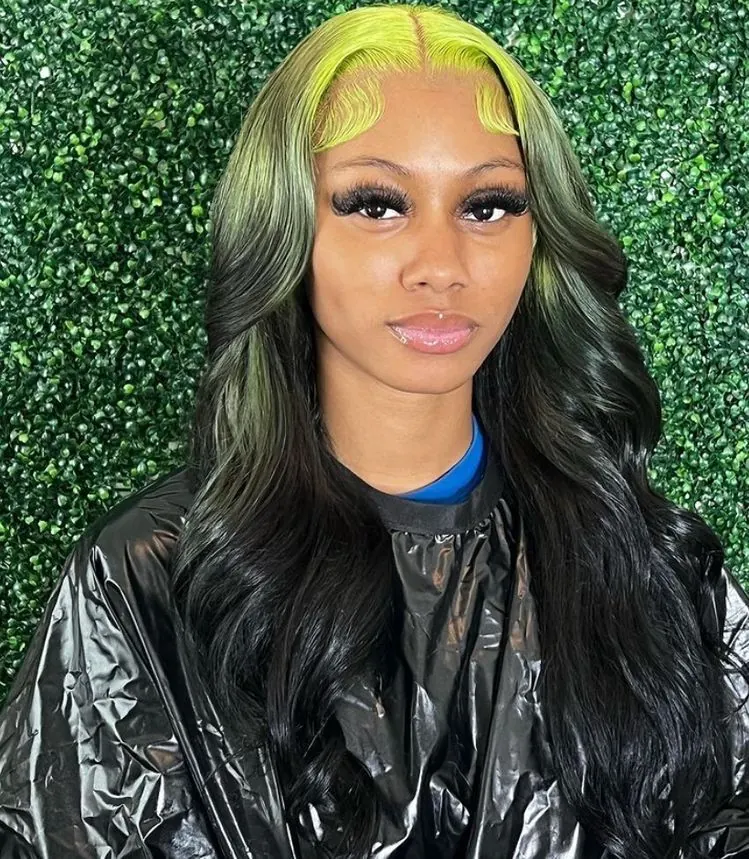
Chartreuse Lime Glam Wave
Chartreuse-lime frames the face in two high-impact panels against long black waves. The yellow-green clarity indicates a very light, even canvas; residual warmth or patchy lift would alter this shade quickly.

Copper Red Wavy Shag
Copper-red fills the crown and micro fringe of a wavy black shag. Since the warm color sits beside very dark lengths, the consultation should separate the area that needs lifting from the black hair that must remain protected.
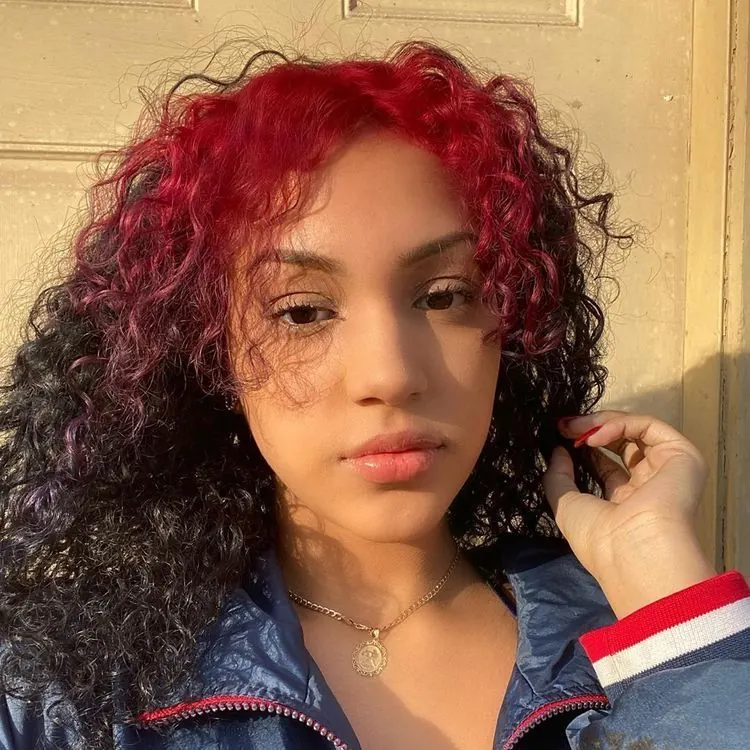
Crimson Red Curly
Crimson red is concentrated across the top of long black curls, with individual ringlets carrying color past the root edge. Saturating the curved curl sections evenly is more important here than producing a ruler-straight boundary.
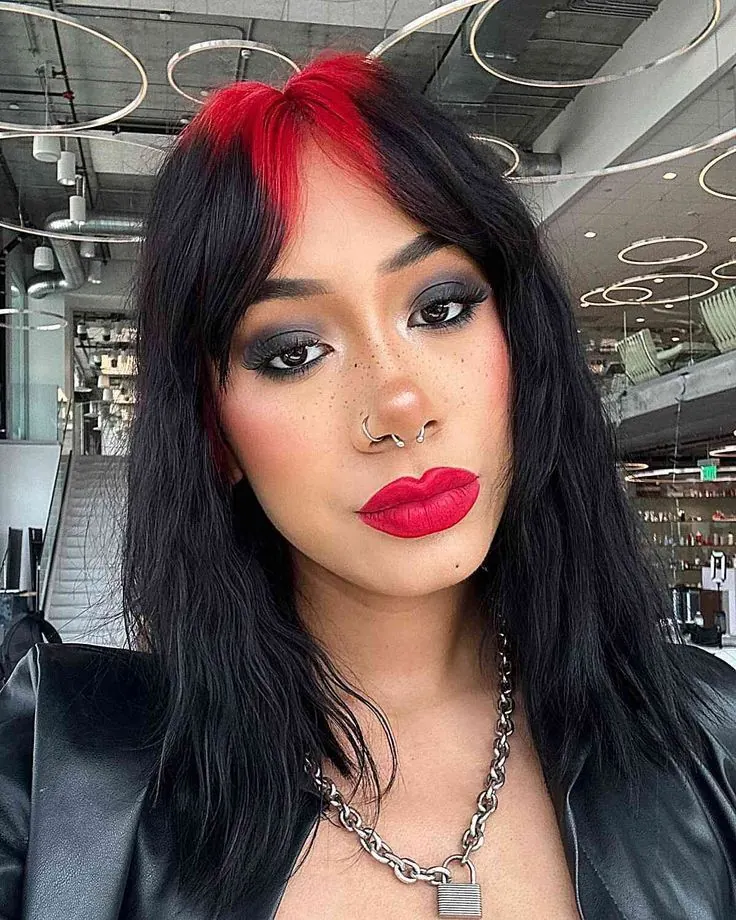
Crimson Red Sleek Straight
A vivid crimson center stripe runs through sleek black hair and opens slightly toward the hairline. The smooth finish exposes every variation in tone, making careful sectioning and complete dye saturation essential.

Crimson Red Straight Bob
Crimson red covers the split root area of a short black bob styled into two small buns. The color must be planned for both loose and tied styling because the buns reveal more of the dyed top panel.
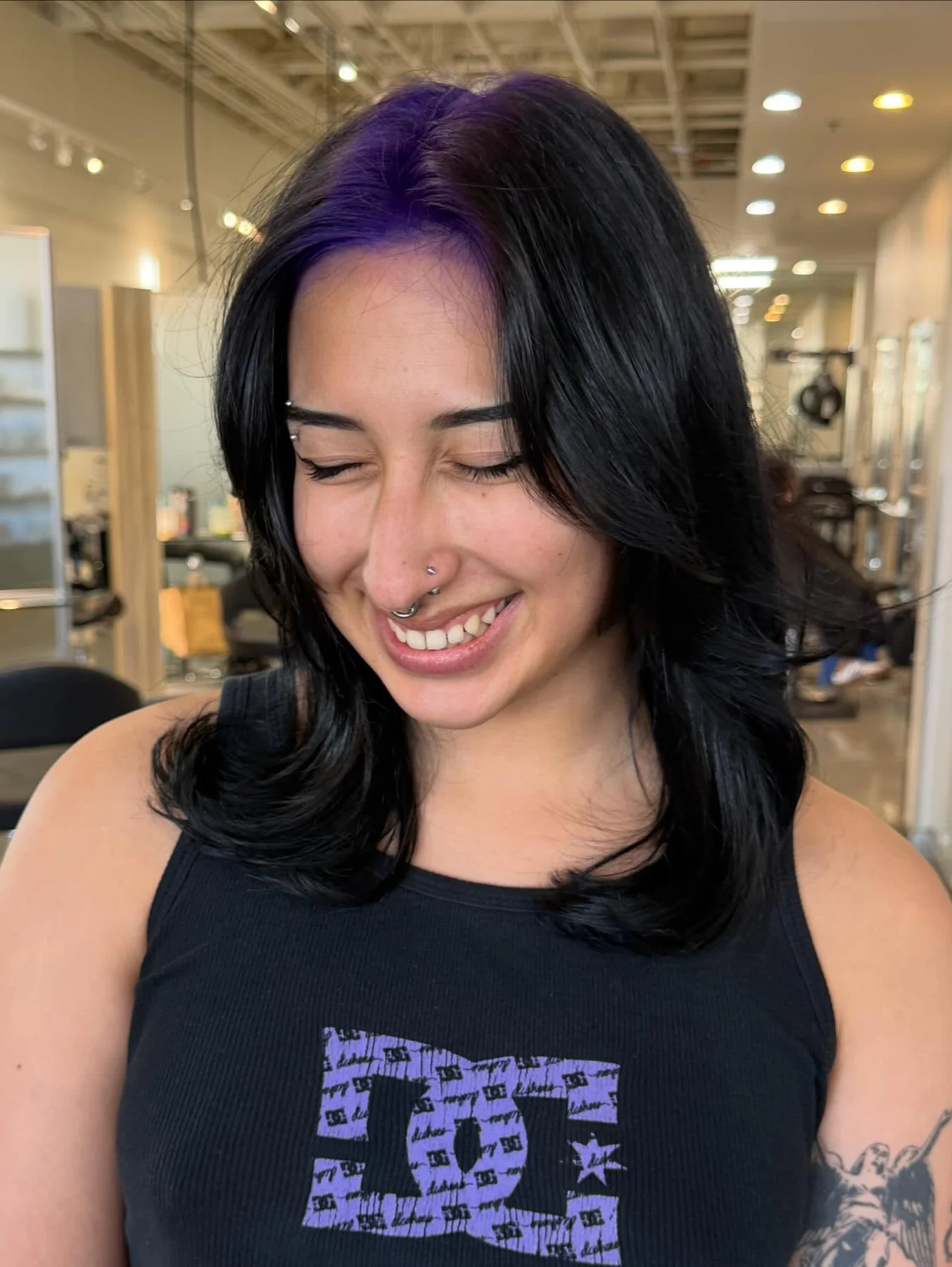
Narrow Deep-Violet Front Part Roots
A very narrow deep-violet section follows the front part of a black layered blowout. This targeted result needs far less lightener and vivid dye than a full crown, but accuracy at the slim part line is critical.

Electric Blue Shag
Electric-blue panels hide behind the fringe and temples of a short black shag. Pre-lightening can remain localized to those peekaboo sections, provided the surrounding dark hair is isolated cleanly during application.

Silver White Layered Shag
Silver-white strands frame a dark layered shag in fine, broken pieces. Achieving this contrast requires the palest lift in the front sections, followed by toner that stays neutral without turning yellow or overly grey.

Forest Green Straight
Forest green appears beneath a top bun and through the short fringe of straight black hair. The deeper green target is less neon than lime, yet the hidden root panel still needs enough lift to avoid reading muddy.
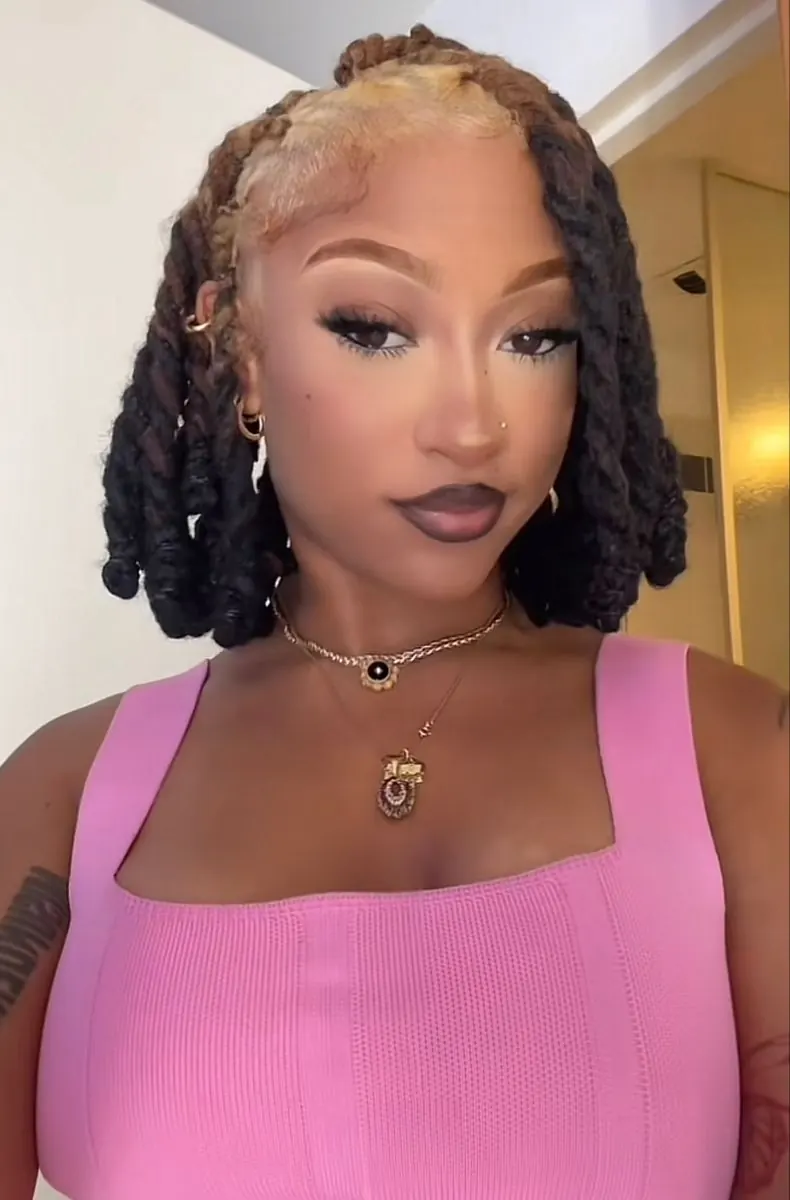
Honey Blonde Soft Locs
Warm honey-blonde is woven into selected front locs while the rest remain black. The color plan should follow the existing loc sections and account for the different processing demands of the selected strands.
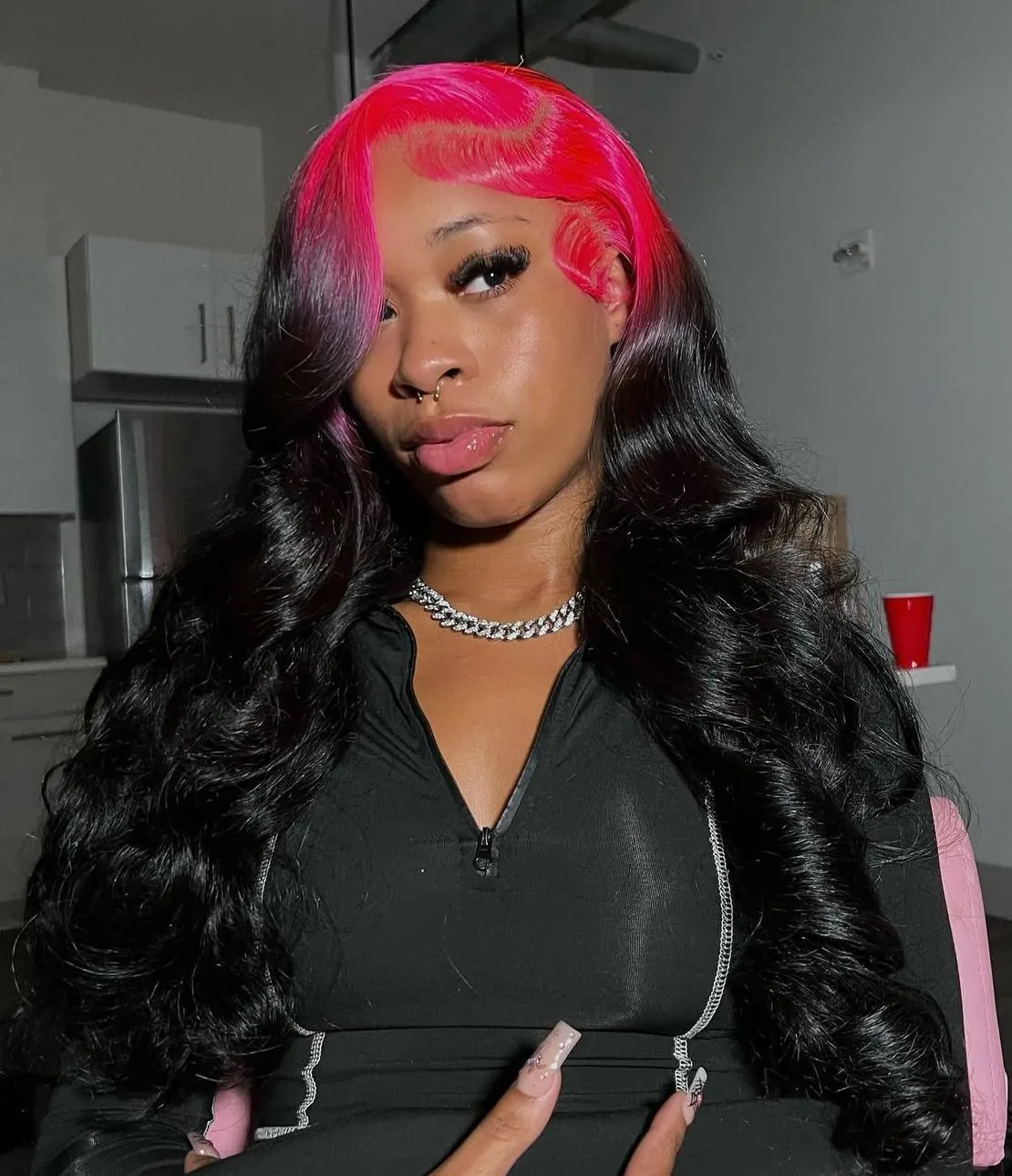
Hot Pink Body Wave
Hot pink forms a broad center panel over long black body waves, with a crisp wig-style part. The saturated target needs a bright underlying base; otherwise the same formula would produce a deeper magenta result.
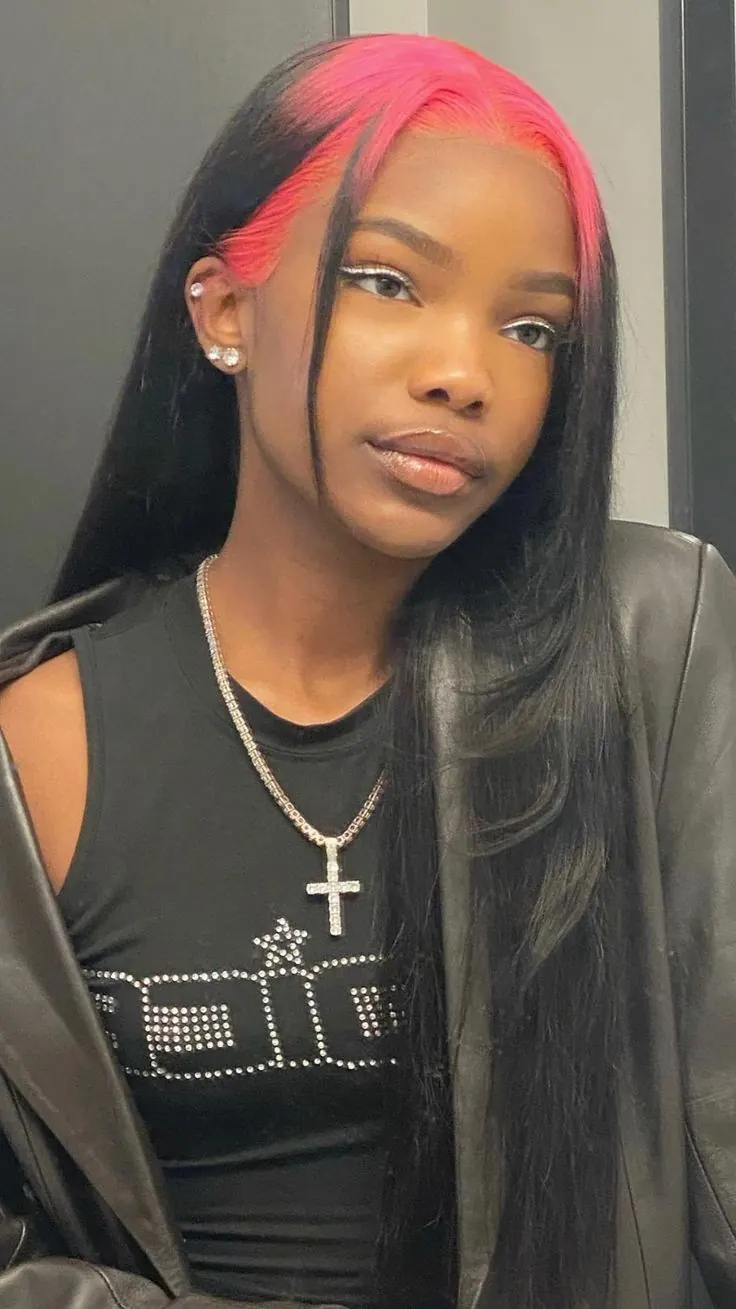
Hot Pink Sleek Straight
A slim hot-pink stripe cuts through glossy straight black hair. Because the colored area is small and exposed, a clean lift and precise application matter more than the total amount of dye used.
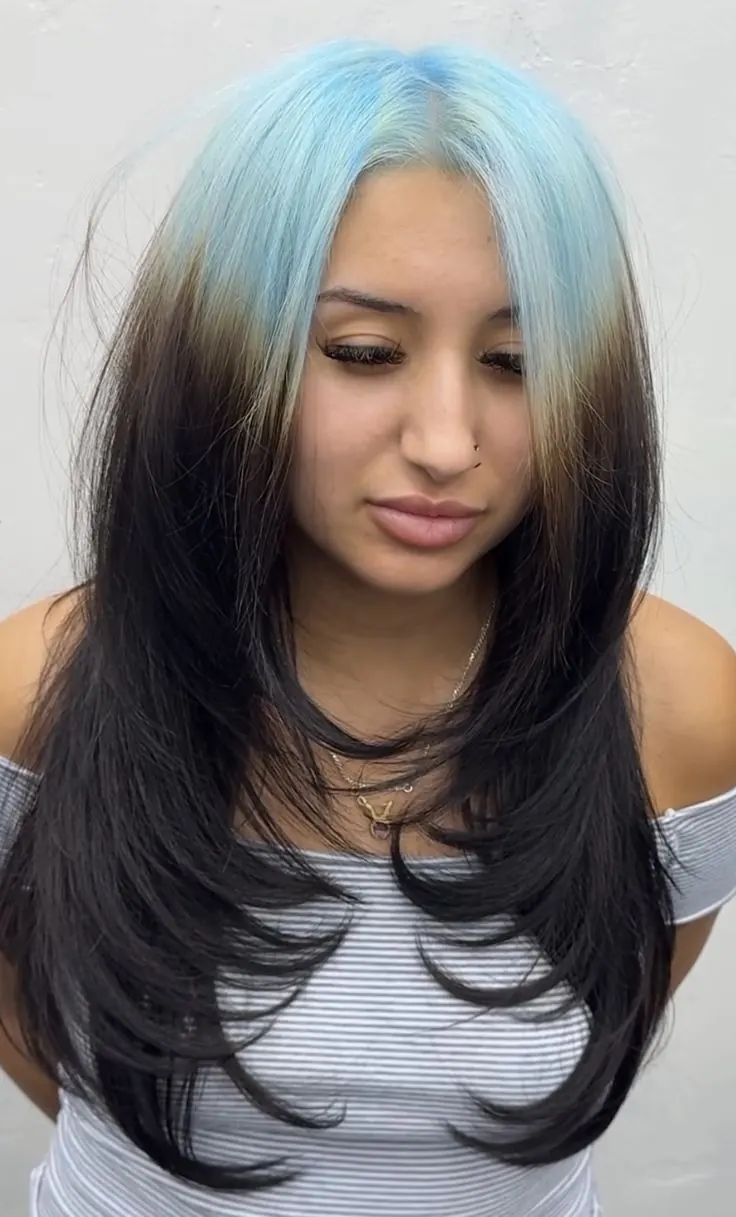
Ice Blue Layered Straight
Ice-blue face-framing layers sit against long black hair with a softly blended top edge. This pale pastel needs a nearly clean blonde base, so it represents more lightening work than the darker cobalt examples.
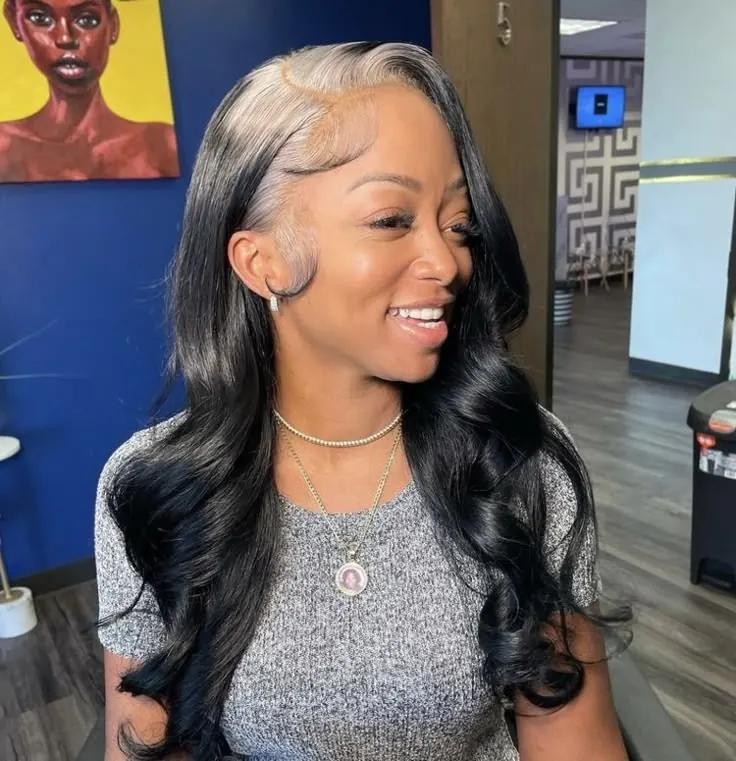
Silver White Body Wave
Silver-white is tucked into the front of black body waves and appears around the temple. The hidden money piece limits the bleaching area, but the section still needs very clean lift to stay bright beside black.
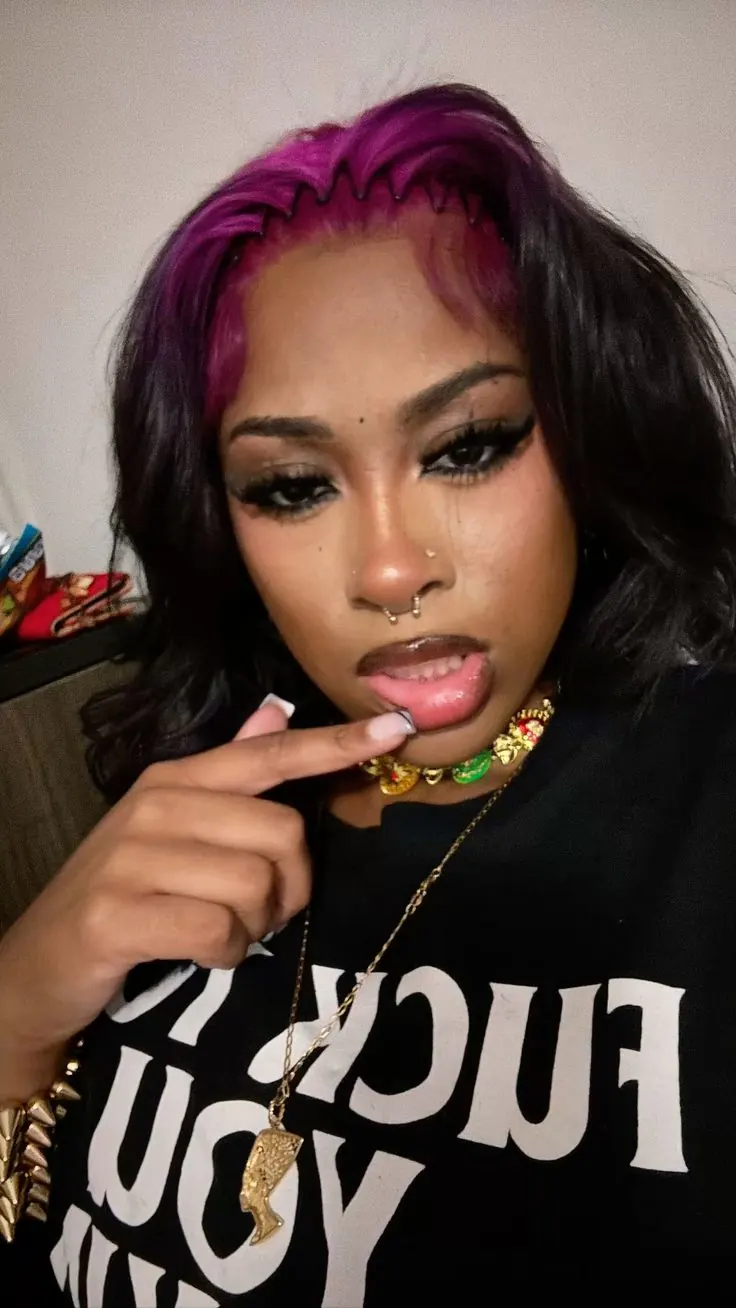
Magenta Purple Glam Wave
Magenta-purple spans the crown of polished black waves and shifts warmer where the light strikes it. A stylist should agree on whether the target is pink-led or violet-led before mixing, since this photograph sits between both families.
The Final Shade Does Not Tell You The Whole Process
For red, pink, purple, blue, green, teal, and other vivid ghost roots, most people use semi-permanent direct dye after the chosen root zone is light enough. Direct dye is useful for ghost roots because it can be painted into a small section, refreshed between appointments, and mixed into custom shades without changing the entire head of hair. It is best for already-lightened roots, money-piece roots, fringe panels, crown panels, and vivid part-line color.
For blonde, silver, white, icy blue, and pastel ghost roots, the important product is usually lightener first, then toner or gloss. Lightener creates the pale base; toner decides whether that base looks pearl, beige, icy, platinum, smoky silver, or clean white. If the hair only lifts to yellow or orange, pastel and silver shades can turn muddy, greenish, beige, or dull instead of looking intentional.
For soft brunette or low-contrast root effects, you may actually be looking for a shadow root, root smudge, or root melt instead of ghost roots. Those services usually use a demi-permanent color or gloss to make the root area darker and softer, while ghost roots are usually designed to make the scalp-adjacent color more visible.
Root Contrast And Root Blending Solve Opposite Problems
Ghost roots are meant to be seen. Think silver roots against black hair, red roots through a fringe, blue roots along a center part, or blonde root panels that frame the face. The root zone carries the color story, so the placement should have a clear shape and the darker or softer lengths should support it.
Shadow roots do almost the opposite. They usually make the root area darker, softer, or more natural-looking so blonde, balayage, or highlighted hair grows out with less contrast. If you want your roots to disappear into the rest of the color, ask for a shadow root. If you want the roots to become the feature, ask for ghost roots and describe the exact placement.
Choose The Product From The Starting Level And Target Tone
Use semi-permanent dye when the root area is already light enough and you want red, pink, blue, green, purple, teal, or another vivid shade. This is the most realistic at-home version because you are mostly controlling placement and saturation, not trying to force dark hair through several lift stages.
Use bleach plus toner when you want white, silver, platinum, icy blonde, pastel pink, pastel blue, or any very pale color. This is the category where professional help matters most because the root area processes quickly with body heat, and overlapping lightener onto previously lightened hair can cause breakage.
Use a gloss, toner, or demi-permanent color when you want a softer smoky root, beige blend, brunette shadow, or low-contrast grow-out. That may still be beautiful, but it is closer to shadow roots or root melt than a vivid ghost roots look.
Book a stylist if your hair has black box dye, old color buildup, breakage, scalp sensitivity, or an unknown color history. Those are the situations where even a small root panel can go wrong quickly because the lightener has to work close to the scalp and close to the most fragile part of the hair.
Home Refreshing is Different From Creating The Placement
At-home ghost roots are most realistic when your hair is already light enough and you are only adding a semi-permanent vivid shade to a small, controlled root zone. A red, pink, purple, blue, or teal refresh on pre-lightened roots is much simpler than trying to bleach dark roots to silver. The safest DIY versions are narrow part-line panels, small money-piece roots, fringe refreshes, or crown panels that have already been lightened professionally.
Refreshing an established section does not mean repainting every nearby strand. Keep the new pigment inside the original shape, protect the surrounding base color, and stop if the scalp becomes uncomfortable or the hair feels unusually weak. If the section needs more lift rather than more pigment, treat that as a different and more technical appointment.
Do Ghost Roots Damage Hair?
Ghost roots do not automatically damage hair. The colored area may be smaller than a full-head lightening service, but the size of the panel does not decide whether the process is safe. The main questions are whether the section needs bleach, how much lift is required, what has already been done to the hair, and whether previously lightened strands can be protected from overlap.
Depositing semi-permanent color onto a healthy section that is already light enough is different from repeatedly bleaching new growth. Lightener works close to the scalp, where body heat can make it process quickly, and applying it over fragile or previously lightened hair increases the risk of dryness and breakage. Old black dye, uneven bands, chemical straightening, heavy heat damage, and an unknown color history can make even a narrow ghost-roots panel difficult to predict.
A strand test cannot promise a perfect result, but it can show how your actual hair lifts, which undertone appears, and whether the tested strands remain strong enough for the plan. A patch test addresses possible skin reaction instead. If your scalp is irritated, scratched, sunburned, or unusually sensitive, or if the strand test stretches, breaks, or feels weak, pause the service and get professional advice rather than trying to correct the problem with more product.
As a practical rule, an existing vivid section that only needs the same pigment is the more manageable home-refresh situation. A plan involving bleach, a pale target such as white or silver, overlapping regrowth, or correction of an uneven result is better treated as a salon service.
Plan Sectioning Before Any Lightener or Color is Mixed
Start with the final look, not the product. Decide whether you want a thin part line, a money-piece root, a crown panel, fringe roots, or all-over root contrast. The placement determines how wide the section should be, how visible the color will be from the front, and whether grow-out will look deliberate after a few weeks.
Next, check whether your current root area is light enough for the color you want. Dark red, burgundy, navy, forest green, and plum can be more forgiving because they do not need the same pale base as silver-white, pastel pink, ice blue, or neon green. If the base is too dark or too warm, vivid dye may look smoky, muddy, brownish, or barely visible.
Then test before you commit. A strand test tells you whether the color turns bright, muddy, warm, patchy, or too subtle on your actual hair. After coloring, protect the finished root zone with cool water, gentle shampoo, heat protection, and a refresh plan before the shade fades into an awkward band.
Where Root-Color Plans Usually Break Down
The first mistake is expecting vivid dye to show on dark hair without lightening. On black or dark brown hair, most bright dyes will barely show unless the root area has already been lifted. The second mistake is bleaching too wide of a section, which can make ghost roots look like accidental regrowth instead of a planned scalp-adjacent design.
The third mistake is choosing white or silver without understanding toner. Lightened hair often goes yellow first, and silver or white needs a clean enough base plus the right toner to avoid dull gray, beige, blue, or greenish results. The fourth mistake is refreshing with too much color-depositing product, which can stain the scalp, blur the part line, or make the root zone look muddy if pigment builds unevenly.
Translate The Reference Into Shade, Zone, Width, And Edge
Ask for the color to be concentrated through the root zone, part, crown, fringe, or face frame. Use the color name and placement together: silver center-part roots, red fringe roots, blue crown roots, pink money-piece roots, blonde root panel, or teal crown roots. That wording gives the stylist both the shade and the map.
Also ask what level your hair needs to lift to, whether toner is included, what the refresh appointment costs, and how the color will look after four to six weeks of growth. Bring photos that clearly show where the color starts and stops. A stylist can match the idea much better if the reference shows placement, edge softness, and the amount of dark hair left intact.
Which Ghost Roots Color Works Best With Your Starting Hair?
The most practical color is one that can become visible on your current base without demanding more lift than your hair can reasonably handle. Contrast matters, but so do old color, condition, maintenance, and how cleanly the chosen section can be isolated.
| Starting hair | Colors that usually stay readable | What to plan for |
|---|---|---|
| Black or very dark brown | Red, burgundy, cobalt, deep purple, forest green, blonde, silver, and white | Deeper shades can create visible color with a moodier finish. Bright blue, green, blonde, silver, white, pastel, and neon targets usually require more lift and a careful strand test. |
| Medium or warm brown | Copper, cherry red, honey or caramel blonde, purple, and teal | Warm shades often connect naturally with the base. Cooler or paler colors may need pre-lightening so brown or orange warmth does not muddy the result. |
| Blonde or naturally light hair | Pink, blue, lavender, mint, silver, beige, and other pastels | Many colors show with less lifting, but staining, uneven saturation, and blurred section edges are easier to see against a light base. |
| Previously colored or fragile hair | A deeper shade that works with the existing level, or a deposit-only refresh on an established panel | Do not choose a pale target from the photograph alone. Test the old color and hair strength before deciding whether additional lift is realistic. |
If you want maximum contrast on black hair, white, silver, vivid blue, green, red, and blonde are the clearest directions. Burgundy, navy, forest green, and plum are softer alternatives when you want the color to remain visible without looking neon. On brown hair, copper, cherry, honey blonde, caramel, purple, and teal usually feel more connected to the base. On blonde hair, pale and vivid shades show readily, so precise placement becomes especially important.
Texture changes where the color should sit, not just which shade you should choose. On curly hair, use a placement that follows the curl pattern.
- Crown roots: Best when the top curls lift away from the scalp and let the color show in motion.
- Face-framing roots: Best if you want the color to stay visible around the front without dyeing every curl.
- Selected part lines: Best for a more precise ghost-roots effect that still looks intentional on tighter textures.
- Top-curl panels: Best when you want the color to sit where the haircut naturally opens instead of hiding under dense curls.
If the color only sits under dense curls, it can disappear once the hair is styled.
Semi-Permanent Color Works Best on a Prepared Base
Semi-permanent dye is common for vivid ghost roots because it deposits color without permanently changing the whole head. It is useful for red, pink, blue, green, purple, and teal placements, and it usually fades gradually enough that you can refresh it with color-depositing conditioner or another direct dye application.
The limitation is important: semi-permanent dye does not lift dark hair. If you want bright color on black or dark brown hair, the root area usually needs pre-lightening first. Without lift, a vivid dye may only add a subtle tint that shows in sunlight.
Lightener Creates Level; Toner Controls The Remaining Warmth
Blonde, white, silver, and pastel ghost roots usually need lightener. Toner then adjusts the final shade so the lifted hair looks platinum, pearl, beige, icy, smoky, or clean white instead of raw yellow. This is why silver-white ghost roots are more technical than simply applying silver dye.
This is where professional help matters most. Bleach near the scalp can be risky if the hair is fragile, previously colored, relaxed, heavily heat-styled, or already lightened. If your goal is white, platinum, pastel, or ice blue, the safer plan is usually a stylist-led lightening session plus a clear maintenance routine.
Each Color Family Has a Different Failure Mode
Red and pink are usually the easiest vivid shades to refresh at home because color-depositing conditioners are widely available and the fade is often more predictable. Blue, green, teal, and purple can be more sensitive to the base underneath; yellow warmth can push blue toward green, and uneven lift can make teal or purple look patchy.
Pastels need the lightest, cleanest base. Darker vivid shades like burgundy, forest green, navy, deep purple, and plum can be more forgiving, especially if you want a moodier result instead of a neon finish. If your hair is fragile or hard to lift, choosing a deeper shade can be the difference between a wearable result and an overprocessed one.
Stop Before a Small Root Section Becomes a Correction
Do not DIY bleach if your hair has old black dye, overlapping lightener, breakage, chemical straightening, scalp irritation, or unknown color history. Ghost roots may use a smaller section than full-head color, but damage at the root zone is still serious because it affects the hair closest to the scalp.
If you want white, platinum, silver, pastel pink, or ice blue, book a stylist unless you already understand lightening levels, toner timing, and how to avoid overlap. If the strand test feels weak, stretches strangely, breaks, or turns an unexpected color, stop and change the plan before coloring the visible root area.
Depositing Conditioners Maintain Color, They do Not Create Lift
Color-depositing conditioners are best for maintenance, not major transformation. They help refresh pink, red, blue, green, purple, and teal ghost roots between color sessions, especially when the original placement still looks good but the shade has started to fade.
They can also stain the scalp, towels, pillowcases, shower grout, and light surfaces, so use gloves and rinse carefully. Apply them only where the color belongs; coating the whole head can make a crisp ghost roots placement look muddy or less intentional.
Patch And Strand Tests Answer Different Safety Questions
A product allergy test checks for a possible skin reaction to that dye, while a strand test shows how the formula behaves on your hair. Neither test is a reason to ignore burning, swelling, itching, or breathing symptoms. Follow the exact timing and method supplied with the product; the FDA recommends testing before every hair-dye application and not using the dye if a rash develops.
Use the strand test to check brightness, undertone, timing, and hair strength. If the test looks muddy, too warm, too faint, too green, or too damaged, adjust the formula, choose a deeper shade, or book a stylist before coloring the main section. The American Academy of Dermatology advises stopping and seeking dermatology guidance if a test causes redness, swelling, burning, itching, or a rash. Because some reactions can be delayed, review the NHS guidance on hair-dye reaction symptoms and seek urgent medical help for breathing difficulty or swelling of the mouth, lips, tongue, or throat.
Prepare For Isolation, Cleanup, And Aftercare
At minimum, plan for sectioning clips, gloves, a tint brush, a tail comb, barrier cream, color-safe shampoo, conditioner, and heat protectant. If bleach is involved, you also need bond support, toner, a realistic timing plan, and enough discipline to avoid overlapping lightener onto fragile hair.
For a vivid refresh, buy the exact color family you need rather than a random bright dye. Red roots need red or burgundy support, blue roots need blue-leaning refresh products, green and teal need careful pigment balance, and blonde or silver roots need toner support rather than more vivid dye. For aftercare timing by color family, read ghost roots maintenance.
Ghost Roots Hair Dye FAQ
Can ghost roots hair dye show on dark hair without bleach?
Only subtly in most cases. Vivid dye can add a tint to dark hair, but bright red, blue, green, pink, silver, white, pastel, or neon ghost roots usually need the root area lightened first.
What dye is best for vivid ghost roots?
Semi-permanent direct dye is usually best for vivid ghost roots when the root zone is already light enough. It works well for red, pink, blue, green, purple, and teal placements because it can be refreshed in small sections.
Do white or silver ghost roots need toner?
Yes. White, silver, platinum, and icy ghost roots usually need lightener first, then toner or gloss to control yellow warmth and create the final cool shade.
If you are still defining the technique, begin with what ghost roots are before choosing a formula. White and smoky results require the separate decisions covered in the white ghost roots guide and silver ghost roots guide, while the cost guide explains why lift, toner, density, and correction history change the quote.