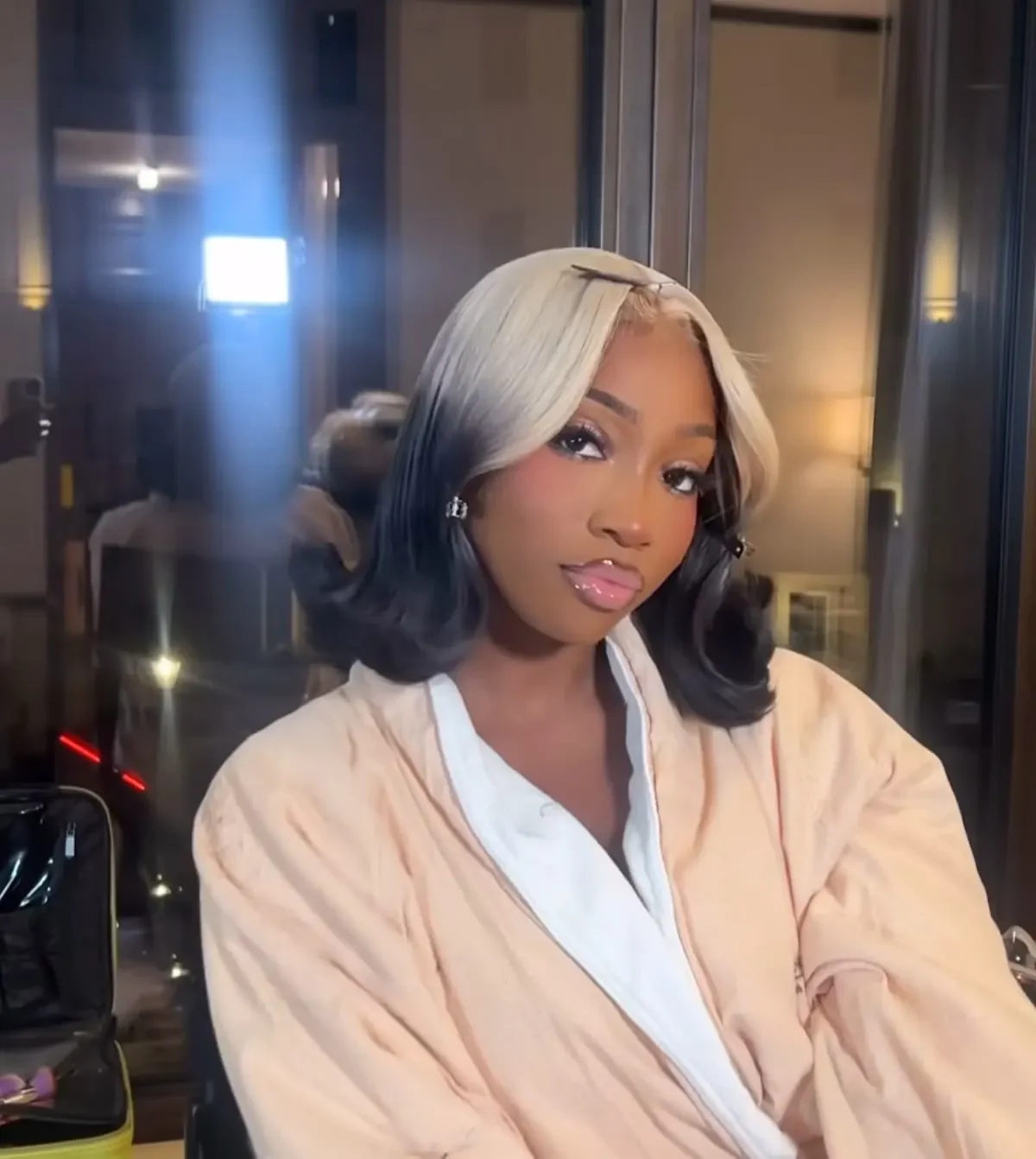
White ghost roots create the hardest pale contrast in this color family. The root section is lifted and toned until it reads white or nearly white, while the surrounding hair stays black, brunette, grey, or another clearly darker shade. The result can be a narrow center stripe, a bright face frame, a split fringe, or a broader crown panel.
The useful decision is not simply “white or black.” Decide how pale the root zone must look, how much of it should remain visible in your normal part, and whether you are prepared to maintain a clean cool tone. White is less forgiving than smoky silver and more demanding than beige or honey blonde.
Visual Ideas
White And Icy Placement That Stays Distinct From Silver
These references focus on visually verified white, platinum-white, and silver-white sections where the pale root area remains the main contrast rather than reading as warm blonde or smoky grey.
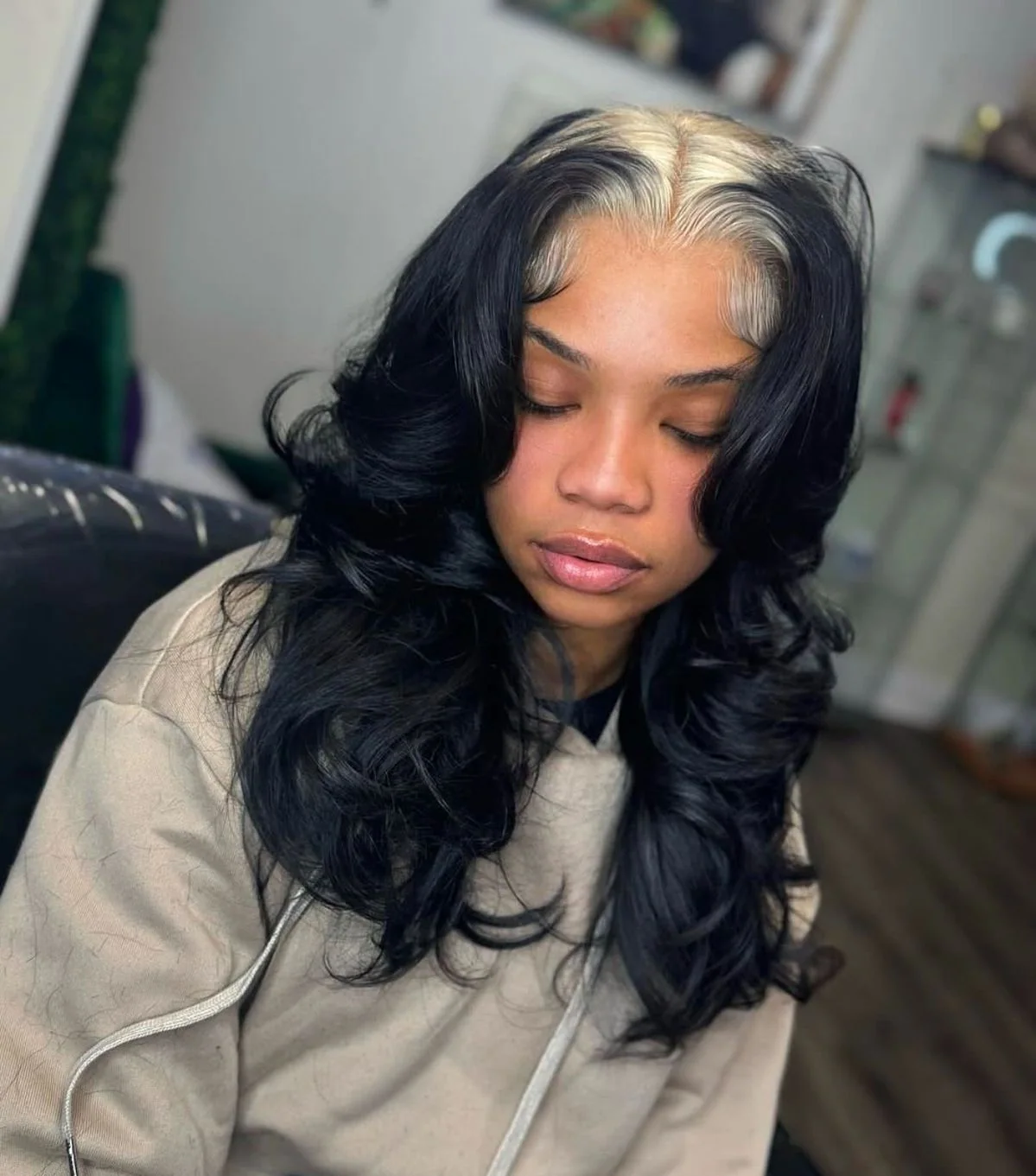
White Money-Piece Waves
A clear black-and-white money piece that keeps the brightness concentrated around the face.
Medium black body waves with silver-white root contrast through the front money-piece panels.
The white face frame brightens the front while the dark body waves keep the style grounded.
Medium waves, oval faces, polished selfies, and anyone who wants white roots to show immediately.
Tone the front panels first because they get the most heat, touch, and product exposure.
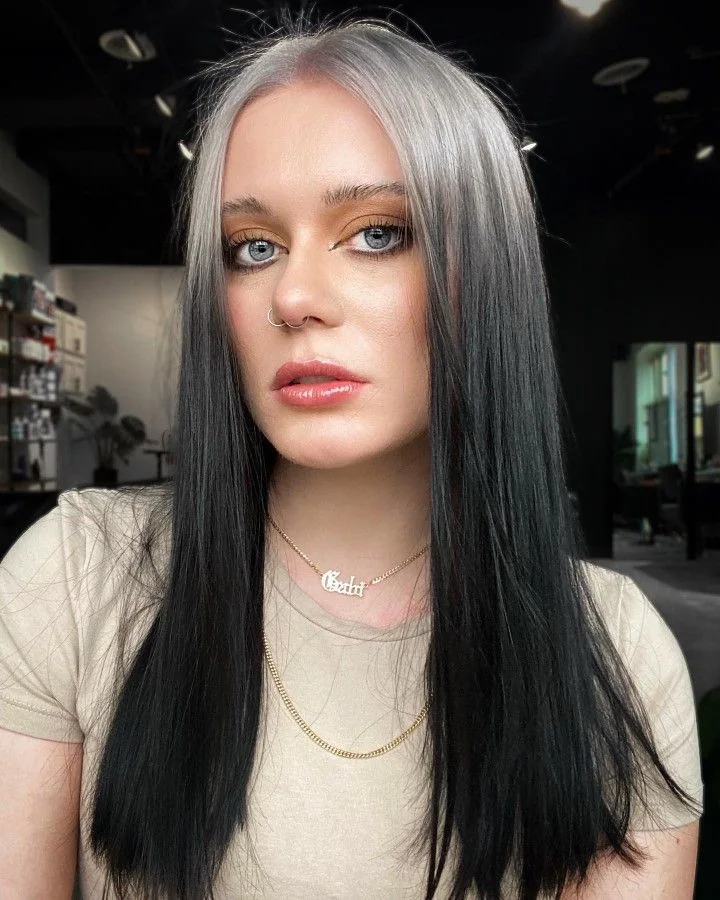
White Center-Part Panels
A long straight version where the center part makes the white placement look clean and deliberate.
Long black sleek hair with silver-white root panels through the center part and front sections.
Straight hair exposes every placement choice, so the neat part makes the contrast look designed.
Long straight hair, center parts, sharp black-and-white contrast, and editorial styling.
Keep heavy oils away from the root panels because white color can look dull quickly.
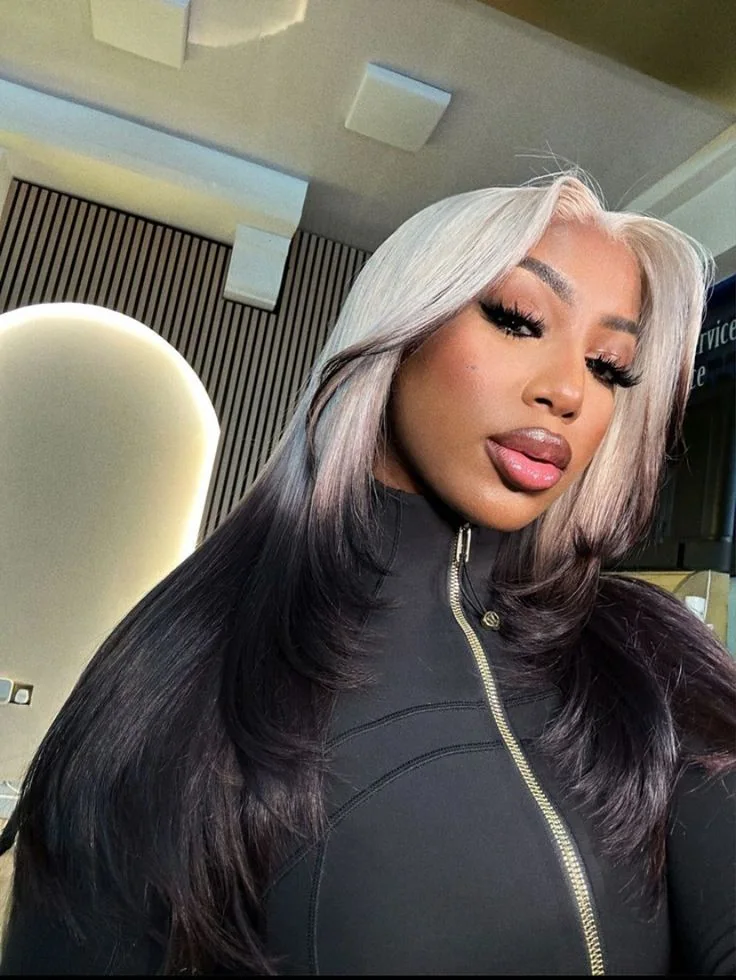
White Side-Part Glam Waves
A softer side-part take where white roots feel glamorous rather than severe.
Long black glam waves with silver-white root contrast through a swept side part.
The side sweep gives the white section lift and keeps the contrast flattering around the face.
Long waves, side parts, oval-heart faces, and polished white root inspiration.
Use gloss and heat protection because glam waves can make lightened sections look dry.

White Blunt Bob Roots
A sharp bob idea where the white top panel becomes the main design feature.
Short blunt black bob with silver-white ghost roots concentrated through the top and center part.
The blunt edge makes the placement look graphic, clean, and intentional.
Short bobs, center parts, sleek styling, and strong black-and-white contrast.
Pair toner appointments with trims because blunt bobs show uneven fading quickly.

White Side-Part Sleek Bob
A cleaner short-hair version where the white root color stays controlled and wearable.
Short sleek black bob with silver-white root placement through a side part.
The side part softens the white contrast while still making the root color visible.
Short sleek bobs, side parts, heart-oval faces, and minimal two-tone styling.
Use smoothing care lightly; too much product can make white roots look coated.

White Shag With Wispy Bangs
A softer alt-style shag where white roots brighten the bang and crown area.
Medium black messy shag with silver-white ghost roots through wispy bangs and the crown.
The shag texture breaks up the white so it feels dimensional instead of helmet-like.
Shags, wispy bangs, glasses, textured styling, and casual white-root inspiration.
Keep styling product light so the white root area does not look dusty.

White Curtain-Bang Shag
A mirror-selfie style where the white stays visible because the curtain bangs naturally open.
Medium black shag with curtain bangs and silver-white ghost roots through the front and crown.
Curtain bangs reveal the root zone, making white ghost roots visible without extra styling tricks.
Curtain bangs, shags, wolf-cut-adjacent layers, and relaxed white-root looks.
Retone the fringe first because front pieces fade and get touched most often.

Platinum-White Chin Bob
A pale platinum-white direction that still keeps black contrast underneath.
Short chin bob with platinum-white top color, soft bangs, and a black underlayer.
The black underlayer stops the pale top from looking flat and gives the bob shape.
Short bobs, soft bangs, pale white-blonde contrast, and salon-finished styling.
This is higher maintenance because pale platinum needs a clean toner routine.
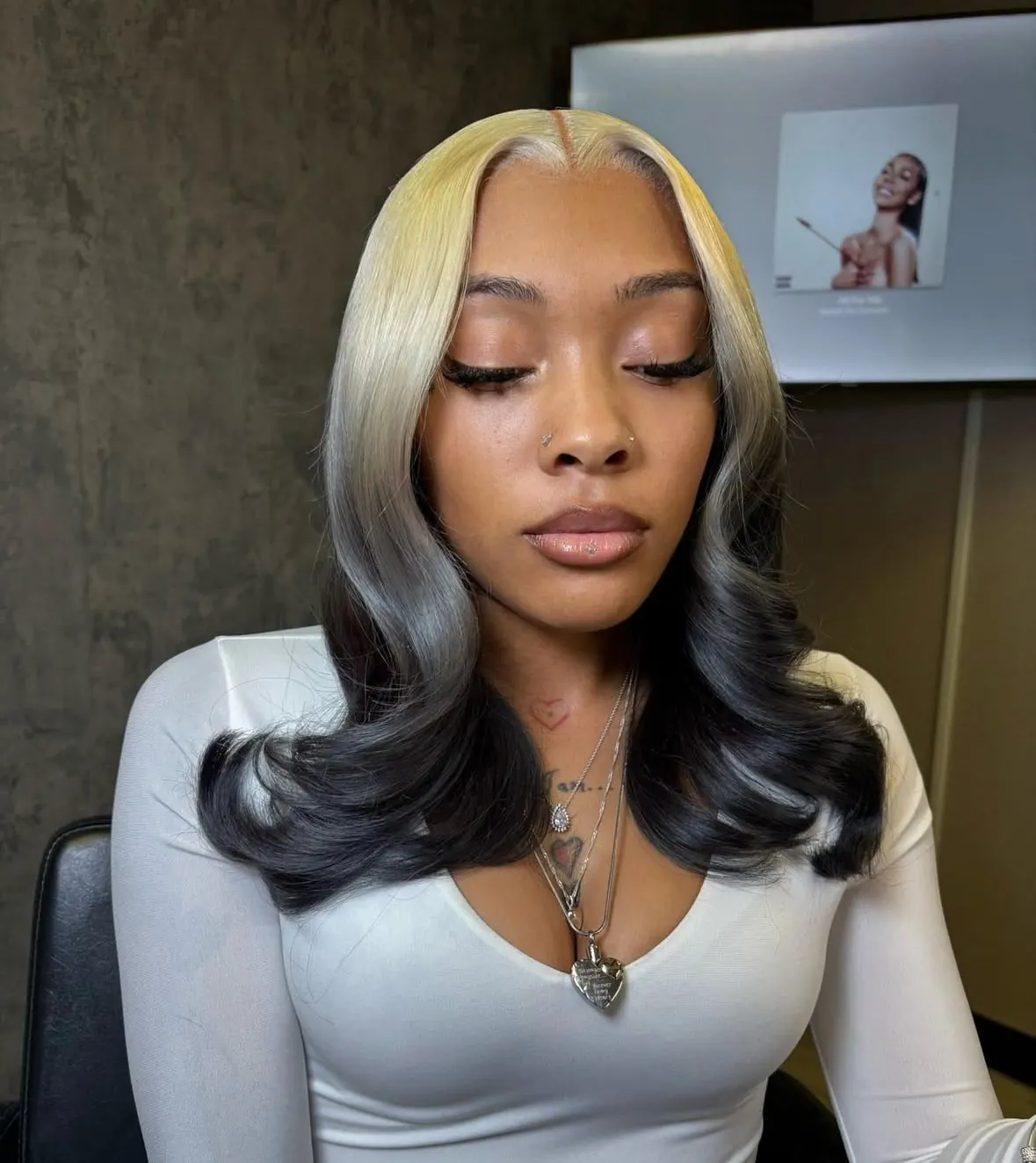
Platinum Money-Piece Waves
A platinum-white option for people whose hair may not safely reach pure white in one session.
Medium black body waves with bright platinum ghost roots around the face.
Platinum gives nearly-white brightness while looking a little softer than a pure white panel.
Medium waves, face-framing placement, dark hair, and realistic white-blonde goals.
Use purple shampoo carefully; too much can make platinum look dull or smoky.
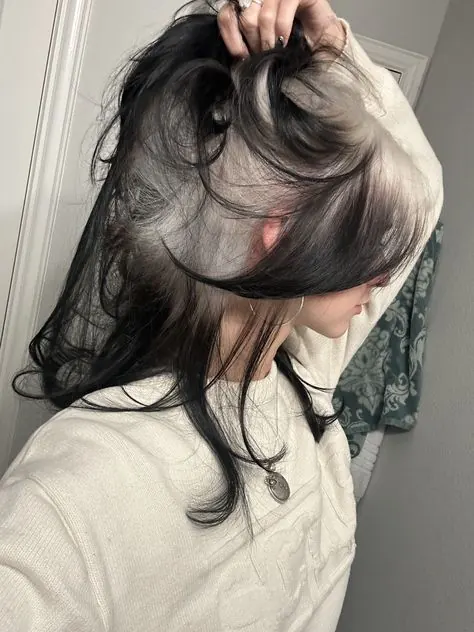
White Peekaboo Updo
A hidden placement idea for people who want white roots to show most when the hair is lifted.
Medium black messy waves styled up with silver-white peekaboo root contrast.
The updo reveals the white root area without making the whole front hairline bright.
Updos, hidden panels, medium hair, and lower-commitment white-root placement.
Ask how the hidden panel will grow out because top-view color can become banded.
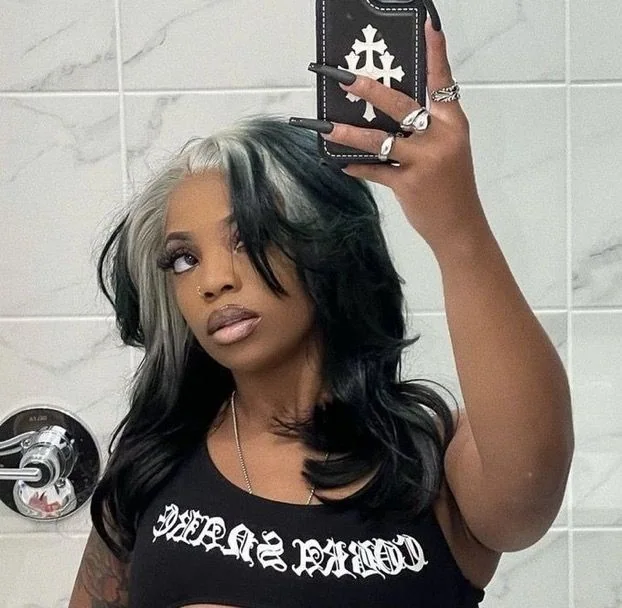
White Mirror-Selfie Waves
A mirror-selfie reference that shows how white money-piece roots read in normal bathroom lighting.
Medium black body waves with silver-white ghost roots framing the face in a mirror selfie.
The white placement stays visible outside studio lighting, which makes it a practical reference for real wear.
Medium waves, selfies, money-piece roots, and people who want the front panels to photograph clearly.
Keep the front panels toned and conditioned because mirror lighting exposes yellowing quickly.

White Split Face Frame
A long loose-wave idea where the white root section opens around the face without covering the whole crown.
Long black loose waves with silver-white money-piece roots and a soft face frame.
The split face frame gives strong contrast while keeping most of the length dark and wearable.
Long loose waves, face framing, oval faces, and softer white ghost roots.
Use toner and heat protection together because long front pieces get styled often.
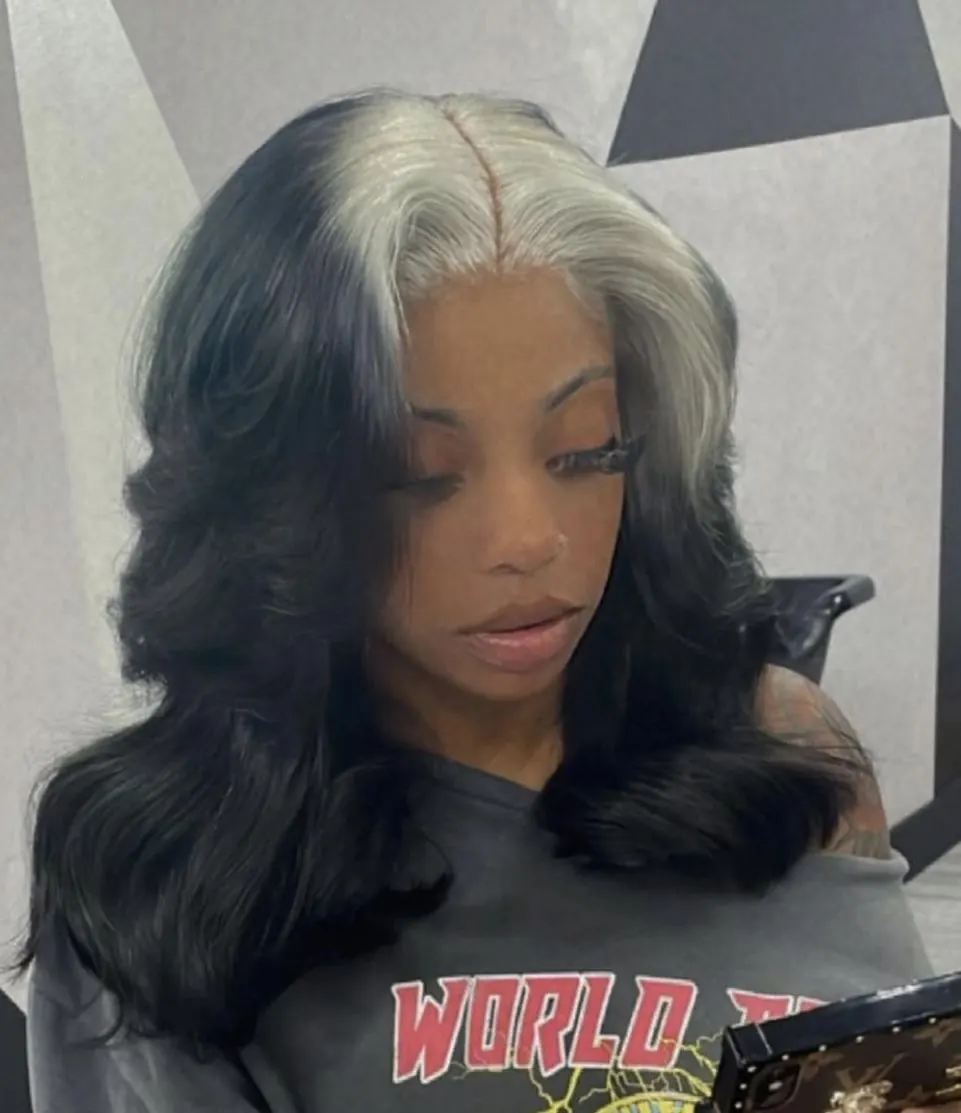
White Salon Body Waves
A salon-finished body-wave option for people who want the white root area to look polished and wearable.
Medium black body waves with silver-white face-framing roots and soft salon styling.
The controlled money-piece shape keeps the white bright without turning the whole top section pale.
Salon blowouts, medium hair, soft waves, and people who want a wearable white-root example.
Use bond care after lightening and avoid over-toning the front panels.
Use White When Contrast is The Point
White placement works best when the pale section has a clear boundary. A narrow center part looks graphic on straight hair. A face frame widens the brightness around the eyes and cheeks. A split fringe makes white part of the haircut. A broad crown panel creates a stronger top-heavy result that remains visible when the hair moves.
On waves and curls, the same section can break into several flashes of white. On a bob, a small pale panel can dominate because there is less length around it. On long hair, the root color can be balanced by darker body and movement.
If you want the root area to look muted, smoky, pearl grey, or charcoal rather than stark, the silver ghost roots guide owns that decision. If you want warmth or a softer transition, compare blonde ghost roots.
White, Silver-White, And Platinum Are Different Requests
White aims for the least visible warmth. It is the most graphic version and usually the least tolerant of yellowing.
Silver-white keeps the brightness but allows a cool metallic cast. It can be easier to connect to grey, black, or cool brunette lengths.
Platinum blonde is pale but can retain a creamy or neutral blonde quality. It may feel softer against warm skin, beige makeup, or brown lengths.
Bring the exact reference rather than relying on these names alone. Salon language varies, lighting changes pale color, and a photograph can make silver look white or platinum look grey.
Placement Changes The Maintenance Burden
A face frame is easy to see and easy to compare, but it is also exposed to frequent washing, heat styling, and touching. A fringe panel can need color attention when the bangs are trimmed. A center stripe shows regrowth quickly because its symmetry is part of the design. A diffused crown section can soften more naturally, but only if the edge was designed to blur.
Ask the stylist to map the section on dry hair in the part and style you use most. A hidden placement may disappear after the appointment. A section that is too broad can feel like an unfinished global lightening service instead of intentional ghost roots.
The Starting Canvas Matters More Than The Product Name
White results generally require a very pale, even canvas. Dark natural hair, old permanent dye, overlapping lightener, banding, and fragile ends change what can be reached safely. Toner can refine a pale base, but it cannot turn an insufficiently lifted orange or dark yellow section into clean white.
This is why a strand test matters. It can show how quickly the selected root area lifts, whether old color interferes, and whether the hair can tolerate the target. A staged pale result is more useful than forcing one session to match a photograph at the expense of the hair.
For a process-level explanation, use the ghost roots hair dye guide. It separates lightening, toner, direct dye, patch testing, and the point at which professional assessment is the safer route.
What to Show And Say at a Consultation
Bring one reference for color and another for placement if necessary. Include a top or side view when the root boundary is not clear from the front.
You can say:
I want a white or silver-white root section that stays clearly separate from the darker lengths. Please map it through my usual part and show me how wide the section will be before lightening. I want to know what level is safely achievable, what toner keeps it cool, and how the edge will look as it grows.
Then clarify:
- whether the target is white, silver-white, or platinum blonde
- whether the edge is crisp, diffused, or softly melted
- whether the placement follows the part, fringe, face frame, or crown
- what result is realistic after the first session
- how toner and regrowth will be maintained
Signs That The Reference is a Good Fit
Choose the image because its structure resembles your plan, not because the model has the same face or outfit. Look for a similar base depth, part, haircut, texture, and section width. A straight center stripe on black hair will not predict how a wide white crown behaves on curls. A pale money piece will not show the grow-out of a full fringe panel.
The gallery below is arranged to compare these differences. Some examples show stark black-and-white separation; others show silver-white or platinum edges that soften the contrast. Each caption explains the visual reason the image belongs on this page.
Keeping White Roots From Turning Dull
White can drift yellow, grey, violet, or blue depending on the canvas, toner, water, heat, and product use. More purple shampoo is not always the answer. Overuse can make porous sections look flat or tinted while leaving uneven warmth elsewhere.
Use the toner or cleansing schedule recommended for the actual formula. Protect the lightened area from unnecessary heat, avoid overlapping lightener during a refresh, and keep the darker lengths glossy so the pale section remains deliberate. The maintenance guide explains the difference between refreshing tone and rebuilding the placement.
When to Choose Another Version
Choose silver if you want smoke and depth instead of the cleanest pale result. Choose beige or honey blonde if you want warmth and a softer grow-out. Choose a vivid shade if the main goal is color expression rather than maximum lightness. Choose a smaller face frame or fringe accent if a broad pale crown feels too demanding.
White ghost roots are successful when the placement remains readable, the pale canvas is realistic for the hair, and the maintenance plan is accepted before the service begins.
Related Decisions
Compare silver ghost roots for smoky grey placement, blonde ghost roots for warmer pale options, and ghost roots with bangs if the root color must follow a fringe.