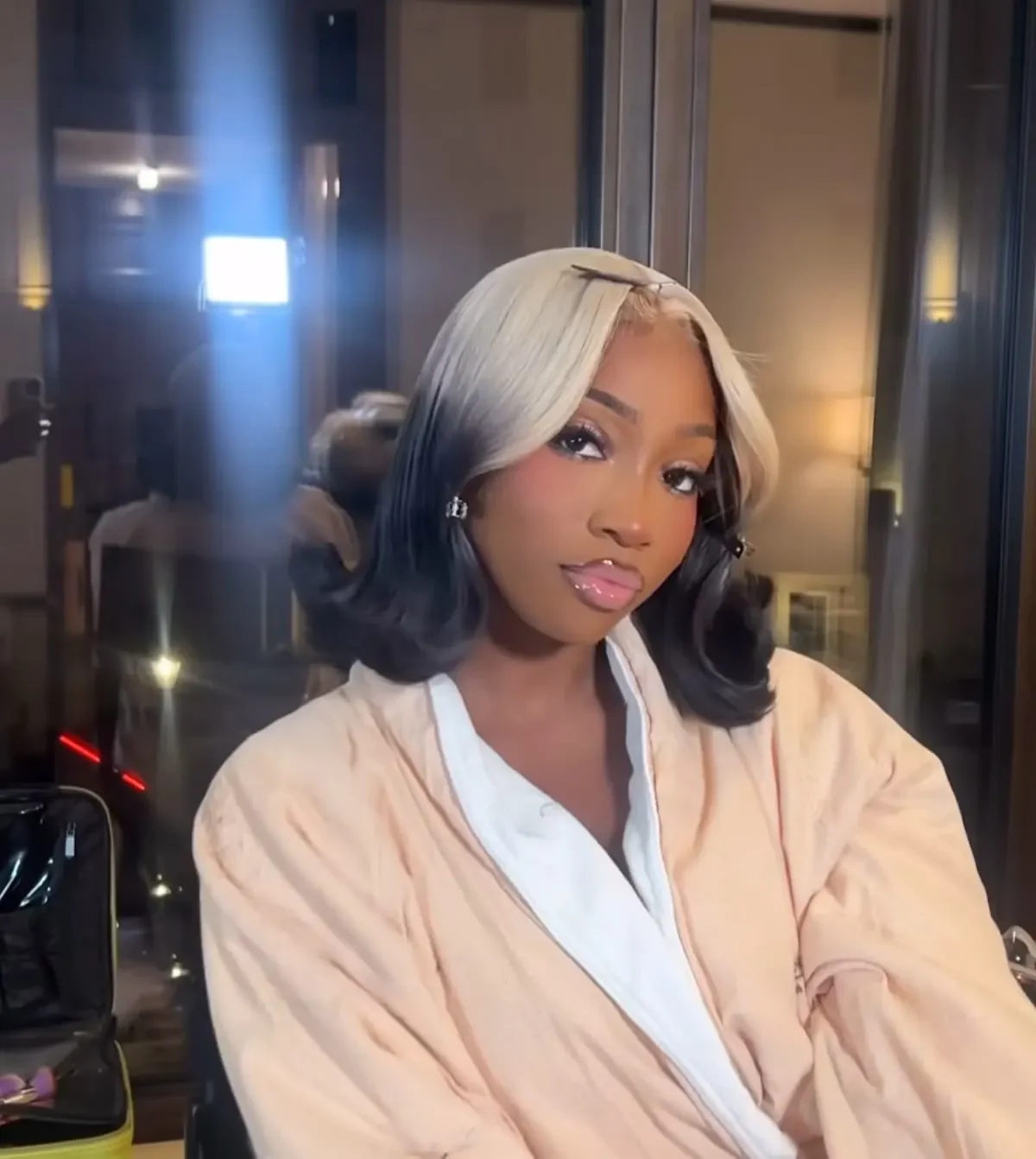
Silver ghost roots are a cool-toned ghost roots look where the scalp-adjacent color reads smoky, pearl, icy grey, charcoal, or silver-white instead of warm blonde. The color story still starts near the part, crown, fringe, or face frame, so it should look designed into the haircut rather than like faded blonde growing out.
The strongest versions keep dark or deeper lengths intact, then use silver around the root zone to brighten the face and create contrast. Below are the main directions people usually mean when they search for silver ghost roots: silver-white money pieces, smoky grey face framing, short bobs, shags, long layers, platinum-silver panels, and softer silver-blonde blends. Use the visual examples first, then use the guide below to decide what to ask for.
Visual Ideas
From Smoky Grey Panels to Sharp Silver-White Contrast
These silver ghost roots references use the new local silver image pool and cover bobs, shags, long layers, smoky grey panels, silver-white money pieces, and softer platinum-silver blends.
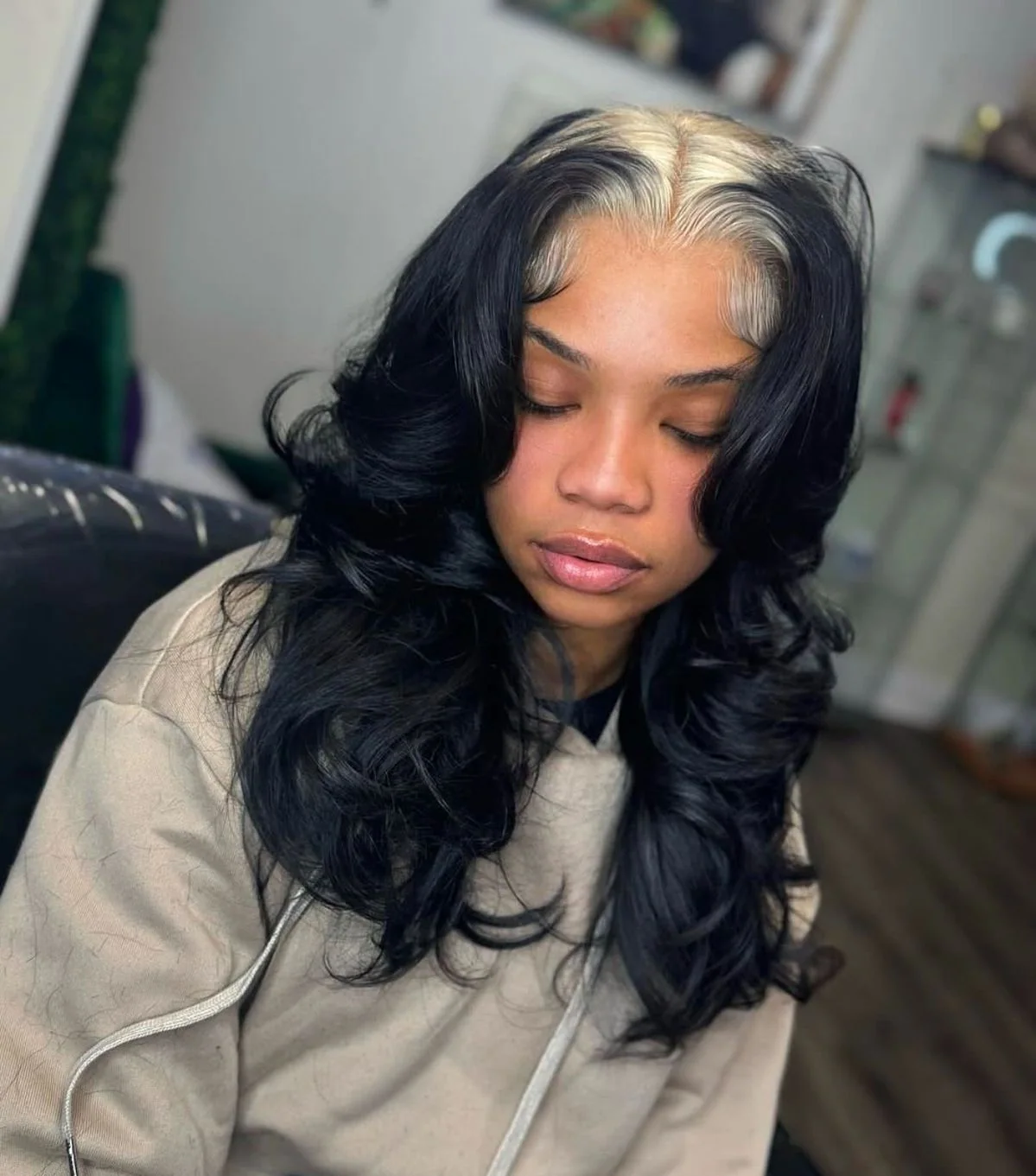
Silver-White Money Piece Waves
A polished silver-white face frame over black waves, made for people who want the root color to read instantly.
Medium black body waves with silver-white ghost roots concentrated around the front money-piece area.
The bright front panel opens the face while the dark lengths keep the look grounded and expensive-looking.
Medium layers, soft waves, oval faces, and anyone who wants silver roots without coloring the whole head.
Tone the front pieces regularly and use heat protection because this placement gets styled often.
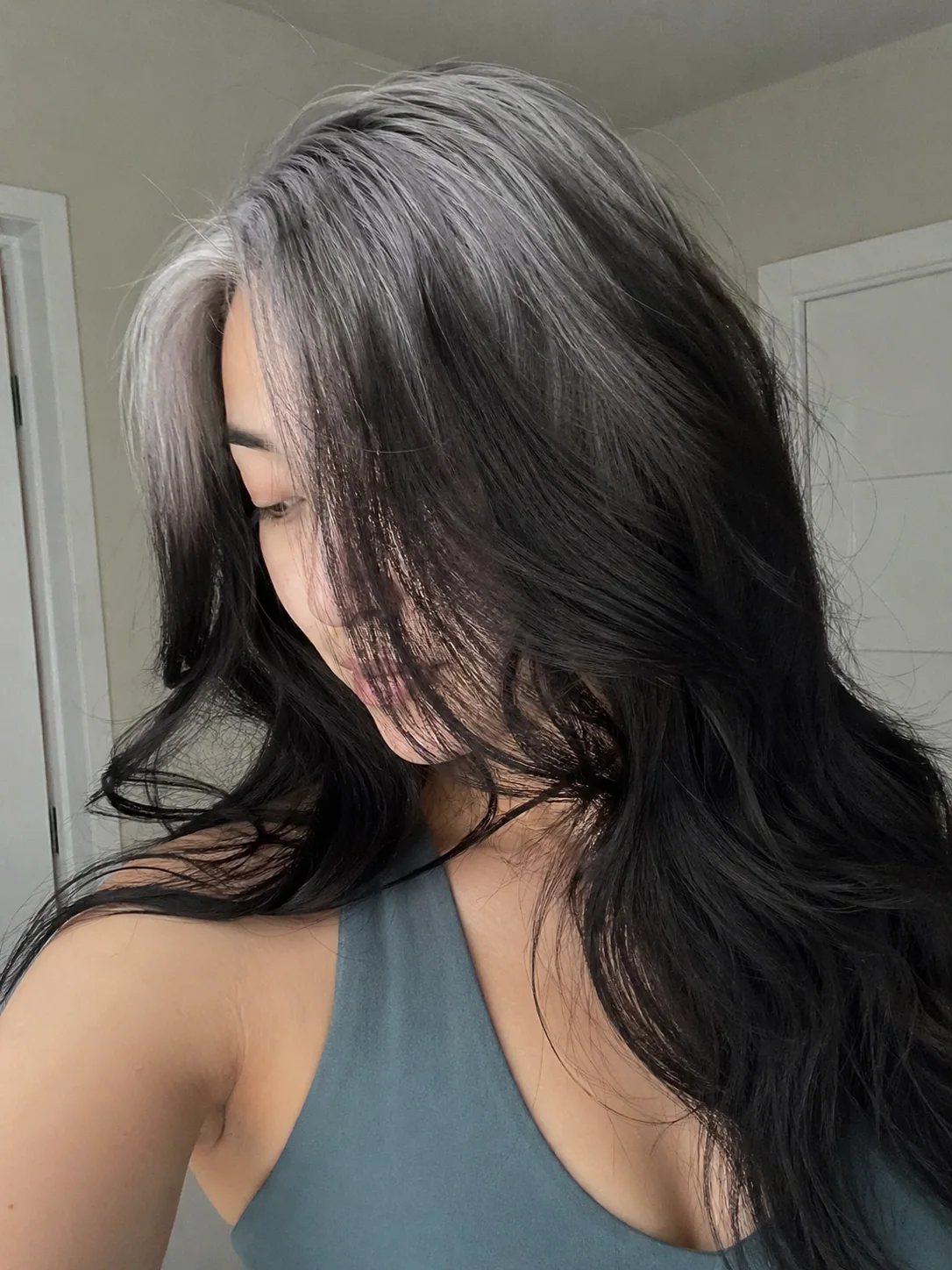
Smoky Silver Long Layers
A softer smoky silver version for long hair where the lightness diffuses through the top instead of forming a hard stripe.
Long black layered waves with a smoky silver crown and side-swept root panel.
The silver is visible at the top, but the soft wave keeps the contrast from looking blocky.
Long layers, side parts, loose waves, and people who want silver to feel wearable rather than stark.
Use a gloss or toner refresh before the smoky finish shifts warm or dull.
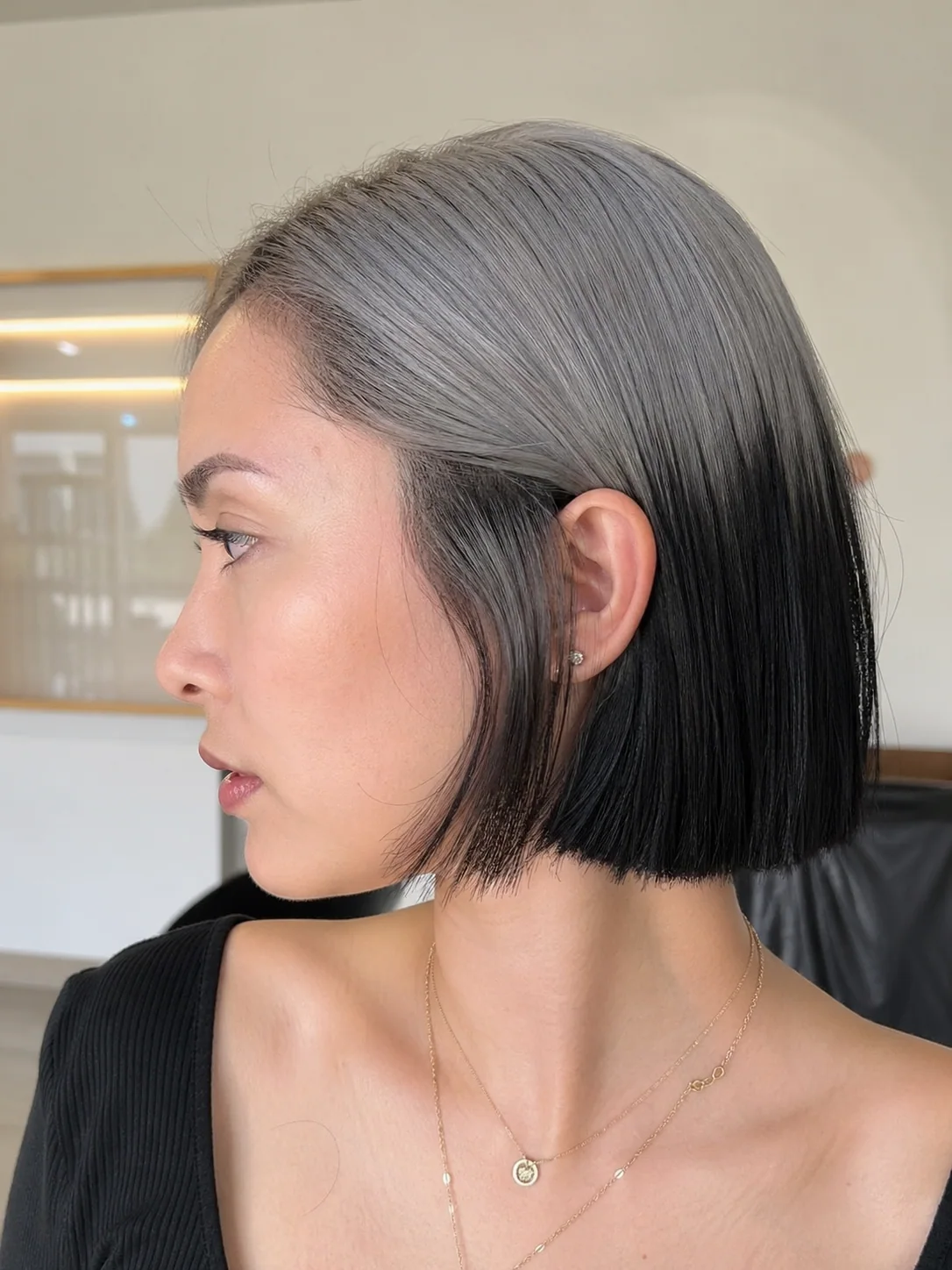
Silver-Grey Blunt Bob
A clean short bob where the silver-grey top panel becomes the whole statement.
Short blunt bob with sleek black underlayers and silver-grey ghost roots through the top.
The blunt line makes the color placement look precise instead of accidental.
Short bobs, straight hair, side profiles, and anyone who likes polished two-tone shape.
Keep the bob trimmed and the grey toned; blunt cuts show uneven fading quickly.
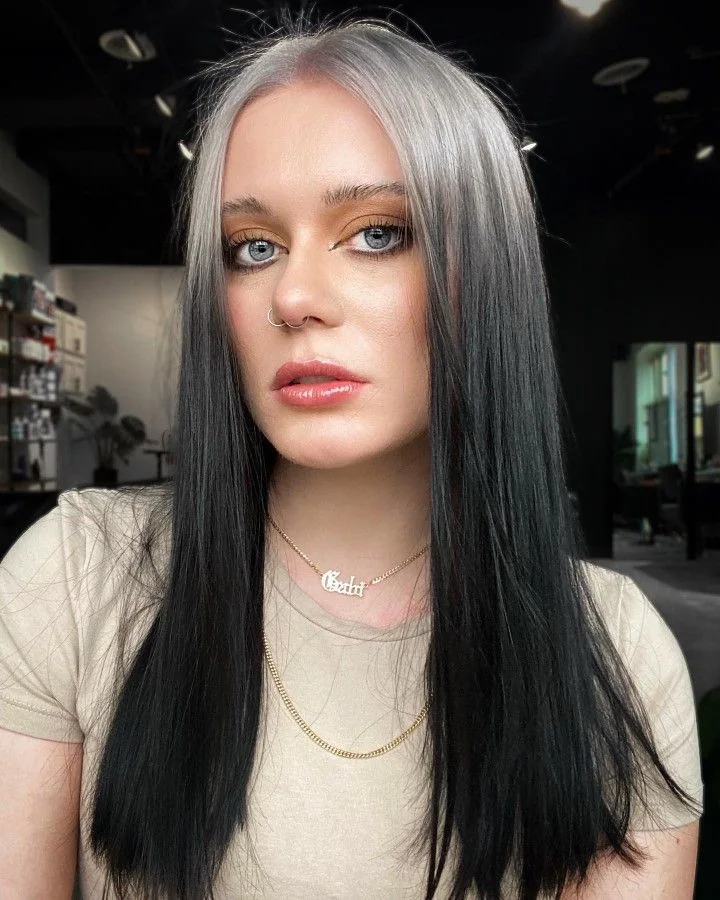
Long Straight Silver Panels
A long straight version where the center part makes the silver placement easy to understand.
Long sleek black hair with silver-white panels through the root zone and front sections.
Straight hair shows every placement choice, so the clean center part makes the silver feel intentional.
Long straight hair, center parts, and high-contrast silver-white root ideas.
Avoid heavy oils near the roots; silver looks best when the top section stays clean and reflective.
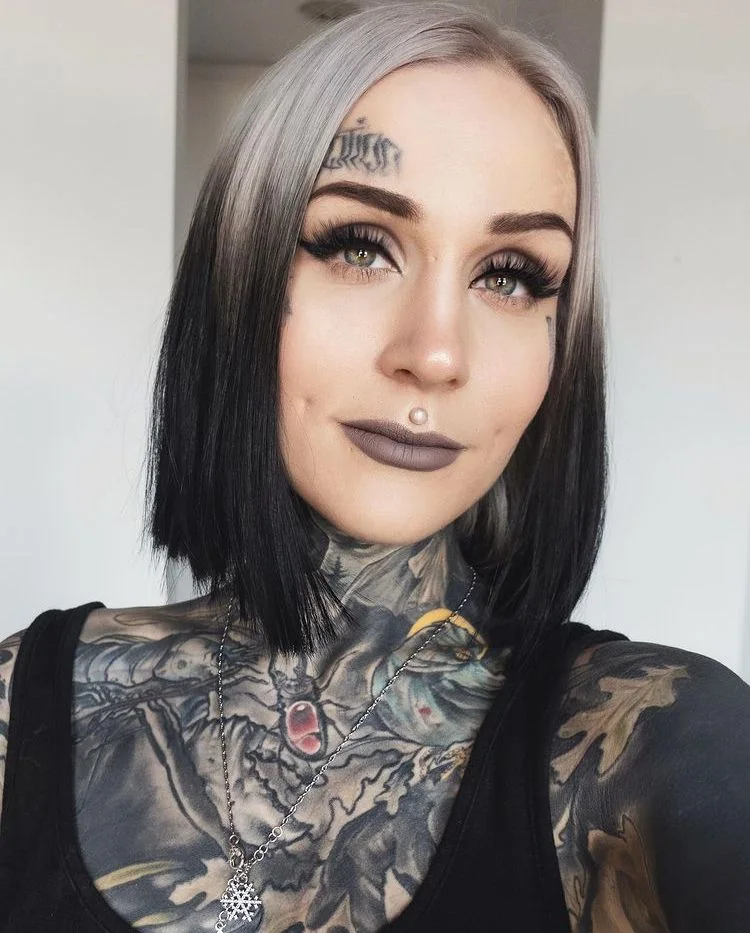
Graphic Silver Blunt Bob
A high-contrast bob for people who want silver ghost roots to feel sharp, graphic, and editorial.
Short blunt bob with a strong silver-white top section and dark ends.
The compact cut keeps attention on the root contrast instead of letting the color get lost in length.
Short bobs, center parts, sleek finishes, and graphic black-and-silver styling.
Use toner and bond care together; the root zone needs brightness without dryness.

Soft Silver Messy Shag
A softer shag direction where silver roots brighten the crown but still feel lived-in.
Medium messy shag with wispy bangs, black lengths, and soft silver-white crown roots.
The texture breaks up the silver so it looks dimensional rather than helmet-like.
Shags, glasses, wispy bangs, soft waves, and casual silver ghost roots inspiration.
Keep styling product light so the silver root area does not look dusty or coated.

Silver Shag With Curtain Bangs
A mirror-selfie reference that shows how silver roots can sit through the fringe and crown.
Medium shag with curtain bangs, black lengths, and silver-white root contrast.
Curtain bangs reveal the root area naturally, so the silver stays visible even when the hair moves.
Curtain bangs, shags, wolf-cut-adjacent layers, and relaxed mirror-selfie styling.
Refresh the fringe first because the front pieces fade and get touched the most.
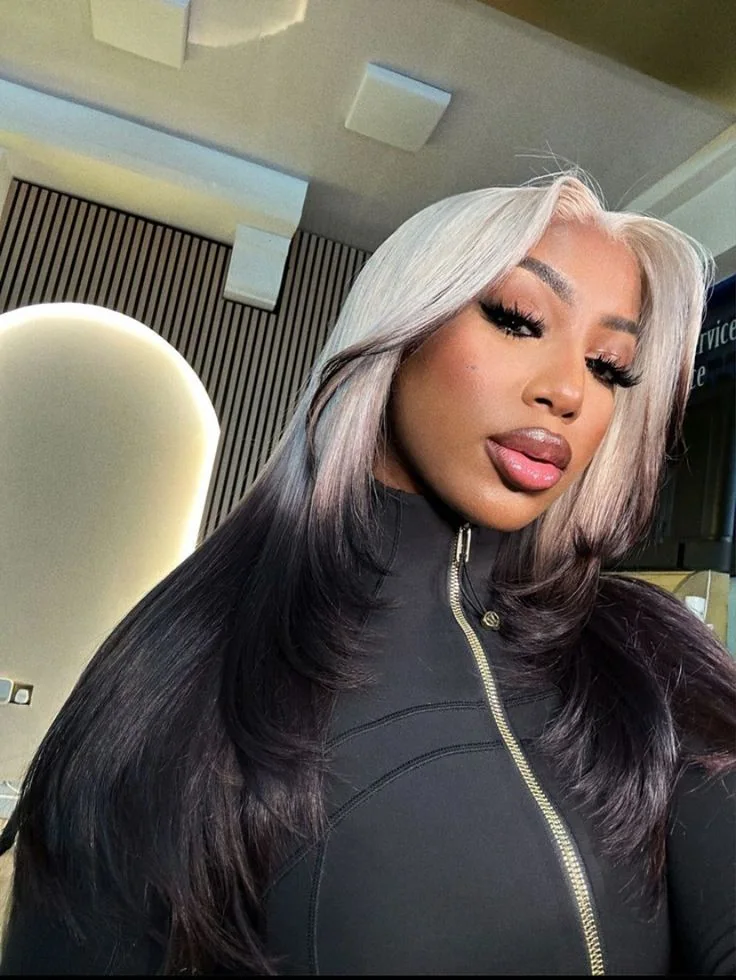
Glam Silver Side Part
A polished side-part version where the silver reads glamorous instead of icy and severe.
Long black glam waves with a silver-white side-swept root and money-piece panel.
The side sweep creates lift and makes the silver catch light across the front.
Long layers, glam waves, side parts, and soft silver-white face framing.
Use heat protectant every time; glam waves can dry out lightened silver sections.

Piecey Silver Textured Bob
An editorial bob where the silver sits through the messy center and piecey fringe.
Short textured bob with black ends, silver-white root contrast, and separated fringe pieces.
The piecey texture makes the silver look intentional and fashion-forward, not like plain regrowth.
Short textured bobs, piecey fringe, editorial styling, and bold silver contrast.
Use lightweight texture spray, not waxy product that can dull silver roots.

Smoky Silver Wolf Cut
A wolf-cut version where smoky silver roots soften the face frame and crown.
Medium wolf cut with curtain bangs, black lengths, and smoky silver ghost roots.
Layering gives the silver more places to flash without needing a full-head color change.
Wolf cuts, curtain bangs, layered medium hair, and softer grey root contrast.
Schedule trims with toner refreshes so the cut and color keep supporting each other.

Platinum-Silver Chin Bob
A lighter silver direction that sits close to platinum while still keeping black contrast underneath.
Short chin-length bob with platinum-silver top color, soft bangs, and a black underlayer.
The black underlayer stops the platinum-silver from looking flat and gives the bob more depth.
Short bobs, soft bangs, salon-finished silver, and high-contrast two-tone cuts.
This is one of the higher-maintenance silver looks because the pale top needs clean toner.
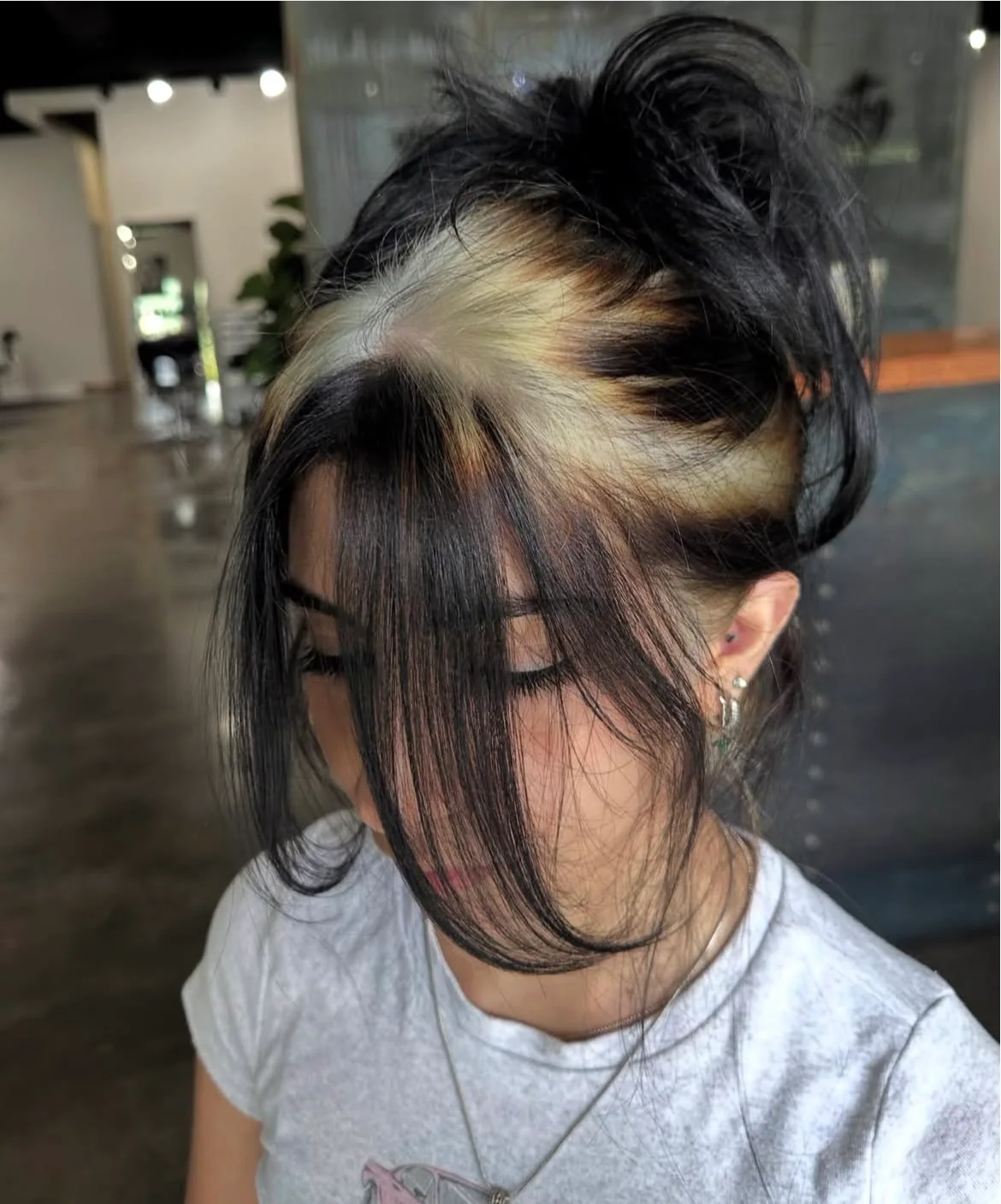
Silver-Blonde Messy Updo
An updo reference that shows silver roots can still matter when the hair is pulled back.
Medium layered hair styled up with silver-blonde roots visible through the crown and face frame.
The lifted style exposes the crown, making the ghost roots visible from more angles.
Messy updos, layered medium hair, face-framing bangs, and salon-candid inspiration.
Keep crown color fresh because updos reveal the root zone more than loose styles.

Silver White Layered Shag
A silver-white face frame brightens the front of a shag while the rest of the hair stays deep espresso. The soft fringe divides the pale color into fine pieces instead of one heavy block.
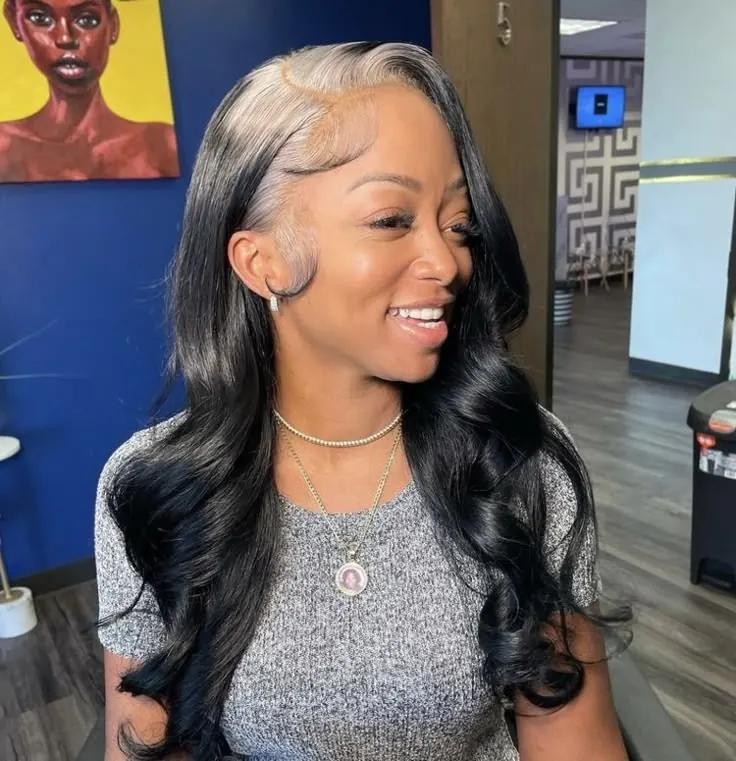
Silver White Body Wave
Silver-white appears as a concealed money piece through black body waves, visible mainly around the temple and part. This placement offers strong light-dark contrast without whitening the full hairline.
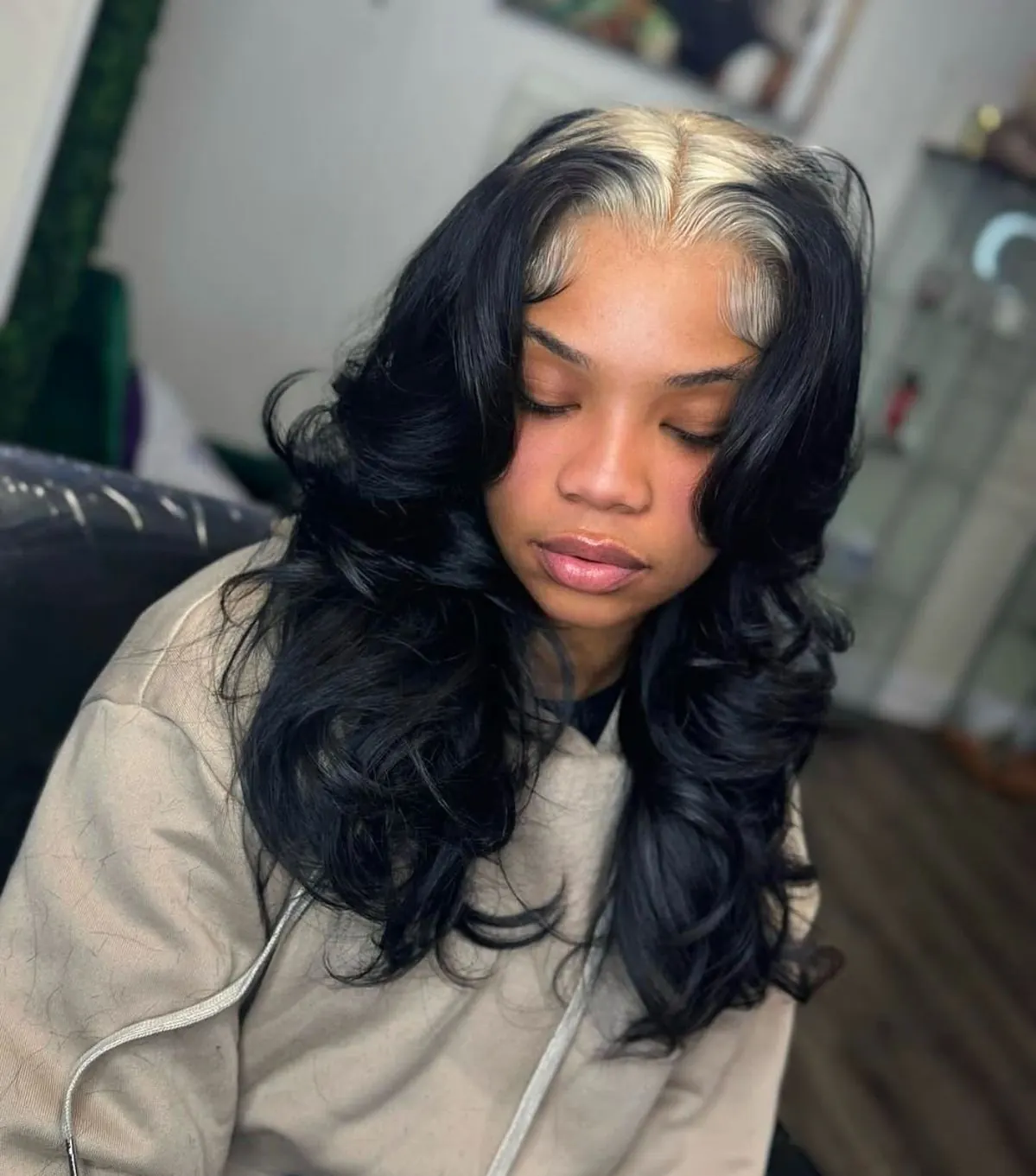
Silver White Glam Curl
Two broad silver-white sections curve beside the face and disappear into glossy black curls. The generous width creates a graphic money-piece effect that will show toner changes quickly.

Silver White Loose Wave
A bright silver-white face frame sweeps into long loose black waves. Warmth would be most noticeable along the pale front curve, where the section sits directly against the dark base.
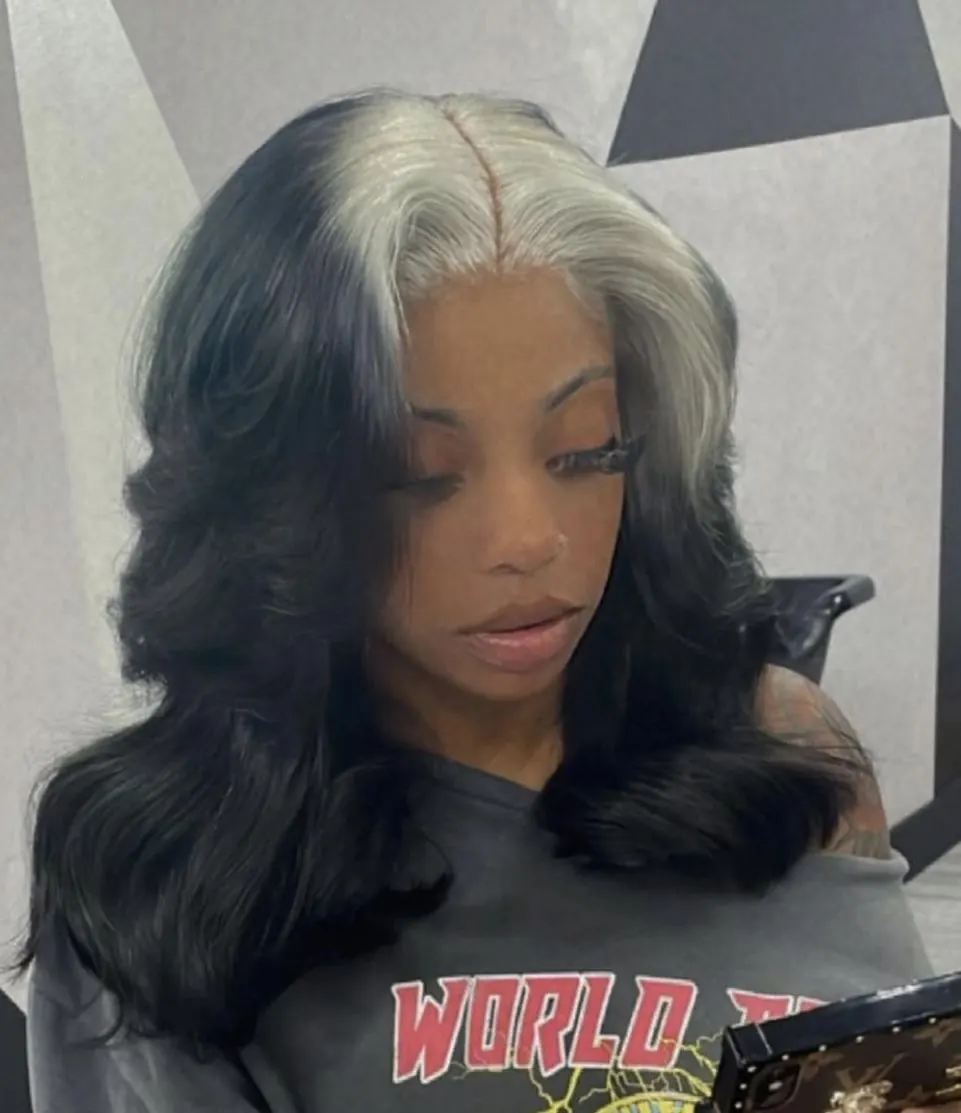
Silver White Body Wave
The broad silver-white frame extends from the center part through both front panels of medium body waves. Its near-white value makes it a higher-contrast commitment than smoky grey or narrow silver streaks.
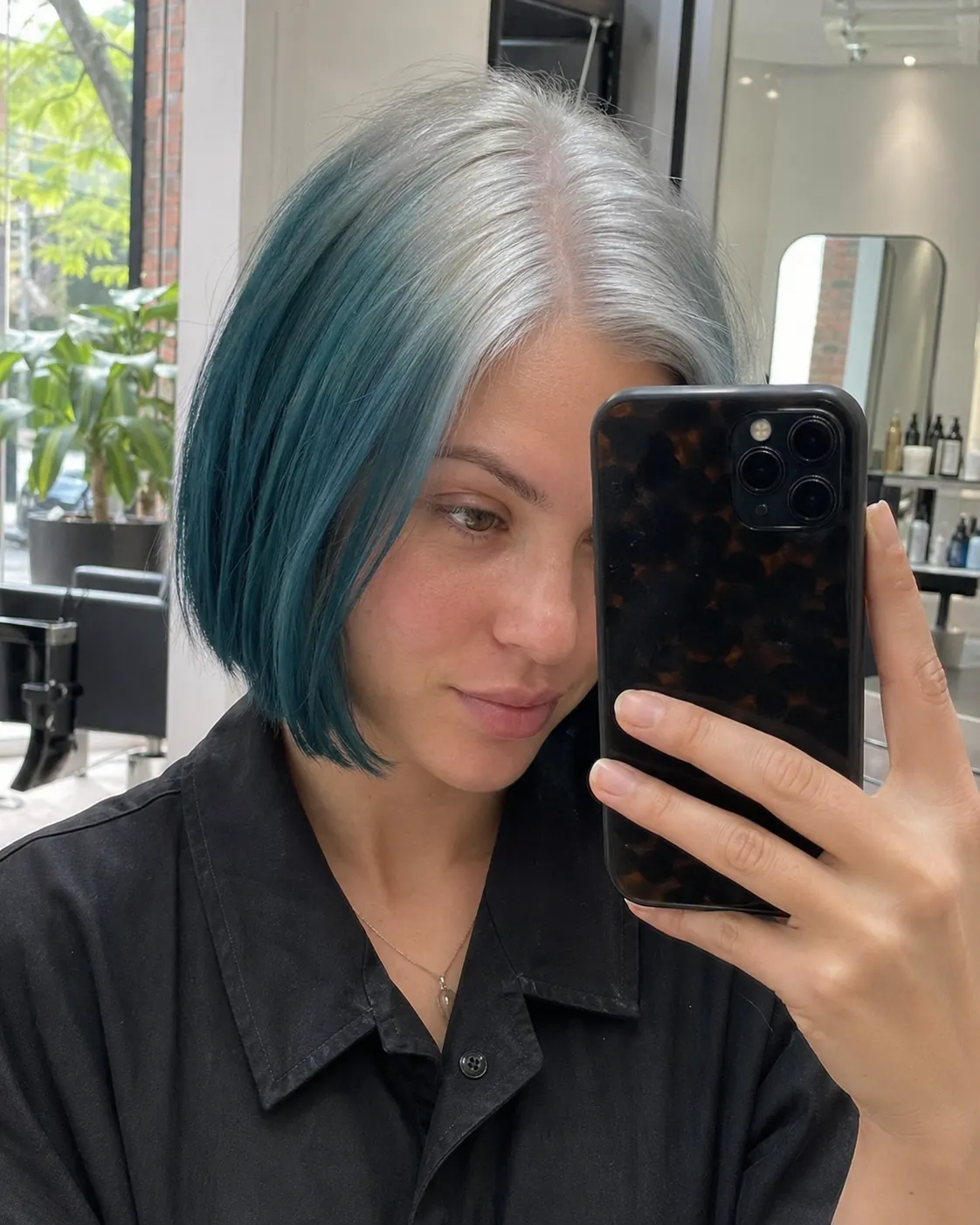
Silver White Sleek Bob
Silver-white covers the crown and one side of a sleek black bob, producing an asymmetric two-tone finish. The smooth cut exposes the transition clearly and leaves little texture to disguise banding.
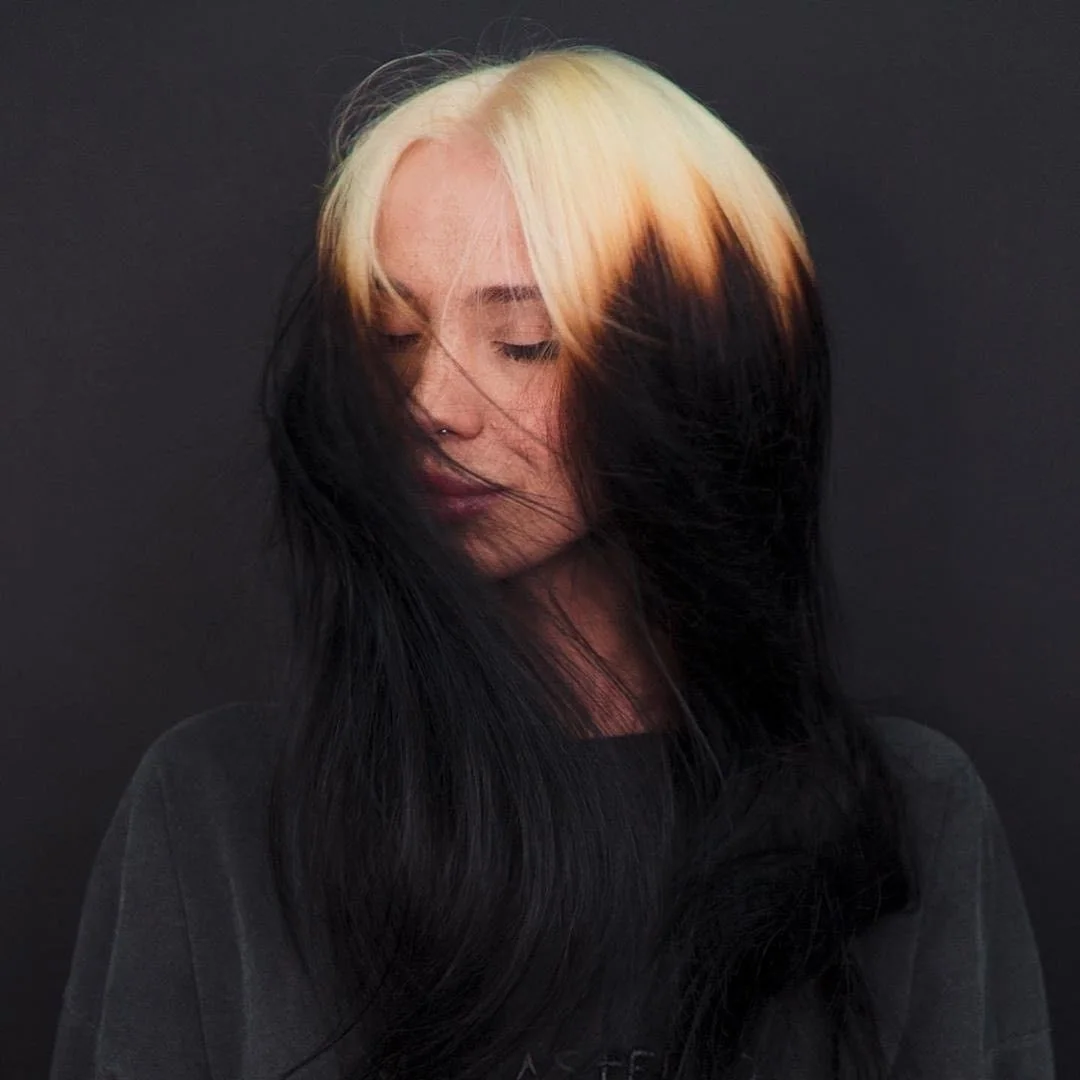
Platinum Silver Straight
Platinum-silver falls from the center part into straight black lengths, with a soft grey cast rather than pure white brightness. The muted portrait shows how the tone behaves in low light.

Silver White Layered Shag
A narrow silver-white center part opens into the face-framing layers of a black shag. Outdoor light confirms the section is cool and pale while the dark fringe prevents it from reading as an all-over silver look.
Silver Keeps a Smoky Cast That White Tries to Remove
Silver and white ghost roots are close, but they do not create the same effect. White roots are brighter, sharper, and more graphic, while silver roots are cooler, smokier, and usually softer around the face. Use this as the quick decision:
- Choose silver ghost roots if you want smoky grey, pearl, charcoal, or icy softness.
- Choose white ghost roots if you want maximum contrast and a cleaner black-and-white effect.
- Choose platinum ghost roots if you want the brightness of white but a slightly warmer blonde finish.
- Choose silver-blue roots if you like icy color but want the result to feel more editorial.
The biggest difference is maintenance. White and silver both need toning, but silver can shift dull, violet, blue, or green if the toner or shampoo routine is too heavy. White usually shows yellow warmth faster. If your hair naturally lifts warm, silver may be more forgiving than pure white, but it still needs a clean pale base before the toner can look intentional.
Use Silver Where Soft Reflection Can Define The Root Zone
The best placement depends on how visible you want the silver to be from the front, side, and top. A stylist should map the silver to the haircut first, then choose the tone.
- Money-piece roots: Brighten the face quickly and work well if you want the silver to show in selfies.
- Center-part roots: Look clean on straight hair, long layers, and middle-part styling.
- Crown panels: Show more when the hair moves, especially on waves, shags, and layered cuts.
- Fringe or curtain-bang roots: Keep the silver visible even when the rest of the hair is dark.
- Side-part panels: Feel softer and more glamorous than a strict center stripe.
A Cool Result Depends on The Lift Underneath
Silver ghost roots suit people who want a cool-toned contrast that looks softer than white but sharper than beige blonde. They are especially strong on black hair, charcoal brunette hair, cool dark brown hair, pale blonde panels, bobs, shags, long layers, curtain bangs, and face-framing cuts where the root zone is easy to see.
Think twice if you want very low-maintenance color or your hair is already fragile from bleach, box dye, relaxer, or repeated heat styling. Silver is one of the less forgiving ghost roots shades because it exposes warmth, uneven lift, dryness, and product buildup quickly.
Name The Silver, The Root Zone, And The Desired Edge
Use specific color and placement language so the stylist knows this is a root-focused look, not all-over silver hair.
- Ask for smoky silver, icy silver, silver-grey, pearl silver, or charcoal silver root contrast.
- Show whether you want a money piece, center part, crown panel, fringe root, side panel, or face frame.
- Ask whether your hair can reach the right lightness in one session or multiple appointments.
- Ask what toner will be used and how often the silver will need refreshing.
- If your hair is dark or previously colored, ask for a strand test before committing to a pale silver result.
Toning Existing Silver is Safer Than Creating it From Dark Hair
Silver ghost roots are possible to maintain at home, but they are not a casual one-step DIY on dark hair. A true silver result usually requires the root zone to be lifted very pale first, then toned with the right silver, violet, blue-violet, or smoky-grey formula. If the lifted hair is too orange or deep yellow, silver toner will usually look muddy, greenish, beige, or uneven.
For at-home upkeep, the useful products are specific and practical: bond repair for the lightened root zone, a color-safe shampoo, heat protectant, a controlled purple shampoo or purple mask, a silver toner or gloss if your hair is already light enough, gloves, sectioning clips, a tint brush, a tail comb, and barrier cream around the hairline. Avoid random grey box dye over dark roots; it will not create clean silver ghost roots without the right lift underneath.
If you are doing anything yourself, keep it conservative. Refresh tone on already-lightened silver sections, reduce heat, use purple shampoo only when warmth appears, and stop if the root area feels stretchy, hot, brittle, or uneven. For black hair, old box dye, or a first-time silver result, this is a better salon job than a bathroom experiment.
Prevent Yellowing Without Overloading The Hair With Violet
Silver ghost roots are not the easiest color family, but they look expensive when the tone stays clean and glossy. The goal is to keep the silver reflective rather than chalky, greasy, violet, or yellow.
- Use bond care after lightening, especially if the root area was lifted past yellow.
- Use heat protection because silver sections can look dry faster than dark lengths.
- Use purple shampoo carefully; too much can make silver look flat, violet, or smoky in the wrong way.
- Refresh toner before the roots turn beige, yellow, greenish, or dull.
- Keep heavy oils and waxy styling products away from the root area so the silver still reflects light.
Read The Difference Between Pearl, Smoke, Steel, And Silver-White
If you want the most wearable starting point, save silver-white money pieces on black waves or a smoky silver side part on long layers. If you want a sharper editorial result, choose a blunt bob with a silver top panel or a textured bob with piecey silver fringe. If your haircut has movement, a silver shag, wolf cut, or curtain-bang placement usually looks more natural because the color flashes through the layers instead of sitting as one flat stripe.
Silver Ghost Roots FAQ
Are silver ghost roots the same as white ghost roots?
No. White ghost roots are brighter and sharper, while silver ghost roots are cooler, smokier, and usually softer around the face. Silver can read pearl, grey, charcoal, or icy depending on the toner.
Do silver ghost roots work on black hair?
Yes. Black hair gives silver one of the clearest contrasts, but the root area usually needs careful lightening and toning first. Clean silver is not just a one-step dye job on dark hair.
Are silver ghost roots high maintenance?
They can be. Silver can shift yellow, blue, violet, green, or dull depending on the base and products. Toner refreshes, bond care, and controlled purple shampoo use are the main maintenance tools.
Can I do silver ghost roots at home?
Maintaining already-lightened silver sections at home is realistic, but creating silver ghost roots from dark hair is usually a salon job. You need a pale enough base, the right toner, bond care, and a plan to avoid overlapping lightener near the scalp.
For a brighter high-lift version, read white ghost roots. For softer warm contrast, read blonde ghost roots, and review ghost roots hair dye before choosing silver.