Teal ghost roots sit between blue and green, which makes them one of the most flexible vivid versions of this color technique. On black or dark brown hair, teal creates a cool flash through the root area while the darker lengths keep the style moody, dimensional, and easier to wear than full-head teal. The color can look sleek and blue-leaning in cool light, or deeper and greener when the base underneath is warm.
The best teal ghost roots are placed with purpose. A crown panel feels bold, a center stripe feels graphic, a fringe panel feels more alt, and a face-framing or side-part placement makes the color easier to see from the front. If teal is scattered randomly through the lengths, the look stops reading as ghost roots and starts looking like uneven vivid highlights.
Visual Ideas
Where Teal Stays Visible on a Dark Base
These teal ghost roots examples focus on crown panels, center parts, fringe color, bobs, shags, teal-blue softness, and dark-base contrast.
Top-Panel Teal Shag
A louder teal root option where the whole top panel carries the color story.
Medium black shag with teal roots across the crown, top panels, and fringe.
A wider top panel makes teal visible from above while the black lower layers keep the look dimensional.
Full fringes, shags, wolf-cut shapes, and people who want teal to be obvious.
Because the top section is broad, color-safe cleansing and teal refresh products matter more.
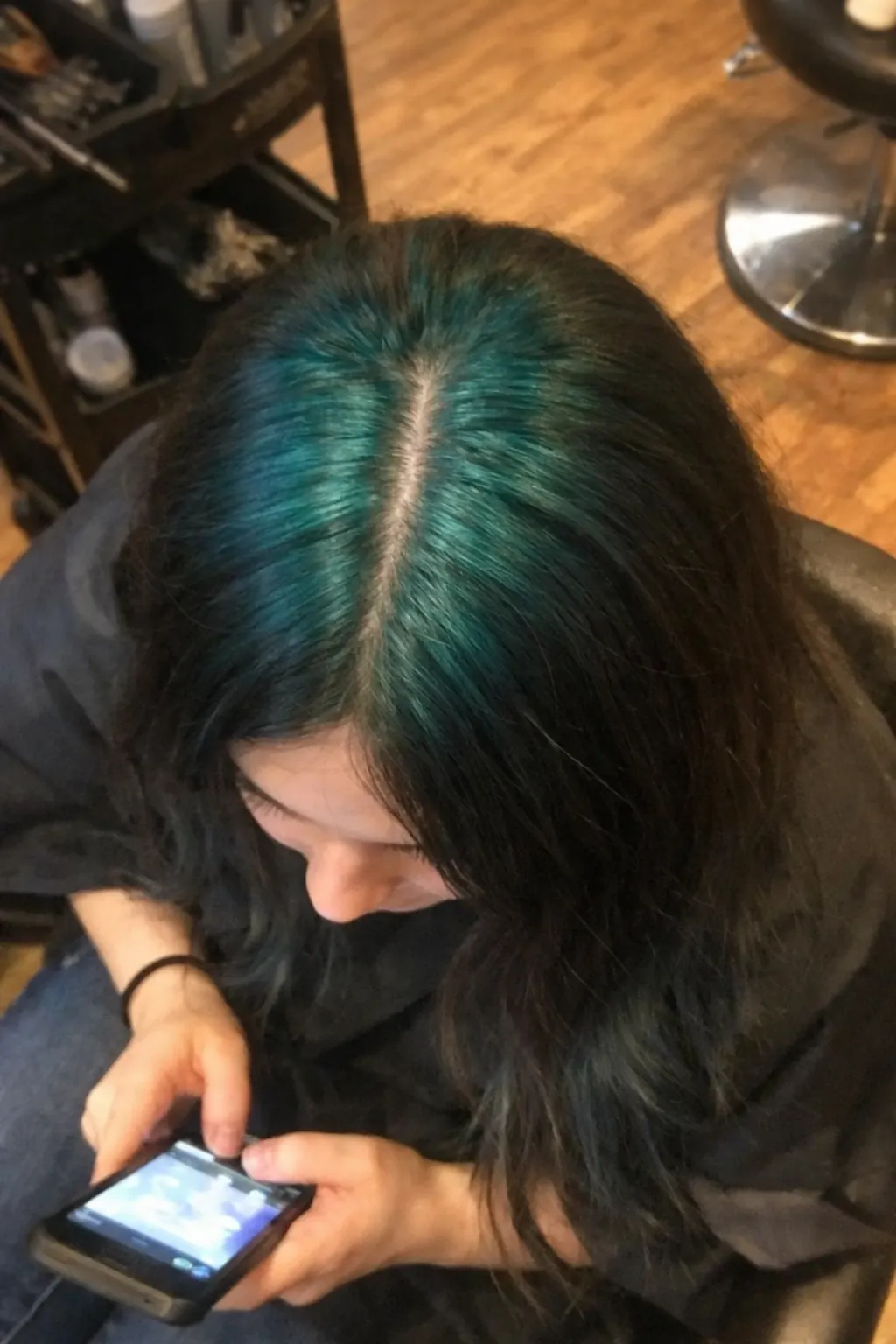
Teal Center-Part Crown Roots
A useful top-down reference for showing exactly where teal should sit on a center part.
Medium-long black center-part hair with teal concentrated along the part line and crown.
The clean part line makes the root placement readable immediately, especially on dark straight hair.
Center parts, salon references, straight layers, and people who want teal roots to look precise.
The part line shows fading first, so refresh the visible root strip rather than over-coloring the lengths.
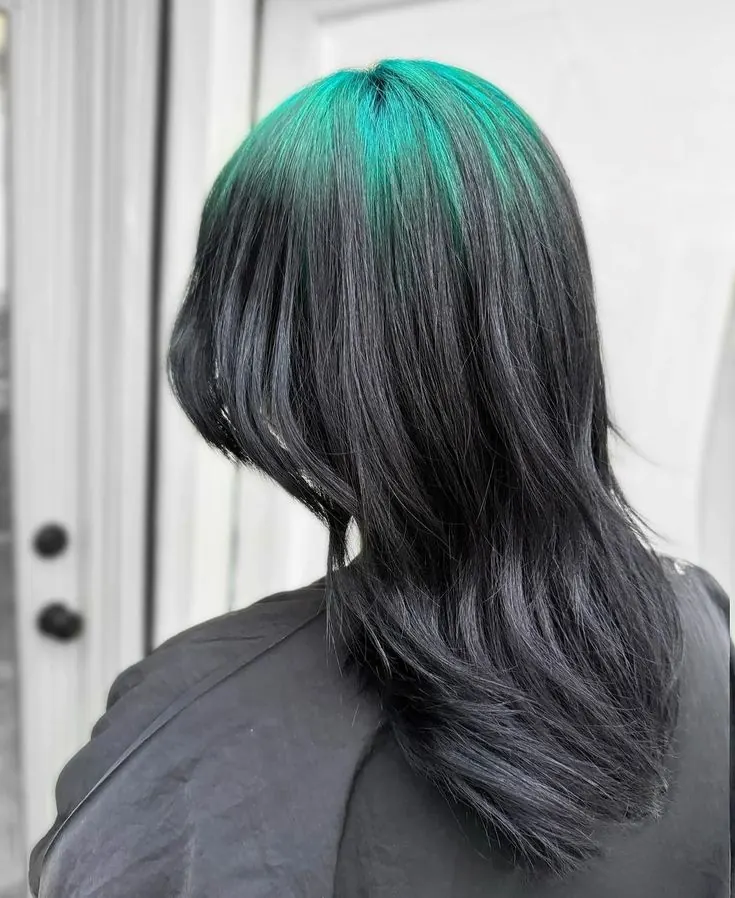
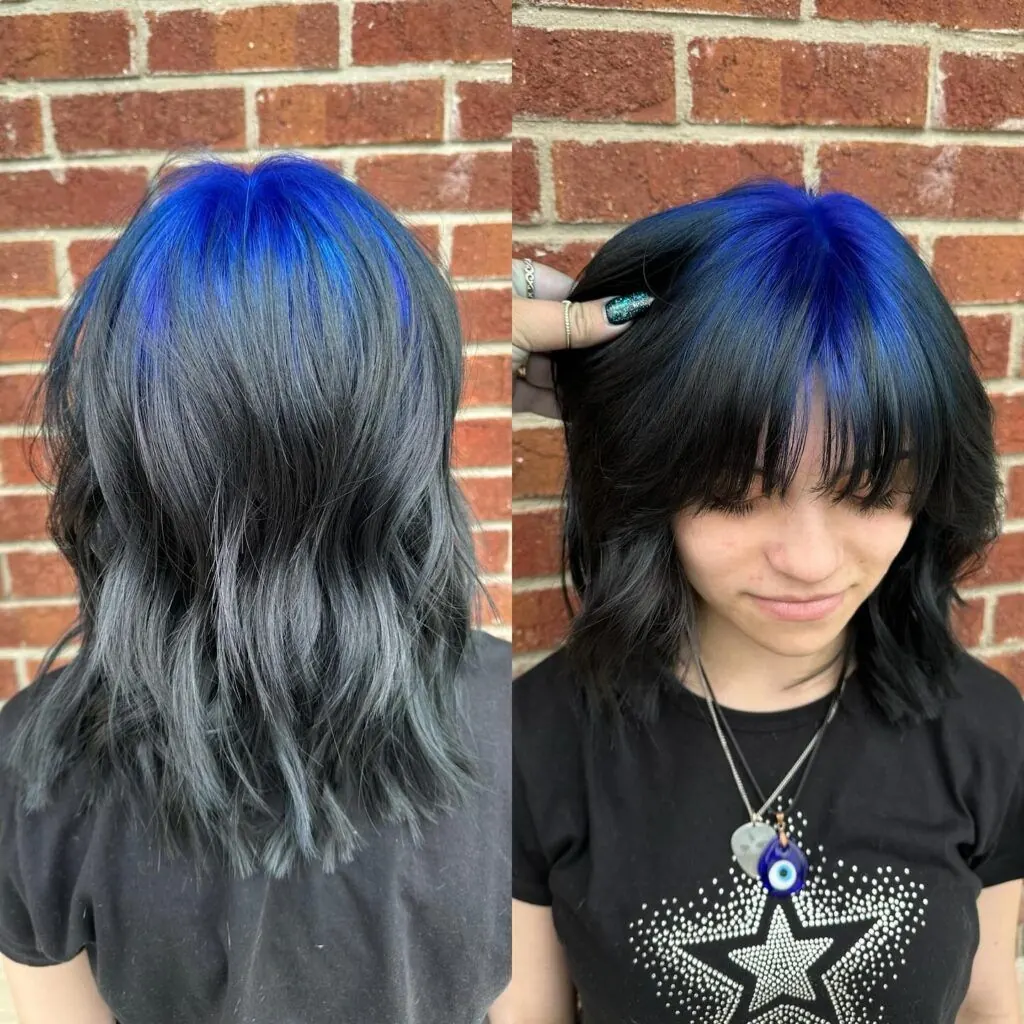
Teal Crown Ghost Roots Lob
A back-view crown reference that shows how teal can sit high without taking over the whole lob.
Medium-long black layered lob with teal concentrated through the crown and upper root area.
The dark lengths keep the lob grounded while the crown placement creates a clear teal focal point.
Lobs, collarbone cuts, crown panels, and people who want visible teal without full-head color.
Back and crown panels need targeted refreshes because they can fade unnoticed until the color looks flat.
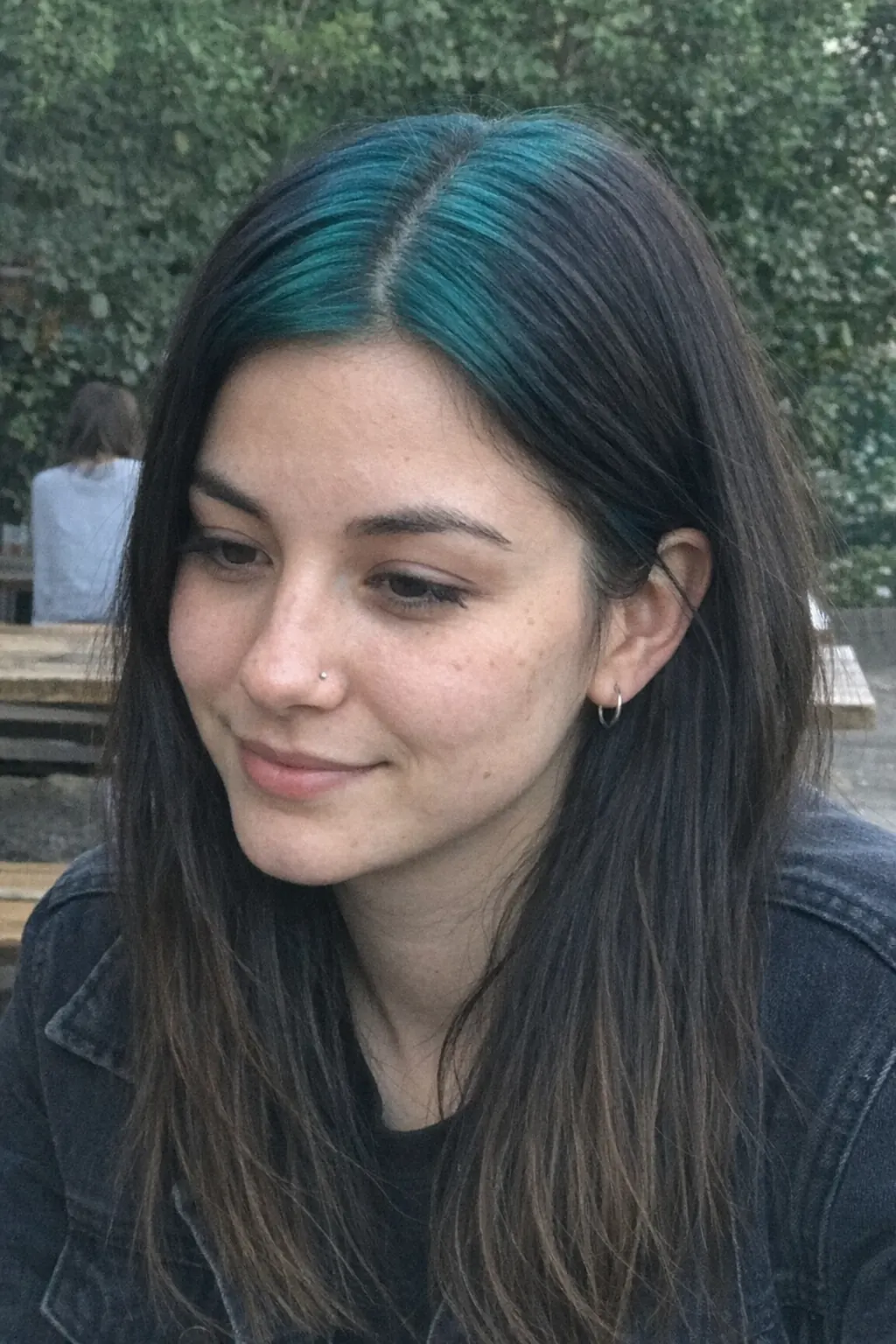
Outdoor Teal Part-Line Roots
A natural-light teal reference that proves the color still reads outside of salon lighting.
Medium-long dark straight layers with teal ghost roots along the center part and top root area.
Straight styling exposes the part line clearly, so the teal placement has to be clean and deliberate.
Straight layers, soft center parts, and people who want teal that feels wearable rather than neon.
Smooth styles show dullness quickly, so shine support and cool-water washing matter.
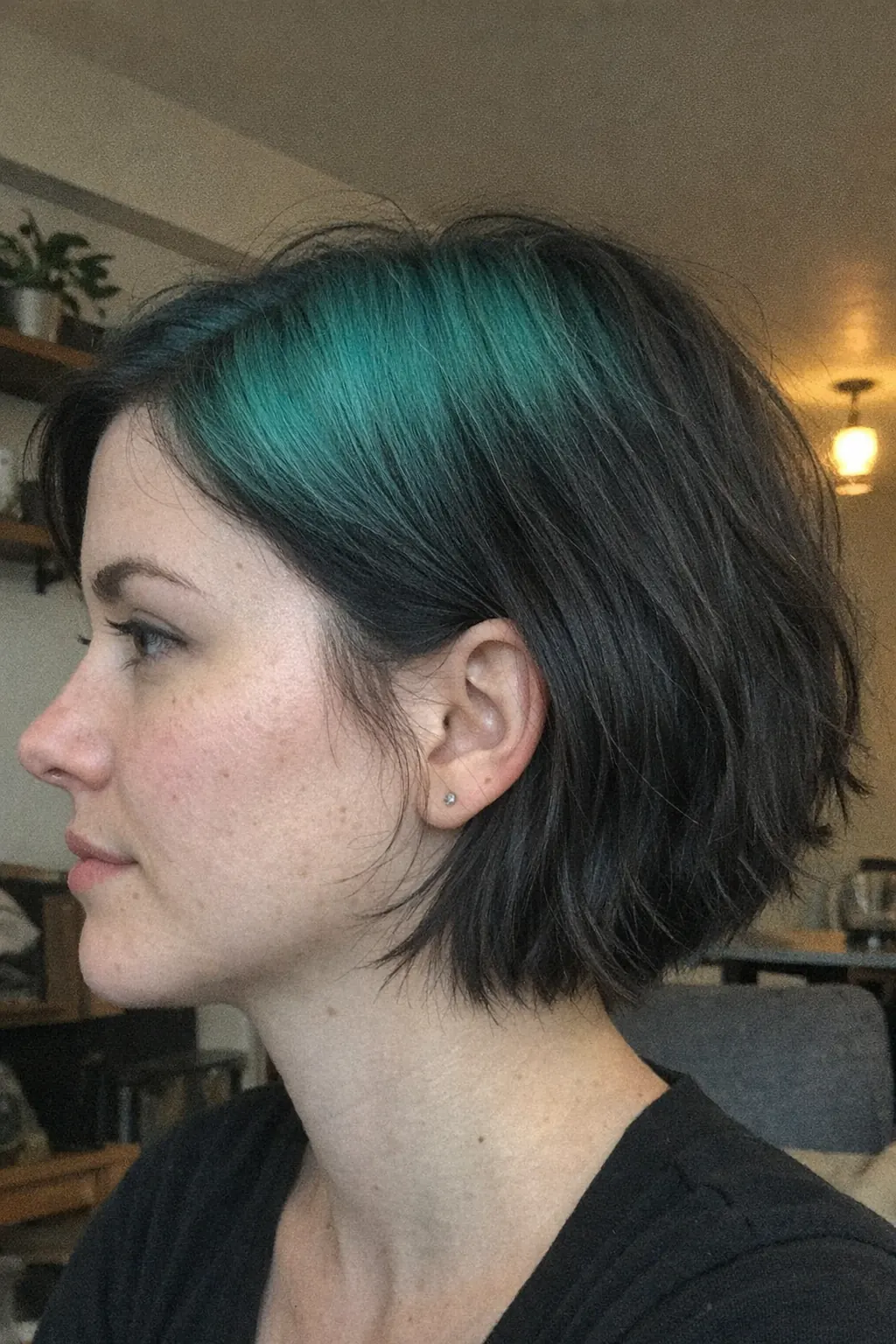
Teal Side-Part French Bob
A short bob reference where teal follows the side part and top sweep.
Short black French bob with teal ghost roots concentrated through the side part.
The side profile makes the root placement clear without needing a large color section.
French bobs, side parts, short dark hair, and concentrated teal root color.
Short cuts change shape quickly, so refresh and trim timing should work together.
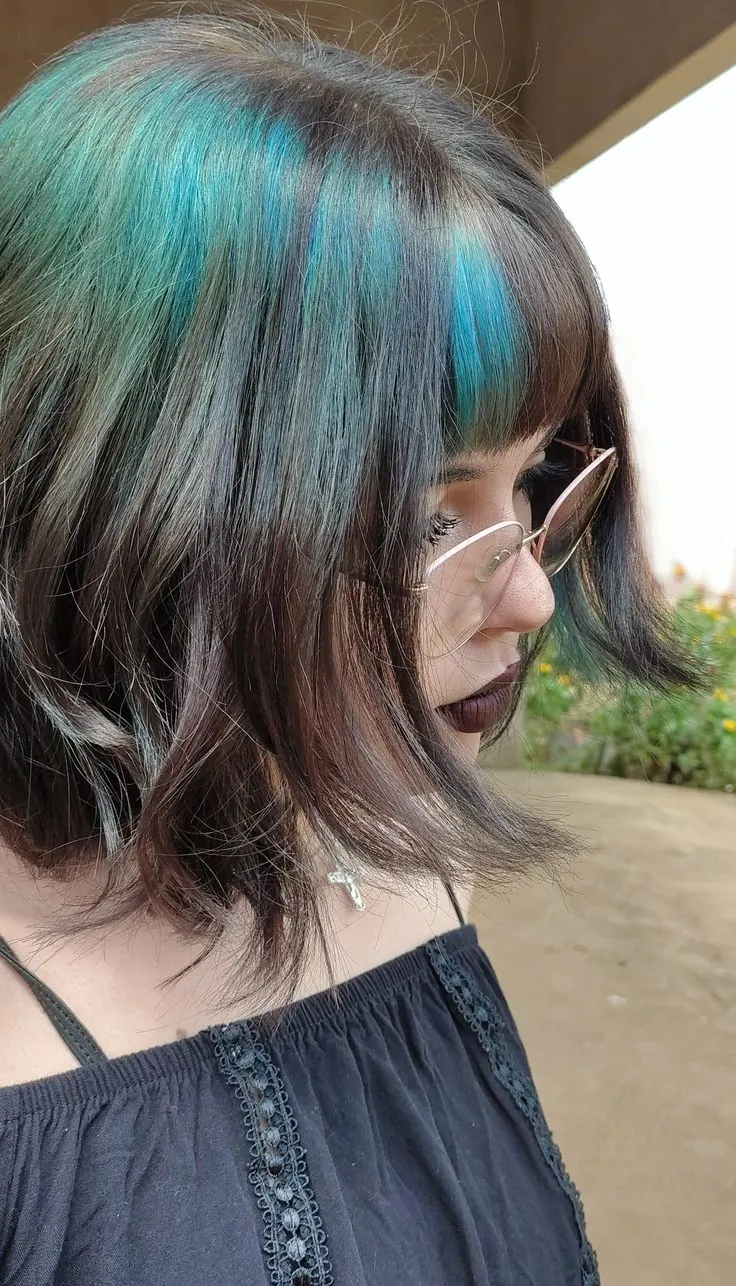
Teal-Blue Textured Bob
A textured bob where teal-blue stays high enough to read from the side.
Short black textured bob with teal-blue ghost roots through the top layer and side view.
Short texture gives teal-blue less room to disappear, so even a small panel feels intentional.
Textured bobs, side-view color, short cuts, and people who want a compact teal statement.
Bob shapes need regular trims, and teal-blue looks best refreshed before it fades green-grey.
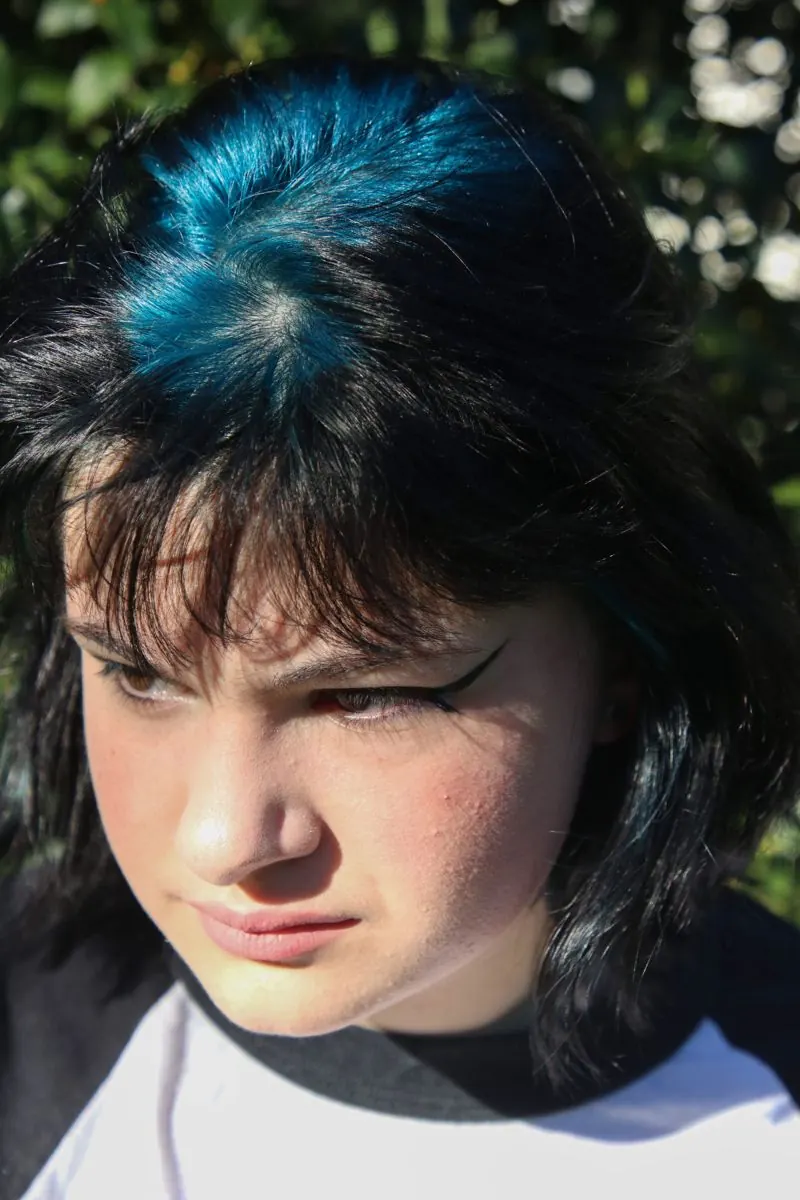
Blue-Teal Short Shag Crown
A bright outdoor short-shag reference where blue-teal color sits clearly through the crown.
Short black layered shag with blue-teal ghost roots concentrated around the crown and top fringe area.
The short shape exposes the crown naturally, so the teal reads as root placement instead of scattered vivid color.
Short shags, layered bobs, crown panels, and people who want teal to show strongly in daylight.
Outdoor-bright teal can fade quickly, so color-safe washing and a blue-leaning teal refresh product matter.
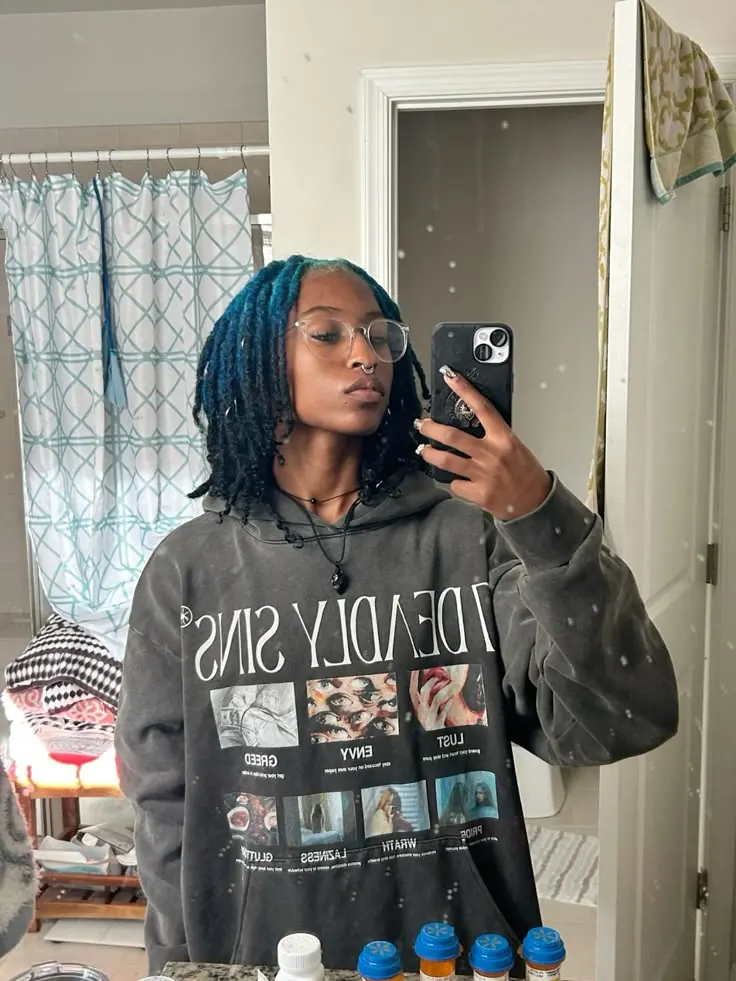
Teal-Blue Locs Crown
A locs reference where teal-blue sits near the scalp and front rows instead of coloring every loc length.
Medium black locs with teal-blue ghost roots placed through the crown and visible front rows.
The color follows selected loc rows, which keeps the teal root-focused and avoids a full-head dye effect.
Locs, visible part rows, crown rows, and anyone who wants teal roots without coloring every loc.
Use residue-conscious cleansing and lightweight moisture so buildup does not dull the teal-blue rows.
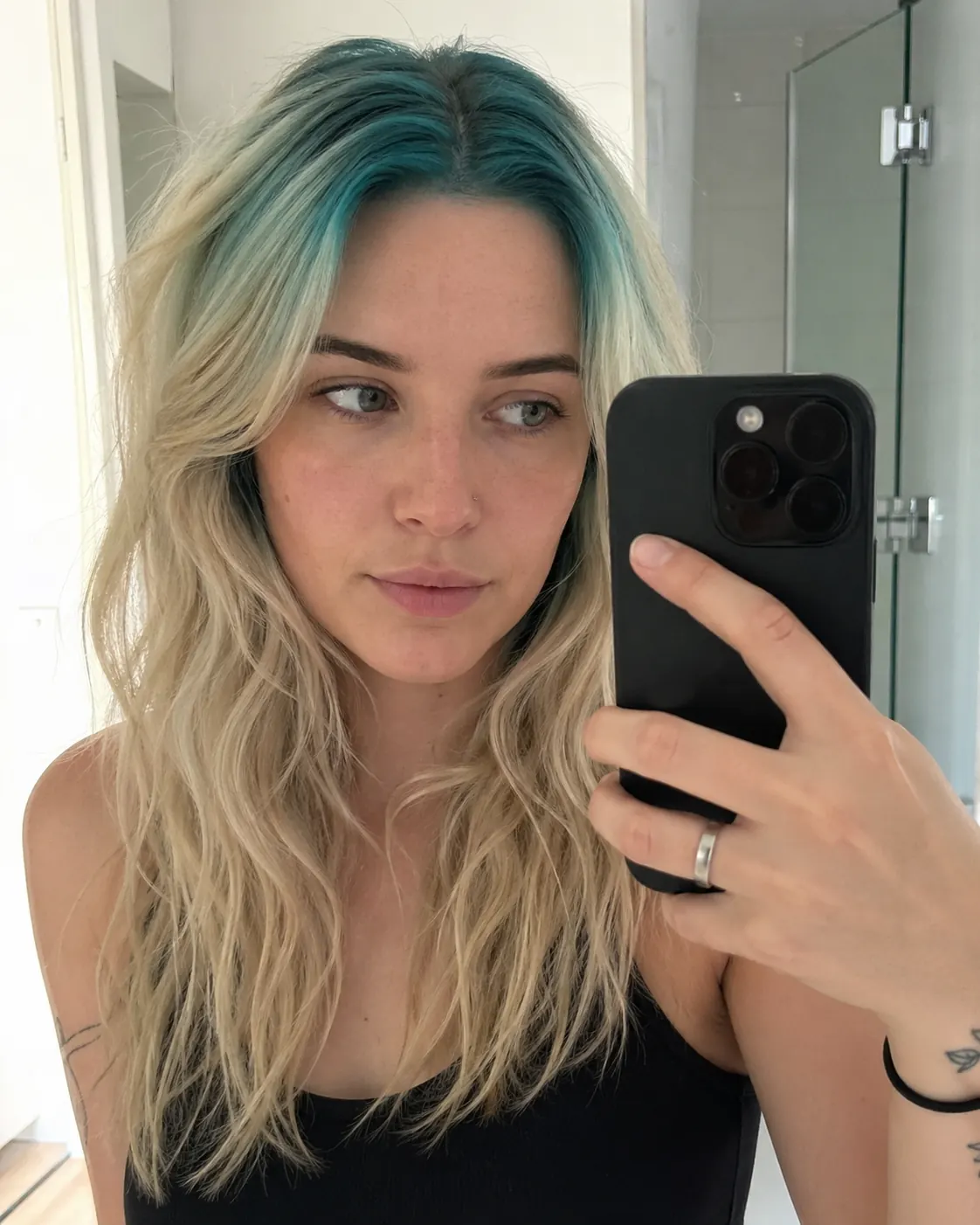
Blonde Teal-Blue Root Panel
A lighter-base teal-blue option where the root panel shows strongly against blonde lengths.
Long blonde loose waves with teal-blue ghost roots placed through the top root panel.
The blonde base makes teal-blue more visible than it would be on black hair, so the placement can stay compact.
Blonde hair, loose waves, root panels, and people who want teal contrast without dark lengths.
Teal over blonde can fade minty or green, so refresh with a balanced teal-blue product instead of random blue.
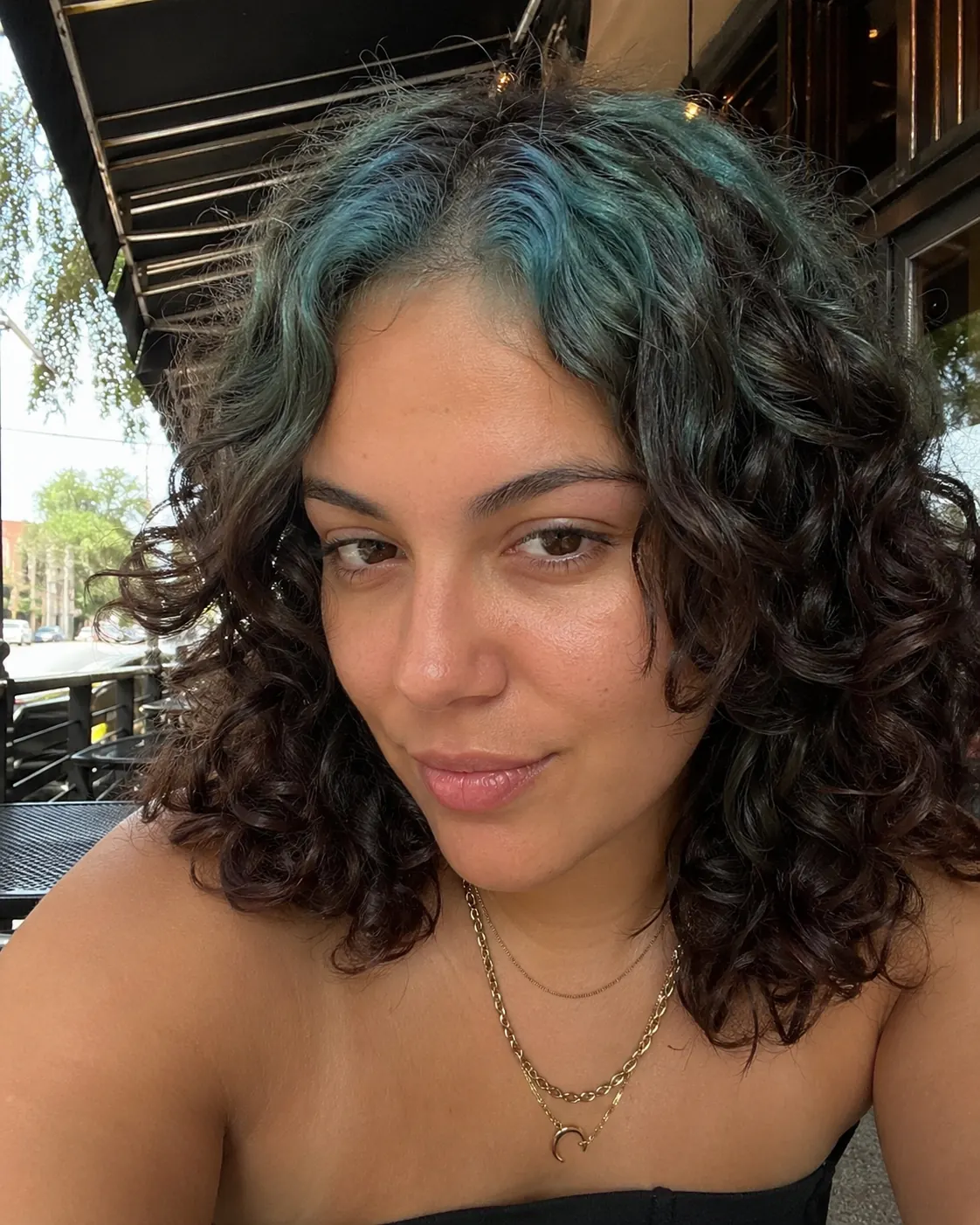
Teal-Green Curly Bob Face Frame
A curly-bob teal reference where the color frames the face and follows the natural curl opening.
Medium black curly bob with teal-green ghost roots placed around the face frame and top curls.
The curls separate around the front, which gives teal a visible path without needing a wide panel.
Curly bobs, face-framing roots, soft teal-green shades, and medium textured cuts.
Use curl-friendly color-safe products; heavy creams near the roots can make teal look dull.
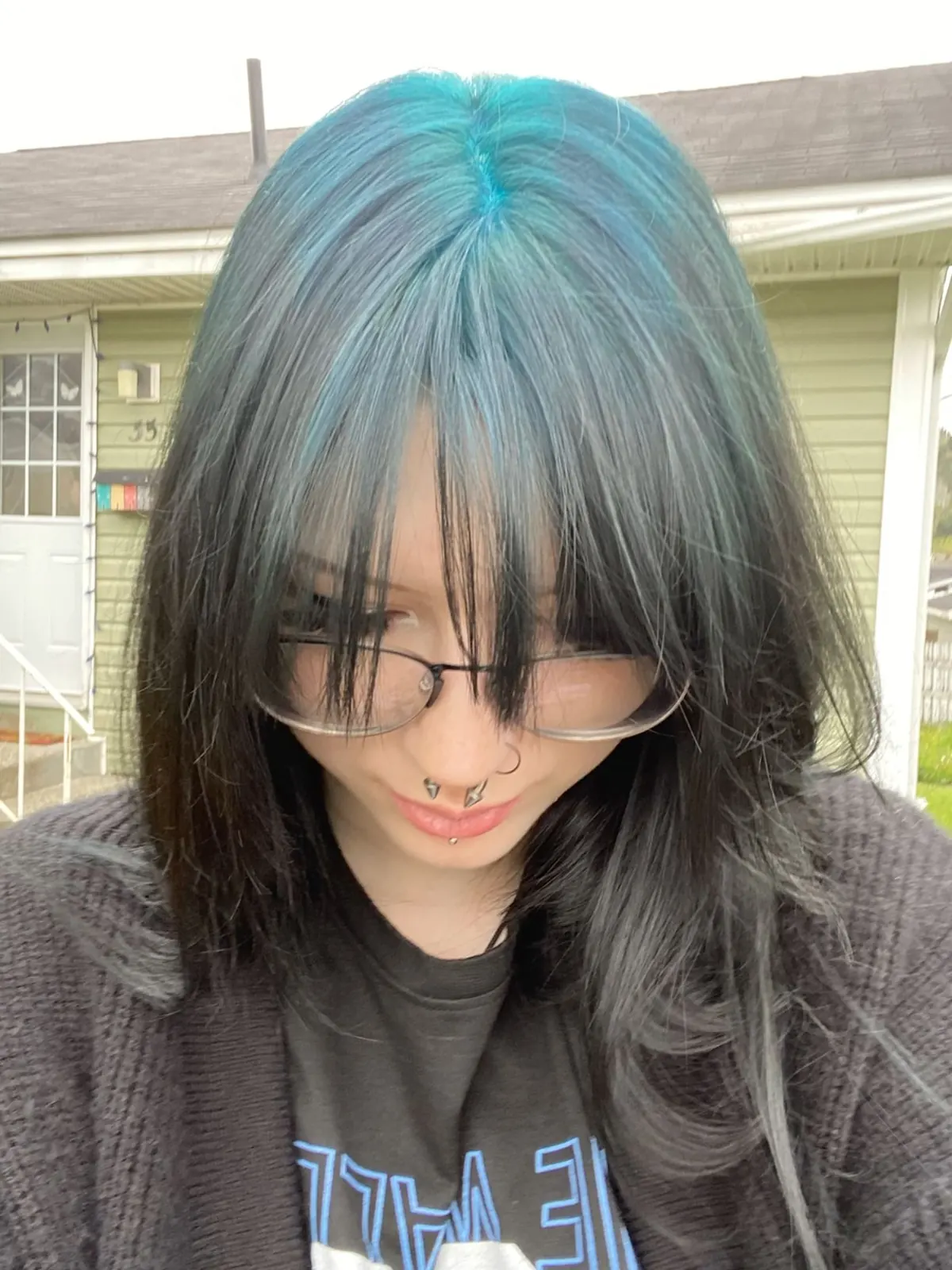
Brown Hair Teal-Blue Crown
A brunette-friendly teal-blue placement that feels softer than teal on a black base.
Medium brown straight hair with teal-blue ghost roots through a crown panel.
The brown base softens the color contrast, making teal-blue feel more wearable and less stark.
Brown hair, straight medium cuts, and people who want teal without a black-hair contrast level.
Warm brunette bases can push teal muddy, so refresh before the shade turns dull green.
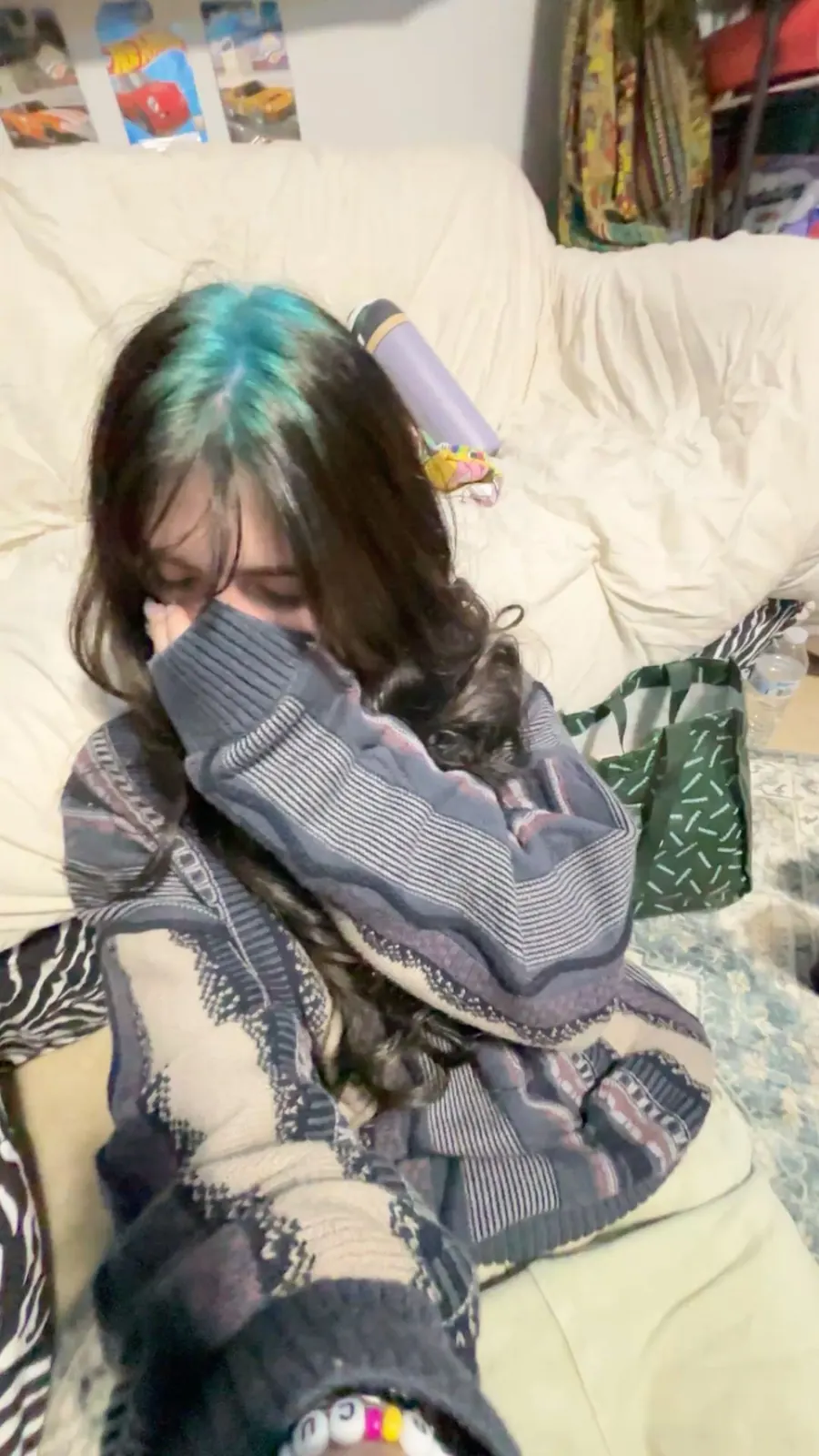
Soft Teal-Blue Crown on Brown Hair
A softer, moodier teal-blue reference for people who want less contrast than black hair gives.
Long brown straight hair with teal-blue ghost roots placed through the crown.
The brunette base makes teal-blue look deeper and quieter while still keeping the color at the root zone.
Long brown hair, subtle teal experiments, and lower-contrast cool color.
Subtle teal-blue needs shine support because fading can make the placement look accidental.
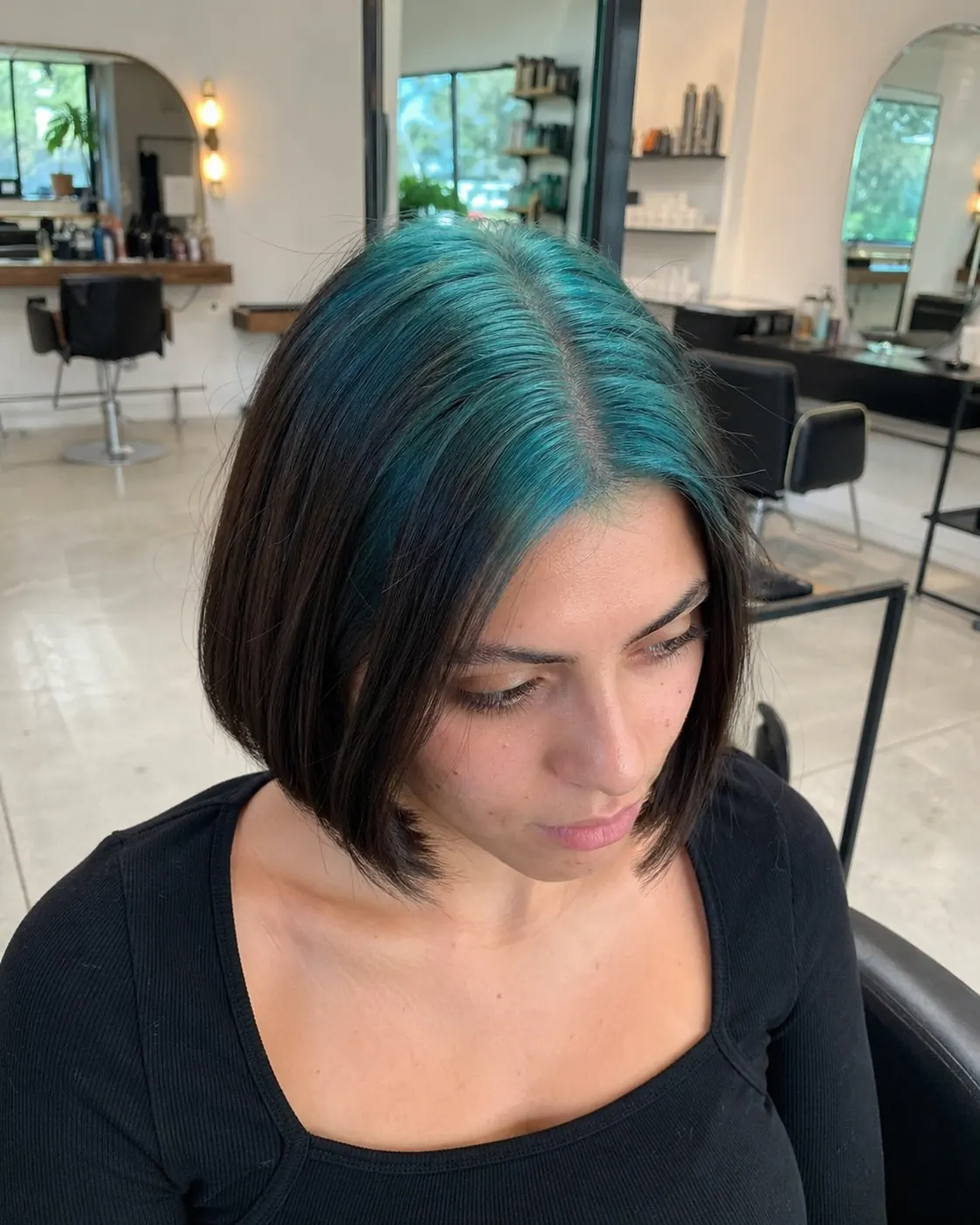
Teal Blue Sleek Bob
A clean teal-blue line runs down the center part of this chin-length black bob. The smooth surface keeps the cool tone precise, so it is easy to judge how little width is needed for a visible result.
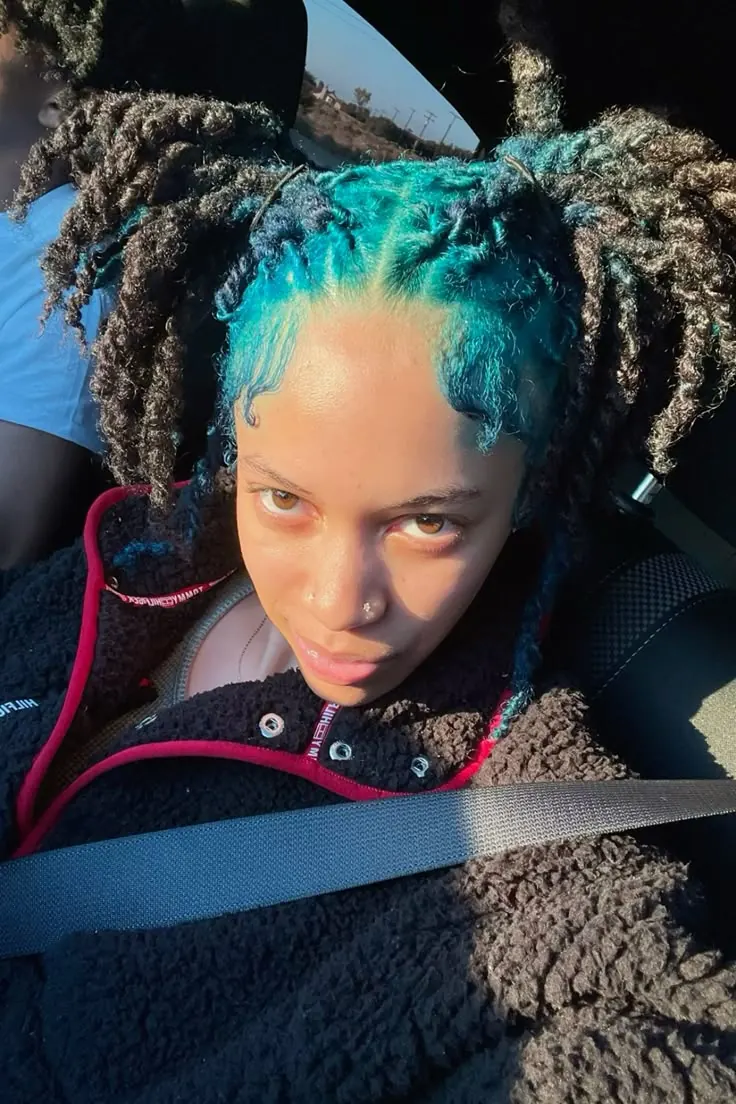
Turquoise Blue Curly Locs
Bright turquoise fills the exposed top panel between dark curly locs. The photograph makes the scalp-facing coverage clear and shows why retouching must follow the original loc rows rather than coating every loc.
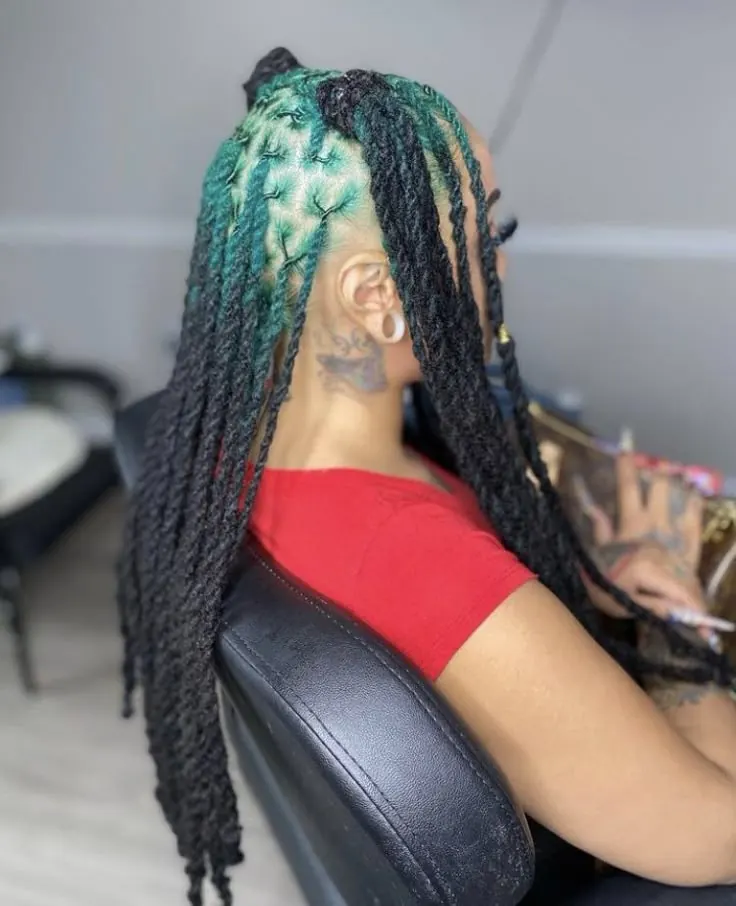
Teal Green Locs
Teal-green color follows the braided side rows while the long locs remain black. This is a directional placement: the color is strongest in profile and depends on the side part staying exposed.
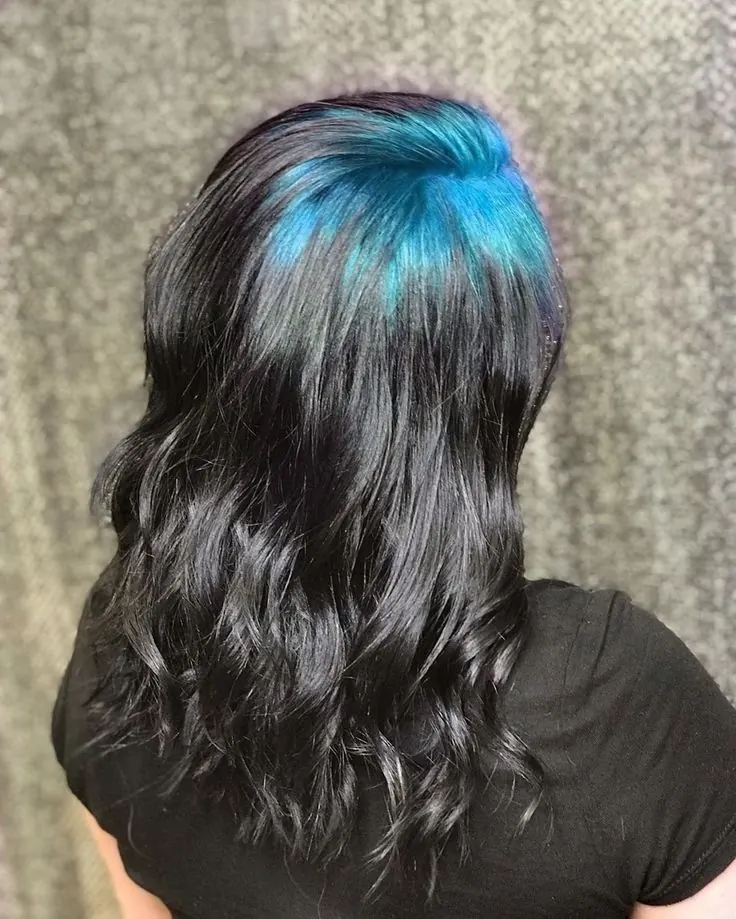
Teal Blue Loose Wave
Seen from behind, teal-blue covers a broad crown section and dissolves into glossy black waves below it. The rounded panel reads more like a colored cap than scattered streaks, which helps when discussing section width.
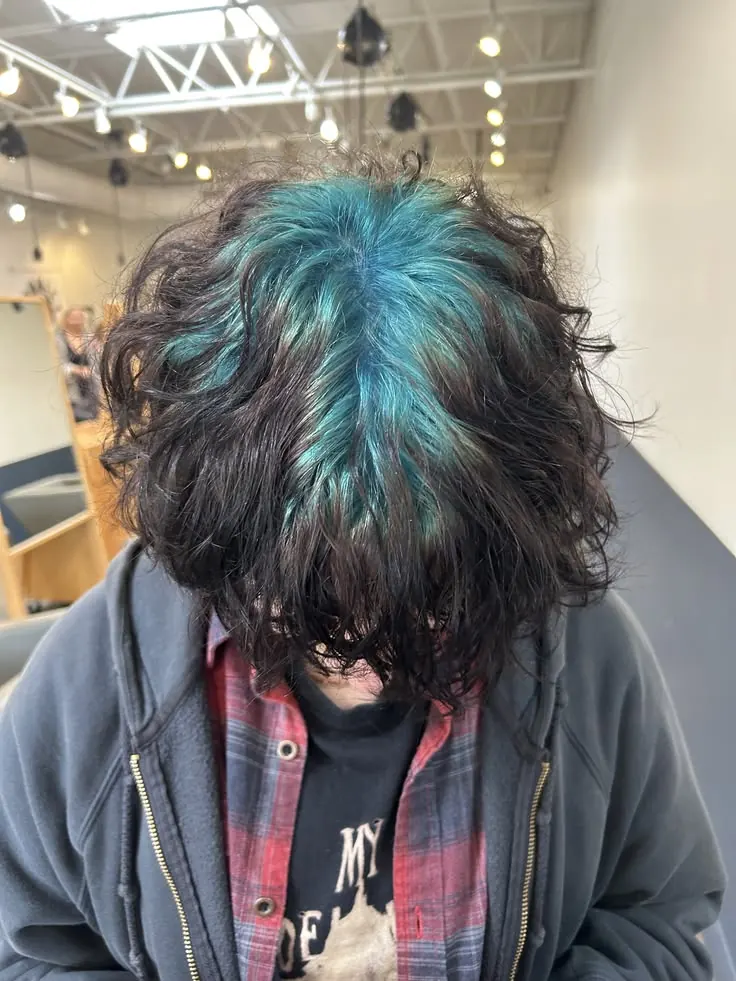
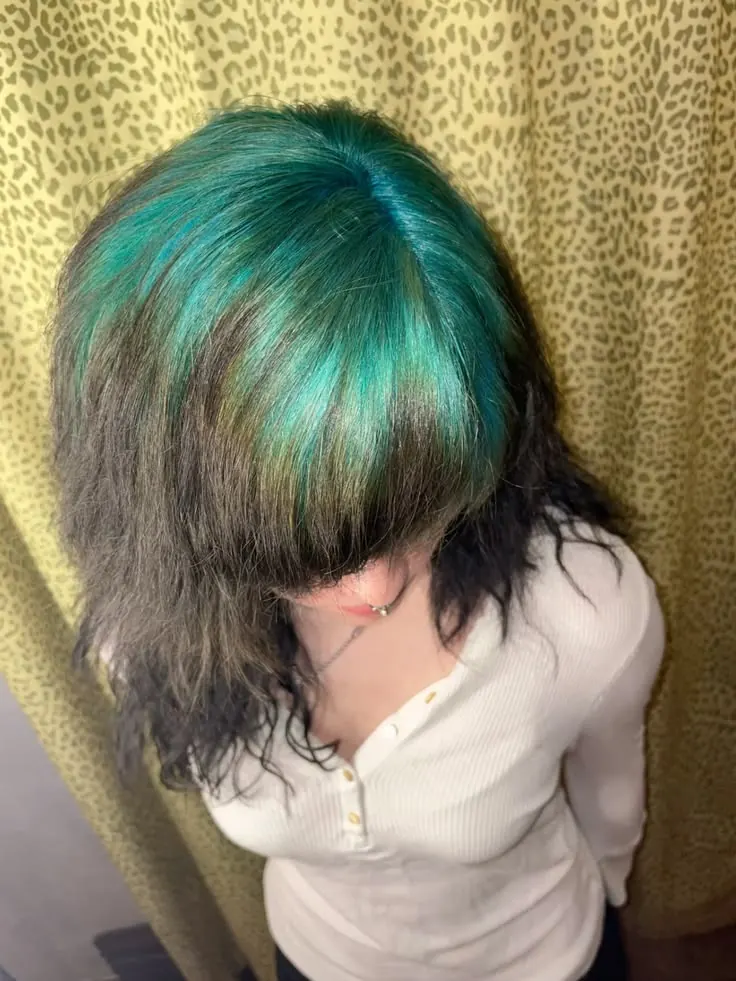
Teal Blue Curly Shag
The overhead angle reveals teal-blue broken into irregular ribbons by the curls of a short shag. It demonstrates how texture can interrupt a root panel while the placement still remains coherent across the crown.
Teal Bridges a Cool Blue Surface And a Green Undertone
Teal has enough brightness to show against dark hair, but it is not as loud as neon green or hot pink. That balance makes it useful if you want vivid color that still feels polished. It can sit quietly on a brunette base, glow against black hair, or lean more electric when the root zone is pre-lightened cleanly.
It also photographs well because teal has two visual directions. The blue side catches cool light and gives the look a sleek finish, while the green side adds depth so the color does not feel flat. That makes teal especially strong on shags, bobs, straight center parts, and crown-focused placements where the root zone is visible from more than one angle.
Keep Teal Where The Part or Crown Can Reopen it
A teal center part works well on straight or softly waved hair because it creates a clean line that makes the root color look deliberate. This is the easiest placement to explain to a stylist: teal through the part line and crown, with the darker lengths left intact.
A teal crown panel works better on shags, wolf cuts, layered lobs, and body waves because the color appears through movement. The panel can be narrow and smoky for a softer effect, or wider and brighter if you want the top section to carry the whole color story.
Teal fringe roots and teal face-framing pieces are the most visible options from the front. They work especially well on bangs, side parts, French bobs, textured bobs, and layered shags because the haircut already opens around the face. Hidden teal panels can work too, but they need enough movement to show; otherwise the color disappears under dark hair.
Judge The Dominant Hue in Neutral Light
Choose teal if you want the coolness of blue with more depth and edge. Teal is usually softer than electric blue and less sharp than cobalt, but it still feels cooler and sleeker than most greens. It is a good middle option when blue feels too clean and green feels too neon.
Choose blue if you want a clearer, icier, or more graphic color statement. Choose green if you want a louder alt finish, especially neon, lime, chartreuse, or forest green. Teal is often the most wearable bridge between the two because it can look vivid without feeling as loud as neon green or hot pink.
Dark Bases Give Teal Enough Contrast to Stay Moody
Teal works well on black hair, dark brown hair, cool brunettes, shags, medium layers, wolf cuts, bobs, side parts, and styles where the top or front section naturally opens. It also suits people who wear black, gray, denim, silver jewelry, cool-toned makeup, or darker wardrobes often, because the color connects easily with those visual cues.
Think twice if your lightened base is very orange or yellow. Teal over warmth can turn muddy, swampy, or dull unless the formula is adjusted. A blue-leaning teal can help counter some warmth, but very clean teal usually needs a cleaner lift than people expect.
Specify Blue-Leaning or Green-Leaning Teal
Ask for teal or blue-green root contrast through the crown, part, fringe, or face frame, with the dark lengths kept intact. If you want the look softer, ask for smoky teal or deep teal-blue. If you want it brighter, ask for saturated teal on a pre-lightened root panel.
Bring separate references for color and placement. One photo can show the shade, while another can show whether the teal should be sharp, blended, hidden, fringe-heavy, crown-focused, or face-framing. Useful wording includes: "teal crown panel on black hair," "blue-green ghost roots through the center part," "teal fringe roots on a shag," and "teal-blue side-part roots on a bob."
Refresh The Same Teal Instead of Layering Unrelated Blue or Green
At home, teal is most realistic as a refresh on hair that is already light enough. A teal or blue-green semi-permanent dye can revive the root zone, and a color-depositing conditioner can maintain the tone between appointments. Use gloves, sectioning clips, a tint brush, and a tail comb so the color stays in the root area instead of spreading through the whole length.
Avoid DIY bleach if your hair is fragile, box-dyed, heavily colored, or already compromised. Teal may look forgiving because it is deeper than pastel blue, but vivid teal still needs the right base. If the root zone is too warm, the final color can turn dull green; if the section is too wide, the look can turn into accidental all-over teal instead of ghost roots.
Warm Fade is The Main Teal Failure to Watch
Teal can fade muddy if it is washed too often, exposed to too much heat, or refreshed with the wrong tone. Use color-safe shampoo, cooler water, heat protection, and a teal or blue-green depositing conditioner before the shade turns dull. If the color starts looking too green, refresh with a more blue-leaning teal; if it looks too blue and flat, a balanced teal gloss can bring back depth.
Placement affects maintenance. Fringe and face-framing teal fade fastest because those pieces are touched, washed, and heat-styled more often. Crown panels may fade more slowly, but they can look flat before you notice. Check the color in daylight, not only bathroom light, because teal often shifts depending on the lighting.
Do Not Let Teal Spread Until it Becomes an All-Over Top Layer
The biggest mistake is choosing teal without checking the base underneath. Yellow warmth can push teal green, orange warmth can make it muddy, and uneven lift can make the root zone patchy. A strand test or stylist consultation is especially useful if your hair has old dark dye or previous vivid color.
Another mistake is hiding teal too deeply under dark layers. Teal ghost roots need to show near the scalp, part, crown, fringe, or face frame. If the color only appears when the hair is lifted by hand, it may be a peekaboo panel, but it will not read strongly as ghost roots in normal styling.
Related Color Ideas
Compare blue ghost roots if you want the color to feel cleaner, icier, or more electric. Compare green ghost roots if you want a sharper alt direction with neon, lime, chartreuse, or forest tones. For product planning before and after coloring, read ghost roots hair dye.
Teal Ghost Roots FAQ
Is teal closer to blue or green for ghost roots?
Teal sits between blue and green. A blue-leaning teal looks cooler and sleeker, while a green-leaning teal looks moodier and more alt. The base underneath affects which side shows more.
Do teal ghost roots work on black hair?
Yes. Black hair gives teal ghost roots strong contrast, especially through the part, crown, fringe, or face frame. The teal area usually needs pre-lightening if you want a vivid result.
How do you keep teal ghost roots from fading muddy?
Use color-safe shampoo, cooler water, low heat, and a teal or blue-green depositing conditioner before the shade turns dull. Warm yellow or orange bases can make teal fade muddier.