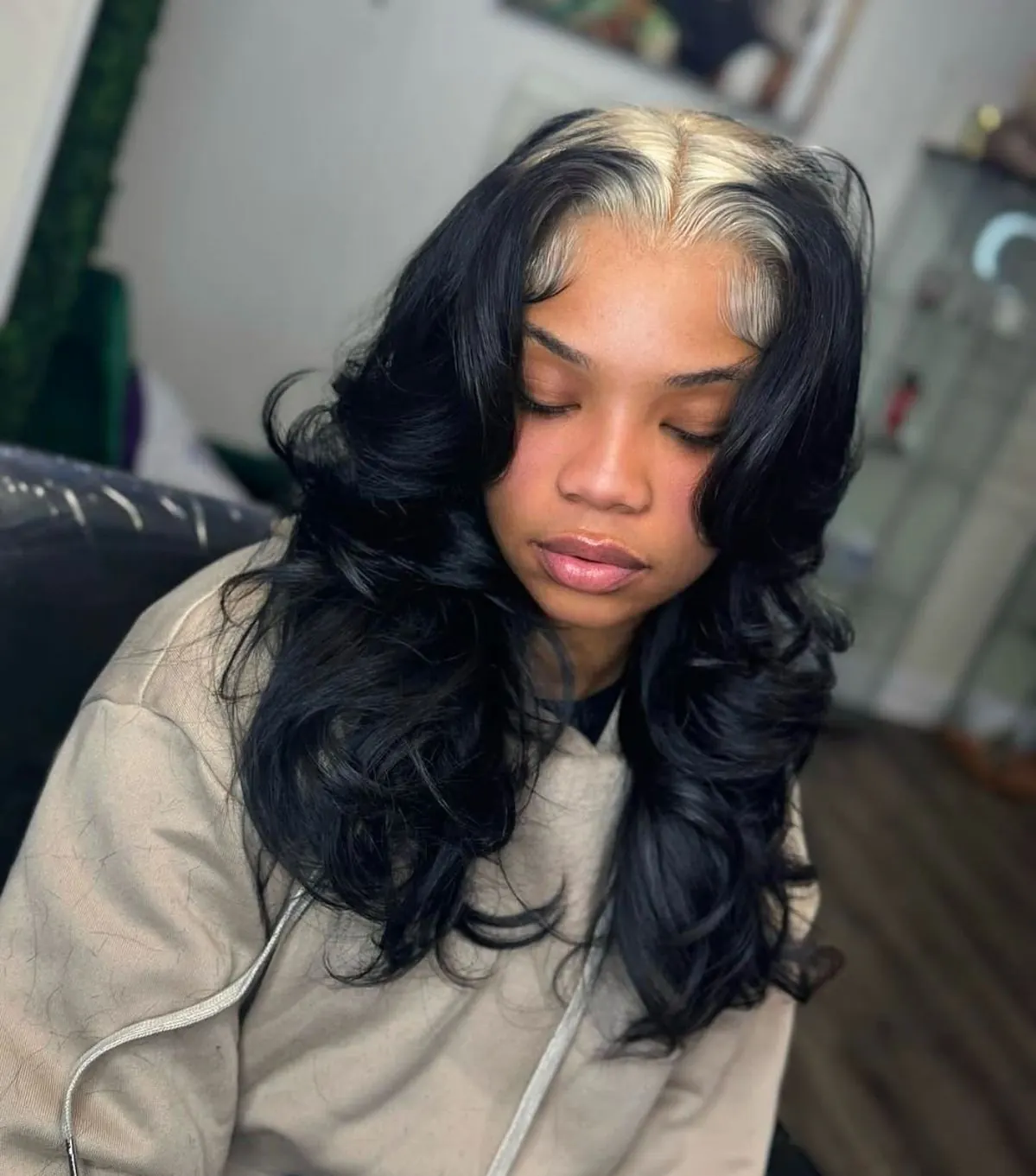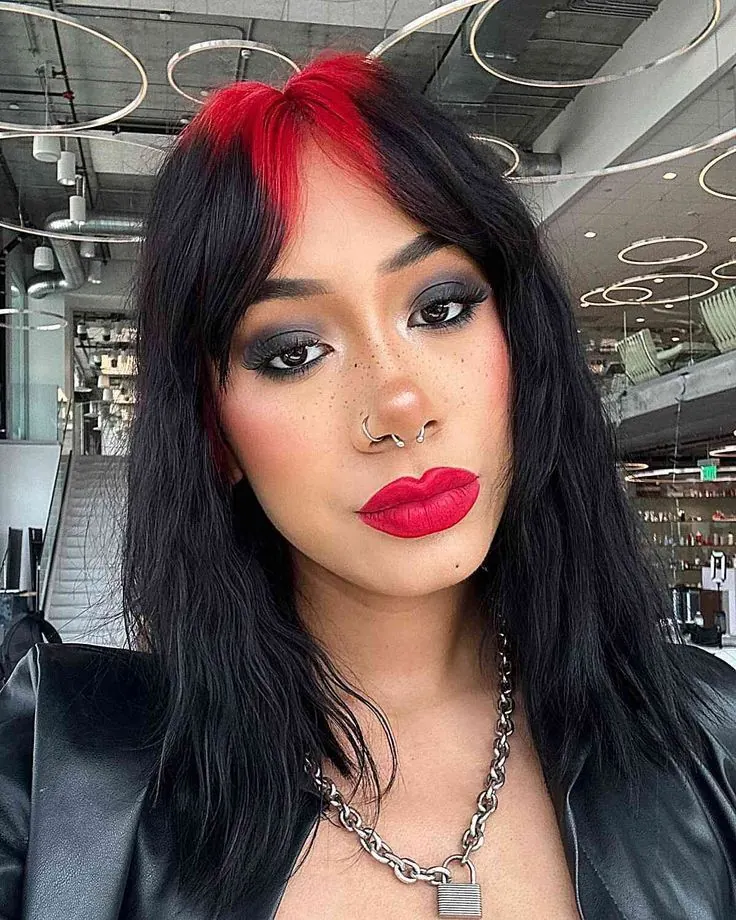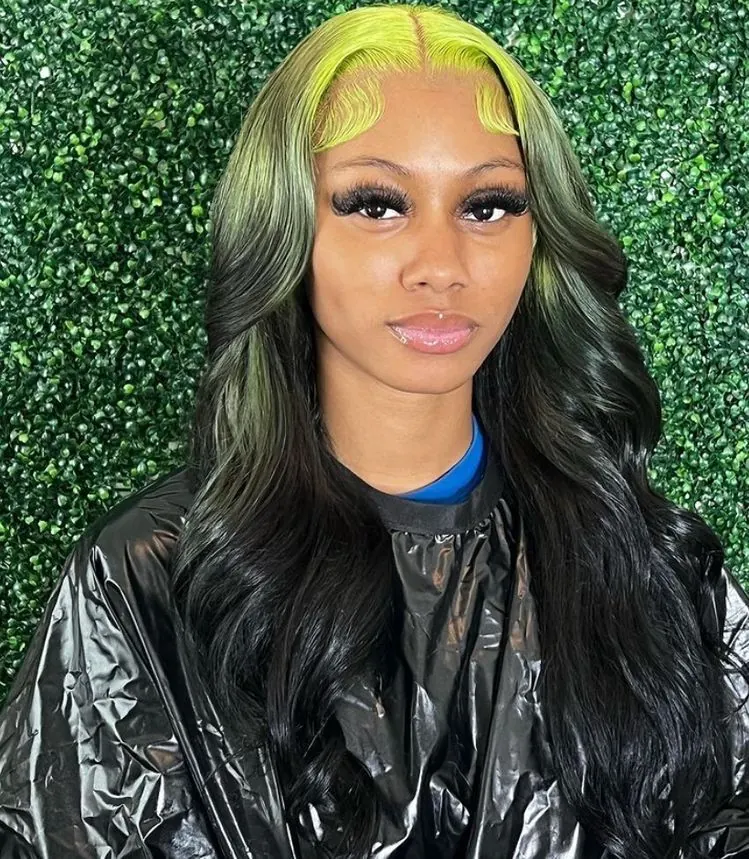
Short hair makes root placement unusually visible. There is less length to dilute the color, and a trim can quickly change the section that looked balanced at the appointment. The best reference is therefore one that matches both the haircut and the way its top, fringe, or part is normally styled.
If your hair falls below the shoulders, use the dedicated ghost roots on long hair guide instead. It covers crown visibility, long layers, waves, curls, braids, locs, and panels that can disappear under the lengths.
Visual Ideas
Short Cuts Where The Root Zone Becomes Part of The Shape
These short-hair examples cover bobs, crops, shags, short curls, split fringe, and compact crown-panel placements.

Electric Blue Shag
Electric-blue peekaboo panels sit behind the blunt fringe of a short black shag. Small head movements reveal the blue at the temples, giving this compact cut color without replacing its dark outer shape.

Orange Copper Wavy Bob
Orange-copper covers the crown of a tousled black bob and breaks into the short layers around the face. The rough edge suits the wavy texture; a perfectly straight boundary would fight the cut's movement.

Silver White Textured Bob
Silver-white pieces split the textured black bob through its piecey fringe and crown. The scattered pale tips make the placement feel cut-driven, while the dark perimeter keeps the chin-length silhouette crisp.
Silver White Sleek Bob
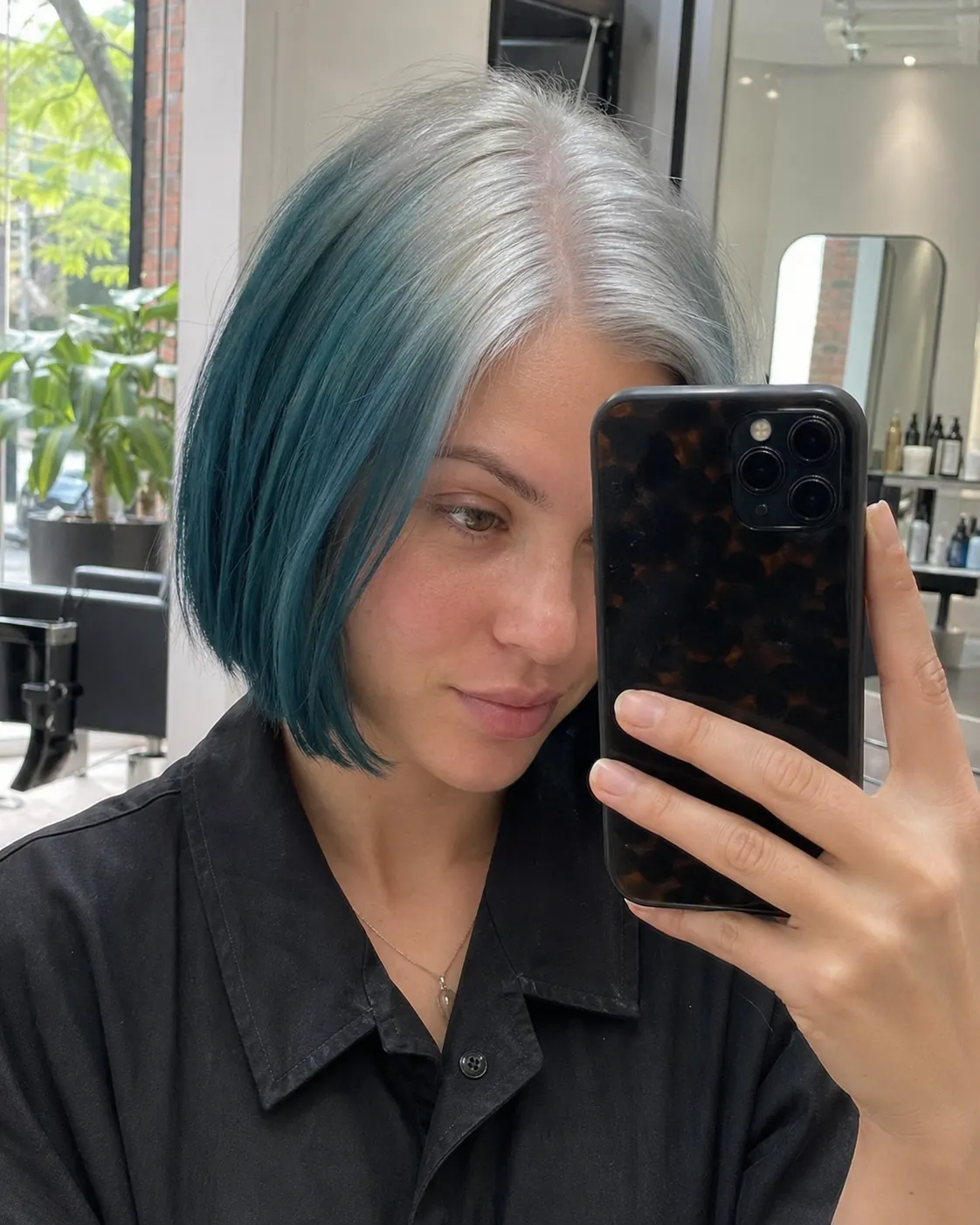
A silver-white crown panel is balanced over a sleek black bob with one pale side extending farther. On hair this smooth and short, the section line must be clean because there are no long layers to soften it.
Taupe Blonde Sleek Bob
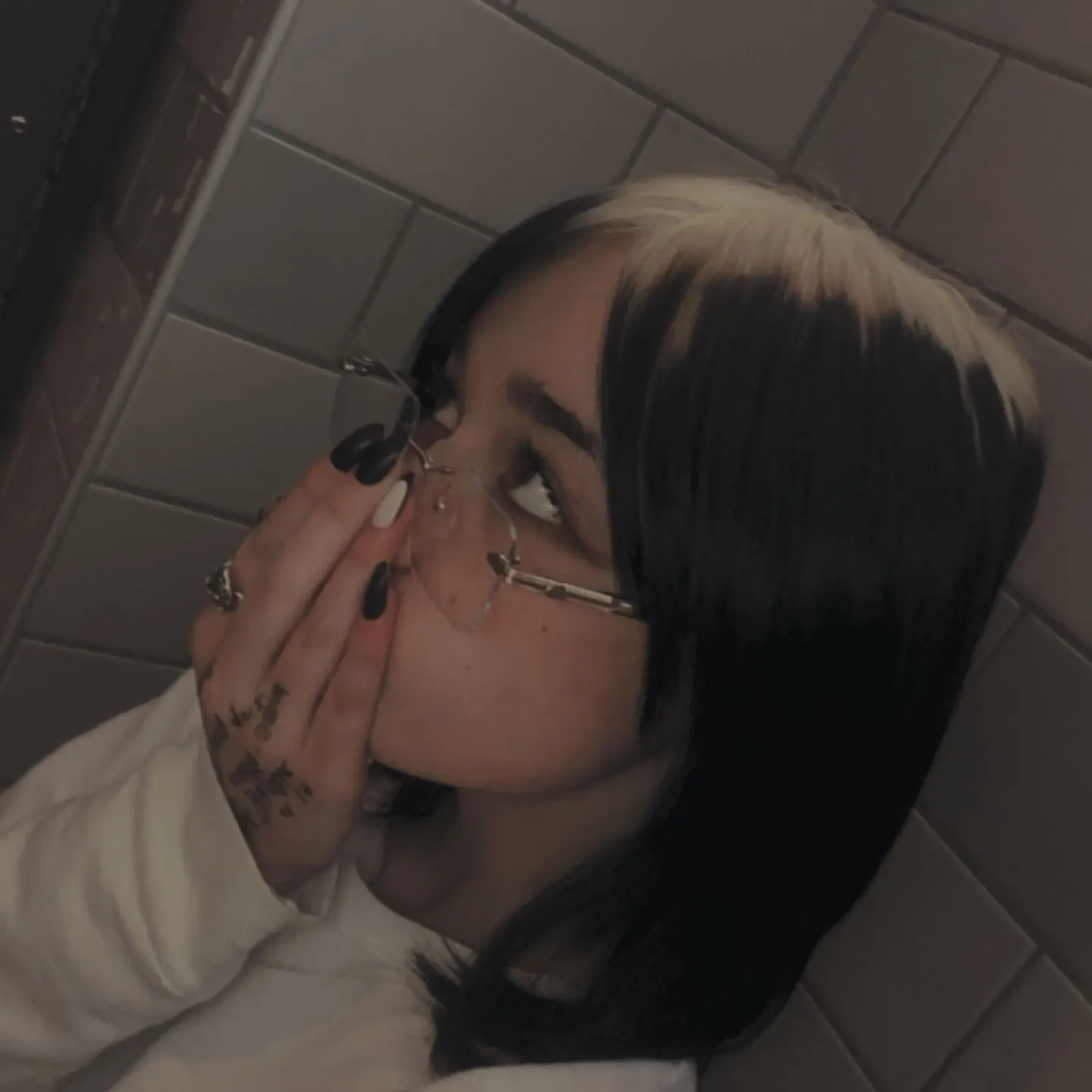
Taupe blonde is concealed beneath the dark surface of a sleek bob and appears only where the ends flip outward. This low-commitment placement depends on the cut maintaining enough movement to uncover the underlayer.
Blue Teal Layered Shag
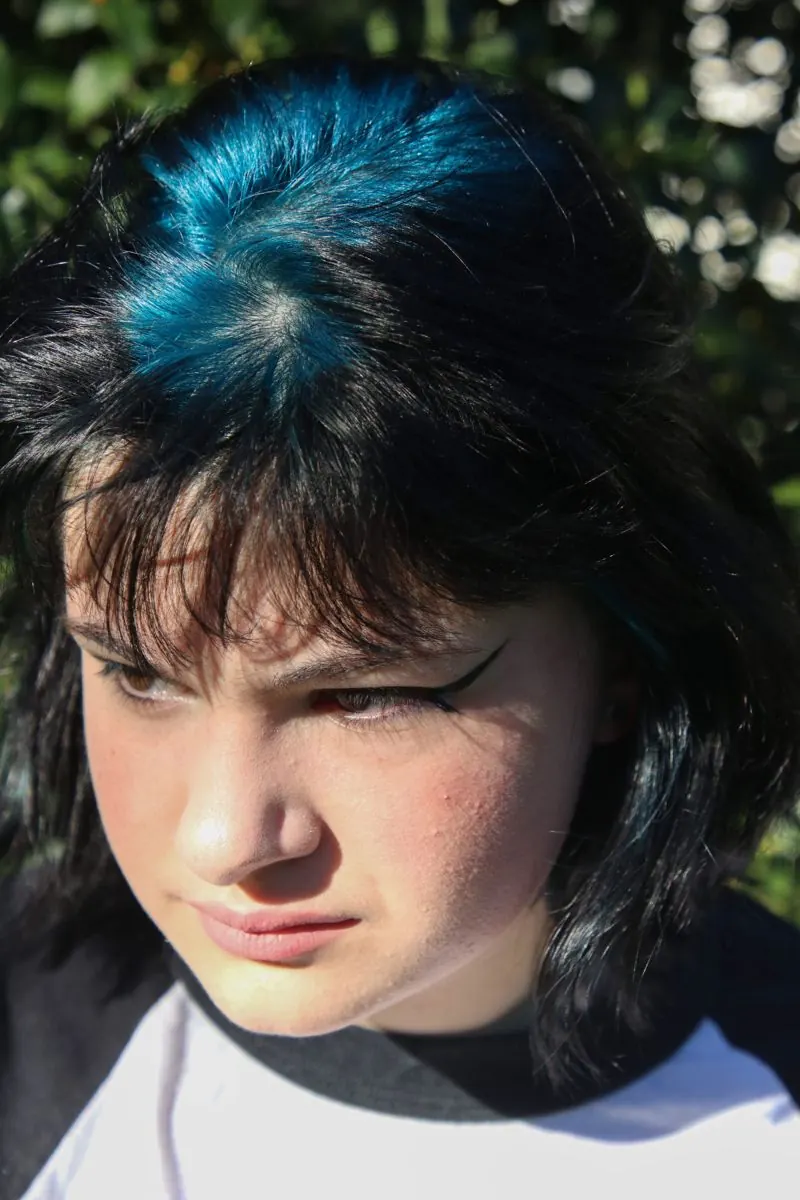
Blue-teal crosses the crown of a short curly shag and separates into ribbons around the fringe. Daylight shows how the cool panel follows the curl pattern instead of forming a flat cap.
Magenta Pink Spiky Mullet
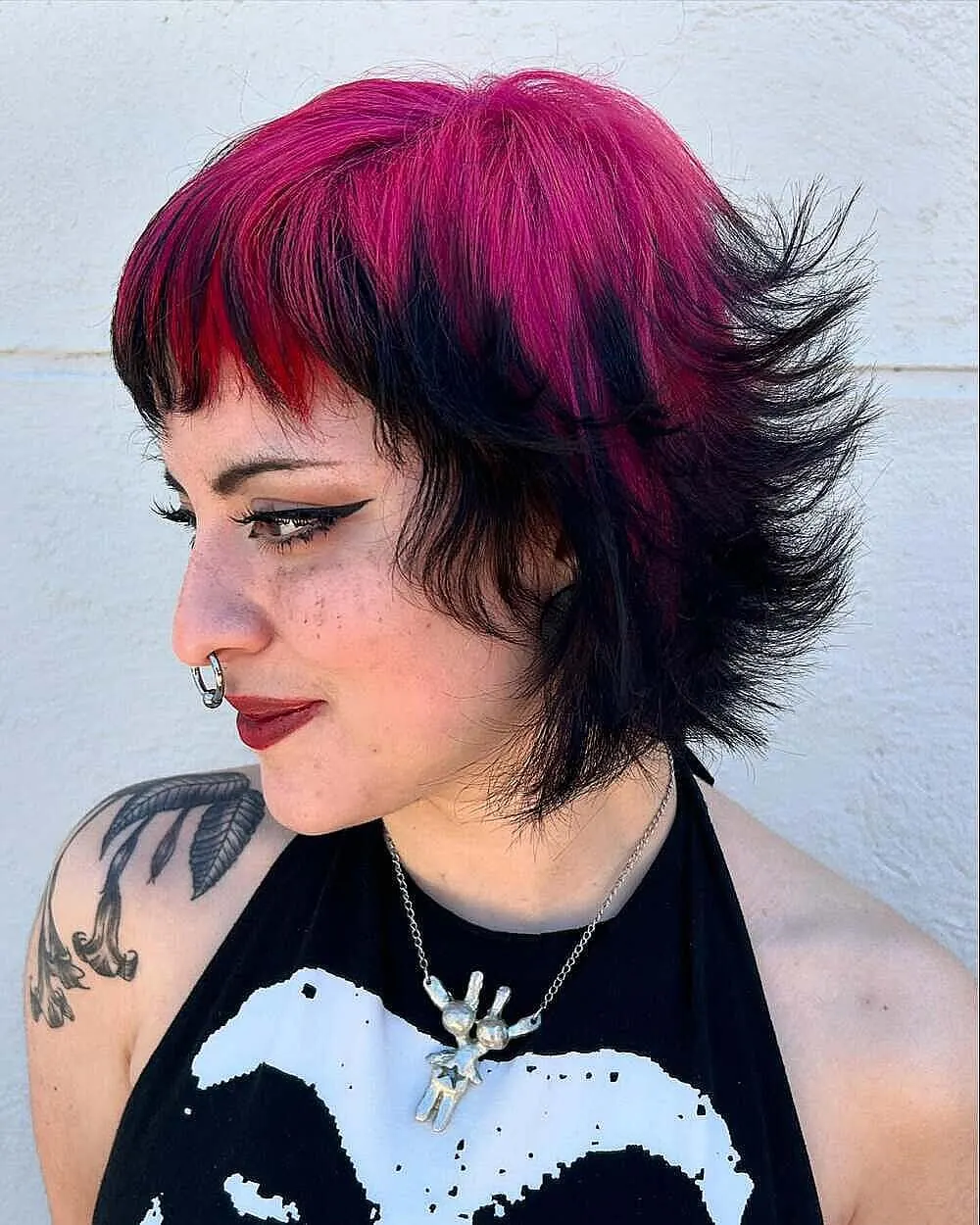
A magenta crown drives the shape of this short spiky mullet, with black tips sharpening the choppy outline. Trimming the fringe or crown will remove colored length quickly, so the cut and color schedule are linked.
Platinum Blonde Sleek Bob
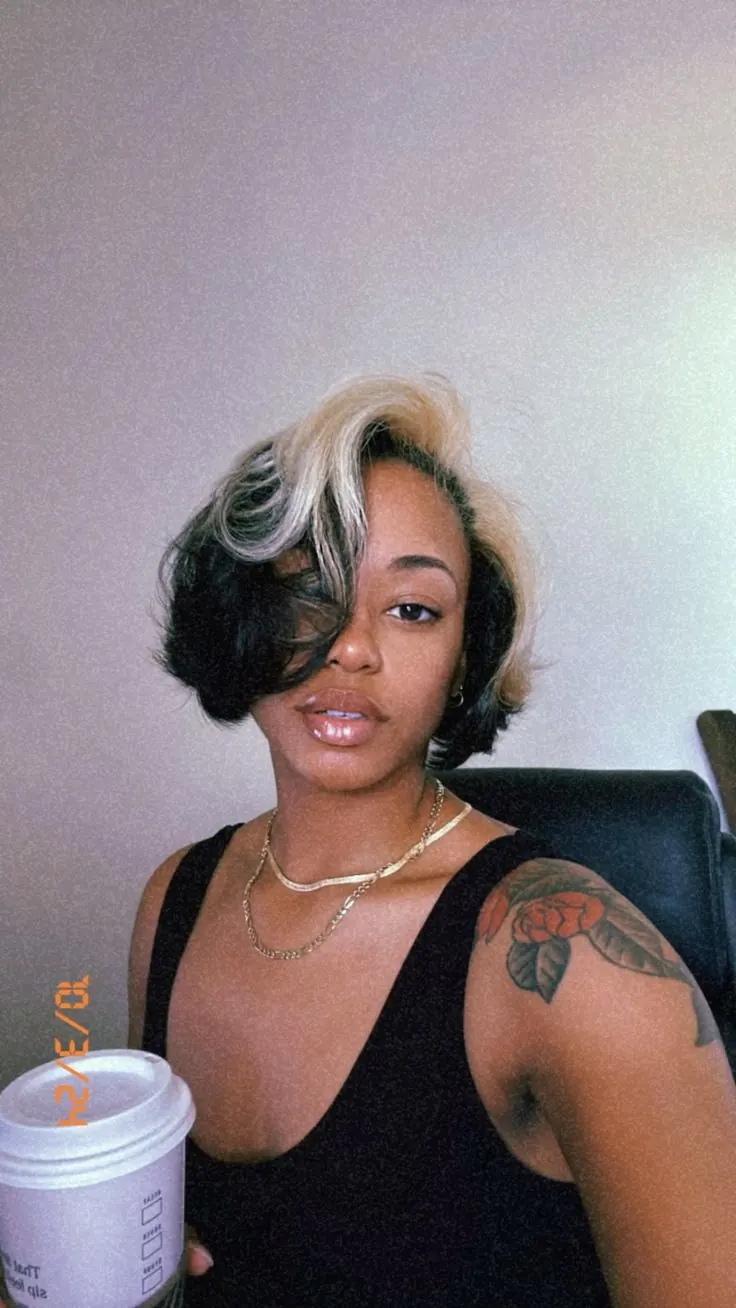
Platinum blonde forms one broad front panel on a smooth black bob. The asymmetry gives the compact cut a strong direction and avoids the more familiar matching money pieces on both sides.
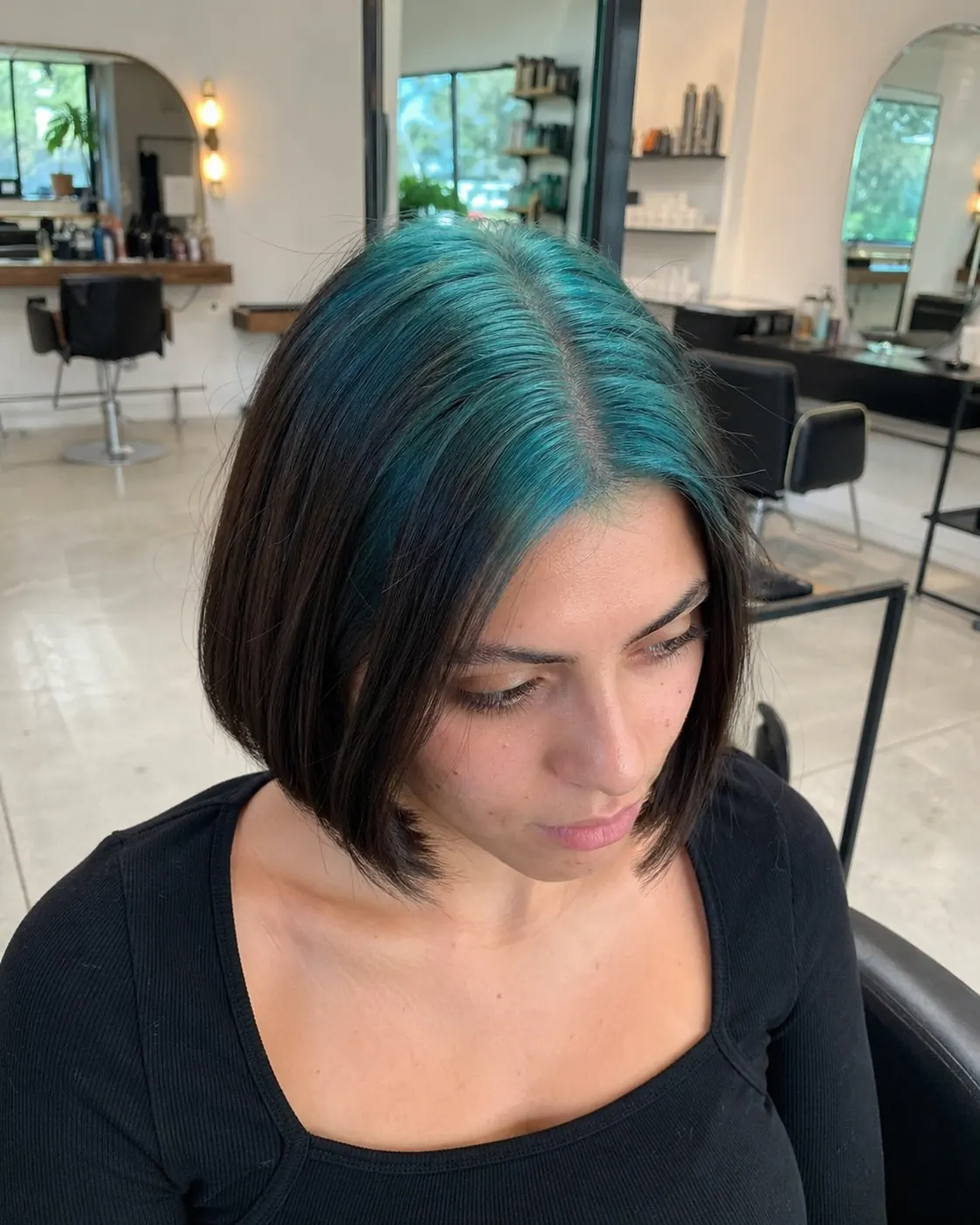
Teal Blue Sleek Bob
Teal-blue is limited to the center part of a polished chin bob. The narrow line remains visible because the straight sides fall away evenly, making precision more important than a large colored area.
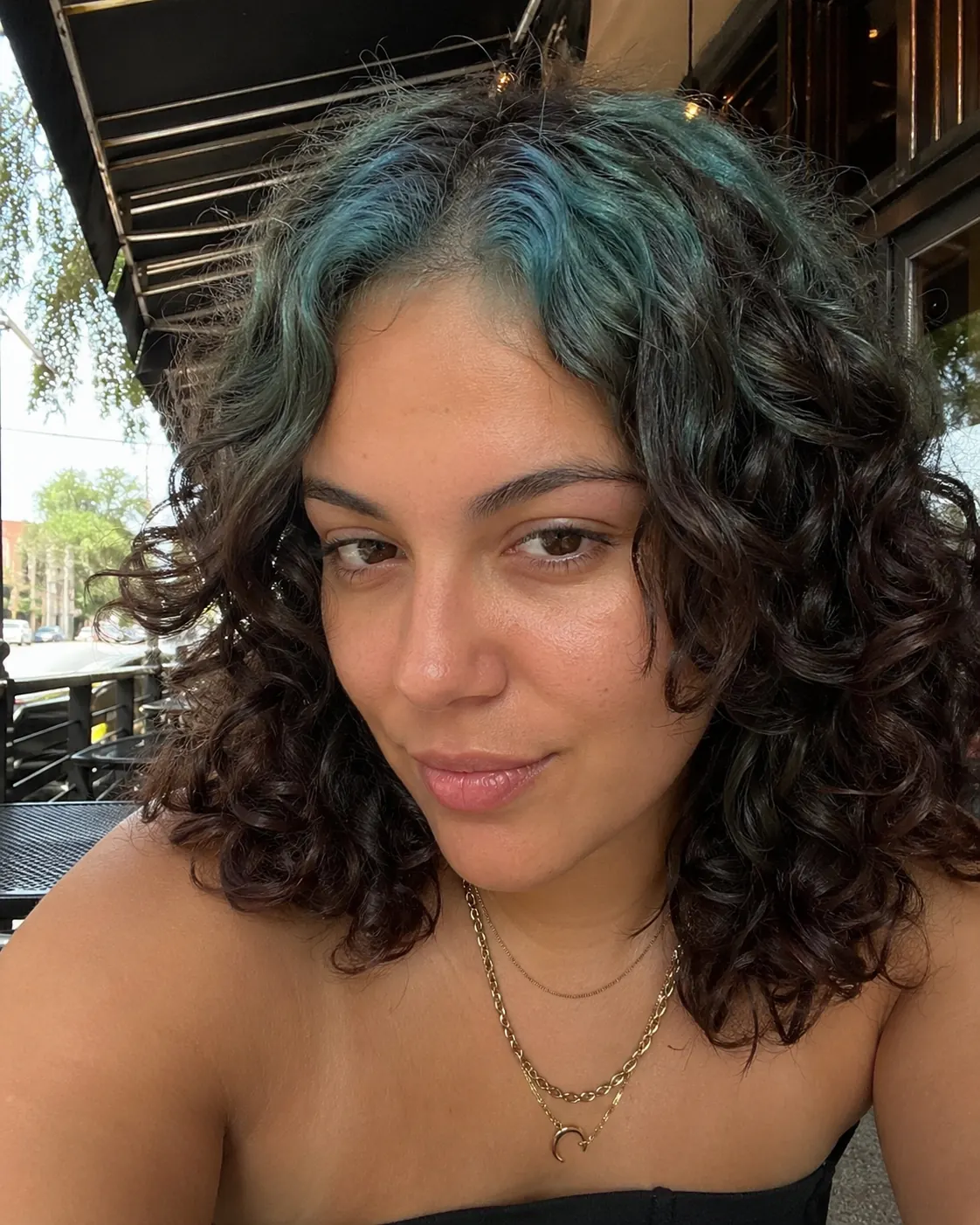
Teal Green Curly Bob
Teal-green threads through the face frame of a dark curly bob. The color follows individual curl clumps, creating a softer boundary than the same placement would have on a blunt straight cut.

Silver White Sleek Bob
A silver-white side part divides a compact black bob and drops into one pale temple section. The off-center balance gives the short cut interest without needing color across the full crown.

Rainbow Pastel Sleek Bob
Pastel peach, yellow, and blue panels peek from beneath a blunt black bob. The short length turns each hidden section into a distinct flash, so this reference is more multicolor underlayer than a single root shade.
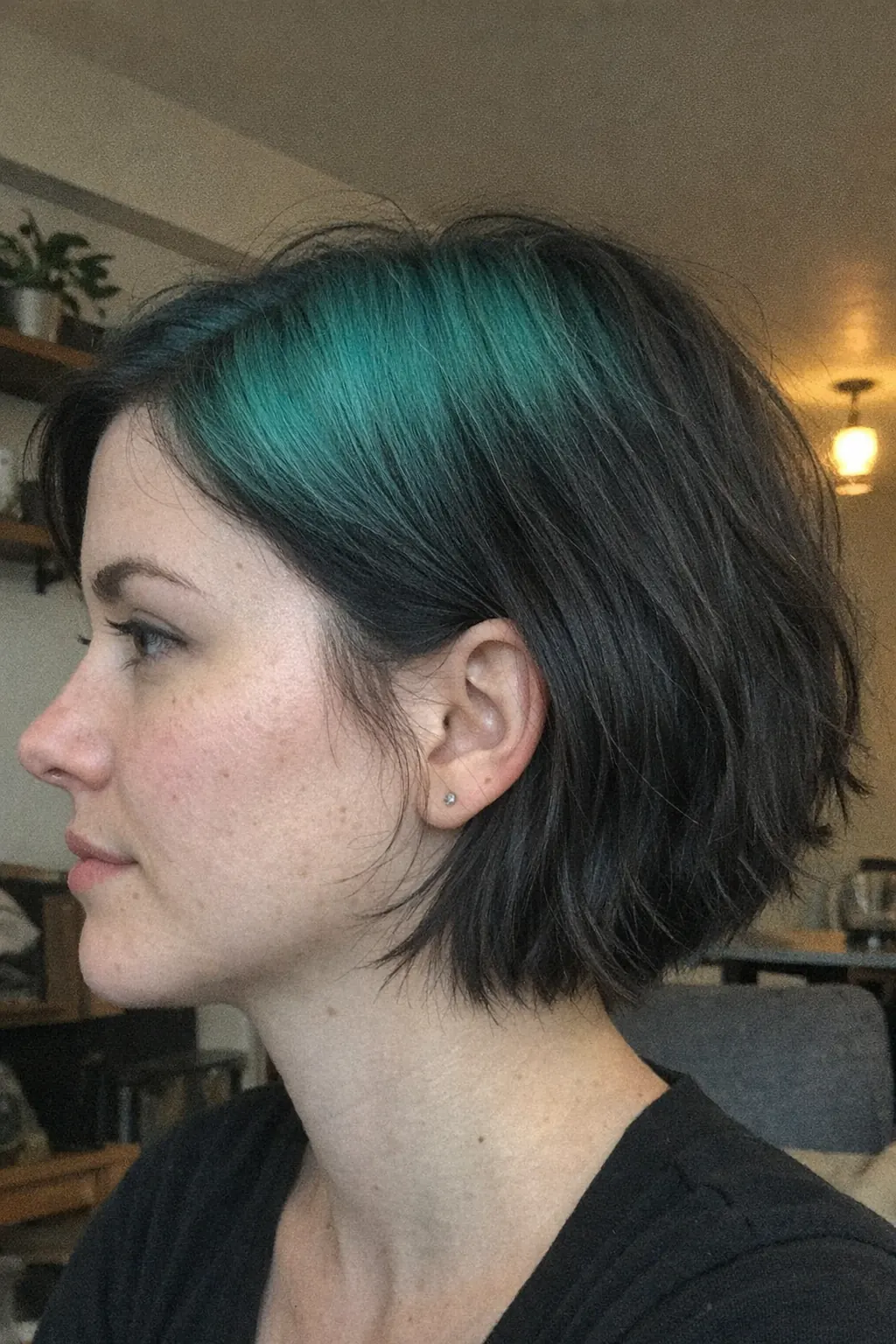
Teal French Bob
A deep teal side part follows the rounded line of a French bob. The muted shade is visible in profile but stays close to the black base, suiting someone who wants color without neon brightness.
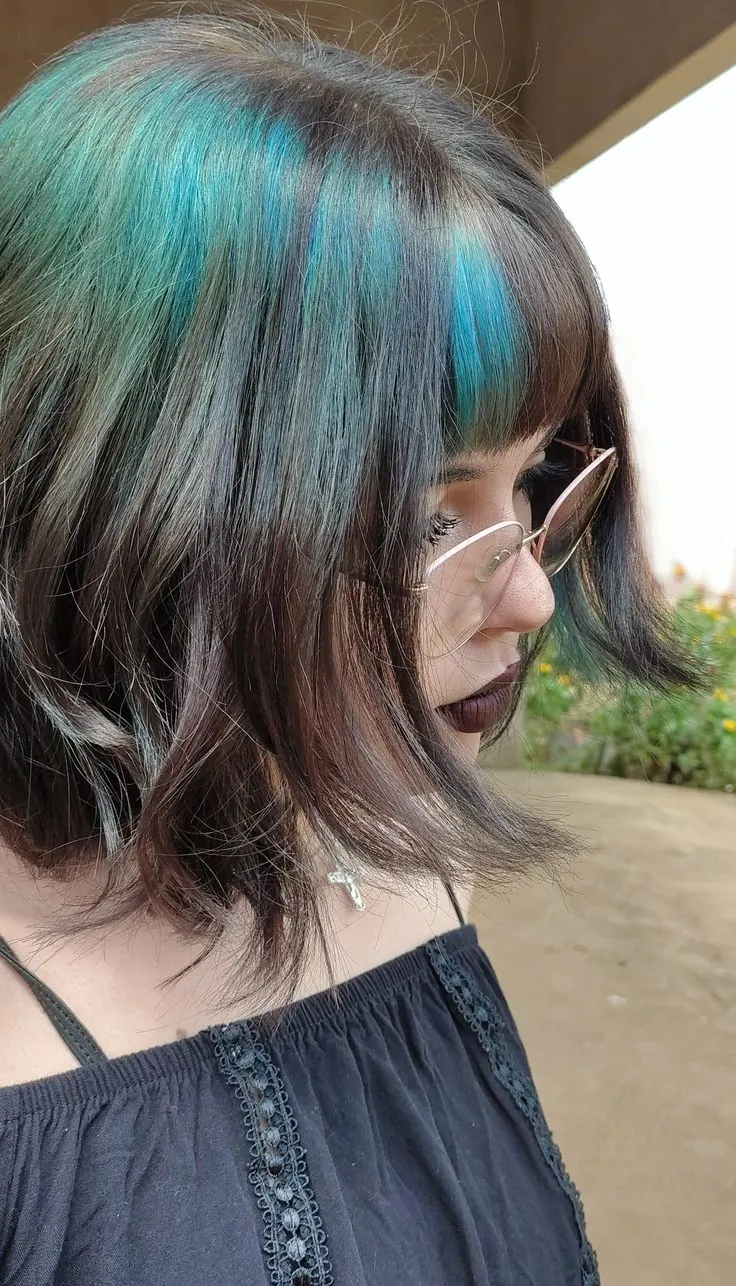
Teal Blue Textured Bob
Teal-blue spreads across the side and crown of a textured bob, fading into smoky black ends. The angled glasses portrait shows the wraparound coverage more clearly than a straight front view.
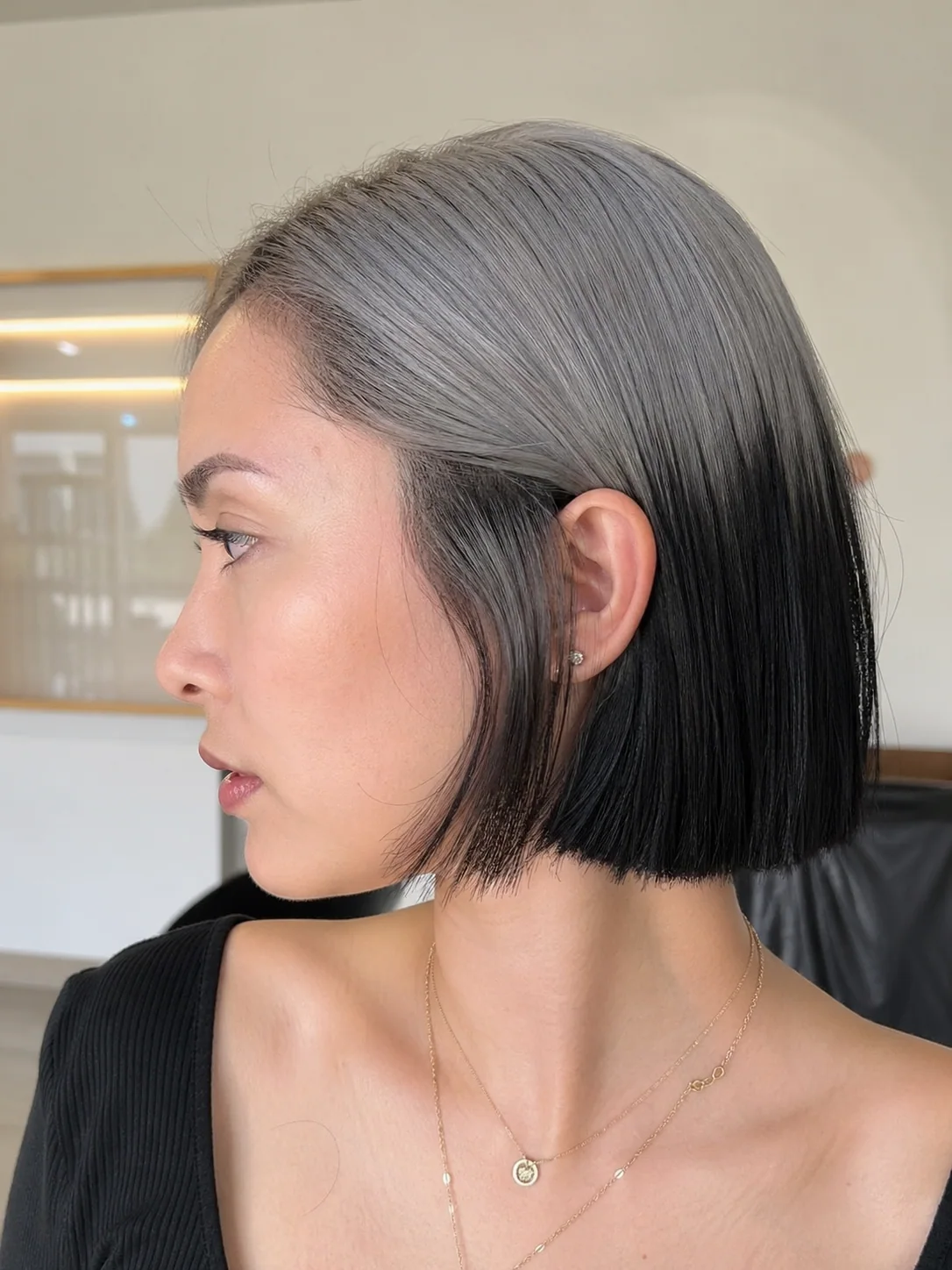
Silver Grey Blunt Bob
Silver-grey occupies one side of a sharp blunt bob while the opposite panel remains black. The clean jaw-length edge makes the two-tone division feel architectural rather than softly blended.

Silver White Blunt Bob
A bright silver-white center panel runs through a short blunt black bob with no fringe. With the forehead fully open, the root contrast stays visible from the front and the pale width is easy to assess.

Platinum Silver Black Chin Bob
Platinum-silver covers the rounded top of a chin bob and meets black through soft bangs and lower ends. The color blocking follows the compact bowl-like shape, so future trims will directly alter the dark border.
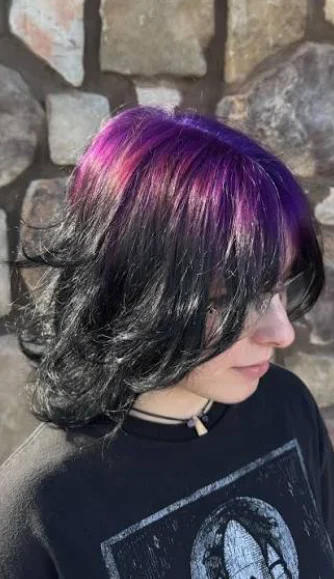
Violet-Magenta Crown Panel on a Layered Bob
Violet-magenta spans the crown of a short layered bob and flashes pinker where sunlight hits the side. Black curved ends frame the panel, keeping the vivid top from overwhelming the haircut.
A Bob Needs a Different Panel From a Crop
A center-part bob supports a narrow symmetrical stripe or two controlled face-framing sections. A side-part bob benefits from an offset panel that remains visible when the hair falls into place. A cropped curl can carry color through the top or crown because the texture repeatedly opens the root zone. A short shag or wolf cut can connect the panel to a fringe and choppy top layers.
Do not ask for “the same roots” across every short cut. Section width should respond to head shape, density, part, and how much dark hair is needed to frame the colored area.
Use The Haircut as The Placement Map
- Blunt bob: keep the boundary clean and relate it to the part or front edge.
- French bob: use the side part, fringe, or a compact crown section so the color does not overpower the outline.
- Curly bob: place color where curls naturally separate and expose the scalp.
- Short shag: connect the root panel to the fringe and top layers.
- Crop or pixie-inspired cut: use a small top, quiff, or side section that will survive the next trim.
If the fringe is central to the plan, continue with ghost roots with bangs. That guide owns trim frequency, curtain sections, blunt fringe, and split placement.
Color Scale Matters More on Short Hair
A small white, silver, neon green, or hot-pink section can dominate a compact cut. Deeper red, teal, plum, or blonde can feel integrated because the contrast is lower. Decide whether the root color should become the focal point or simply sharpen the haircut.
Use the gallery to compare the ratio of colored root area to dark hair. A reference with similar length but a much wider panel may still produce a very different result.
Plan The Next Trim Before The First Color
Ask which part of the colored section will be removed at the next cut. Fringe color can disappear quickly. A crown panel may shift as layers are shortened. A bob can lose a face-frame edge when the front is reshaped.
The cut and color do not always need to be refreshed on the same day, but they should be planned together. A stylist may prefer to establish the shape first, map the root section on dry hair, then refine the finish after coloring.
Salon Wording
I want the contrasting root color to follow this short cut. Please map it through my normal part, fringe, crown, or top curls and show me how much will remain after the next trim. I want the section to be visible without taking over the whole haircut.
Bring a front view and a top or side view. A portrait that hides the crown cannot explain the section width.
Maintenance Priorities
Short hair can show regrowth and fading sooner because the design is compact. Protect the colored area from frequent high heat, use the refresh product that matches the shade, and coordinate tone work with trim timing. If the color begins to sit in the wrong place after the cut changes, it may need remapping rather than another layer of dye.
Read ghost roots maintenance for shade-specific care and grown-out ghost roots if you want a softer path between appointments.
Short-Hair Questions
Do ghost roots work on short hair?
Yes. Short hair can make ghost roots look especially clear because the part, fringe, crown, and top curls are easy to see.
What short haircut works best?
Bobs, shags, wolf cuts, cropped curls, and pixie-inspired crops work best when the color follows the part, fringe, crown, or top layer.
Are short ghost roots high maintenance?
They can be, because short cuts show grow-out and shape changes quickly. Plan trims and color refreshes together so the placement still works.