
A ghost roots mullet works when the color is built into the haircut: fringe, crown, top layers, curtain bangs, or the choppy shape around the side. If the shade sits too low or too hidden, it stops reading as a mullet color idea and starts looking like an unrelated streak.
Use the visual section first to compare how root color behaves on mullets, wolf cuts, and shag-adjacent shapes. Ordinary bobs and long layered cuts expose the scalp differently, so they are better treated as separate references.
Visual Ideas
Root Panels That Move With a Mullet or Wolf Cut
These references are visually verified true mullet and wolf-cut shapes where the root color follows the fringe, crown, top layers, or choppy outline.
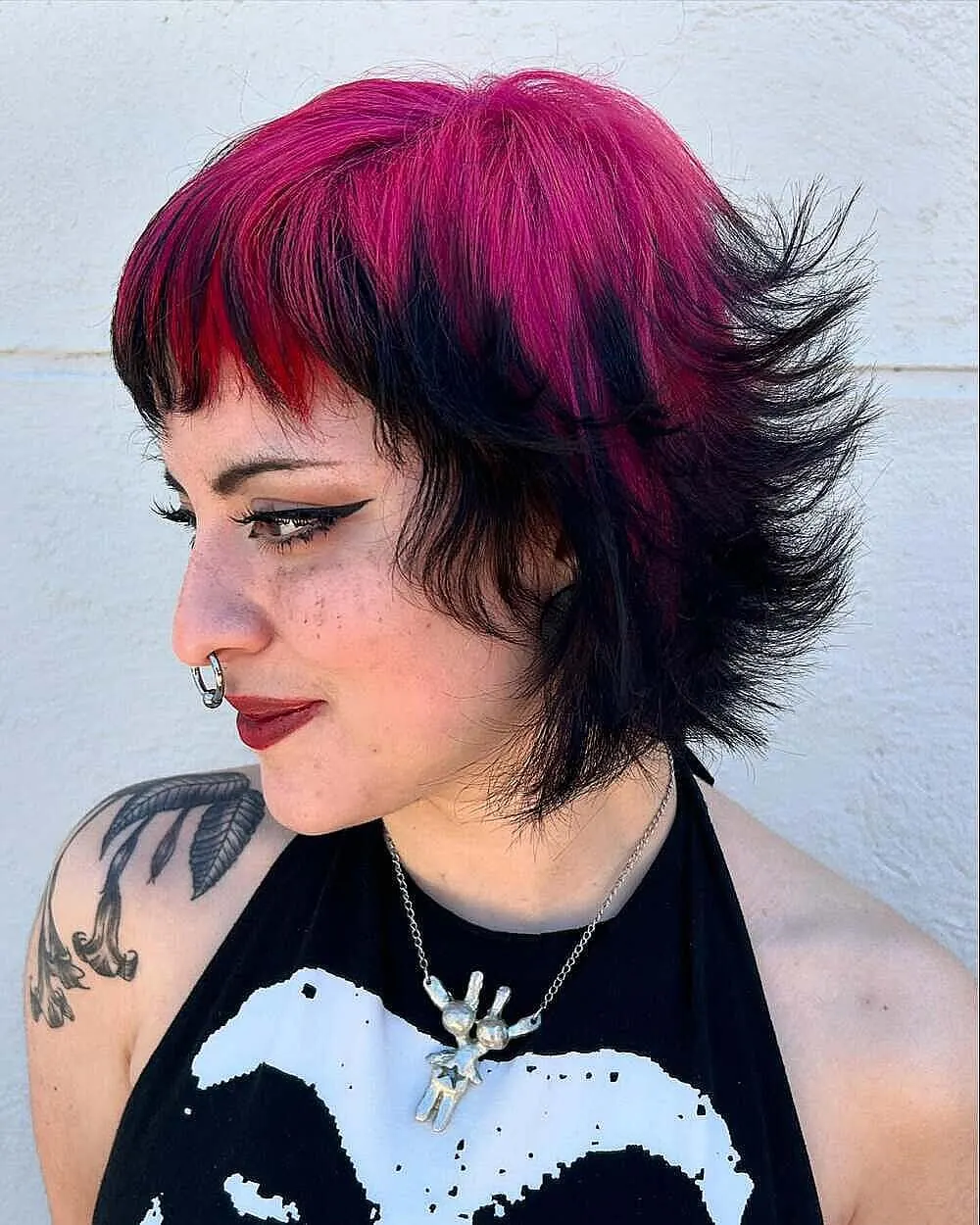
Magenta Spiky Mullet Crown
A true mullet reference where the crown color follows the choppy top and spiky back shape.
Short black spiky mullet with magenta-pink ghost roots concentrated through the crown, fringe, and top layers.
The cut already has lift through the crown, so the magenta reads as part of the haircut instead of a random vivid patch.
Short mullets, spiky texture, micro-fringe shapes, and people who want a clear alt-color statement.
Refresh the magenta when it starts fading dusty, and trim the crown shape before the color placement drops too low.

Smoky Silver Wolf Cut Roots
A wolf-cut option for people who want the mullet feeling softened into longer, face-framing layers.
Medium black wolf cut with smoky silver root contrast through the center part, top layers, and curtain bangs.
The curtain bangs expose the light root area while the longer dark back keeps the wolf-cut silhouette intact.
Wolf cuts, longer mullets, curtain bangs, and cool-toned silver or ash placements.
Silver needs toner support and bond care; too much heat or harsh shampoo can push it yellow or flat.

Copper Micro-Fringe Wolf Cut
A visually verified wavy wolf cut from the internal image database, with copper-red concentrated through the micro fringe and crown.
wavy wolf cut with copper-red ghost roots through the micro fringe and crown, supported by a shorter crown and visibly longer lower layers.
The short fringe, rounded crown layers, and longer textured lower section create a clear soft wolf-cut outline.
Wolf cuts, soft mullets, choppy face framing, and copper-red root placements that need movement to stay visible.
Refresh the copper-red before it loses contrast, and reshape the crown and face frame before the cut grows into ordinary long layers.
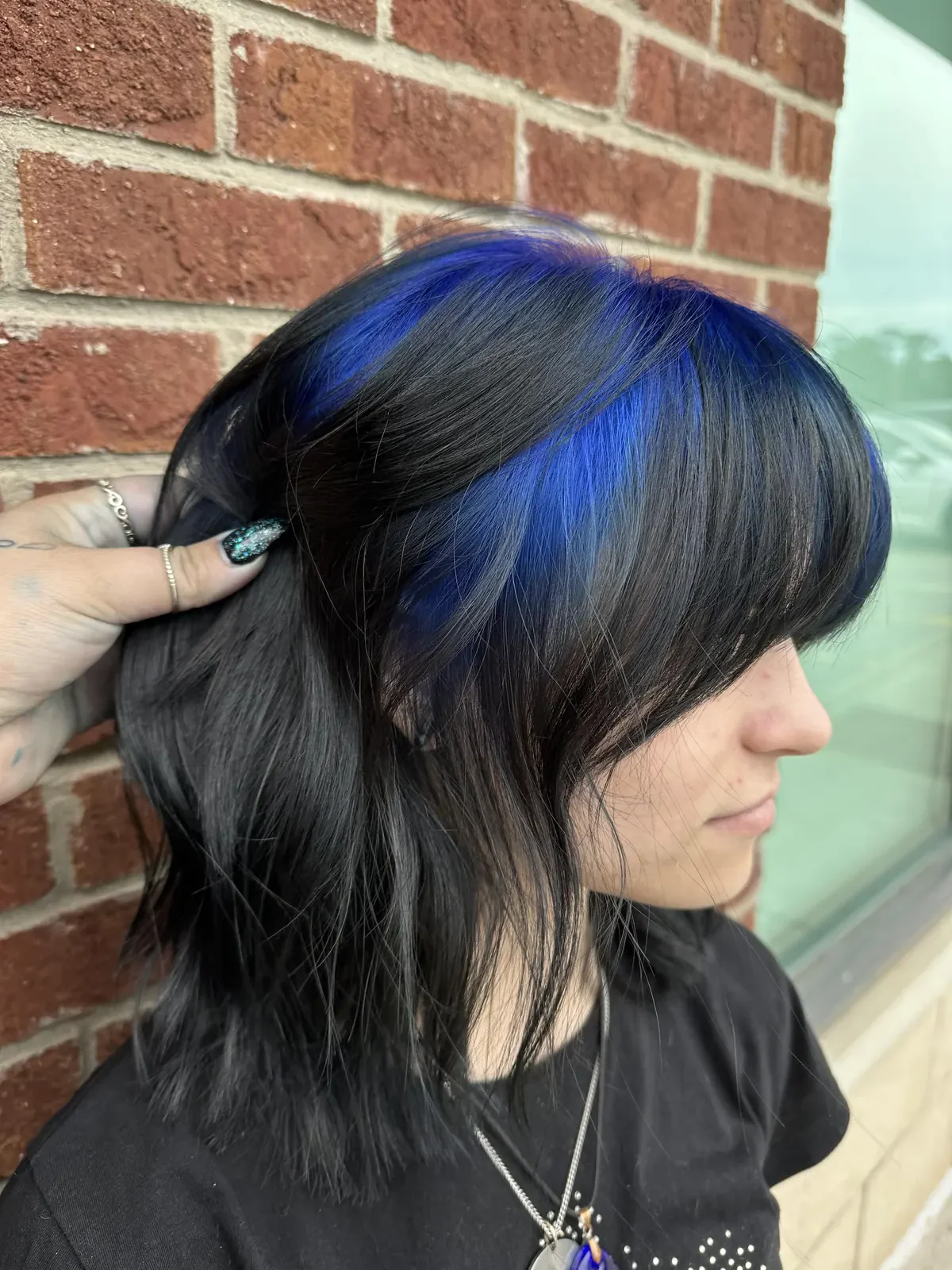
Electric Blue Side-Panel Wolf Cut
A visually verified layered wolf cut from the internal image database, with electric blue concentrated through the crown and side panel.
layered wolf cut with electric blue ghost roots through the crown and side panel, supported by a shorter crown and visibly longer lower layers.
The side view clearly shows short upper layers breaking away from the longer nape, which keeps the blue connected to the wolf-cut structure.
Wolf cuts, soft mullets, choppy face framing, and electric blue root placements that need movement to stay visible.
Refresh the electric blue before it loses contrast, and reshape the crown and face frame before the cut grows into ordinary long layers.
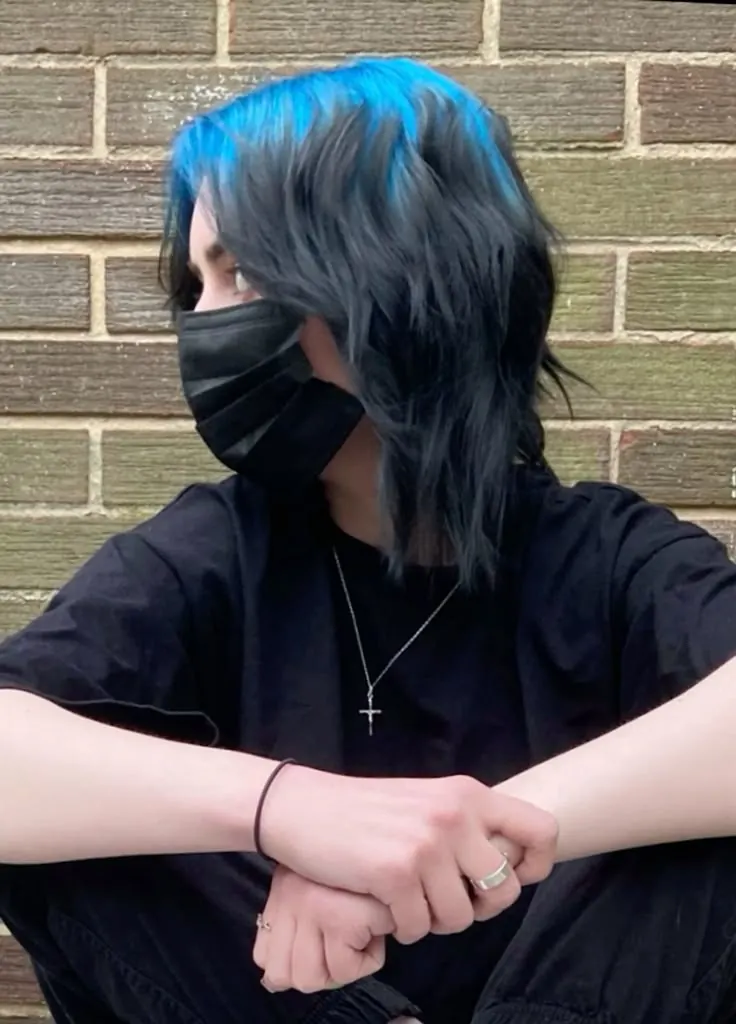
Blue Long-Nape Wolf Cut
A visually verified long-nape wolf cut from the internal image database, with cobalt blue concentrated through the top layers and side panel.
long-nape wolf cut with cobalt blue ghost roots through the top layers and side panel, supported by a shorter crown and visibly longer lower layers.
The shorter rounded crown and visibly longer back section give this cut the strong length contrast of a wolf cut or soft mullet.
Wolf cuts, soft mullets, choppy face framing, and cobalt blue root placements that need movement to stay visible.
Refresh the cobalt blue before it loses contrast, and reshape the crown and face frame before the cut grows into ordinary long layers.

Brown Choppy Wolf Cut Roots
A visually verified choppy wolf cut from the internal image database, with soft brown concentrated through the crown and full fringe.
choppy wolf cut with soft brown ghost roots through the crown and full fringe, supported by a shorter crown and visibly longer lower layers.
The full fringe, short crown, sharply disconnected cheek layers, and long lower pieces form one of the clearest wolf-cut silhouettes in the database.
Wolf cuts, soft mullets, choppy face framing, and soft brown root placements that need movement to stay visible.
Refresh the soft brown before it loses contrast, and reshape the crown and face frame before the cut grows into ordinary long layers.

Hot Pink Choppy Wolf Cut
A visually verified choppy wolf cut from the internal image database, with hot pink concentrated through the fringe, crown, and upper face frame.
choppy wolf cut with hot pink ghost roots through the fringe, crown, and upper face frame, supported by a shorter crown and visibly longer lower layers.
The short top volume and longer flicked nape read as a wolf cut, while the pink follows the same directional layers.
Wolf cuts, soft mullets, choppy face framing, and hot pink root placements that need movement to stay visible.
Refresh the hot pink before it loses contrast, and reshape the crown and face frame before the cut grows into ordinary long layers.
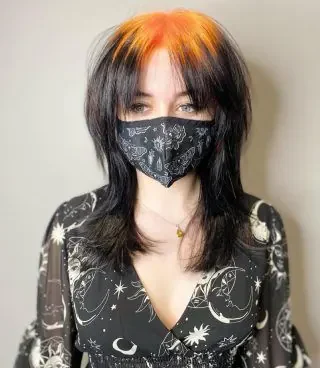
Orange Split-Fringe Wolf Cut
A visually verified split-fringe wolf cut from the internal image database, with orange-copper concentrated through the center fringe and crown.
split-fringe wolf cut with orange-copper ghost roots through the center fringe and crown, supported by a shorter crown and visibly longer lower layers.
The image shows a compact crown, separated cheek-length layers, and longer dark lengths rather than a blunt bob or ordinary layered cut.
Wolf cuts, soft mullets, choppy face framing, and orange-copper root placements that need movement to stay visible.
Refresh the orange-copper before it loses contrast, and reshape the crown and face frame before the cut grows into ordinary long layers.
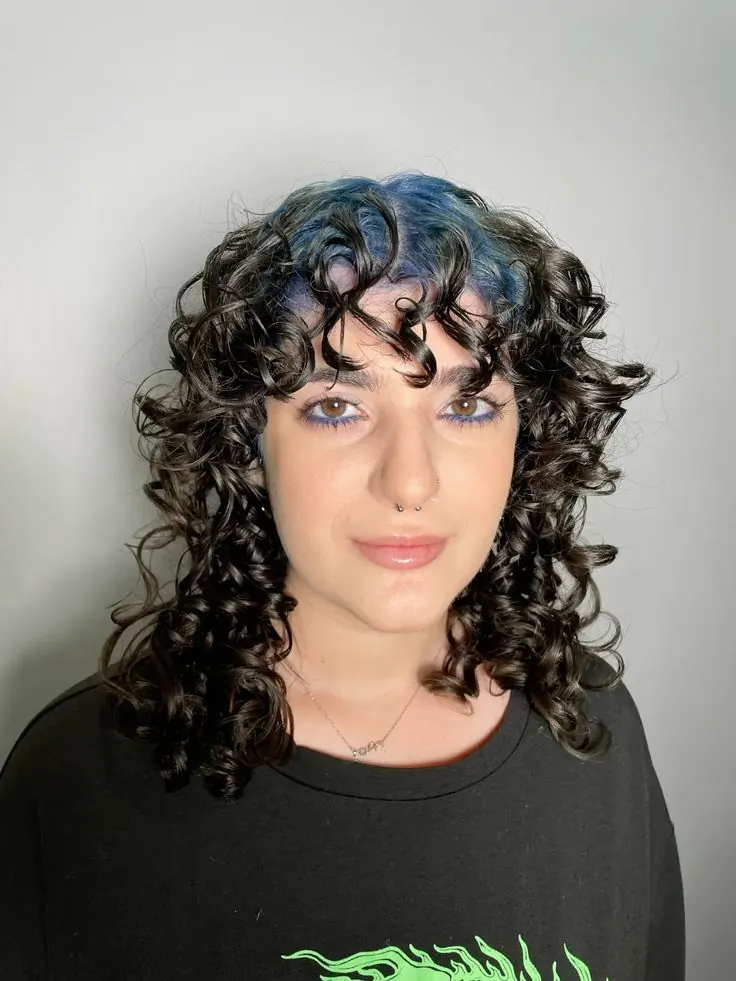
Silver Blue Curly Wolf Cut
A visually verified curly wolf cut from the internal image database, with silver blue concentrated through the crown and curly fringe.
curly wolf cut with silver blue ghost roots through the crown and curly fringe, supported by a shorter crown and visibly longer lower layers.
The curls form a short rounded crown with longer separated pieces below, translating the wolf-cut shape into a curly texture.
Wolf cuts, soft mullets, choppy face framing, and silver blue root placements that need movement to stay visible.
Refresh the silver blue before it loses contrast, and reshape the crown and face frame before the cut grows into ordinary long layers.
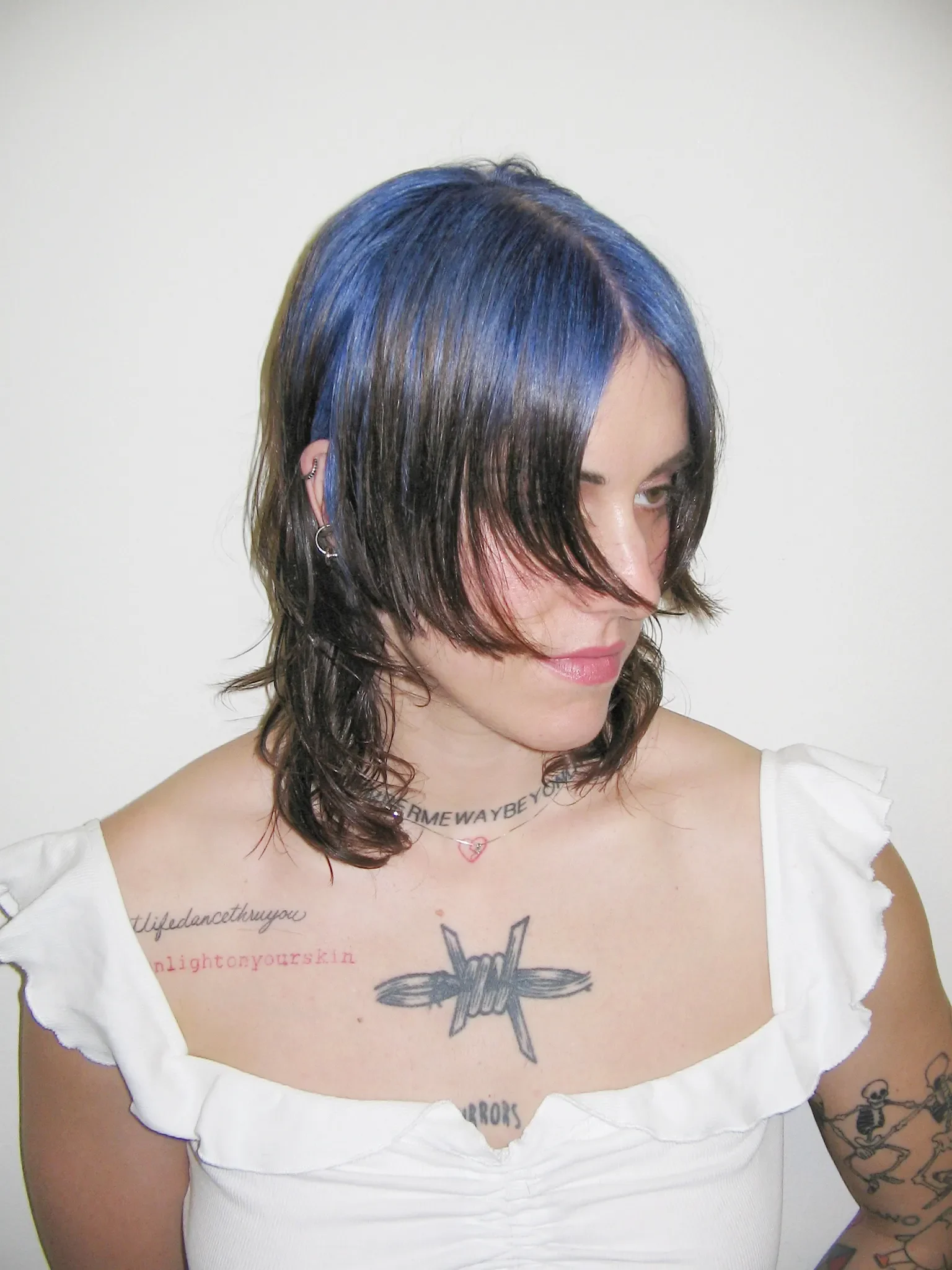
Blue Crown Mullet-Wolf Cut
A visually verified mullet-wolf hybrid from the internal image database, with deep blue concentrated through the crown and upper fringe.
mullet-wolf hybrid with deep blue ghost roots through the crown and upper fringe, supported by a shorter crown and visibly longer lower layers.
Short crown layers sit distinctly above the long narrow nape, giving this image a strong mullet-wolf profile even from the front.
Wolf cuts, soft mullets, choppy face framing, and deep blue root placements that need movement to stay visible.
Refresh the deep blue before it loses contrast, and reshape the crown and face frame before the cut grows into ordinary long layers.
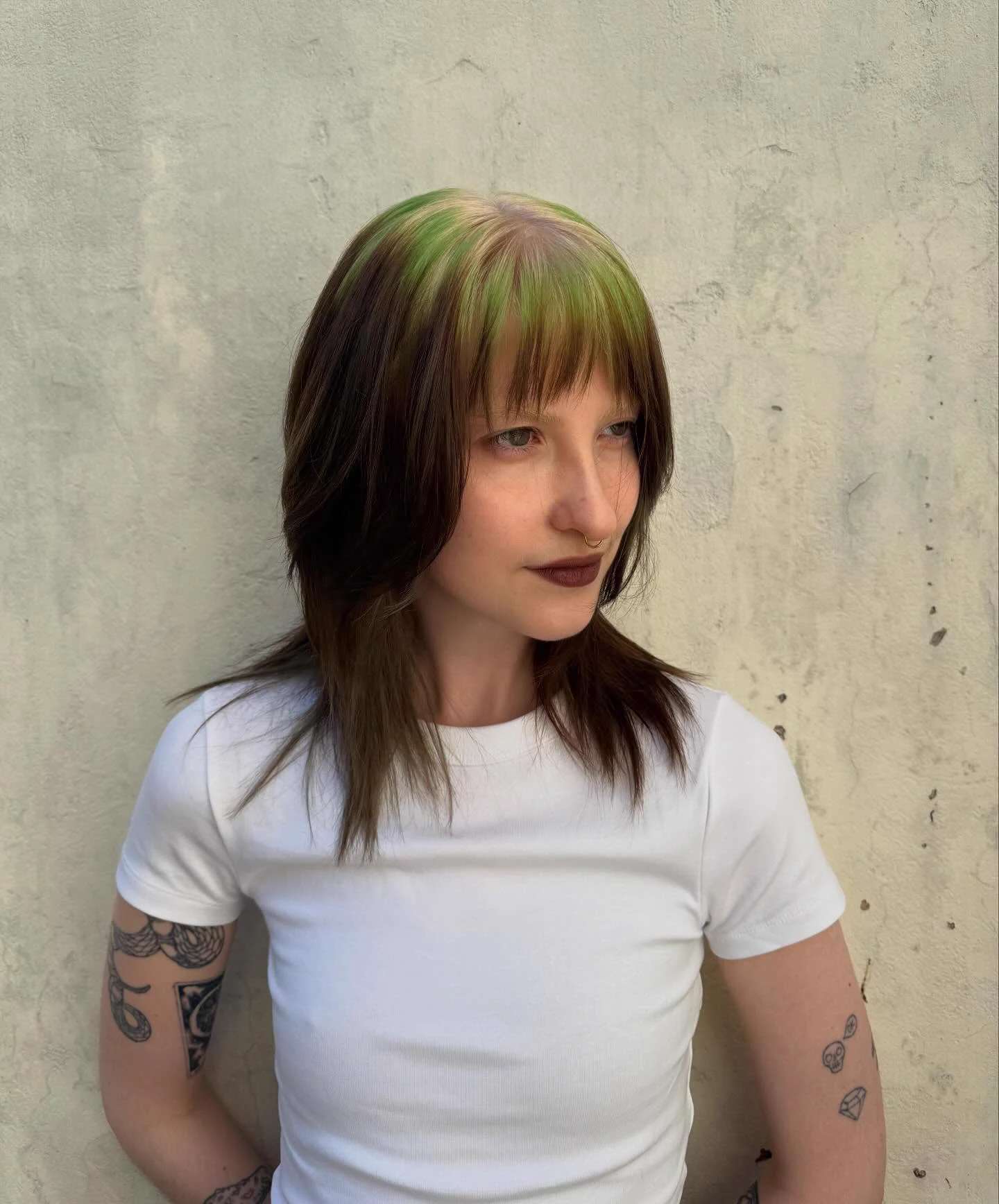
Green Layered Wolf Cut
A visually verified straight layered wolf cut from the internal image database, with green concentrated through the full top and fringe.
straight layered wolf cut with green ghost roots through the full top and fringe, supported by a shorter crown and visibly longer lower layers.
The short cap, cheek-length wings, and long tapered nape produce a textbook straight wolf-cut silhouette.
Wolf cuts, soft mullets, choppy face framing, and green root placements that need movement to stay visible.
Refresh the green before it loses contrast, and reshape the crown and face frame before the cut grows into ordinary long layers.
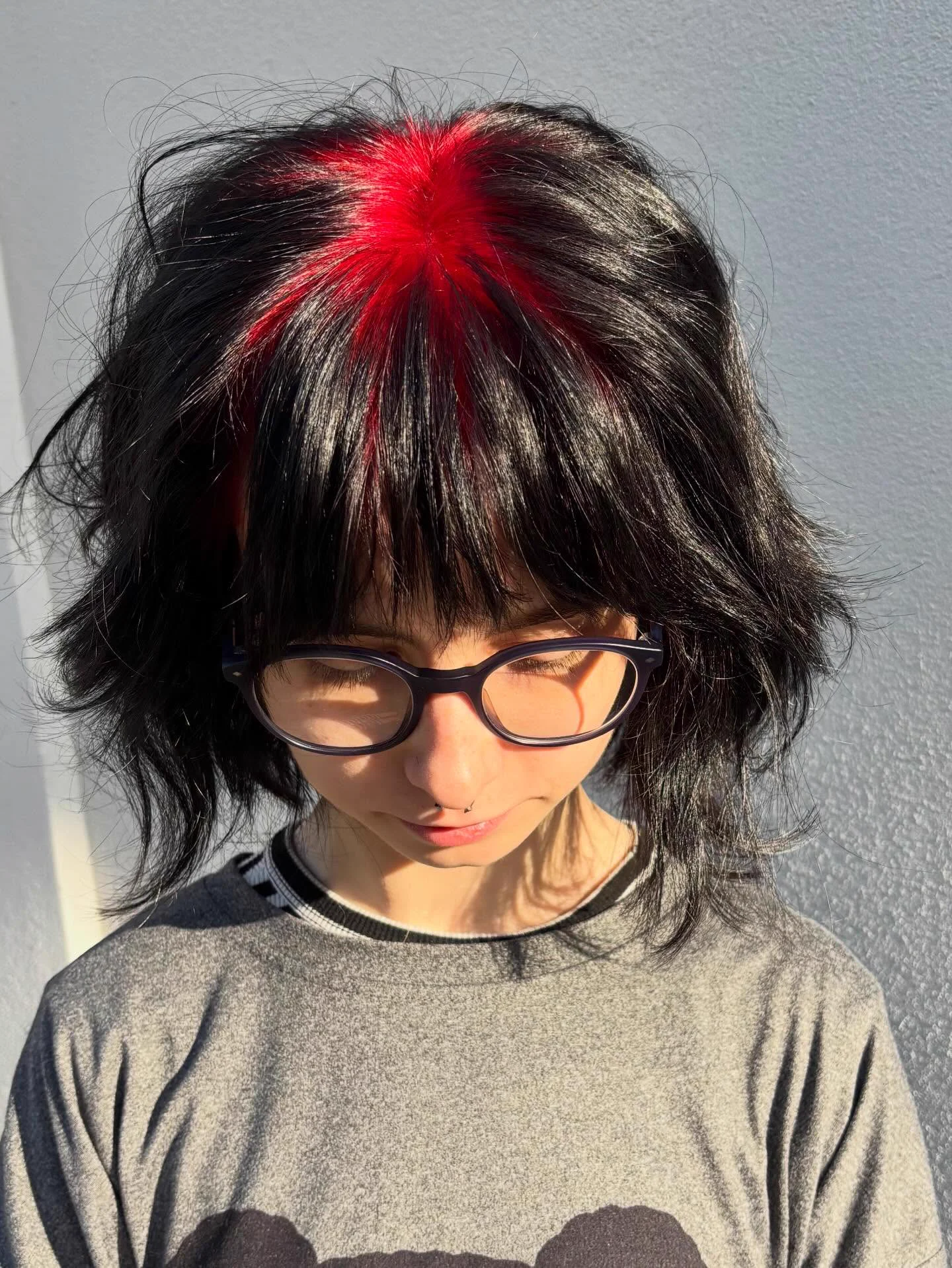
Red Crown-Burst Wolf Cut
A visually verified wavy wolf cut from the internal image database, with bright red concentrated through the center crown and fringe.
wavy wolf cut with bright red ghost roots through the center crown and fringe, supported by a shorter crown and visibly longer lower layers.
The short textured crown, broken side layers, and longer nape remain visible despite the slightly top-down camera angle.
Wolf cuts, soft mullets, choppy face framing, and bright red root placements that need movement to stay visible.
Refresh the bright red before it loses contrast, and reshape the crown and face frame before the cut grows into ordinary long layers.
A Mullet Already Exposes The Crown And Fringe
Mullets already have a clear architecture: shorter front pieces, visible crown lift, choppy top layers, and longer back movement. Ghost roots suit that shape because the root color can sit exactly where the haircut opens.
The goal is not to dye every layer. The goal is to make one part of the cut carry the color story. A magenta crown panel, copper micro fringe, smoky silver curtain bang root, or teal top panel can all work if the placement stays close to the scalp and follows the cut.
The best ghost roots mullets usually have at least one of these:
- A visible fringe, micro-fringe, curtain bang, or face-framing layer
- Crown texture that lifts enough to show the color
- A shag or wolf-cut outline with movement through the top
- Darker sides or back sections that keep the root color in focus
- A refresh plan for both the haircut and the shade
Follow The Top Layers Instead of Coloring a Flat Circle
Fringe roots are the safest choice if you want the color to show from the front. This works for micro-fringe, split fringe, curtain bangs, and piecey bangs because the root area is naturally visible.
Crown panels work best on spiky mullets, wolf cuts, and textured shags. The color shows as the top layers separate, especially with lightweight texture spray or soft styling cream.
Center-part roots suit longer wolf cuts and curtain-bang mullets. This placement feels cleaner and more wearable than a full vivid crown because the color follows the part and face frame.
Top-layer panels are useful when the haircut has a shaggy top but not a sharp fringe. Keep the color shallow and scalp-adjacent so it still reads as ghost roots.
Side panels can work, but they need to connect with the haircut. If the color is placed too low behind the ear, it can look like a peekaboo streak rather than ghost roots.
Color Intensity Should Match The Cut's Visual Weight
Magenta, copper, red, teal, silver, and smoky blonde are the strongest color families for a mullet because they show clearly through textured layers.
Magenta and hot pink feel the most alt and graphic, especially on black hair. Copper and orange-red are easier to wear but still bright enough to show through the fringe. Silver and smoky blonde make the cut feel sharper and cooler, but they usually need more careful lightening and toner support. Teal and blue-green work well on shags, but the base must be clean enough or the color can fade muddy.
For a softer option, use silver, taupe blonde, or muted copper through the curtain bang roots only. For a louder option, use magenta, orange-copper, or teal through the crown and fringe together.
Describe How The Root Panel Should Travel Through The Shape
Bring a reference photo and describe the placement, not just the color. "Ghost roots mullet" can mean very different things depending on whether the color sits in the bangs, crown, side panel, or top layers.
Useful wording:
- "Magenta ghost roots through the crown and micro-fringe, with the back left dark."
- "Copper root color through the split fringe only, blended softly into the top."
- "Smoky silver ghost roots on the curtain bangs and part line, not all-over silver."
- "Teal top-panel ghost roots on a layered shag, with dark sides and darker length."
- "Keep the color placement visible after the next trim."
Also ask where the color will sit after the haircut is reshaped. Mullets change quickly when the fringe, crown, or tail is trimmed, so the placement should survive normal maintenance.
Refresh Products Should Preserve The Section, Not Expand it
DIY maintenance can make sense if the root panel is already lightened and you are refreshing the same shade. Creating a vivid or silver ghost roots mullet from dark hair is different: that usually involves bleach near the scalp, uneven layers, and short fringe sections, so a stylist is safer.
For at-home upkeep, choose products based on the actual image and color family:
- Magenta or pink mullet: magenta semi-permanent dye, pink color-depositing mask, color-safe shampoo, lightweight texture spray
- Copper or orange fringe: copper color-depositing mask, small tint brush, gloves, color-safe cleanser
- Silver or smoky wolf cut: bond repair mask, silver toner or gloss, occasional purple shampoo, heat protectant
- Teal shag panel: teal or blue-green depositing mask, sulfate-free shampoo, lightweight styling cream, shine spray
Avoid generic "root touch-up" sprays for this style. They are usually made to hide regrowth, while ghost roots are supposed to be visible.
Keep Lightener Away From Previously Processed Choppy Ends
If your hair is dark and the target shade is magenta, copper, teal, silver, white, or pastel, the visible root area may need pre-lightening. That is the risky part. Do not overlap bleach onto already-lightened short fringe or crown pieces unless a stylist has mapped it for you.
Safer at-home refresh steps:
- Wash less often for a few days before refreshing so the scalp is not freshly irritated.
- Clip away the dark sides, back, and lower layers that should not receive pigment.
- Apply the same shade family only to the existing colored root panel, fringe, or crown.
- Feather the edge lightly with a tint brush; do not drag vivid color through the whole mullet unless that is the intended design.
- Rinse with cool water until it runs mostly clear, then style with lightweight product so the root panel stays visible.
If the colored area has grown out too far, book a salon refresh instead of trying to bleach a new band at home. Short layered cuts make banding obvious.
Schedule The Cut And Color as One Maintenance Decision
The haircut and the color have to be maintained together. A fresh magenta panel on a mullet that has lost its crown shape will still look off; a perfect cut with faded teal or yellowing silver will also lose the ghost-roots effect.
Plan the first refresh based on the color. Vivid magenta, teal, and copper may need a depositing mask before the next haircut. Silver, smoky blonde, and white need toner support and bond care. Fringe placements fade fastest because they are washed, touched, heat-styled, and trimmed more often.
Use light texture products. Heavy wax, thick oils, or matte clay can coat the colored root area and make vivid shades look dull. If the color sits through the fringe, apply styling product to the ends first and only use the leftover amount near the roots.
Disconnected Side Color Can Fight The Mullet's Direction
The biggest mistake is choosing a reference where the haircut is not actually a mullet, wolf cut, or shag. A bob with color near the scalp can be a good ghost roots look, but it does not show how the fringe, crown, and choppy top layers work together on these cuts.
Other mistakes:
- Placing the color too low under the top layer
- Coloring random side streaks that do not connect to the cut
- Using silver or pastel on a base that is too yellow
- Letting vivid shades fade until the crown looks accidental
- Trimming the fringe without checking how much colored placement will be removed
Ghost Roots Mullet FAQ
Do ghost roots work on a mullet?
Yes. Ghost roots work especially well on mullets because the fringe, crown, and choppy top layers naturally expose the root zone. The color should follow the haircut instead of sitting as a random streak.
What placement is best for ghost roots on a mullet?
The strongest placements are the fringe roots, crown panel, center part, curtain bang roots, and top layers. Side panels can work, but only if they connect visually with the mullet shape.
Are ghost roots mullets high maintenance?
They are medium to high maintenance because both the cut and the color matter. Plan trims and color refreshes together so the root panel still sits in the right place after reshaping.
For related cuts, compare ghost roots on short hair and ghost roots for men. For more vivid color options, see green ghost roots, teal ghost roots, and red ghost roots.