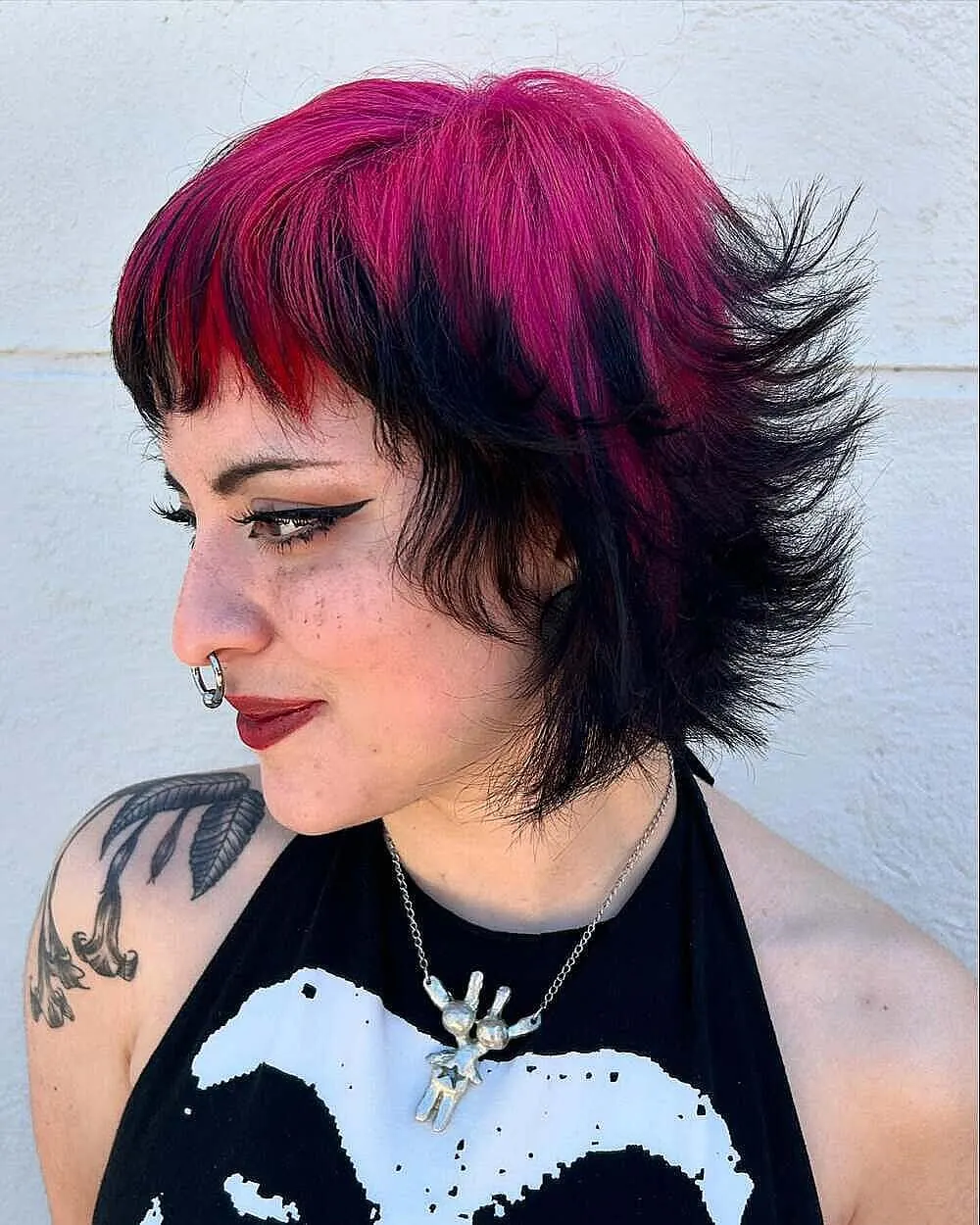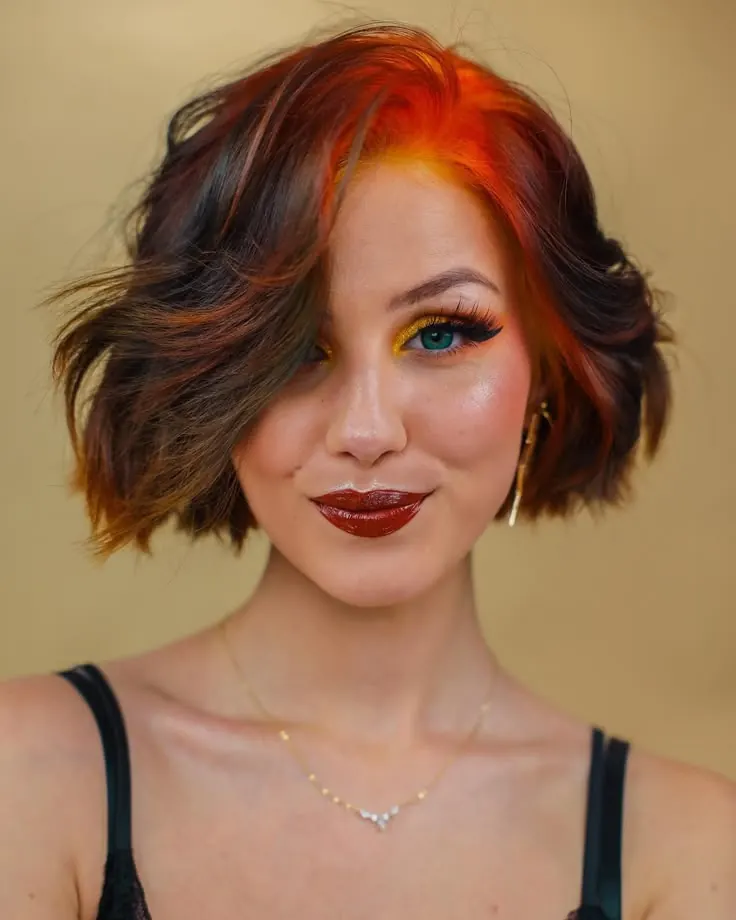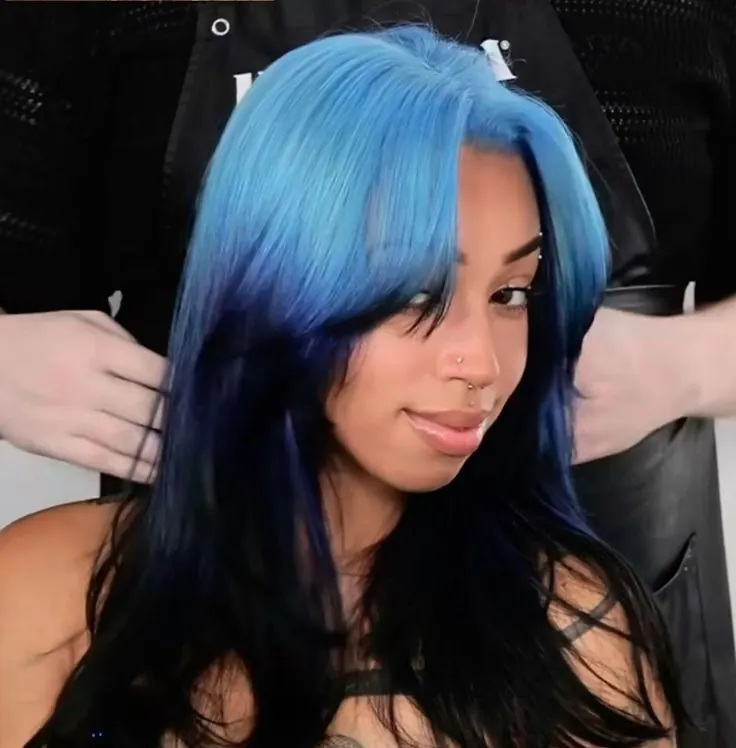
Ghost roots on men's hair look strongest when the colored root zone is planned around the haircut. Curls reveal color through the crown, curtain cuts expose it along the center part, and shags or mullets carry it through the fringe and top layers.
Use the gallery below to compare red, blue, green, pink, blonde, and white placements, then match the shade, upkeep, and root placement to the way you cut and style your hair.
Visual Ideas
Root Color Mapped to The Cut, Not Added After it
These men's ghost roots references cover red, blue, green, pink, blonde, silver-white, curls, curtains, shags, mullets, quiffs, and short textured placements.
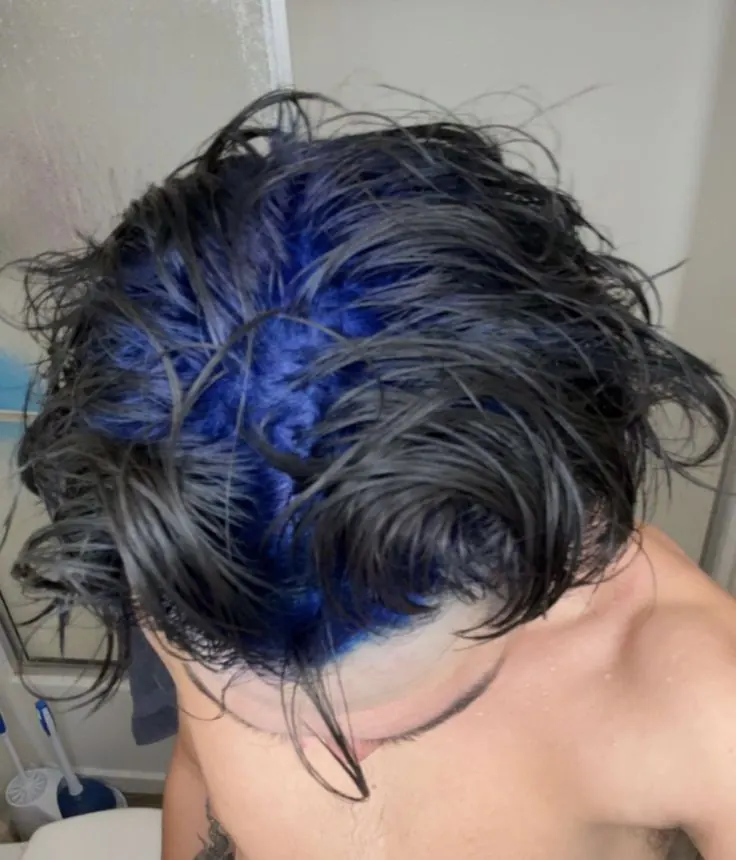
Electric Blue Crown Panel Roots
Wet-look texture with vivid blue color concentrated near the crown and part line.
The top view shows the finished medium wavy layered cut exposing the electric blue crown panel without requiring color through the full black length. It is a useful comparison for medium men's cuts with wavy texture.
Electric Blue will fade fastest along the exposed crown panel. A shade-matched deposit can refresh that area without extending color into the darker sides or ends.
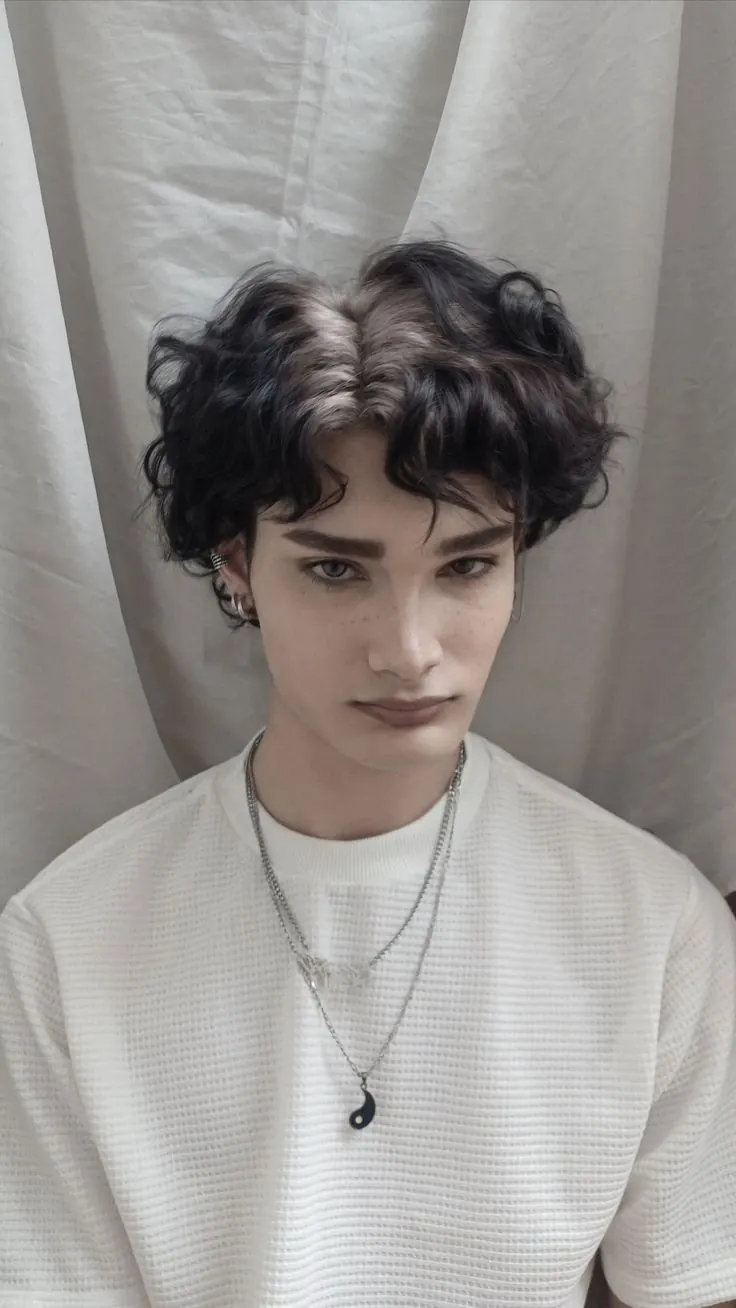
Platinum Blonde Curly Top Roots
Center-part placement with a soft split-dye ghost-roots effect.
From the front portrait, the curl groups open around the curly top, so the platinum blonde appears between dark sections instead of covering every curl. It is a useful comparison for short curls, loose curls, textured tops, and anyone who wants the color visible from above.
Platinum Blonde on this short curly crop depends on clean lift and toner. The next service should avoid overlapping lightener onto the previously processed curly top.
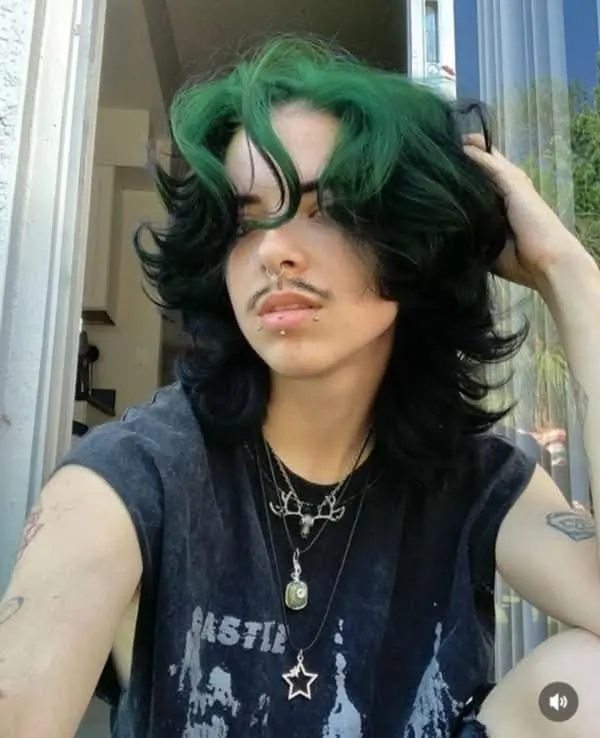
Neon Green Shag Crown Roots
Green roots concentrated through the fringe and top layers.
The front portrait shows how the choppy shag mullet uncovers the shag crown, making the color part of the cut's movement rather than a separate scalp stripe. It is a useful comparison for shags, wolf cuts, mullets, choppy layers, and alt styling.
Neon Green will fade fastest along the exposed shag crown. A shade-matched deposit can refresh that area without extending color into the darker sides or ends.
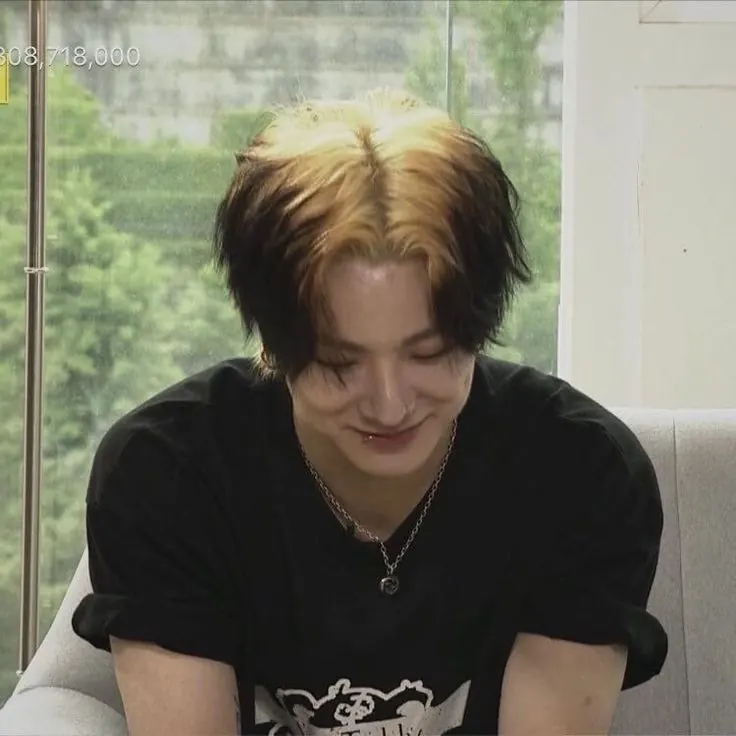
Honey Blonde Curtain Part Roots
Blended light roots at the center part with darker lengths.
In the downward portrait, the curtain cut divides at the front and exposes the curtain part, keeping the color visible whenever the center part opens. It is a useful comparison for curtain cuts, middle parts, soft bends, and hair that naturally opens around the face.
Honey Blonde on this curtain cut depends on clean lift and toner. The next service should avoid overlapping lightener onto the previously processed curtain part.
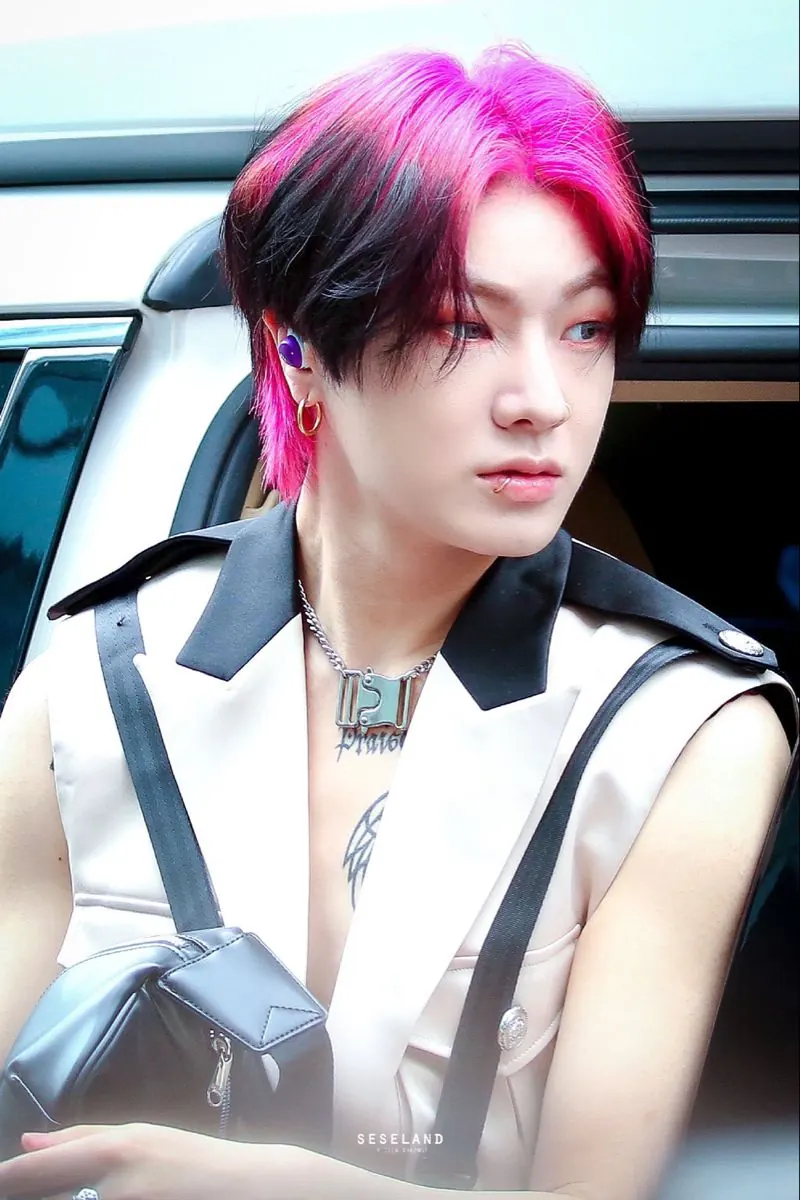
Hot Pink Top Panel Roots
Editorial idol-style look with bright pink roots and dark outer lengths.
The three quarter portrait shows the finished layered medium cut exposing the hot pink top panel without requiring color through the full black length. It is a useful comparison for medium men's cuts with straight texture.
Hot Pink will fade fastest along the exposed top panel. A shade-matched deposit can refresh that area without extending color into the darker sides or ends.
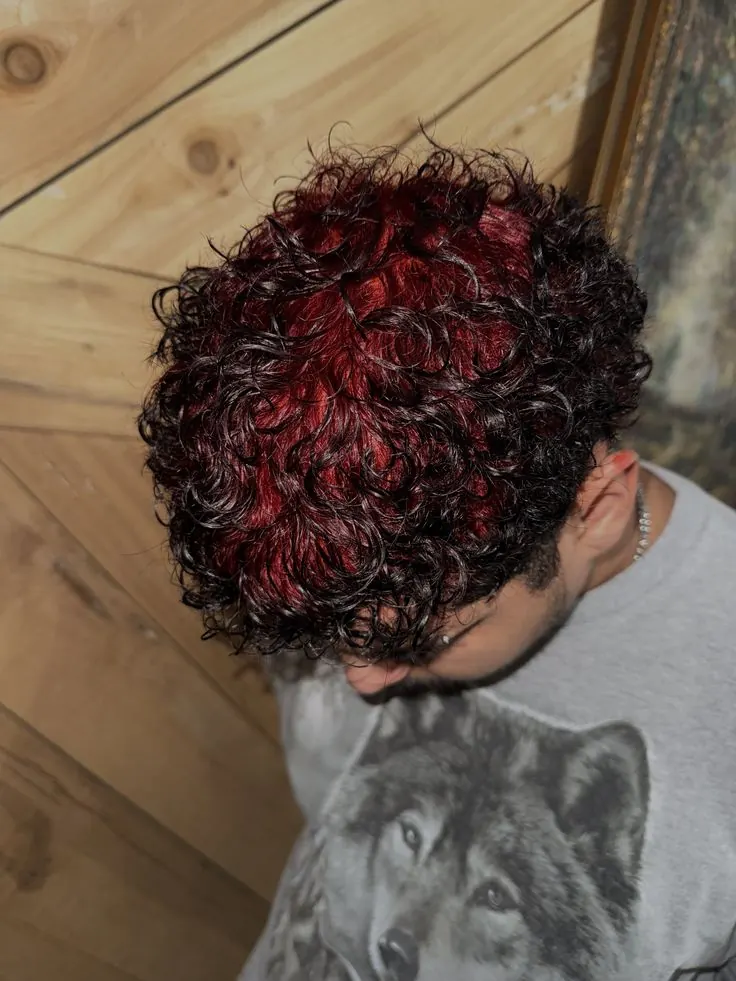
Deep Red Curly Crown Roots
Defined curls with red roots peeking through the crown.
From the top view, the curl groups open around the curly crown, so the deep red appears between dark sections instead of covering every curl. It is a useful comparison for short curls, loose curls, textured tops, and anyone who wants the color visible from above.
Deep Red will fade fastest along the exposed curly crown. A shade-matched deposit can refresh that area without extending color into the darker sides or ends.
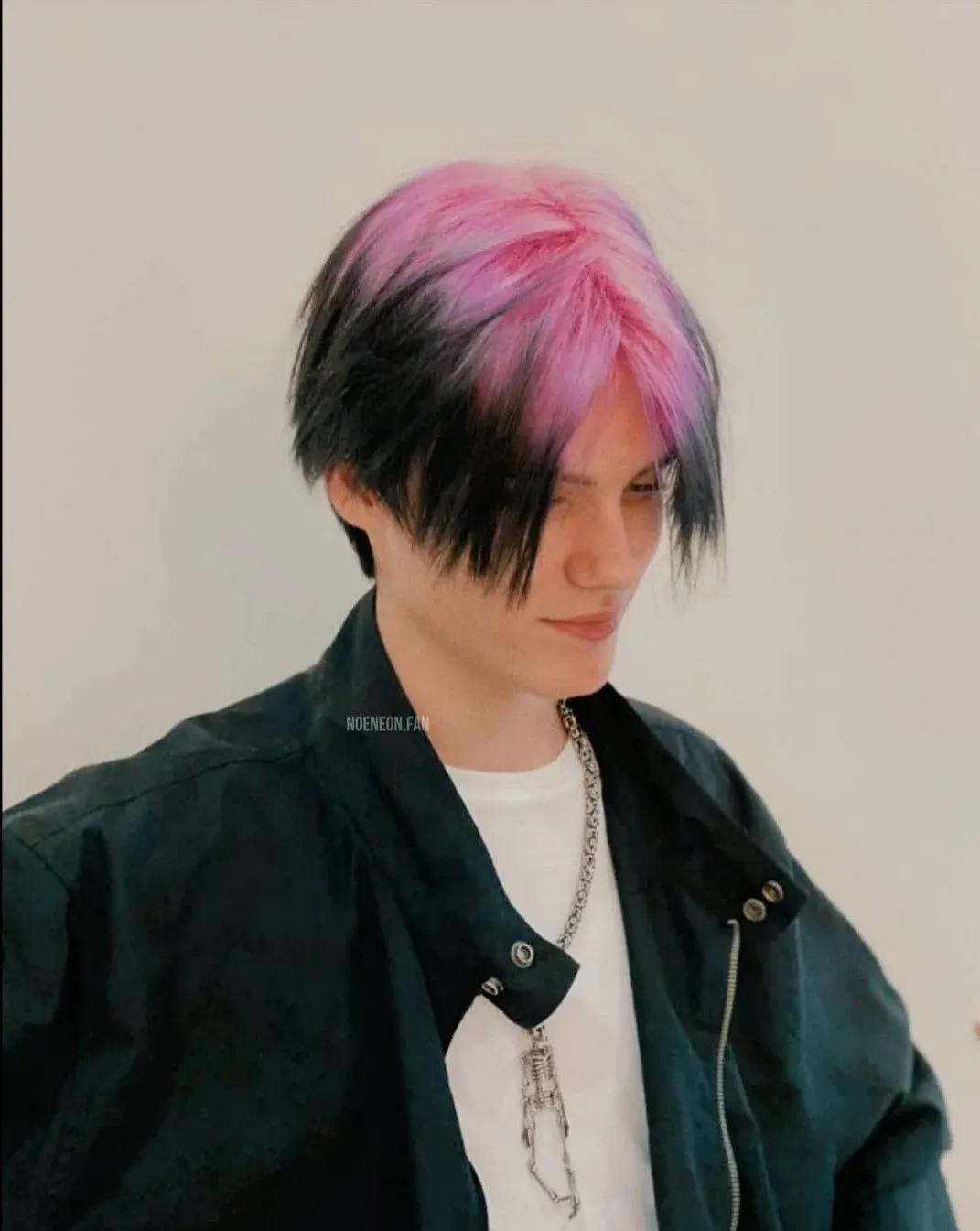
Pastel Pink Top Panel Roots
Soft pink crown and parting with dark face-framing sections.
The three quarter portrait shows the finished layered medium cut exposing the pastel pink top panel without requiring color through the full black length. It is a useful comparison for medium men's cuts with straight texture.
Pastel Pink will fade fastest along the exposed top panel. A shade-matched deposit can refresh that area without extending color into the darker sides or ends.
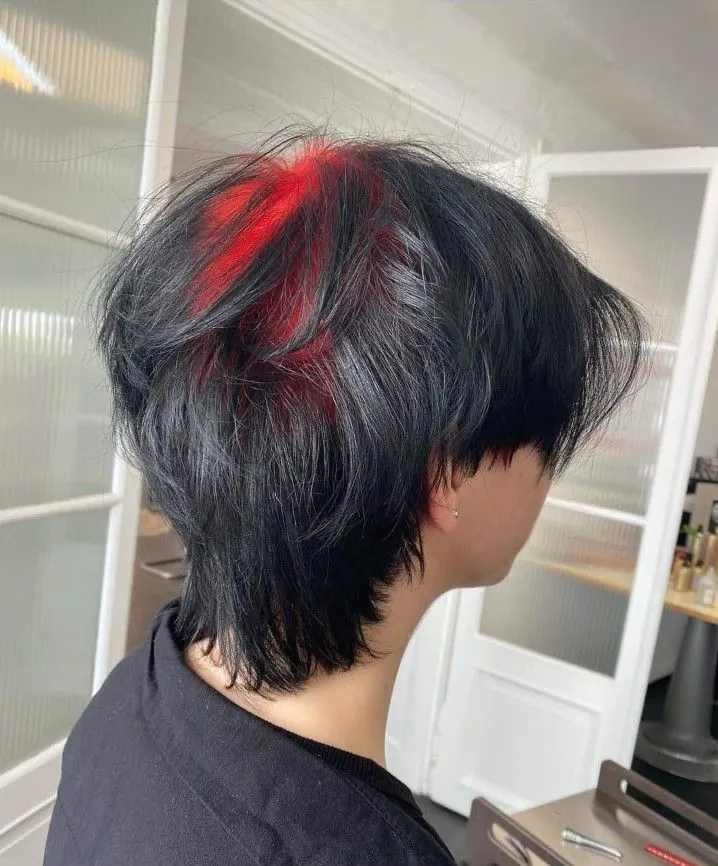
Red Shag Crown Roots
Back-view reference showing red roots through crown layers.
The back three quarter shows how the choppy wolf cut mullet uncovers the shag crown, making the color part of the cut's movement rather than a separate scalp stripe. It is a useful comparison for shags, wolf cuts, mullets, choppy layers, and alt styling.
Red will fade fastest along the exposed shag crown. A shade-matched deposit can refresh that area without extending color into the darker sides or ends.
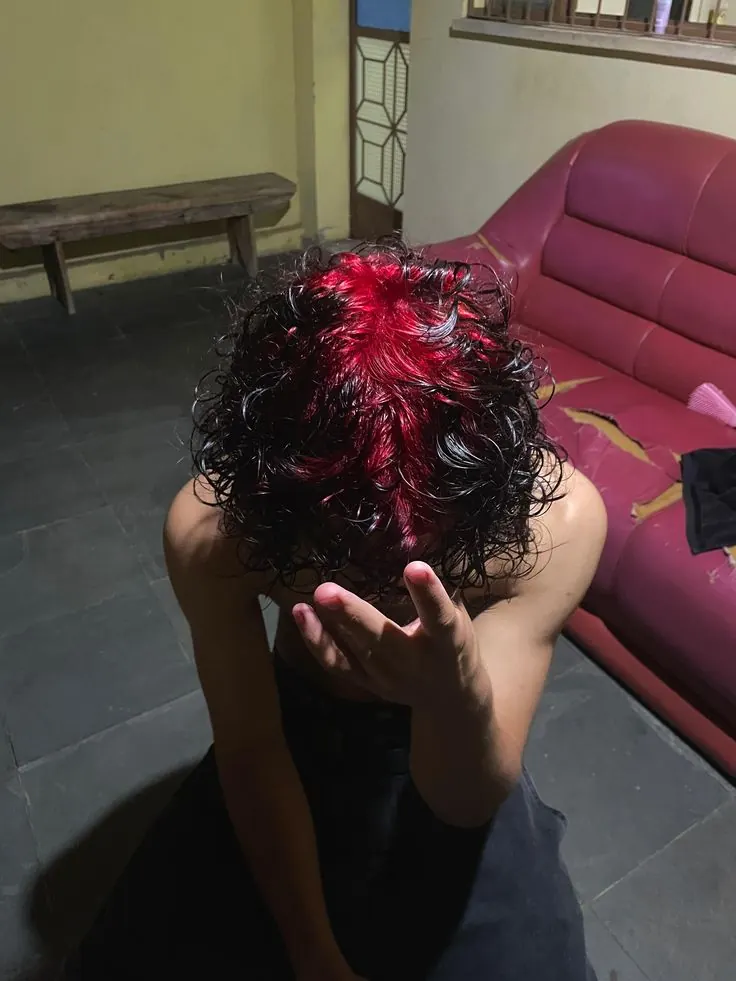
Crimson Red Curly Crown Roots
High-contrast crimson roots with hand partly covering the face.
From the top view, the curl groups open around the curly crown, so the crimson red appears between dark sections instead of covering every curl. It is a useful comparison for short curls, loose curls, textured tops, and anyone who wants the color visible from above.
Crimson Red will fade fastest along the exposed curly crown. A shade-matched deposit can refresh that area without extending color into the darker sides or ends.
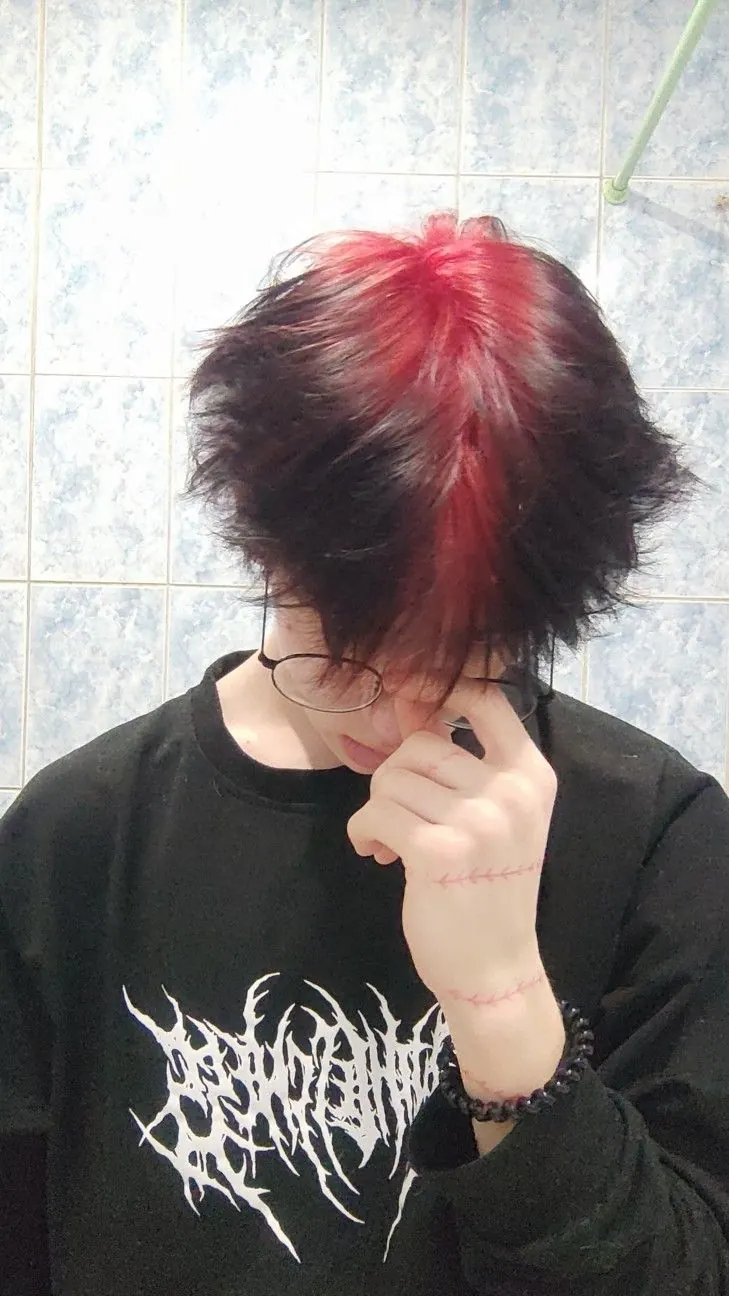
Crimson Red Shag Crown Roots
Center-part stripe effect with red roots running through the fringe.
The front portrait looking down shows how the choppy shag cut uncovers the shag crown, making the color part of the cut's movement rather than a separate scalp stripe. It is a useful comparison for shags, wolf cuts, mullets, choppy layers, and alt styling.
Crimson Red will fade fastest along the exposed shag crown. A shade-matched deposit can refresh that area without extending color into the darker sides or ends.
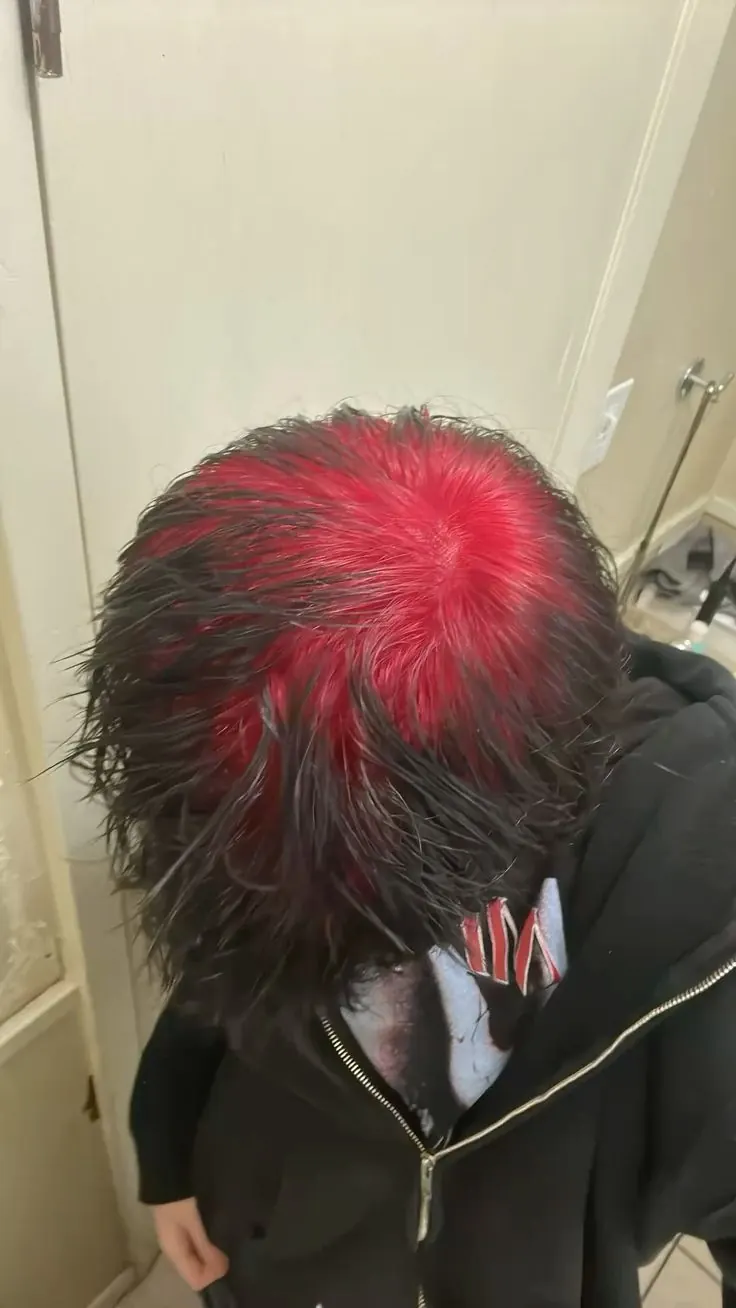
Hot Pink Shag Crown Roots
Bold pink crown application with wet separated strands.
The top view shows how the choppy wet shag uncovers the shag crown, making the color part of the cut's movement rather than a separate scalp stripe. It is a useful comparison for shags, wolf cuts, mullets, choppy layers, and alt styling.
Hot Pink will fade fastest along the exposed shag crown. A shade-matched deposit can refresh that area without extending color into the darker sides or ends.
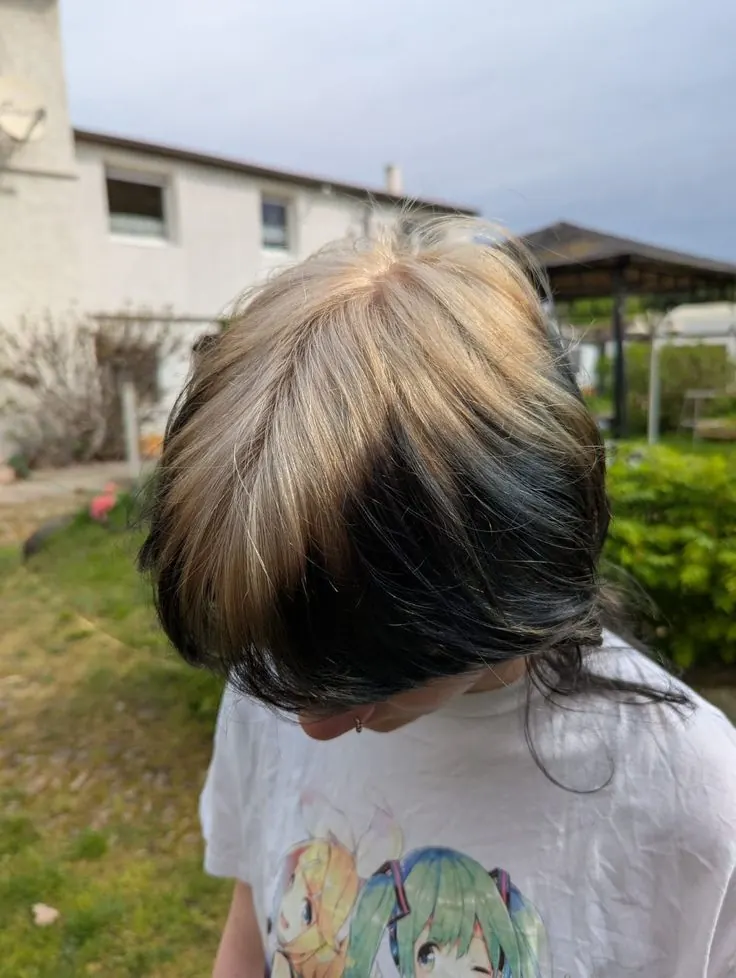
Ash Blonde Curtain Part Roots
Ash-blonde top section with dark lower layers and a soft curtain shape.
In the top down portrait, the curtain cut divides at the front and exposes the curtain part, keeping the color visible whenever the center part opens. It is a useful comparison for curtain cuts, middle parts, soft bends, and hair that naturally opens around the face.
Ash Blonde on this curtain cut depends on clean lift and toner. The next service should avoid overlapping lightener onto the previously processed curtain part.
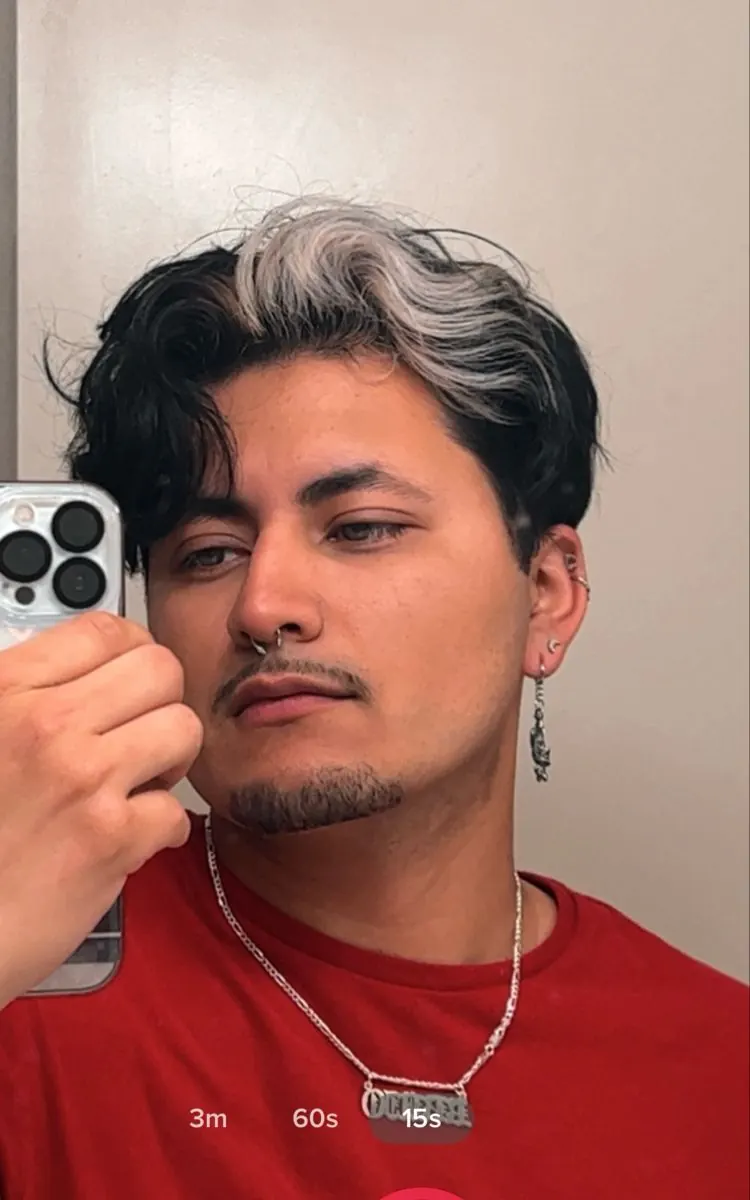
Silver White Quiff Roots
Classic men's example with white-silver ghost roots at the front wave.
The mirror selfie shows the lifted front bringing the quiff into view, while the shorter dark sides keep the accent concentrated above the forehead. It is a useful comparison for quiffs, brushed-up fronts, cropped sides, and polished short cuts.
Silver White on this short wavy quiff depends on clean lift and toner. The next service should avoid overlapping lightener onto the previously processed quiff.
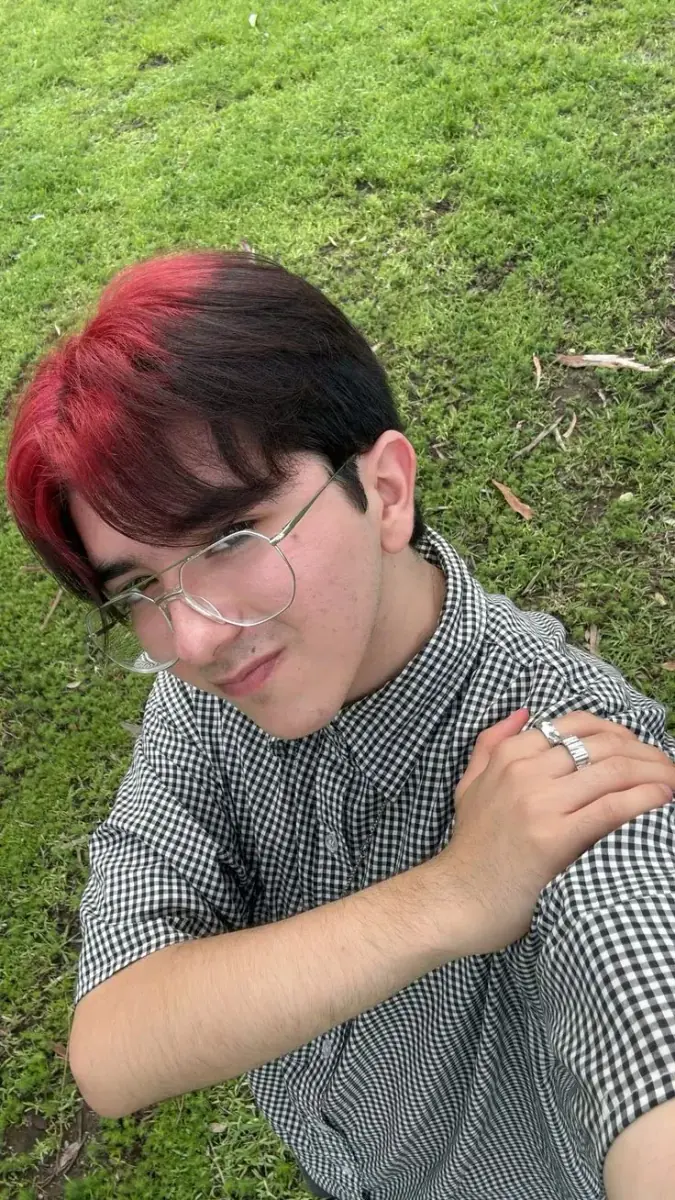
Burgundy Red Curtain Part Roots
Polished men's portrait with burgundy-red root zone over a dark base.
In the three quarter selfie, the short curtain cut divides at the front and exposes the curtain part, keeping the color visible whenever the center part opens. It is a useful comparison for curtain cuts, middle parts, soft bends, and hair that naturally opens around the face.
Burgundy Red will fade fastest along the exposed curtain part. A shade-matched deposit can refresh that area without extending color into the darker sides or ends.
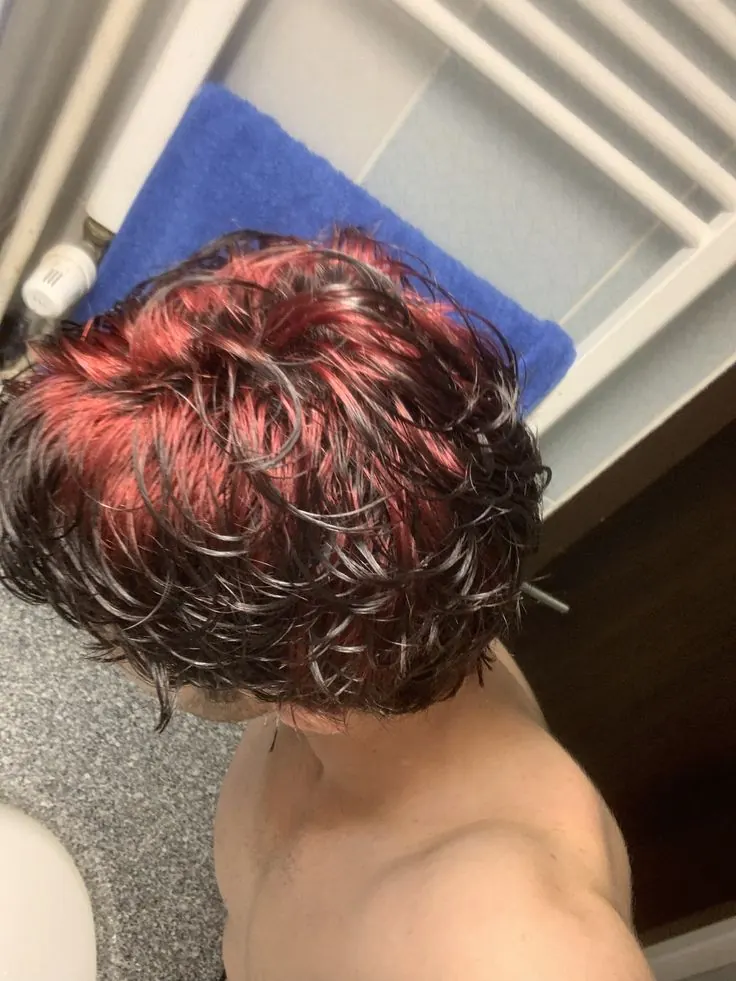
Burgundy Red Crown Panel Roots
Wet texture with burgundy roots distributed across the top.
The top view shows the finished medium wavy cut exposing the burgundy red crown panel without requiring color through the full black length. It is a useful comparison for medium men's cuts with wet wavy texture.
Burgundy Red will fade fastest along the exposed crown panel. A shade-matched deposit can refresh that area without extending color into the darker sides or ends.
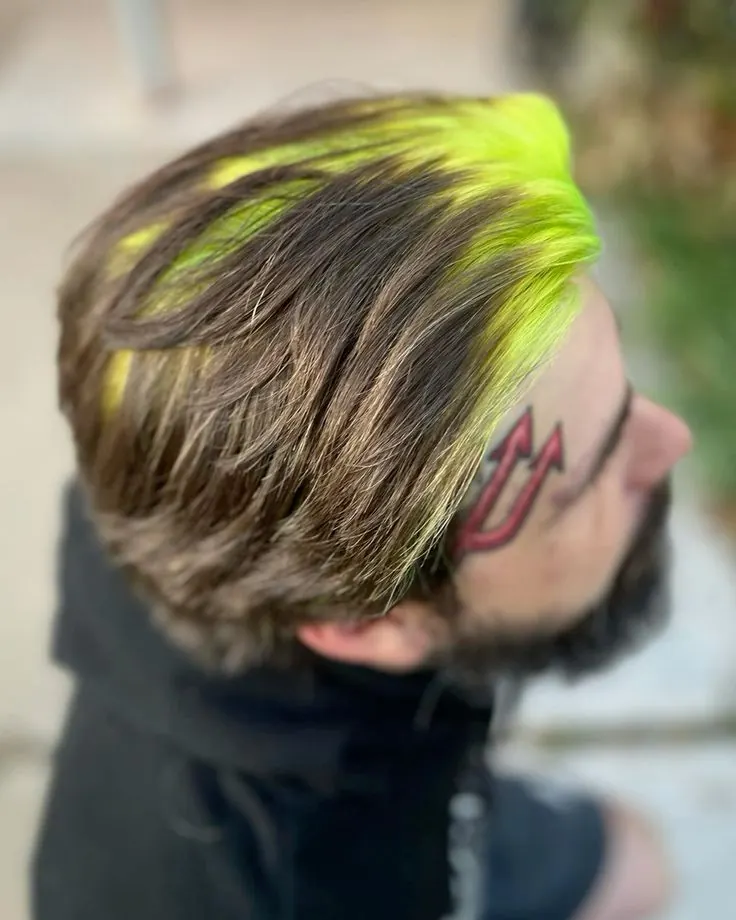
Neon Lime Top Panel Roots
Neon-lime ghost roots placed through the front sweep and crown.
The side profile shows the finished side-swept medium cut exposing the neon lime top panel without requiring color through the full ash brown length. It is a useful comparison for medium men's cuts with straight texture.
Neon Lime will fade fastest along the exposed top panel. A shade-matched deposit can refresh that area without extending color into the darker sides or ends.
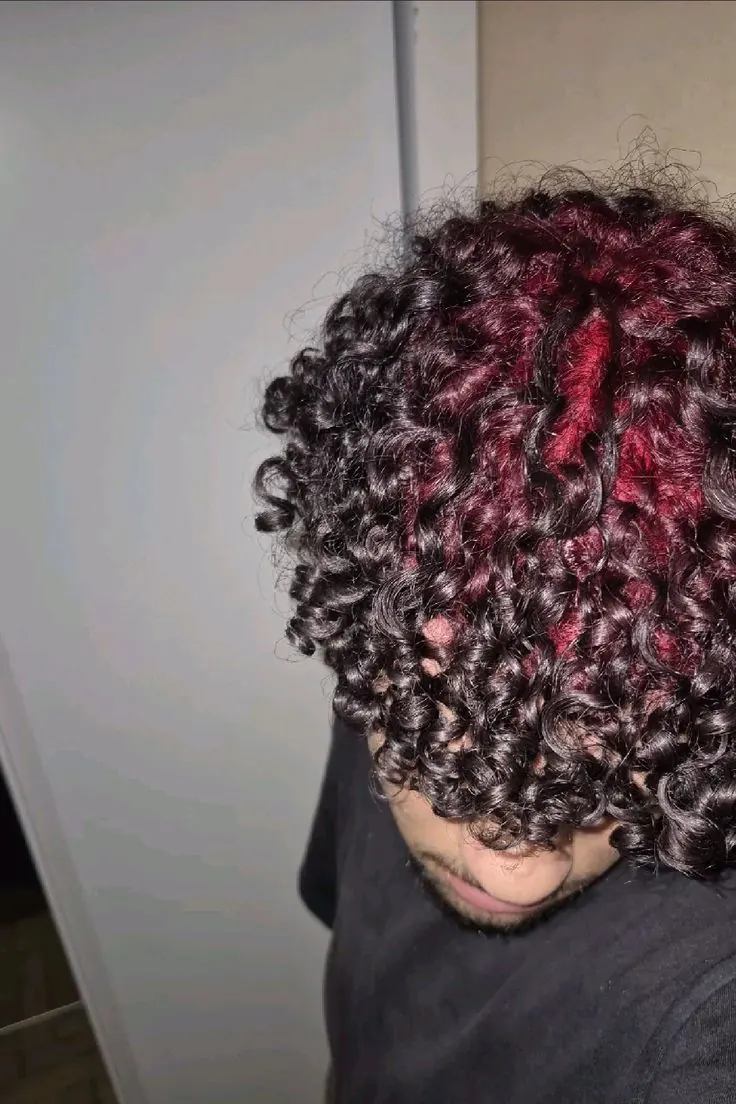
Burgundy Red Curly Crown Roots
Dense curls with burgundy-red roots visible across the top.
From the top view, the curl groups open around the curly crown, so the burgundy red appears between dark sections instead of covering every curl. It is a useful comparison for short curls, loose curls, textured tops, and anyone who wants the color visible from above.
Burgundy Red will fade fastest along the exposed curly crown. A shade-matched deposit can refresh that area without extending color into the darker sides or ends.
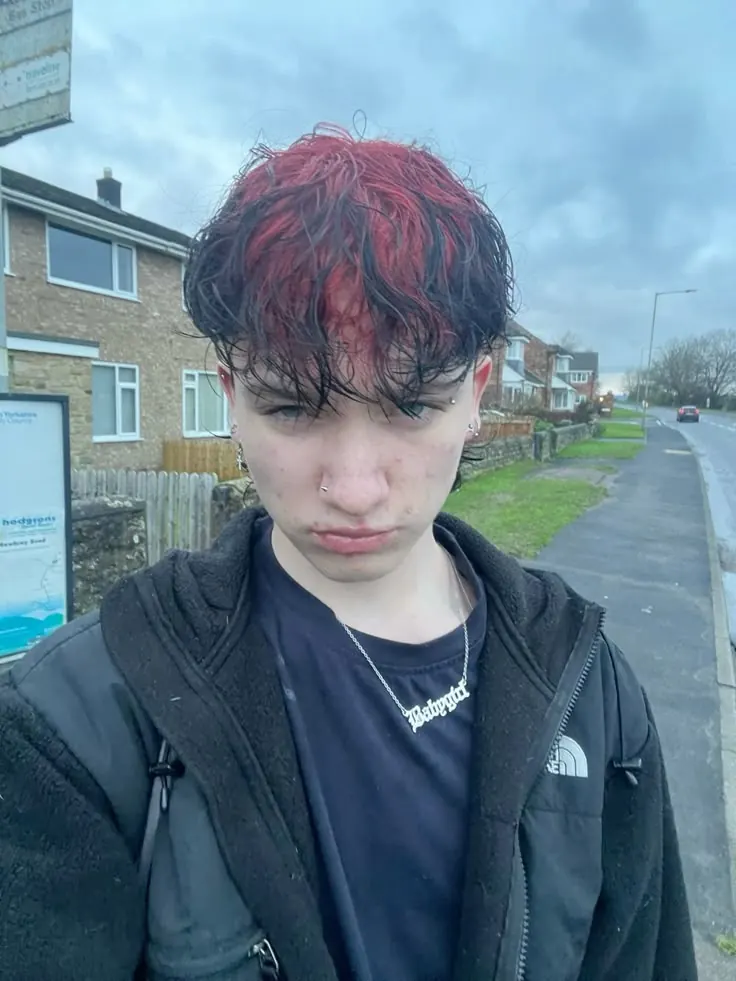
Burgundy Red Fringe Roots
Outdoor portrait with a wet fringe and burgundy roots across the top.
The front portrait shows the finished wet fringe cut exposing the burgundy red fringe without requiring color through the full black length. It is a useful comparison for short men's cuts with wet straight texture.
Burgundy Red will fade fastest along the exposed fringe. A shade-matched deposit can refresh that area without extending color into the darker sides or ends.
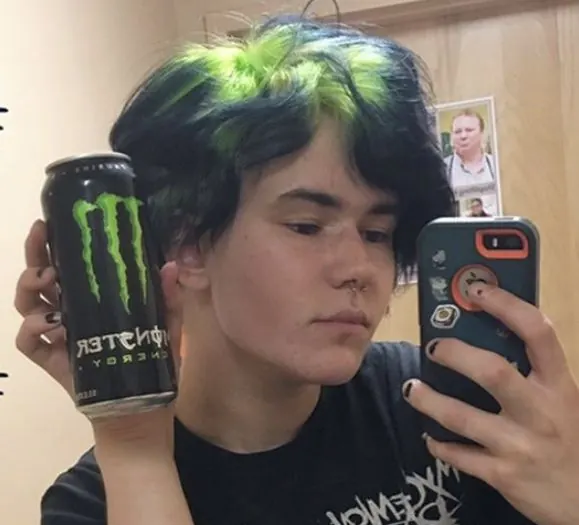
Neon Green Top Panel Roots
Short black cut with lime-green root patches and a visible side part.
The mirror selfie shows the finished short layered cut exposing the neon green top panel without requiring color through the full black length. It is a useful comparison for short men's cuts with straight texture.
Neon Green will fade fastest along the exposed top panel. A shade-matched deposit can refresh that area without extending color into the darker sides or ends.

Ash Blonde Curtain Part Roots
Strong center-part example with face mostly covered by hands.
In the front portrait, the medium curtain cut divides at the front and exposes the curtain part, keeping the color visible whenever the center part opens. It is a useful comparison for curtain cuts, middle parts, soft bends, and hair that naturally opens around the face.
Ash Blonde on this medium curtain cut depends on clean lift and toner. The next service should avoid overlapping lightener onto the previously processed curtain part.
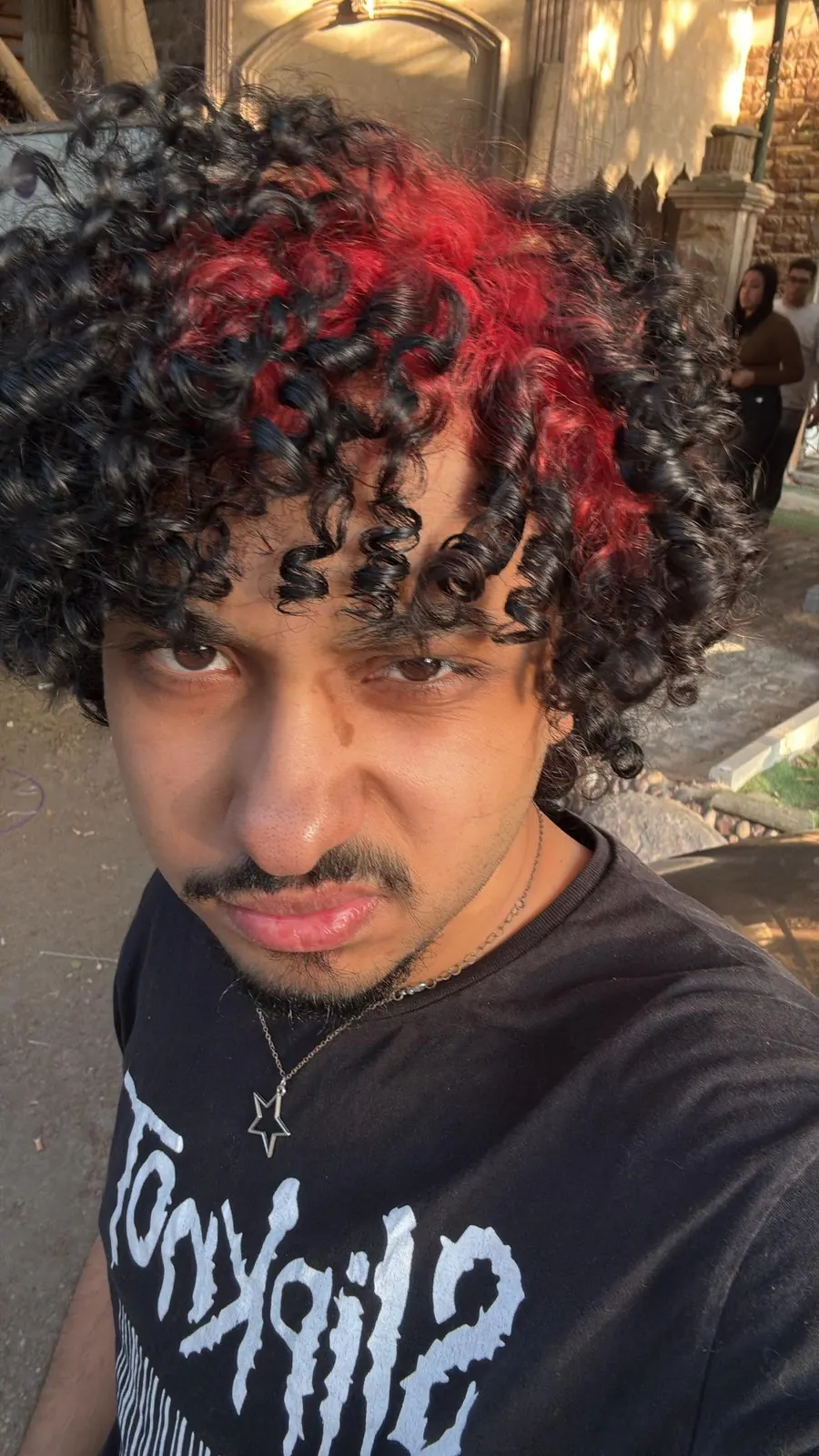
Crimson Red Curly Top Roots
Front-facing curly example with bright red root placement and visible facial features.
From the front selfie, the curl groups open around the curly top, so the crimson red appears between dark sections instead of covering every curl. It is a useful comparison for short curls, loose curls, textured tops, and anyone who wants the color visible from above.
Crimson Red will fade fastest along the exposed curly top. A shade-matched deposit can refresh that area without extending color into the darker sides or ends.
Pick a Color That Can Survive The Haircut Schedule
Use color choice to control how loud the look feels:
- Red ghost roots: The boldest choice on black hair. Crimson, burgundy, and deep red read quickly even when the colored area is small, so they work well on shags, wet texture, curls, and short cuts where the crown is visible.
- Blue ghost roots: Cooler and more futuristic. Cobalt and electric blue suit textured tops, undercuts, curtains, and medium wavy hair because the shade keeps a clean graphic edge.
- Green ghost roots: More alt and graphic. Neon green, lime, and chartreuse are strongest on mullets, shags, and choppy layers because the color looks intentional when it moves through the crown or fringe.
- Pink ghost roots: Sharper than people expect on men's cuts. Hot pink works well on black shags and layered medium hair, while pastel pink needs a cleaner lift and looks softer.
- Blonde, silver, or white ghost roots: The cleanest option if you want contrast without vivid color. These shades suit curls, curtains, quiffs, and short textured cuts, but they need better lightening, toner, and bond care.
For more color-specific examples, compare red ghost roots, blue ghost roots, and teal ghost roots.
The Fringe, Part, Quiff, or Top Curls Must Expose The Root Zone
The haircut should decide where the color goes:
- Short curls: Keep the color on the top curls or crown curls so it shows from the front and above.
- Curtain cuts: Place the color around the middle part and first bend, not randomly across the whole scalp.
- Shags and wolf cuts: Use the fringe, crown, and top layers so the color appears when the cut moves.
- Mullets: Keep the strongest color around the crown or fringe, then let the darker length preserve the shape.
- Quiffs and brushed-up cuts: Concentrate blonde, silver-white, or vivid color toward the front where the style lifts.
- Undercuts: Keep the shorter sides dark and let the longer top carry the ghost-root contrast.
A small placement can be enough on short hair because the color sits close to the viewer. For cut-specific ideas, see ghost roots mullet and ghost roots on short hair.
Coordinate The Barbering And Color Work Before The Appointment
Ask for the color to follow the haircut, not just the scalp. Useful phrases include:
- "Red crown panel on a textured shag."
- "Blue top-curl ghost roots with the sides left dark."
- "Blonde center-part roots on curtains."
- "Silver-white quiff roots with dark sides."
- "Green fringe placement on a mullet."
- "Grown-out ghost roots that still show through the top layers."
If you usually style with pomade, gel, wax, or curl cream, mention that too. Heavy product can hide the color if the placement is too subtle.
A Fast Fade Can Remove The Placement You Just Colored
Avoid these before booking or dyeing:
- Going too hidden: A tiny underlayer can disappear after one trim, especially around the sides or neckline.
- Ignoring lift: White, pastel pink, and ice blue need a clean lightened base. Short hair can still be damaged by aggressive bleaching.
- Copying a photo too literally: A placement that works on long waves may not work on curls, curtains, or a cropped undercut.
- Using too much dark product: Pomade, heavy gel, and dark dry shampoo can dull vivid roots and make blonde or white roots look dirty.
- Skipping the grow-out plan: Short cuts change shape quickly, so the color needs to work after the next trim too.
- Coloring every section: Ghost roots look strongest when the root zone is the feature and the darker base still supports the haircut.
Shorter Shapes Need More Frequent Placement Checks
Plan maintenance around both the shade and the haircut:
- Short cuts show grow-out faster: A half inch of regrowth is more obvious on a short top than on long layers.
- Vivid colors need refresh products: Red, blue, green, and pink usually need color-depositing products between appointments.
- Blonde and white need toner support: Platinum, silver, and white placements need toner, purple shampoo used carefully, and bond care.
- Styling product matters: Use lighter creams, texture sprays, or matte paste so the root color stays visible.
- The trim and color should work together: If the cut changes every few weeks, plan the color placement around the next haircut too.
If you want easier upkeep, choose darker red, burgundy, navy, forest green, or a grown-out placement.
For product planning and upkeep, read ghost roots hair dye. If your hair is cropped or textured, also compare ghost roots short hair.
Ghost Roots For Men FAQ
Do ghost roots work on short men's hair?
Yes. Ghost roots can work very well on short men's hair when the color is placed where the cut naturally shows it, such as the top curls, fringe, quiff, crown, or center part.
What ghost roots color is easiest for men to maintain?
Darker vivid shades like burgundy, navy, forest green, and deep red are usually easier than white, pastel, or neon shades. Blonde and silver need toner and bond care, while vivid shades need color refreshes.
Should a barber or colorist do men's ghost roots?
A barber can shape the cut, but a colorist is usually better for bleaching, vivid color placement, toner, and avoiding damage. For the best result, plan the haircut and color placement together.