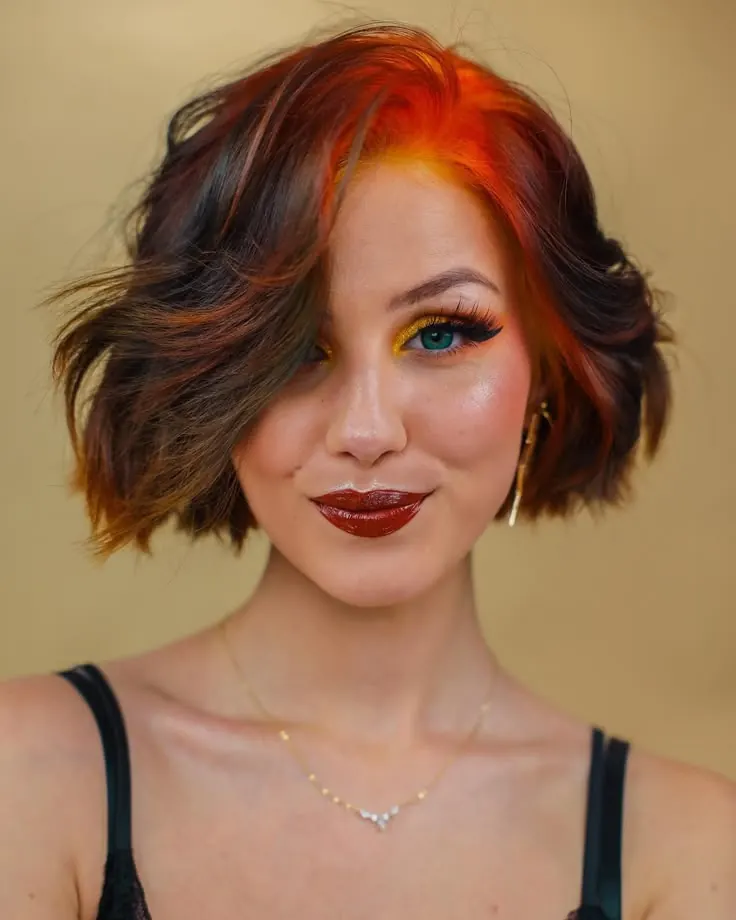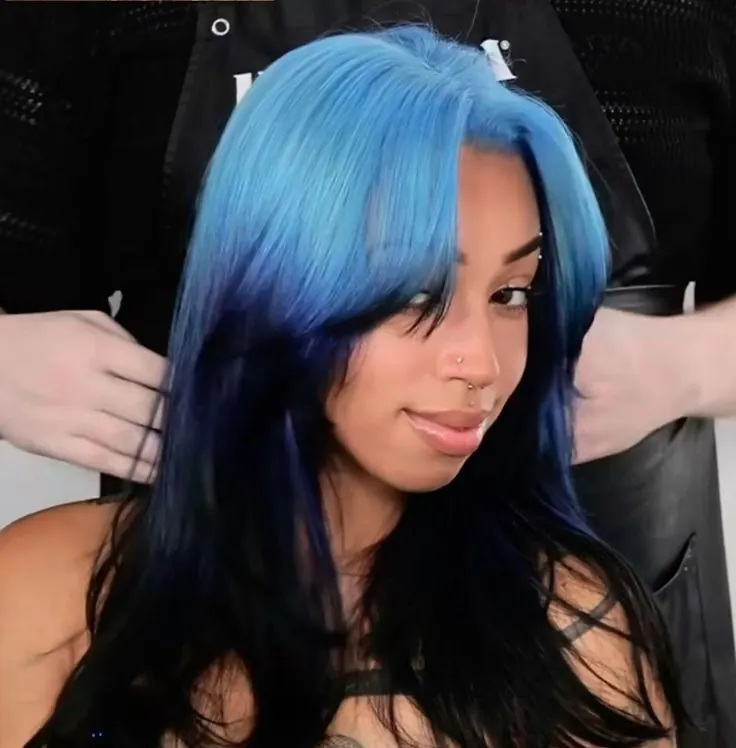
Ghost roots with bangs work because the fringe is already the first thing people notice. When the color starts near the scalp and follows the bang shape, the root contrast looks intentional instead of like random dye or neglected grow-out.
The best versions keep the color focused around the fringe, part, crown, or face-framing pieces. That lets the bangs carry the look while the rest of the hair stays darker, softer, or easier to maintain.
Visual Ideas
How Fringe Shape Changes The Visible Root Section
These bangs and fringe references focus on curtain bangs, blunt bangs, wispy fringe, split fringe, face-framing bangs, shags, bobs, and root color that stays visible around the face.

Copper Red Wavy Shag
Copper-red is painted through the micro fringe and the crown of a wavy black shag. Because the bangs are very short, the warm root band remains exposed and becomes a deliberate focal point rather than disappearing under longer hair.

Silver White Layered Shag
Silver-white face-framing pieces pass through a soft, broken fringe against deep brown layers. The pale strands keep the bangs airy; a solid white block would make the same shag look much heavier around the forehead.
Silver Blue Curly Shag
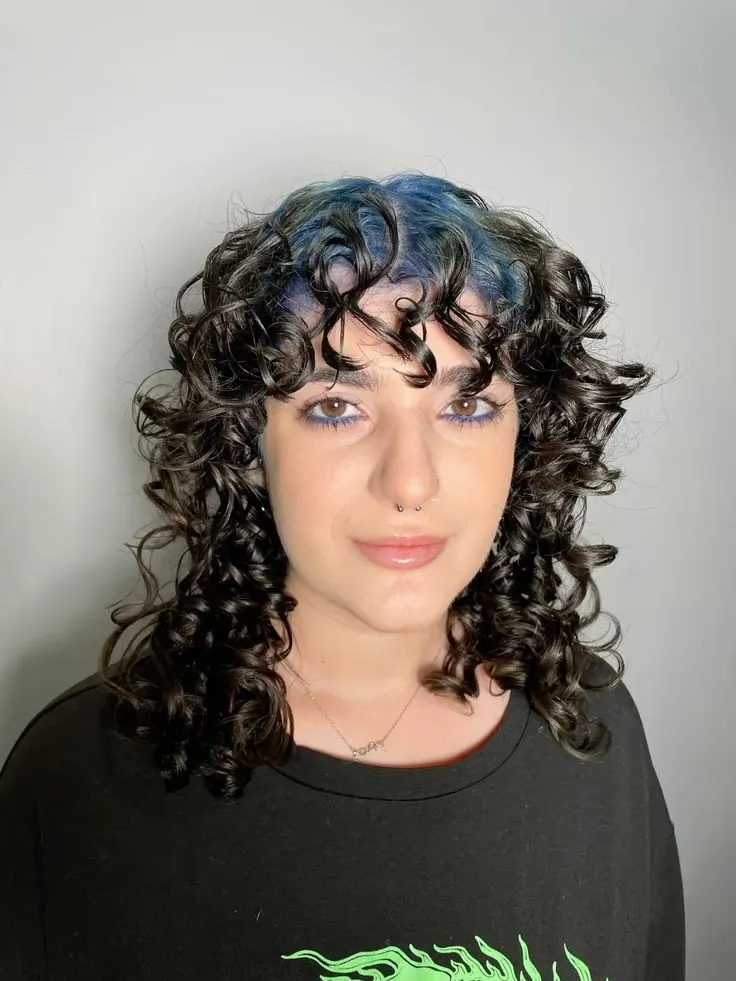
Silver-blue traces the curtain bangs and a few curls across the crown, leaving the remaining curly shag black. The separated ringlets show how a cool root shade can echo the fringe without coloring every curl.

Cobalt Blue Layered Shag
Cobalt blue begins above one eye and crosses the crown of this uneven layered fringe. Its asymmetric path works with the shag's direction, so the blue looks integrated into the cut rather than centered mechanically.

Warm Brown Straight Layered
Warm-brown color sits behind the full fringe and softens into dark straight layers. The bangs remain mostly deep at their ends, allowing the muted crown to read as gentle root contrast instead of a two-tone fringe.

Soft Beige Straight
Soft beige brightens the wispy face-framing bangs on a dark straight cut. The narrow pieces leave plenty of brunette between them, a useful model when a full pale fringe would feel too wide.

Silver White Messy Shag
Silver-white is hidden under a messy black shag and revealed where the wispy bangs separate. Lifting the top layer exposes much more pale color, so styling will determine whether this reads subtle or dramatic.

Smoky Silver Wolf Cut
Smoky-silver begins at the center part and runs through curtain bangs on a layered wolf cut. The grey is deliberately subdued, preserving a soft connection to the black lengths rather than producing a white stripe.

Silver White Shag
Broad silver-white curtain bangs open over a black shag and continue into the front layers. Their curved shape keeps the pale area connected on both sides even when the center of the forehead remains dark.
Pink Lilac Straight
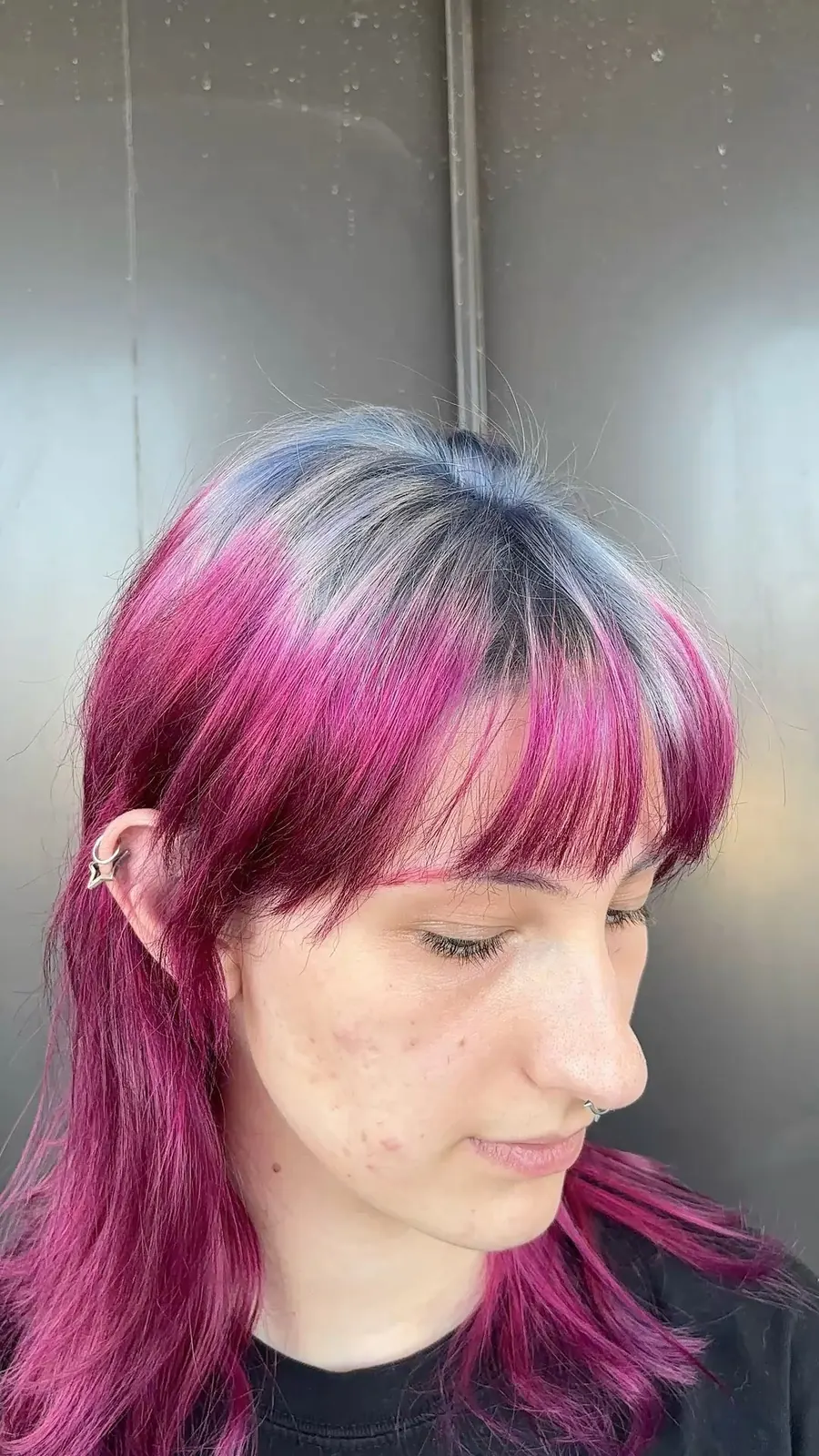
Pink-lilac saturates a blunt full fringe and the upper layers, then deepens toward magenta around the sides. This side profile shows how far behind the ear a colored bang section can continue before it becomes all-over color.
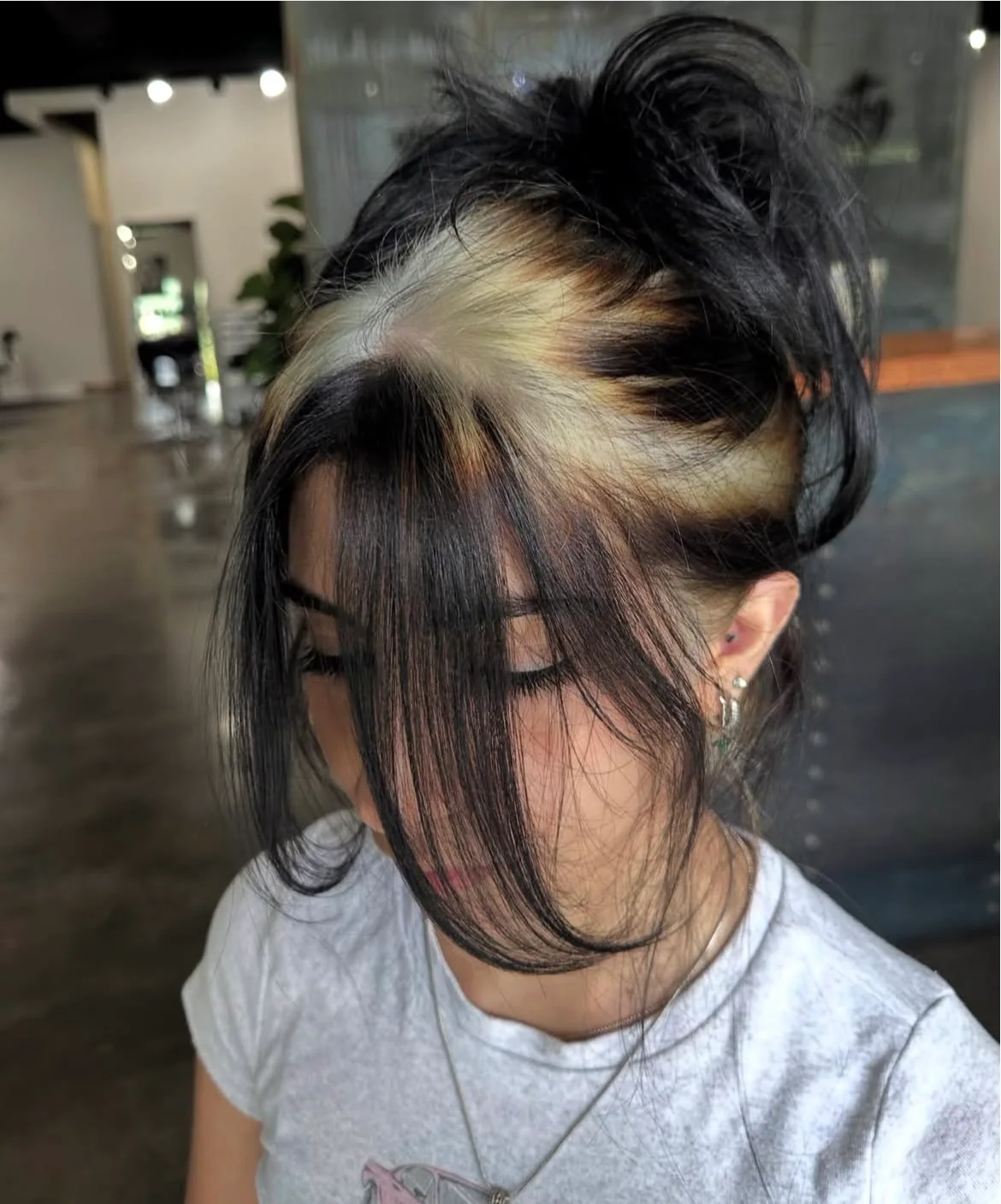
Silver Blonde Messy Updo
Silver-blonde ribbons frame a loose updo, with long dark bangs falling across the face. The salon angle highlights an important planning point: the pale sections must still sit correctly when the hair is pinned up.

Platinum Silver Black Chin Bob
A platinum-silver top meets a black chin bob through soft full bangs. The fringe blends both colors across the forehead, preventing the pale crown from looking detached from the dark lower shape.
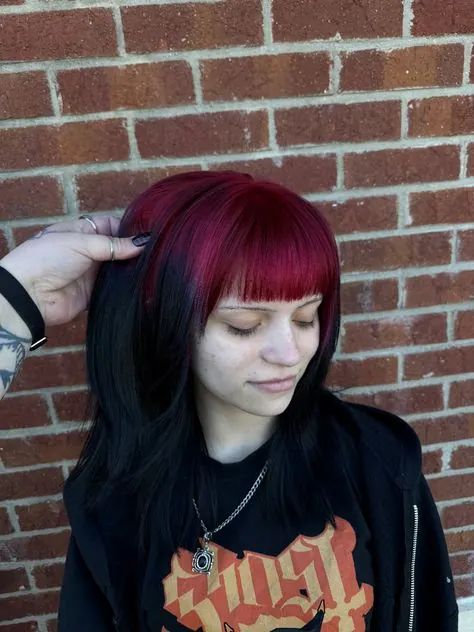
Burgundy Red Soft Wave
Burgundy-red covers the full fringe and upper side of soft black waves. The side angle makes the stopping point visible just behind the temple, useful when deciding how much of the bang section should carry red.
The Fringe Determines How Much Root Color Survives From The Front
Different bang shapes show ghost roots in different ways. Choose the cut first, then decide how much color the root area should carry.
- Curtain bangs: Best for softer ghost roots because the color can follow the center part and open around the face.
- Blunt bangs: Best for graphic color because the straight fringe line makes red, white, blue, green, or purple roots look sharper.
- Wispy bangs: Best for lighter contrast because the color peeks through in small pieces instead of forming one heavy panel.
- Split fringe: Best for two-tone looks, especially black hair with red, copper, silver, blonde, or neon color at the root.
- Micro bangs: Best for alt shags, wolf cuts, and short hair where the color should feel bold and deliberate.
- Face-framing bangs: Best if you want the color to brighten the face without dyeing the full fringe.
If your bangs are very heavy, the color needs to sit high enough to show when the fringe falls forward. If your bangs are airy or layered, a softer root panel can still be visible.
Connect The Colored Root Zone to The Bang Section
The strongest ghost roots with bangs usually follow one of these placements:
- Fringe root panel: Color sits directly at the bang root and follows the fringe shape.
- Center-part plus curtain bangs: Color starts at the part and blends into the open curtain pieces.
- Crown into fringe: Color begins at the crown and travels forward so the bangs do not look disconnected.
- Split fringe: One side or both sides of the bangs carry visible color while the lengths stay dark.
- Face-frame roots: The color starts near the front hairline and blends into soft bangs or money-piece pieces.
Avoid placing color only through the lower ends of the bangs if the goal is ghost roots. The scalp-adjacent area should be part of the design.
Choose a Shade That Will Stay Visible After Daily Styling
High-contrast colors are easiest to read on bangs because the fringe sits close to the eyes and face.
- Silver or white: Sharp, editorial, and strongest on black or dark brunette hair.
- Blonde or beige: Softer than white and easier to wear with curtain bangs or face-framing bangs.
- Red or burgundy: Strong on black hair, especially with split fringe, bobs, and shags.
- Copper or orange-copper: Warm and bold, especially on shaggy bangs or wolf-cut layers.
- Pink or lilac: Playful and softer around the face than red or neon green.
- Blue, teal, or silver-blue: Cool-toned and sleek on curtain bangs, curly shags, and dark bases.
- Green: More alternative and best when the cut already has a strong fringe or bob shape.
If you want the look to stay wearable, choose a shade that supports your haircut instead of fighting it. A soft beige face frame may suit airy bangs better than a hard neon panel, while blunt bangs can handle stronger contrast.
Curtain, Blunt, Wispy, And Split Fringe Reveal Different Areas
- Bob: Ghost roots look best when the color follows the fringe line, side part, or front curve of the cut. The compact shape makes the color easy to read, so even a small panel can look polished.
- Shag or wolf cut: The color should usually connect the crown and fringe. That keeps the bangs from looking like a separate dyed piece and makes the root placement feel built into the layers.
- Long hair: Ghost roots with bangs need a clear front story. Curtain bangs, split fringe, and face-framing roots work well because they connect the bangs to the rest of the style instead of leaving the front color stranded.
- Curly hair: The color should sit where the curls naturally separate. Curtain bangs and curly fringe can show ghost roots beautifully, but heavy product near the root can make vivid color look dull.
- Shorter cuts: Compare this with ghost roots on short hair if the bang placement is part of a cropped bob, short shag, or compact fringe shape.
Plan The Cut And Color Before Either One Removes The Other
Bring photos that show both the bang shape and the root color. The phrase "ghost roots with bangs" is useful, but it is still too broad on its own.
Useful wording:
- "I want the color to start at the root area of my bangs."
- "Keep the color connected to my part, crown, or face frame so it does not look like random streaks."
- "Make the fringe panel soft and blended" or "make the fringe panel sharp and graphic."
- "Keep the darker base through the lengths so the bangs stay the focus."
- "Tell me how this color will fade around my face and how often I should refresh it."
If your bangs are new, consider cutting them before final color placement. Even a small change in fringe length can change where the color should sit.
Bangs Need Earlier Trims And More Targeted Color Refreshes
Bangs fade and grow out faster visually because they are washed, touched, trimmed, and heat-styled more often than the rest of the hair.
Keep the color looking intentional by washing gently, using heat protection, and refreshing vivid shades before they collapse into orange, brown, greenish, or dull tones. Silver, white, and blonde bangs usually need toner support. Red, pink, blue, green, and purple bangs usually need color-depositing maintenance.
Trim timing matters too. A small bang trim can make ghost roots look sharper, but cutting too much after color may remove the strongest part of the placement. Ask your stylist whether to trim first, color second, or leave extra room for the next bang shape.
For upkeep and product planning, read ghost roots hair dye.
Do Not Place Color Where The Finished Fringe Will Hide it
- Coloring only the ends of the bangs and missing the root area.
- Choosing a hidden placement that disappears when the fringe falls forward.
- Making blunt bangs too soft when the reference photo is sharp and graphic.
- Making wispy bangs too heavy with color when the reference photo is airy.
- Forgetting that face-framing color fades faster because it gets styled more often.
- Cutting the bangs shorter after color and removing the strongest root placement.
FAQ
Do ghost roots work with curtain bangs?
Yes. Curtain bangs work well with ghost roots because the color can follow the center part and open around the face, which makes the root placement easy to see.
Are ghost roots with bangs high maintenance?
They can be. Bangs show grow-out and fading quickly because they sit at the front, but a small fringe panel can still be easier to maintain than full-head vivid color.
What color looks best with ghost roots and bangs?
Silver, white, red, copper, pink, blue, teal, green, and purple can all work. The best shade depends on the bang shape, the base color, and how bold the face-framing contrast should be.